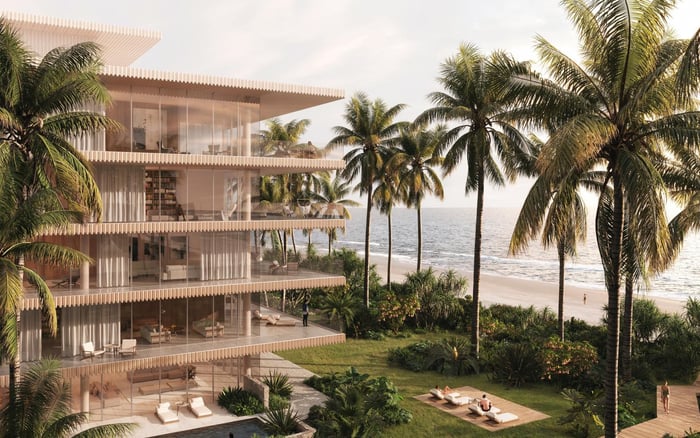
Una Residences Brickell offers a timely lens on how ultra-luxury condo buyers should evaluate smart-building control, service contracts, data governance, and long-term upgrade authority alongside architecture, privacy, and South Florida lifestyle priorities.

Una Residences Brickell is a useful starting point for a larger South Florida ownership conversation. In Brickell and across Miami-Dade, Broward, and Palm Beach luxury markets, buyers increasingly evaluate not only design, views, service, and privacy, but also the digital systems that may support daily residential life.
The central question is no longer simply whether a building feels technologically current. It is who controls the tools behind that experience.
For high-end condominium buyers, smart-building convenience can be attractive when it supports privacy, responsiveness, and ease. The ownership issue becomes more complex when resident-facing platforms, service workflows, access systems, maintenance requests, vendor contracts, and data policies are part of the operating environment. A luxury residence may be physical real estate, but the resident experience can also depend on software, staff procedures, and long-term governance.
This article does not assume that any specific AI platform is installed, promised, or operating at Una Residences Brickell. Instead, it uses the topic to frame a practical due-diligence question for sophisticated buyers: if building services become more intelligent, automated, or vendor-dependent, how much authority will owners have over the systems shaping their experience?
AI-enabled building services are often described in terms of convenience. They may be associated with faster responses, improved maintenance coordination, easier resident communication, smoother amenity scheduling, or better staff allocation. Those outcomes can be valuable, but they should not distract from the ownership structure behind them.
A buyer should ask whether a digital service is optional or essential to the building’s operations. If a platform supports access, reservations, packages, maintenance, security workflows, or communications, its contract terms may matter as much as its user interface. A system that feels seamless on day one can become a long-term concern if owners lack visibility into costs, privacy protections, upgrade rights, or replacement options.
The best smart-building strategy is not simply a collection of features. It is a governance framework that clarifies who makes decisions, who pays for changes, who protects resident information, and how the building can adapt as technology evolves.
Luxury buyers often focus on what they can see: arrival sequence, finishes, ceiling heights, balcony experience, amenities, and neighborhood setting. Those elements remain essential. Yet the less visible infrastructure can shape the day-to-day ownership experience just as strongly.
If building services rely on third-party software, buyers should understand the length and flexibility of those agreements. If resident data is collected, buyers should ask who can access it and how it is protected. If a platform becomes outdated, buyers should know whether the association can replace it without unreasonable disruption. If future upgrades require new hardware or staff training, buyers should understand how those decisions are approved and funded.
These are not anti-technology questions. They are ownership questions. A well-designed digital service model should make luxury living feel calmer, more private, and more responsive without creating dependencies that owners cannot evaluate.
Brickell’s appeal is tied to a dense mix of residential, business, dining, and lifestyle energy. That setting can make operations especially important. In a high-service condominium environment, the quality of access control, guest coordination, maintenance response, amenity management, and resident communication can influence how private and effortless the building feels.
A polished app or resident portal may be only the visible layer. Behind it are vendor relationships, management procedures, staffing decisions, cybersecurity practices, and association authority. Buyers who plan to hold for the long term should consider whether the building can maintain service quality as technology changes.
This matters because digital systems can age faster than architecture. Finishes can be refreshed, furniture can be changed, and amenity programming can evolve. Poorly structured software dependencies may be harder to unwind. For that reason, governance can become part of the long-term value conversation.
Buyers evaluating an ultra-luxury condominium should request clarity on the building’s technology ecosystem as part of broader due diligence. The goal is not to demand unnecessary complexity. It is to understand control.
Start with service contracts. Which platforms are important to building operations? How long do the agreements run? Are fees fixed, variable, or usage-based? Can the association audit, renegotiate, replace, or terminate providers? Are any services bundled in ways that limit future flexibility?
Then review data practices. What resident information is collected through building systems? Who can access it? Is it shared with vendors? How long is it retained? What privacy protections are in place? In a luxury environment, discretion is not an accessory; it is part of the core value proposition.
Finally, examine upgrade pathways. Technology will change. Buyers should ask how future software, hardware, security, and training decisions will be handled, and whether the building has a process for adapting without unnecessary disruption.
A modern luxury amenity is no longer only a room, terrace, pool, spa area, or service desk. It may also include the systems that make reservations, access, communication, and maintenance feel effortless. The physical space creates the first impression, but operational consistency sustains the luxury experience.
That is why smart-building governance belongs beside traditional condominium due diligence. Buyers should still study layouts, exposures, monthly costs, rules, reserves, and service culture. They should also ask how technology supports those elements and whether the building’s digital tools can be managed in the owners’ long-term interest.
The most resilient luxury buildings will likely be those where convenience and control are not in conflict. Residents should benefit from refined service without surrendering transparency over the systems that help deliver it.
South Florida luxury buyers are increasingly sophisticated about ownership quality. They understand that a residence is not only a purchase of space, but also participation in an operating structure. As service models become more digital, that operating structure deserves closer attention.
Una Residences Brickell provides a timely lens for this conversation because it sits within a market where privacy, service, design, and lifestyle expectations are high. The broader lesson is simple: the buildings that age best may be those that combine refined physical environments with clear authority over their digital and operational systems.
For buyers, the practical advantage is confidence. When contracts, data practices, upgrade rights, and decision-making authority are understood before closing, smart-building convenience can feel like an enhancement rather than an unknown.
What is the main ownership question behind AI-enabled building services? The main question is who controls the systems that support resident services, data, access, maintenance, and future upgrades.
Does this article claim Una Residences Brickell has a specific AI platform? No. It uses Una Residences Brickell as a lens for buyer due diligence without asserting that any specific AI system is installed or promised.
Why should luxury condo buyers ask about software contracts? Software contracts can affect costs, flexibility, service continuity, privacy, and the association’s ability to change providers over time.
What data questions should buyers raise? Buyers should ask what resident information is collected, who can access it, how long it is retained, and whether it is shared with vendors.
Can smart-building services affect privacy? Yes. Digital systems may touch access, communications, service requests, and guest workflows, so privacy protections should be reviewed carefully.
Why does vendor flexibility matter? Vendor flexibility matters because technology can become outdated, and owners should understand whether the association can renegotiate or replace systems.
Should technology matter as much as design? Design remains essential, but technology governance should be evaluated alongside architecture, service, privacy, and long-term ownership quality.
What should buyers ask about future upgrades? Buyers should ask who approves upgrades, how they are funded, whether new hardware is required, and how disruption will be managed.
Is this issue limited to Brickell? No. The same questions apply across South Florida luxury condominium markets where service, privacy, and digital infrastructure intersect.
Who should help review smart-building terms? Buyers should rely on qualified real estate, legal, and condominium-document professionals to review contracts, rules, and ownership obligations.
For a tailored shortlist and next-step guidance, connect with MILLION.
If branded residences are on your mind — as a home or as an allocation — we would be glad to share what we are seeing, privately.
Begin a quiet conversation