A buyer-focused guide to evaluating battery-backup, emergency power, runtime, in-unit load priorities, maintenance responsibility, and resilience planning at Sixth & Rio Fort Lauderdale.
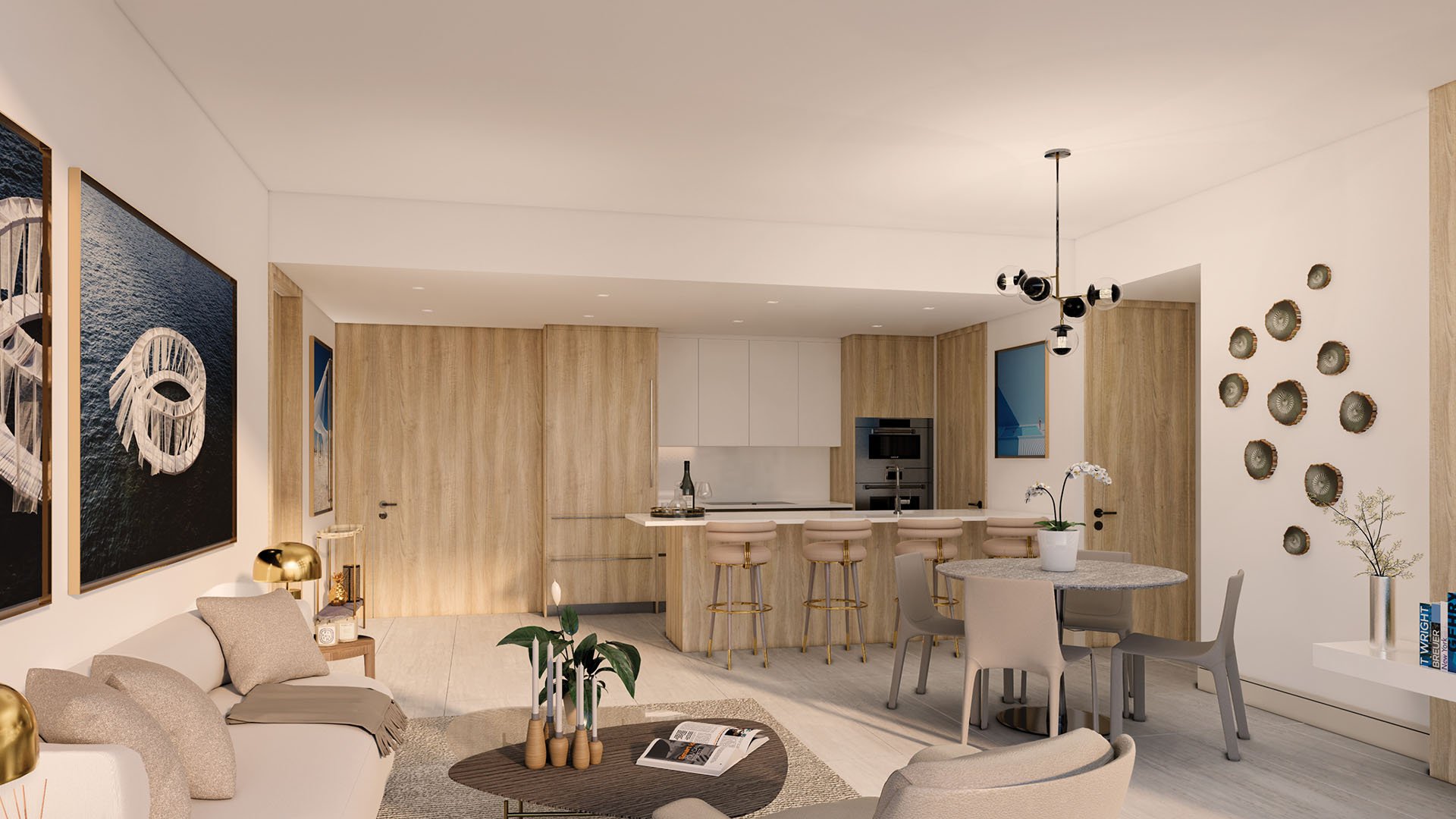
At Sixth & Rio Fort Lauderdale, battery-backup options should not be treated as a minor technology upgrade or an afterthought to finishes, views, and amenity programming. For buyers in Broward, power resilience belongs to the larger question of habitability: how a residence, its common areas, and its essential services perform when the grid is stressed or temporarily unavailable.
South Florida luxury buyers understand that storm readiness is not limited to impact glass and elevated design. Tropical-storm and hurricane-related outages can reshape the practical experience of ownership, particularly for buyers who expect a condominium to function as a primary residence, a second home, or a lock-and-leave base with sophisticated systems that still need protection.
Sixth & Rio Fort Lauderdale has a boutique condominium profile, which makes the power conversation more specific. A buyer should not assume that backup capacity, if present, is designed to support the same lifestyle during an outage that the building offers on a normal day. The essential question is whether backup systems are scaled only for required emergency loads, or whether they also support comfort, convenience, and continuity.
The most important distinction is between code-required emergency power and luxury-level standby power. A building can satisfy life-safety obligations without keeping private residences cool, connected, or comfortable. That distinction matters for buyers comparing new-construction opportunities, especially when marketing language uses broad terms such as resilience, backup, emergency power, or storm readiness.
Ask the sales team and project representatives to identify exactly what receives emergency power. The list should address elevators, garage access, lobby and security systems, life-safety systems, pumps, telecom rooms, and access-control hardware. These are not abstract technical details. They determine whether residents can move through the building, enter parking areas, maintain secure access, and rely on core building functions during an interruption.
A polished lobby is not the same as a functioning building during a grid event. The right buyer posture is calm but exacting: request the practical operating map, not a general reassurance.
Buyers should ask whether the building uses a generator, a battery-energy-storage system, a hybrid generator-and-battery arrangement, or no supplemental system beyond legally required emergency power. Each answer leads to a different diligence path.
A generator raises questions about fuel, ventilation, testing, noise, maintenance, and where equipment is positioned relative to flood exposure. A battery system raises questions about battery location, inverters, switchgear, runtime, thermal management, service access, and replacement responsibility. A hybrid approach can be attractive in concept, but it still requires clarity on which system carries which loads, and for how long.
The key is not to prefer one technology in the abstract. The key is to understand the system actually described in the condominium documents, engineering materials, and association framework before relying on it as part of an ownership decision.
A backup system’s nameplate capacity can sound reassuring while revealing very little about real-life usefulness. Buyers should request expected runtime under realistic load assumptions. That means asking what happens when the actual intended loads are connected, not merely what a battery or generator can theoretically support under ideal conditions.
For a Fort Lauderdale condominium buyer, runtime should be discussed through practical scenarios. How long can critical common-area systems operate? Are elevators available continuously or intermittently? Does garage access remain usable? Are pumps supported? Is building connectivity protected? If any in-residence circuits are backed up, how long can they be sustained?
Investment decisions in the luxury market often turn on details that seem invisible until an outage occurs. A residence that can preserve refrigeration, communications, and limited lighting may be experienced very differently from one that benefits only from common-area emergency systems.
The most sensitive battery-backup questions often involve the residence itself. Buyers should ask whether any in-unit loads are supported by the building, such as refrigerator circuits, Wi-Fi or network equipment, limited lighting, medical-device circuits, or HVAC components. If the answer is yes, request a written explanation of exactly which circuits are included.
If the answer is no, that is not necessarily a defect. It may simply mean the building’s emergency power is focused on common systems and code-required functions. But the buyer should understand that before closing, especially if the residence will include wine storage, climate-sensitive interiors, remote-work equipment, smart-home systems, medical devices, or other loads that cannot be casually interrupted.
Pre-construction conversations are the time to ask for a written load-priority plan. A vague promise that the building is storm ready is not a substitute for a circuit-level understanding of what remains powered, what drops offline, and what must be handled privately by the owner.
Some buyers assume they can solve backup-power concerns with a private in-unit battery installation. In a condominium, that assumption requires careful verification. Buyers should confirm whether private battery systems are permitted under the condominium declaration, architectural rules, electrical design, fire and life-safety requirements, and insurance expectations.
This is particularly important where batteries, inverters, or related equipment may require ventilation, service clearance, specific installation protocols, or association approval. Even a compact residential battery can raise questions that go beyond an owner’s personal preference.
The diligence should also address whether private backup equipment can be connected to selected loads, whether it can interface with building systems, and whether installation would affect warranties or insurance obligations. Some buyers may file their search under Fort Lauderdale, but the practical issue is highly specific to each condominium regime and its governing documents.
Backup power is only as reliable as its placement and maintenance. Buyers should ask where batteries, inverters, switchgear, generators, and fuel systems are located relative to flood exposure, ventilation requirements, and service access. Equipment that is difficult to reach, poorly protected, or operationally constrained may not provide the level of comfort a luxury buyer expects.
Maintenance responsibility is equally important. Who tests the equipment? How often is it tested? Are costs covered through the operating budget, reserves, or potential special assessments? If major components require periodic replacement, buyers should understand how that expense is planned and disclosed.
The most disciplined approach is to review sales documents, condominium declarations, and association rules for backup-power rights and limitations. A conversation is useful, but the documents govern the ownership experience. If resilience is part of the buyer’s reason for choosing Sixth & Rio, it should be visible in the paperwork, not merely in the showroom language.
Does Sixth & Rio Fort Lauderdale have a confirmed battery-backup system? Buyers should verify the current project documents directly before assuming any specific battery, generator, hybrid system, capacity, or runtime.
What is the first backup-power question a buyer should ask? Ask which building systems receive emergency power, including elevators, garage access, security, pumps, telecom rooms, and access control.
Why is code-required emergency power not enough for every luxury buyer? Code-required power may protect life-safety functions without supporting comfort loads such as refrigeration, Wi-Fi, lighting, or HVAC components.
Should buyers ask about in-unit backup circuits? Yes. Buyers should confirm whether refrigerator circuits, network equipment, limited lighting, medical-device circuits, or HVAC elements are supported.
What does runtime mean in practical terms? Runtime is how long backup power can support the intended loads under realistic conditions, not simply the advertised capacity of equipment.
Is automatic transfer important? Yes. Buyers should ask whether backup power engages automatically through transfer switches or requires action by staff, vendors, or residents.
Can an owner install a private in-unit battery? Only if allowed by the condominium documents, architectural rules, electrical design, fire requirements, and insurance framework.
Why does equipment location matter? Batteries, switchgear, generators, and fuel systems should be reviewed for flood exposure, ventilation, service access, and operational reliability.
Who pays to maintain backup-power equipment? Buyers should determine whether maintenance is handled through operating budgets, reserves, or potential special assessments.
What is the best way to shortlist comparable options for touring? Start with location fit, delivery status, and daily lifestyle priorities, then compare stacks and elevations to validate views and privacy.
If you'd like a private walkthrough and a curated shortlist, connect with MILLION.
If branded residences are on your mind — as a home or as an allocation — we would be glad to share what we are seeing, privately.
Begin a quiet conversation