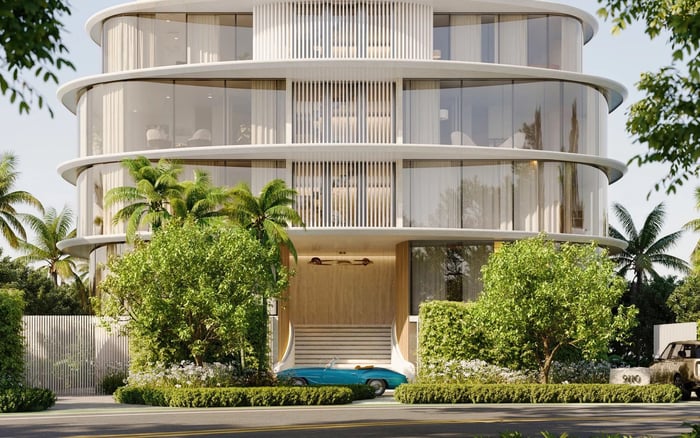
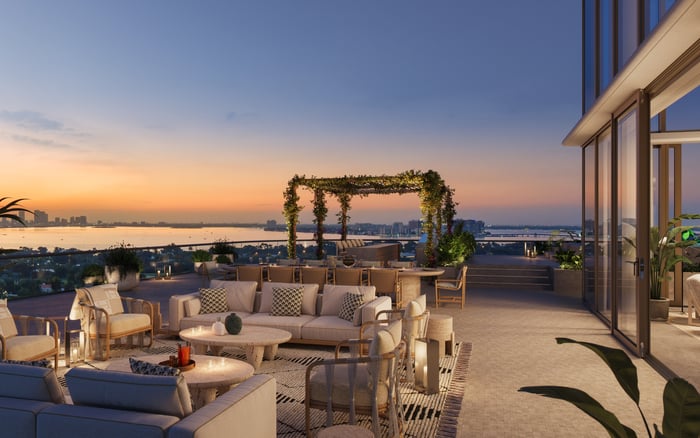
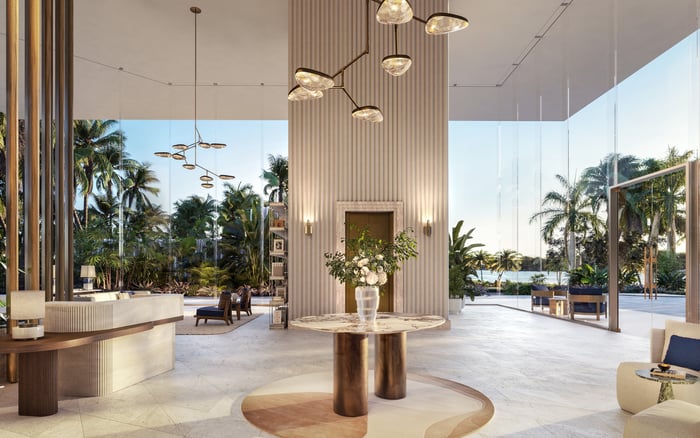
In Miami Beach, aesthetics are never simply about taste. They are about posture: how a building meets the sky, how it frames the ocean, and how it signals lineage or modernity before you ever step inside. This comparison looks at two distinct design temperaments now shaping the upper tier of Miami-beach new-construction. On one side, an Art Deco revival sensibility, calibrated for Miami Beach’s historic glamour and the ritual of arrival. On the other, a contemporary glass approach that leans into weightlessness, horizon lines, and the quiet theater of transparency. Both can be impeccably luxurious. The difference is what kind of luxury you want to live in: the curated romance of a stylized past, or the disciplined clarity of a modern envelope.
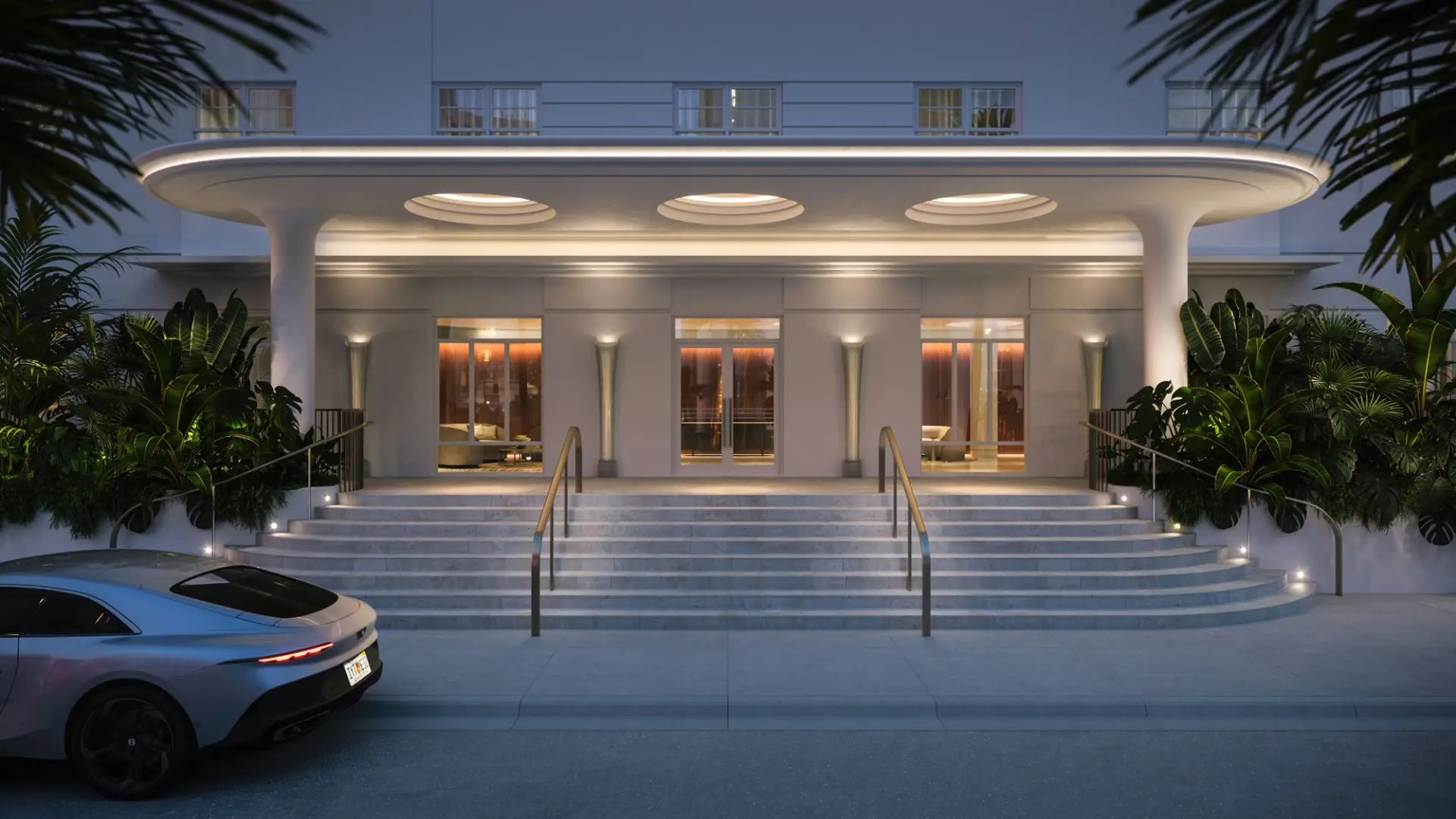
Miami Beach has always supported more than one definition of luxury. There is the city’s native fluency in Art Deco-where geometry, symmetry, and a sense of occasion are embedded in the streetscape. Then there is the newer oceanfront vocabulary of contemporary glass, where the priority is not nostalgia but precision: clean structure, expansive glazing, and a disciplined reduction of visual noise.
That divide is more than aesthetic. It shapes how you move through a building, how you entertain, and how a residence feels from morning light to evening glow. In the same Miami-beach market, buyers can choose architecture that wears like a finely tailored suit-or one that reads like a perfectly cut pane of glass.
Through this lens, Shore Club Private Collections Miami Beach presents an interpretation of Miami Beach glamour, while The Perigon Miami Beach sits squarely within the contemporary glass tradition.
Art Deco revival in Miami Beach rarely aims for literal replication. At its best, it distills the era’s essentials-crisp massing, rhythmic fenestration, strong vertical lines, and controlled ornament-and refines them for a modern buyer, so the result feels intentional rather than nostalgic.
A Deco-inflected building tends to prioritize the choreography of arrival. The entry sequence matters: canopy, threshold, lobby proportions, and lighting that flatters rather than floods. Even at a larger scale, the architecture can feel composed and “held,” because Deco-derived design favors legibility and hierarchy. The facade reads like an outfit with structure; the building is not trying to disappear into the sky.
For a luxury buyer, the appeal is as emotional as it is visual. Deco revival can feel like stepping into a lineage of Miami-beach life-cocktail-hour elegance, a resort sensibility, and cinematic confidence. It also pairs naturally with interiors that can carry pattern, texture, and curated objects without tipping into visual noise. In other words: expressive, and forgiving.
Contemporary glass towers are built as instruments for light and view. Their most compelling moments arrive during the day, when the glazing turns the Atlantic into moving artwork, and at dusk, when interior illumination allows the building to read like a lantern.
This approach optimizes for horizon, not heritage. The facade aims to feel thin, precise, and unencumbered. The core move is to reduce visual interruptions between interior and exterior so the ocean is not a “view,” but a constant presence. In practice, that can heighten your awareness of weather, sun angle, and reflections-an experience many buyers find energizing.
The discipline of contemporary glass also shifts the emotional temperature of a home. It tends to register as calm. Where Art Deco revival leans into atmosphere and occasion, modern glass leans into clarity and restraint. Furnishings, art, and materials perform best when they are equally edited. The architecture does not want competition.
When comparing Shore Club Private Collections and The Perigon, start with a fundamental buyer question: do you want a building that presents itself as an icon, or one that dissolves into the view?
With Art Deco revival cues, Shore Club Private Collections can be read as a statement of identity. Deco’s legacy on Miami Beach has always carried public-facing confidence, and revival projects typically preserve that posture: a composed exterior, an emphasis on symmetry or rhythm, and an arrival experience that feels deliberate.
The Perigon’s contemporary glass direction, by contrast, is oriented around the ocean-facing experience. Glass-forward architecture is less about being “seen” from the street and more about what residents see from within. The most consequential elevation is the one calibrated to light, water, and skyline.
Neither is inherently more luxurious. They deliver luxury differently: one through narrative and heritage energy, the other through controlled, modern serenity.
Architecture sets the interior rules. A Deco revival framework often welcomes layered materials and an elevated sense of decorative comfort: fluted surfaces, rich metals, warm stones, and lighting that behaves more like jewelry than infrastructure. Rooms can be composed as distinct moments-a salon-like living area, a dining space with presence, a corridor that doubles as gallery.
In contemporary glass residences, the interior ideal is continuity. Sightlines matter. Plan geometry is often simplified so the ocean holds focus from multiple positions. Materials tend to be selected for quiet performance: refined stone, pale woods, and details that recede into the perimeter. The goal is not to “decorate” the view, but to intensify it.
If you collect art, both can work. The real question is whether you want the architecture to participate in the conversation-or to disappear behind it.
Amenities are where stylistic preferences become lifestyle realities.
A Deco revival amenity experience typically leans club-like: social spaces that feel dressed, a hospitality cadence, and an environment that encourages lingering. You can picture hosting a formal evening and transitioning into a lounge-like setting without the mood breaking.
Contemporary glass projects often steer toward a spa tone: quieter palettes, open-air thresholds, and wellness-forward calm. Even when amenity programming is extensive, the aesthetic ambition is to keep the environment visually light so residents feel decompressed.
For buyers deciding between Shore Club Private Collections and The Perigon, consider how you want your building to feel on a random Tuesday: the energy of a private club, or the calm of a resort spa.
Glass is beautiful, but it is also honest. Daylight is abundant, and so is exposure-depending on orientation and neighboring sightlines. In an ultra-premium purchase, “privacy” is not a generic promise; it is a practical consideration shaped by facade design, balcony depth, and how the building sits relative to the beach and adjacent properties.
Art Deco revival envelopes can feel more protective by nature because the facade tends to be more articulated. That articulation can create shade, depth, and subtle screening. Contemporary glass can still deliver privacy, but it often calls for a more deliberate approach to interior lighting, window treatments, and how outdoor space is used.
A buyer who travels frequently may prefer the simplicity of modern glass minimalism. A buyer who entertains often may value the staged arrival and layered atmosphere Deco revival can provide.
Miami-beach buyers are not monolithic. Some want continuity with the city’s established design identity. Others want a home that reads as globally modern, closer in spirit to new coastal towers in other world capitals.
It’s also worth noting that Miami Beach is not the only place where these aesthetics are playing out. Contemporary glass living has a clear lineage in other waterfront markets across South Florida. For example, Arte Surfside expresses a similarly modern, gallery-like sensibility in Surfside, while Five Park Miami Beach carries a contemporary approach that speaks to a more vertical, skyline-facing lifestyle.
Meanwhile, buyers drawn to a warmer, more classical register of residential luxury often cross-shop beyond the barrier island, where the mood can shift from beachfront clarity to city sophistication. In Brickell, Baccarat Residences Brickell offers another lens on elevated design-one where atmosphere and material richness can matter as much as glass and view.
When two projects sit at the top of the market, the decision is rarely about whether the finishes are “good.” They will be. The decision is about emotional alignment.
Choose an Art Deco revival direction if you value:
A sense of arrival that feels ceremonial.
A building identity that reads as Miami Beach, not just oceanfront.
Interiors that welcome layered styling, color, and collectible pieces.
Choose contemporary glass if you value:
The ocean as the primary artwork.
A quieter architectural presence with fewer visual interruptions.
A modern routine built around light, openness, and an edited palette.
Shore Club Private Collections and The Perigon express these preferences in high resolution. The right choice is the one that matches how you actually live: your hours, your hosting style, your tolerance for visibility, and the feeling you want when the door closes.
Is Art Deco revival the same as historic preservation? No. Revival typically references Deco principles while using modern construction and contemporary interiors.
Does contemporary glass always mean floor-to-ceiling windows? Not always, but it often prioritizes expansive glazing and simplified structure to maximize light and views.
Which aesthetic feels more “Miami Beach”? Deco revival aligns closely with the city’s iconic visual identity, while glass feels more globally modern.
Is one style more timeless for resale? Timelessness depends on execution and context; buyers typically gravitate to either heritage character or clean modernity.
Which style is better for art collections? Deco revival can complement layered, expressive collections; glass-forward homes often suit edited, sculptural works.
Do glass buildings feel less private? They can, depending on orientation and lighting, but thoughtful planning and treatments can preserve privacy.
Which aesthetic is better for entertaining? Deco revival often feels more club-like and staged; contemporary glass tends to host best with a relaxed, view-led mood.
How should I compare two luxury projects beyond the facade? Focus on arrival sequence, natural light quality, amenity atmosphere, and how the architecture frames daily routines.
Can I blend both aesthetics in my interior design? Yes. Many owners mix Deco accents with modern furniture, as long as the material palette stays disciplined.
What’s the simplest way to decide between Shore Club Private Collections and The Perigon? Choose Shore Club for heritage-forward glamour, and The Perigon for minimalist glass serenity.
To compare the best-fit options with clarity, connect with MILLION Luxury.
If branded residences are on your mind — as a home or as an allocation — we would be glad to share what we are seeing, privately.
Begin a quiet conversation