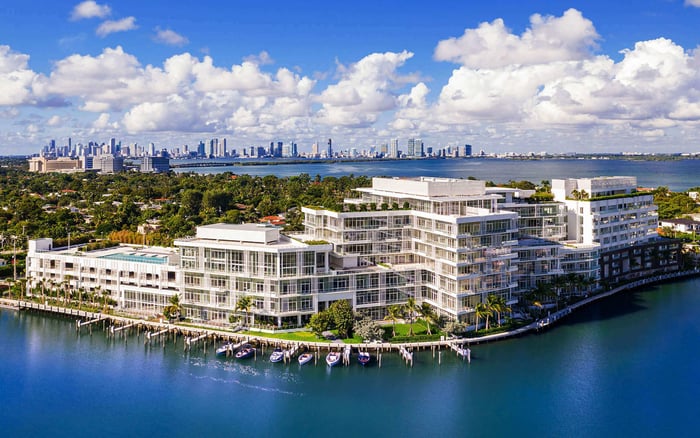
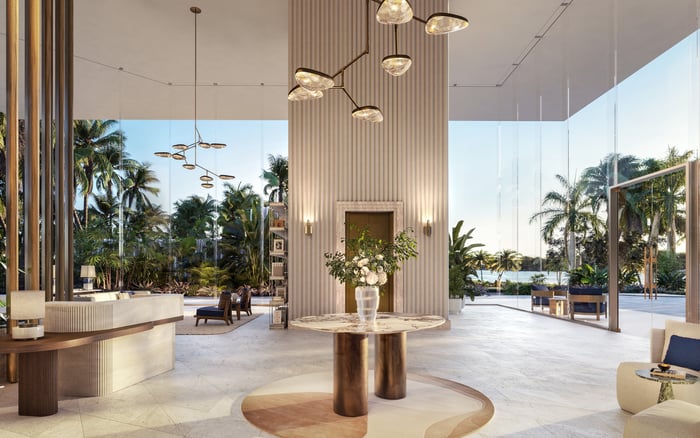
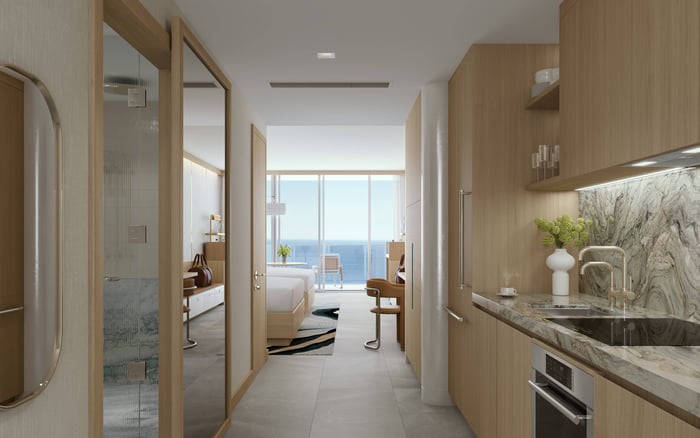
A buyer-focused guide to reading construction quality, façade maintenance, and replacement-reserve visibility before choosing full-time ownership at W Pompano Beach Hotel & Residences or Continuum on South Beach.
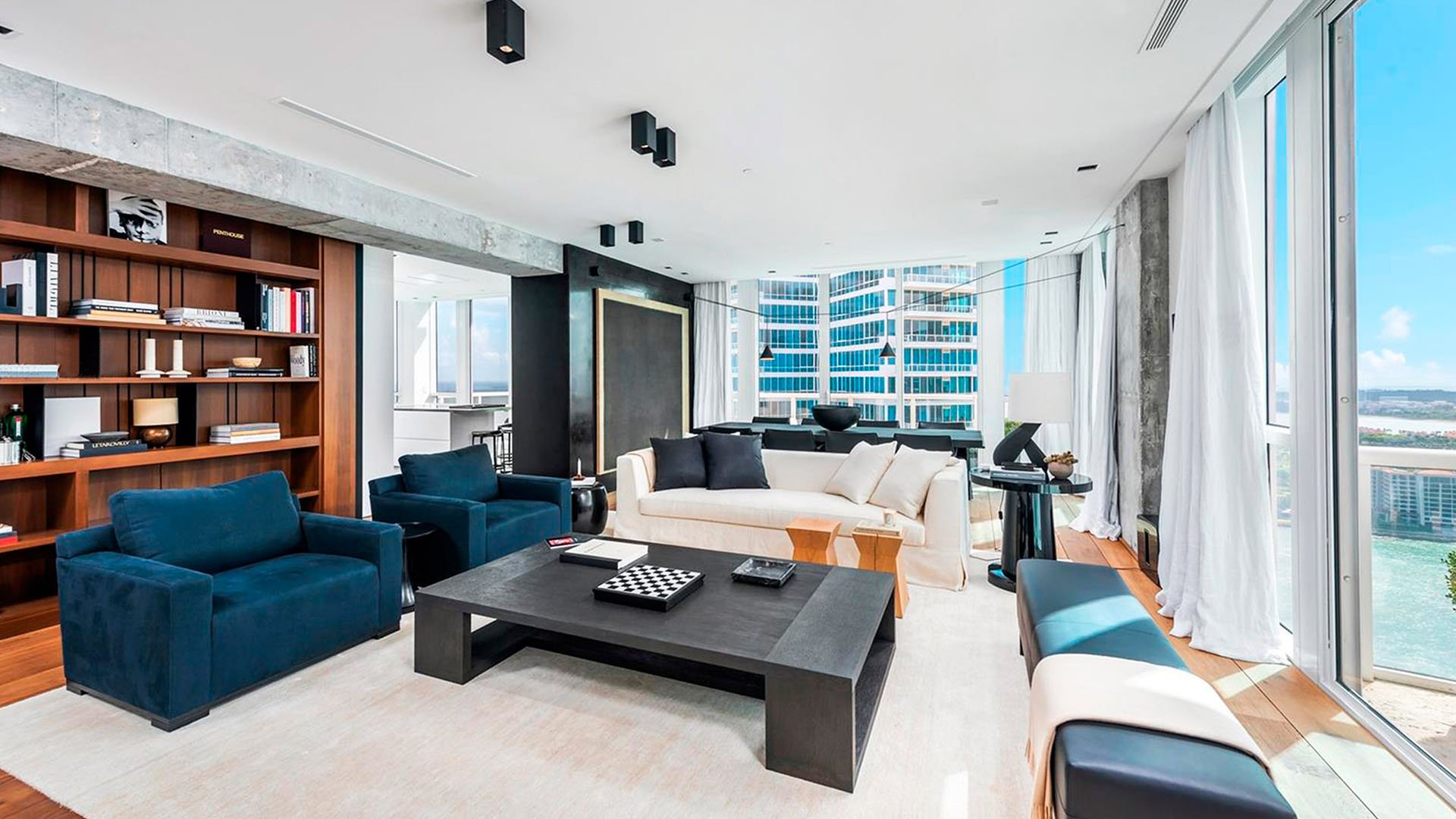
For a full-time owner, a South Florida residence is more than a seasonal address or a hospitality backdrop. It is the building that must perform every day, through humidity, salt air, wind-driven rain, heavy amenity use, and the quiet repetition of ordinary life. That is why W Pompano Beach Hotel & Residences and Continuum on South Beach belong in a more technical conversation than finishes alone can provide.
Sophisticated buyers still care about arrival sequences, service culture, wellness spaces, and the way morning light moves across a terrace. Yet the long-term pleasure of ownership is often shaped by less visible disciplines: how the exterior wall system is detailed, how water is managed, how often the façade is inspected, and how clearly future capital work is funded.
In market shorthand, Pompano Beach and Miami Beach can sound like lifestyle categories. For full-time owners, they should also prompt a practical review of building resilience. Oceanfront and near-coastal living can be extraordinary, but it rewards buyers who treat construction quality, façade maintenance, and replacement reserves as part of the luxury experience, not as back-office details.
Construction quality is often mistaken for a visual judgment. A stone lobby, a calibrated lighting package, and a refined kitchen may reveal design intent, but they do not fully show how a building will live over time. For a full-time owner, the stronger question is whether the residence has been delivered with systems that can be inspected, maintained, repaired, and documented.
At W Pompano Beach Hotel & Residences, buyers should ask how the residential and hospitality components are separated operationally, where shared systems exist, and which party is responsible for future maintenance. A condo-hotel setting can offer compelling service and energy, but full-time owners should understand where residential quiet, access control, elevator use, loading, valet operations, and building staff responsibilities begin and end.
At Continuum on South Beach, the diligence lens is different. Owners should focus on the continuity of maintenance records, the rhythm of capital projects, and the association’s history of addressing physical-plant needs before they become disruptive. A completed luxury building can offer the benefit of an observable maintenance culture. The key is to read that culture through records, not polished common areas alone.
The most useful buyer questions are direct. What warranties apply, and who administers them? What is the documented process for identifying water intrusion? How are balcony, railing, waterproofing, window, roof, garage, pool deck, and mechanical concerns logged? How are resident complaints triaged? When full-time ownership is the goal, these answers matter as much as the view line.
The façade is the building’s public face, but it is also a working system. Glass, sealants, coatings, railings, balcony edges, stucco, waterproofing membranes, anchoring points, and drainage paths all have jobs to perform. In South Florida, those jobs are complicated by sun exposure, salt air, intense rain, and persistent moisture.
For owners, façade maintenance should not be treated as an occasional cosmetic exercise. It should be understood as a recurring discipline with inspection cycles, vendor accountability, access logistics, resident communication, and financial planning. A building can look immaculate from the street and still require a serious upcoming exterior program. Conversely, visible work in progress may signal a responsible association rather than a problem.
Buyers comparing W Pompano Beach Hotel & Residences and Continuum on South Beach should request the current façade maintenance plan, the most recent exterior assessments, the anticipated repair horizon, and the budget assumptions behind them. If the building is newer, the focus should be on specifications, warranties, and turnover documentation. If the building is operating with an established association, the focus should be on inspection history, completed projects, and future cycles.
Full-time owners should also ask about the lived impact of façade work. Exterior projects can affect balcony access, pool deck use, valet circulation, views, noise, privacy, and the daily rhythm of a residence. In the luxury tier, the difference between inconvenience and frustration is often communication. A well-governed building explains scope, timing, sequencing, and resident protections before scaffolding, swing stages, or staging areas become part of the view.
Replacement reserves are not glamorous, but they are a form of luxury protection. They help turn future building needs from surprises into planned obligations. For full-time owners, reserve visibility can be the difference between an address that feels serene and one that becomes financially reactive.
The most important issue is not simply whether reserves exist. It is whether the reserve framework is specific enough to be useful. Buyers should look for major components, remaining useful life assumptions, projected replacement costs, funding strategies, and recent updates. Elevators, roofs, waterproofing systems, façade elements, mechanical equipment, life-safety systems, pool infrastructure, garage systems, and common-area finishes each carry different timelines and cost profiles.
In a branded or service-intensive environment, reserve questions should extend to shared amenities and operational interfaces. At W Pompano Beach Hotel & Residences, a full-time owner should understand how hotel-style or mixed-use services intersect with residential cost exposure. At Continuum on South Beach, an owner should understand how reserve planning supports the long-term quality of a high-service residential experience.
Clarity matters. If a budget shows low monthly carrying costs but offers little insight into future capital needs, the apparent efficiency may be misleading. If a building carries higher reserves with well-documented planning, the monthly number may reflect a more disciplined approach to preserving long-term value. Luxury buyers should not reflexively prefer the lowest assessment. They should prefer the clearest one.
A useful comparison begins with the owner’s daily life. Will the residence be a primary home with constant use of amenities, parking, package systems, staff, elevators, and terraces? Will the owner entertain frequently? Will pets, family, home-office needs, or wellness routines place additional demands on the building? Full-time ownership magnifies small operational details.
For W Pompano Beach Hotel & Residences, the central diligence theme is alignment: brand promise, construction delivery, operating structure, and residential governance should all support one another. Buyers should ask how residential priorities are protected within any larger hospitality environment, how maintenance decisions are made, and how capital obligations are allocated.
For Continuum on South Beach, the central diligence theme is stewardship: how well the building’s physical condition, association records, and reserve posture support the lifestyle already being enjoyed. Buyers should ask for documents that show not only what has been repaired, but what is anticipated next.
The most prepared buyers bring a small professional team into the review: a real estate advisor, attorney, inspector or engineer where appropriate, and a financial professional who can read reserve implications without emotion. That team should not be searching for reasons to be alarmed. It should help the owner distinguish ordinary coastal building stewardship from red flags.
What should full-time owners ask first about construction quality? Start with the building envelope, waterproofing, window systems, balcony details, roof systems, and how defects or resident complaints are documented.
Why does façade maintenance matter so much in South Florida? Salt air, sun, moisture, and wind-driven rain make exterior systems work harder, so inspection and maintenance cycles are central to long-term comfort.
Is a newer residence automatically lower risk? No. Newer buildings still require careful review of specifications, warranties, turnover documents, operating structure, and early maintenance protocols.
Is an established building automatically higher risk? No. An established building may offer a visible record of stewardship, completed projects, and reserve planning that can be reviewed before purchase.
What reserve documents should buyers request? Buyers should review budgets, reserve studies or reserve schedules, component lists, funding assumptions, recent updates, and any planned capital projects.
How should buyers think about assessments? Assessments are not inherently negative; the key is whether they are tied to a clear plan, credible scope, and transparent communication.
What is different about a condo-hotel ownership review? Buyers should understand shared services, cost allocation, residential access, governance, amenity use, and how hotel operations interact with daily living.
How do Pompano Beach and Miami Beach compare for due diligence? The lifestyle context differs, but the technical questions remain similar: envelope, reserves, governance, maintenance history, and future capital planning.
Should oceanfront buyers expect more maintenance? Coastal exposure often increases the importance of exterior maintenance planning, especially for façades, railings, waterproofing, and mechanical systems.
What is the best sign of a well-run luxury building? Look for clear records, proactive maintenance, realistic reserves, consistent communication, and a board or management culture that plans ahead.
For a discreet conversation and a curated building-by-building shortlist, connect with MILLION.
If branded residences are on your mind — as a home or as an allocation — we would be glad to share what we are seeing, privately.
Begin a quiet conversation