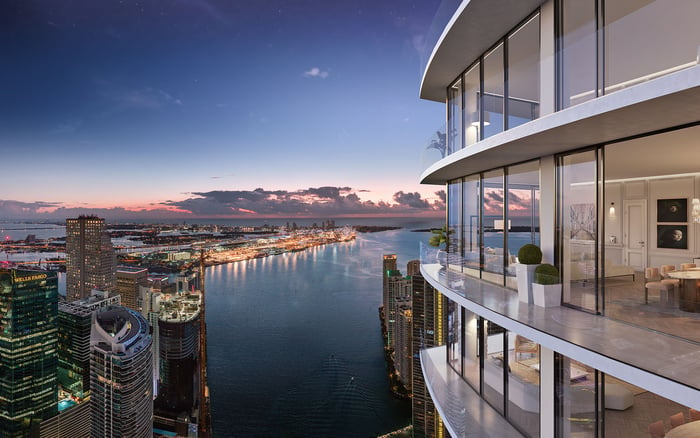
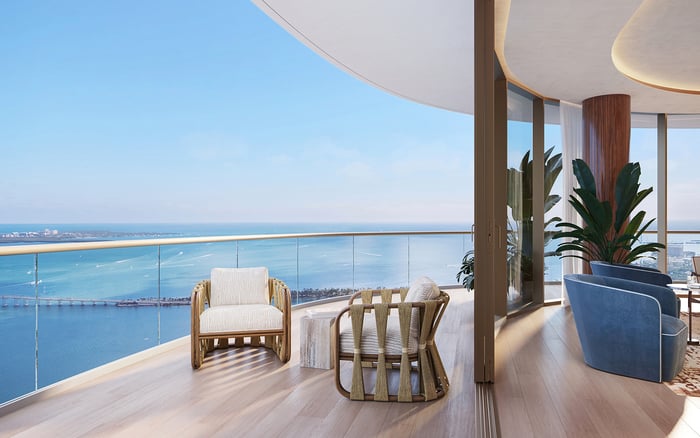
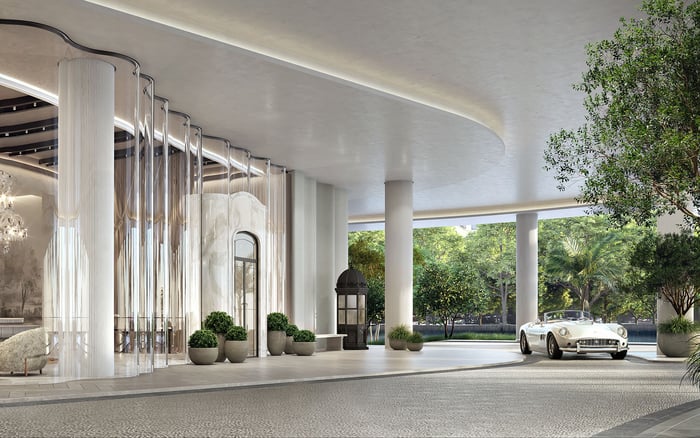
A residents-only speakeasy is not just another amenity; in South Florida’s new ultra-premium landscape it is a social filter, a brand signal, and, when executed well, a quiet accelerator of community. At Cipriani Residences Brickell, the very idea of a private, members-style bar tucked behind unmarked doors speaks to a particular kind of buyer: someone who values control over access, ambiance over spectacle, and proximity without exposure. This MILLION Luxury editorial examines what “exclusivity” really means when it’s attached to a residential speakeasy in Brickell: who it is designed for, how privacy is maintained, what operational details separate a true insiders’ room from a dressed-up lounge, and how buyers should underwrite the lifestyle and resale implications. With limited publicly disclosed specifics available, the focus here is on the practical markers that define a genuinely rare resident social space and the questions worth asking before you make it part of your purchase decision.
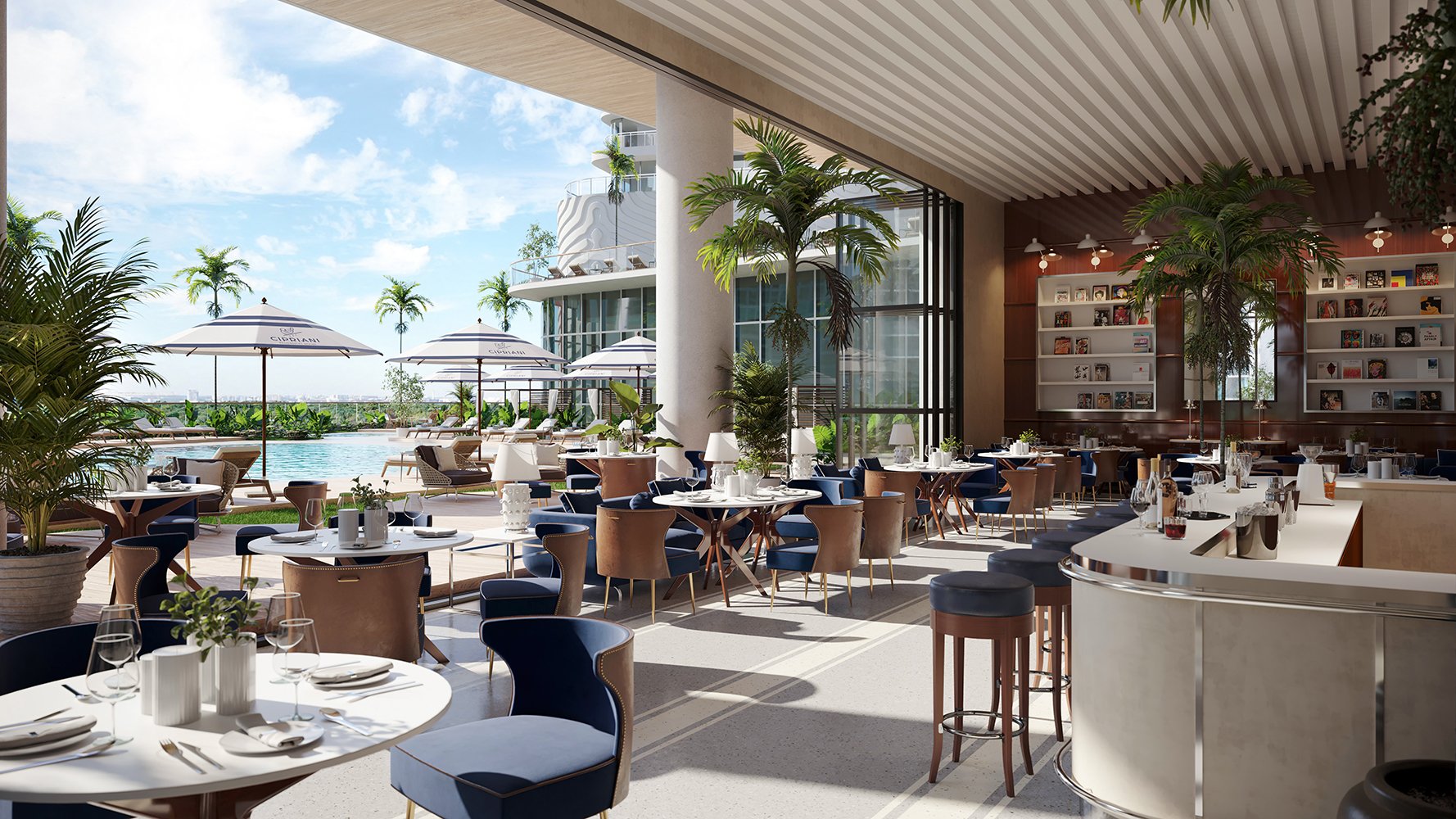
In luxury residential design, “speakeasy” is often shorthand for a mood-low light, warm finishes, and a sense of discovery. But for buyers evaluating Cipriani Residences Brickell, the more consequential phrase is “residents-only.” Exclusivity is less about atmosphere and more about the gate.
A residents-only bar within the tower can operate as a private third place-where relationships form without the friction of reservations, velvet ropes, or public visibility. For many global owners who keep South Florida as a primary or secondary home, the appeal is straightforward: step into a refined room, recognize familiar faces, and exit without turning the evening into a public outing.
At its best, this amenity is not a “party feature.” It is a controlled setting that respects routines, security, and personal brand. In Brickell, that distinction carries added weight, because the neighborhood compresses finance, dining, and nightlife into a compact, highly observed environment.
Exclusivity is often marketed like a finish selection. In reality, it’s operational. A residents-only speakeasy reads as exclusive when a few conditions are reliably true.
First, access control is non-negotiable. The room should be physically separated from public circulation and protected by a system that does not depend on informal enforcement. If the entrance is too visible, too convenient for guests of guests, or too easily “explained” to outsiders, the space becomes just another lounge.
Second, the room needs a defined social purpose. A speakeasy treated as overflow seating for events-or as spillover for the pool deck-won’t develop the intimacy that makes it worth returning to. The intent should be clear: a place to sit, talk, drink, and settle in.
Third, staffing and the service model matter as much as the design. A genuinely exclusive room maintains a calm cadence. Lighting, acoustics, and seating density should be tuned for conversation, not throughput. When buyers say they want “a private bar,” they often mean: a place where they are not rushed, recorded, or interrupted.
Brickell is a neighborhood where convenience and visibility coexist. Owners can walk to dining and entertainment, yet high-profile residents often prefer not to be seen entering the same venue repeatedly. A well-run residents-only speakeasy can reduce that exposure while preserving the experience.
This is also why comparison shopping matters. Brickell’s premium inventory increasingly competes on lifestyle programming, not only square footage. Notice how different towers signal social identity. Una Residences Brickell tends to speak to buyers drawn to waterfront presence and a more composed tempo, while Baccarat Residences Brickell signals a hospitality-forward sensibility with a polished, brand-coded atmosphere. A residents-only speakeasy at Cipriani Residences Brickell belongs in that same conversation: a lifestyle claim meant to feel “private club” without requiring a separate address.
The buyer’s question isn’t whether the claim exists. It’s whether that claim is protected by clear boundaries and consistent operations.
Even without relying on marketing language, buyers can gauge exclusivity by watching for small architectural and operational cues.
Start with circulation. Where is the entrance relative to the main lobby, elevators, and other high-traffic amenities? A room that requires a purposeful turn or a controlled threshold is more likely to remain resident-oriented than one positioned directly off a commonly used corridor.
Next, evaluate sightlines. A speakeasy that’s visible from public areas-or one that exposes patrons the moment the door opens-undercuts its own promise. Discretion is partly psychological: residents relax when they feel out of view.
Then listen. Acoustic privacy is the difference between a room that feels intimate and one that reads as an echoing extension of a lobby lounge. Luxury isn’t silence; it’s control. Voices should soften rather than bounce.
Finally, ask about staffing. Exclusivity erodes when a space is left unattended, because rules drift. A steady service presence reinforces both experience and access control.
Residents-only doesn’t have to mean unwelcoming. In the strongest buildings, it simply establishes a clear social contract.
Guest rules are decisive. If every resident can treat the speakeasy like a private event space, the room will behave like a public venue. If guests are permitted but structured-limited party size, resident present, or controlled hours-the room retains its identity.
Equally important is whether the building supports a culture of discretion. Some towers naturally cultivate a quieter, more private rhythm. Others invite a more extroverted energy. Neither is inherently better, but buyers should match the building’s social temperature to their own.
For those who want an inside-the-building social life but prefer it calm, amenities that reinforce wellness and intentional living can be a useful comparison point. House of Wellness Brickell reflects a different amenity thesis-health, recovery, and routine rather than nightlife-yet it underscores the same core idea: the most valuable amenities protect time and privacy.
A residents-only speakeasy becomes more persuasive when the hospitality DNA behind it aligns with restraint. The Cipriani name, for many luxury consumers, implies classical discipline: service that is present without being performative, and spaces that avoid trendiness in favor of longevity.
In a residential context, that restraint is essential. Real exclusivity ages well. A room built around timeless materials, comfortable seating, and controlled lighting can remain desirable across market cycles and ownership turnover. By contrast, a heavily themed “secret bar” can feel dated once novelty wears off.
Look for signs the speakeasy is conceived as a permanent lifestyle room, not a marketing set piece. The standard is repeatability: the kind of place you can use three nights in a row without feeling like you’re repeating yourself.
A private speakeasy can add intangible value, but it doesn’t automatically translate into a resale premium on its own. In South Florida, value is typically earned when an amenity supports daily life and differentiates the building for a consistent buyer profile.
For end users, the upside is immediate: less friction when entertaining, a built-in social setting, and a controlled environment that can substitute for public nightlife. For investors, the impact is more nuanced. A residents-only speakeasy can strengthen brand perception and help a building stand out, but it does not replace fundamentals like location, views, layout efficiency, and the overall amenity mix.
When comparing Brickell offerings, it can be helpful to weigh social amenities against broader positioning. 2200 Brickell, for example, may appeal to buyers who prioritize a more residential cadence within the Brickell ecosystem, while other towers compete more directly on hospitality spectacle. In that context, a residents-only speakeasy functions as a signal: the building is curating who shares the room with you, not just what the room looks like.
A discreet amenity is only as exclusive as its governance. Before assigning lifestyle value to a residents-only speakeasy, ask questions that reveal how the building actually operates.
Clarify who can enter-and how access is verified. Ask whether the room can be reserved, and under what conditions. Confirm whether it’s ever used for building-wide events or private brand activations. Ask about hours, staffing, and whether service is intended to function like a lounge or a true bar program.
Also ask what happens on peak weekends. Exclusivity is tested when demand rises. If the room becomes spillover for guests, it may still be beautiful, but it won’t remain private.
Ultimately, evaluating exclusivity is about mapping the experience to your priorities. If you want a quiet, controlled place to meet friends, the speakeasy can be a meaningful part of the decision. If you want a high-energy scene, you may find the “residents-only” constraint more limiting than luxurious.
What is a residents-only speakeasy in a condo tower? It is a private bar or lounge reserved for residents, designed for discretion and controlled access.
Does “speakeasy” always mean hidden or secret? Not necessarily; in residential settings it often refers to ambiance rather than literal secrecy.
How can a buyer verify exclusivity during a tour? Evaluate access points, sightlines, staffing, and how separated the space is from public areas.
Are guests typically allowed in residents-only bars? Often yes, but the most exclusive spaces maintain clear limits and require the resident to be present.
What operational detail most affects privacy? Consistent access control, including verified entry and attentive staffing, makes the biggest difference.
Will a private speakeasy increase resale value? It can support desirability, but value still depends primarily on fundamentals like layout, views, and location.
Is a residents-only speakeasy better than nearby public nightlife in Brickell? It is different: it prioritizes control and discretion over variety and public energy.
What makes an amenity feel “club-like” instead of just a lounge? Purposeful separation, a calm service rhythm, and a social culture that discourages crowding.
Should investors weigh this amenity differently than end users? Yes; end users may value daily utility, while investors should treat it as brand support, not a sole driver.
What is the best way to compare buildings with similar amenities? Compare governance, guest policies, and how consistently the space is operated across peak demand.
For a confidential assessment and a building-by-building shortlist, connect with MILLION Luxury.
If branded residences are on your mind — as a home or as an allocation — we would be glad to share what we are seeing, privately.
Begin a quiet conversation