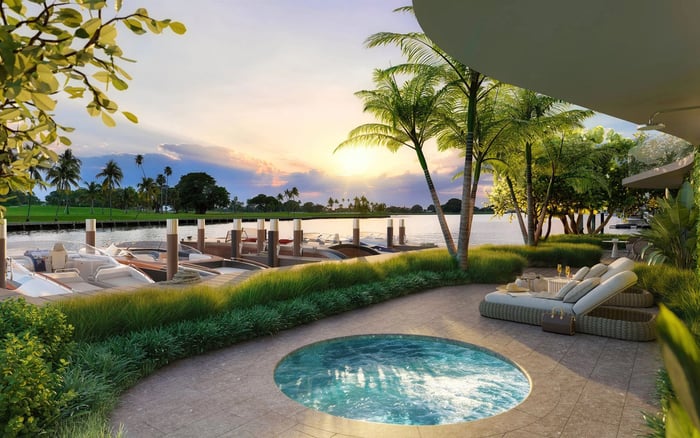
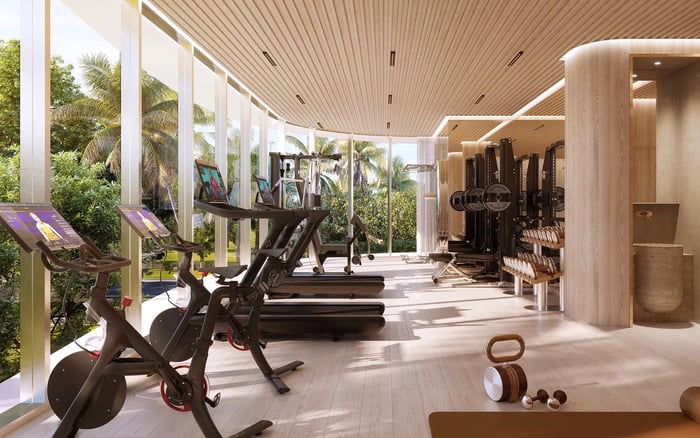
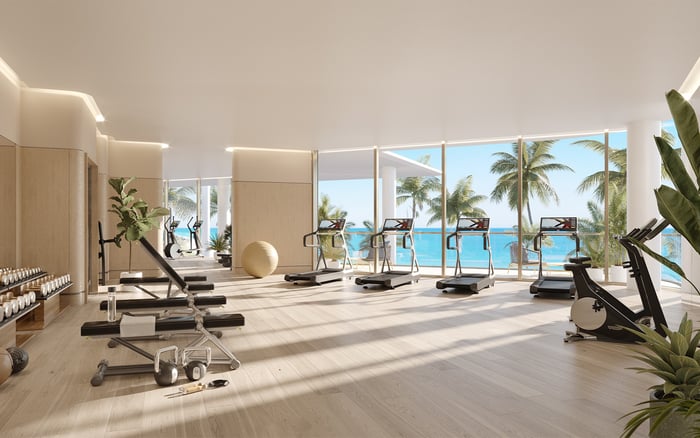
A buyer-focused guide to judging whether a wellness-branded residence will feel serene in daily life, with practical questions for spa capacity, reservations, programming, and resident privacy.
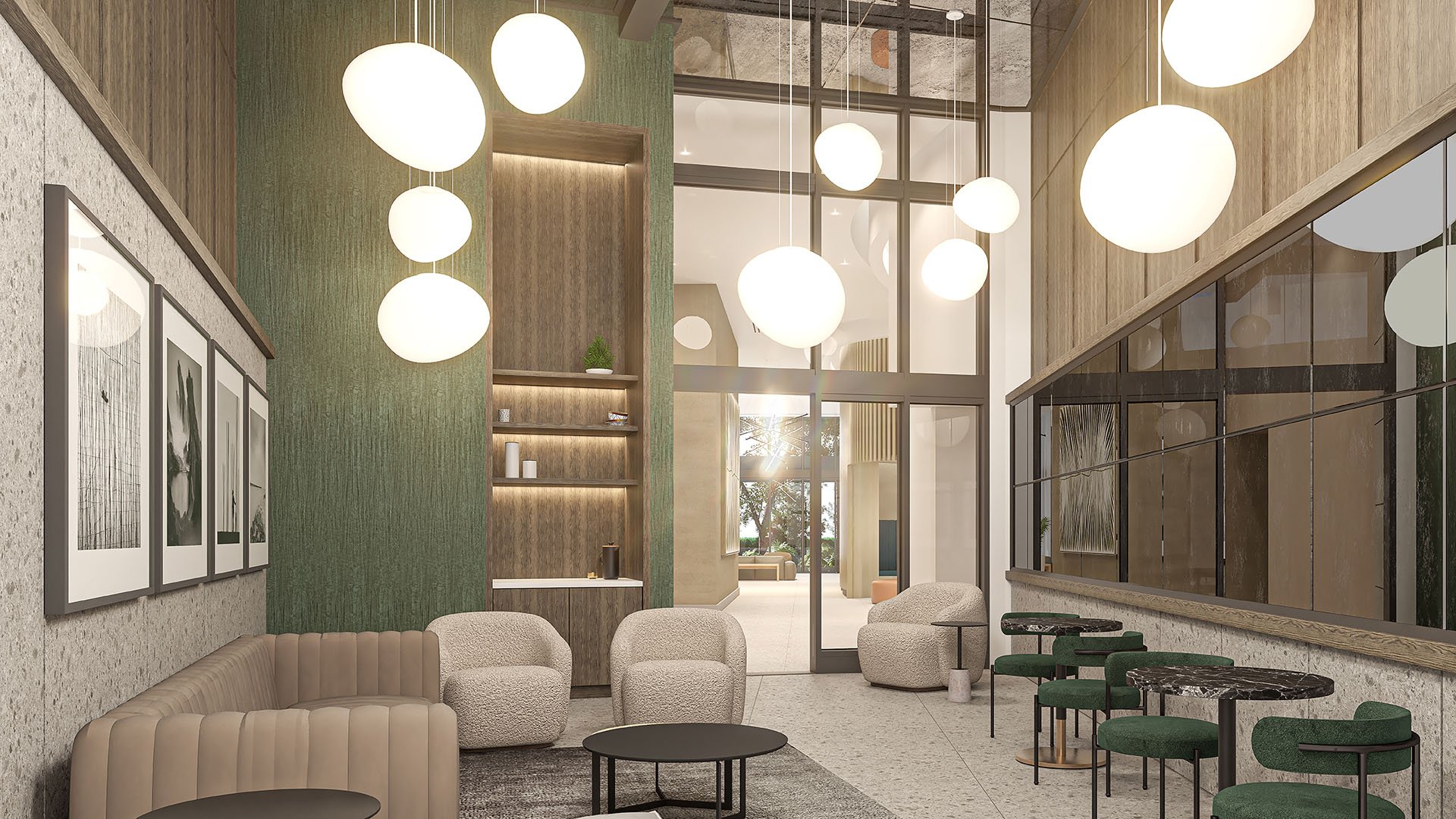
A wellness-branded residence can photograph beautifully and still disappoint the owner who expects privacy, calm, and immediate access. The difference often comes down to crowding. Not crowding in the ordinary sense of a busy gym, but the subtler friction that appears when massage rooms are booked, thermal circuits feel social rather than restorative, lockers are scarce, or the recovery lounge functions like a waiting area.
For South Florida buyers, this issue deserves close attention. Miami Beach, Brickell, Surfside, Bay Harbor Islands, Coconut Grove, and Palm Beach all offer residences where health, longevity, and restoration may be presented as part of the ownership experience. Yet the most compelling wellness address is not necessarily the one with the largest spa menu. It is the one whose spa ecosystem aligns with the building population, guest policy, operating model, and buyer lifestyle.
When reviewing residences such as The Well Bay Harbor Islands and The Well Coconut Grove, the right question is not simply what amenities exist. It is how those amenities will perform on a rainy Saturday, during season, after school pickup, before a gala, or at 7 a.m. when multiple residents may want the same window.
The first measure is proportionality. A spa that sounds expansive in a sales conversation may feel constrained if it serves too many residences, outside users, hotel guests, club members, or short-stay occupants. Ask how many residences will have regular access to the spa, whether access is resident-only, and whether any part of the wellness program is shared with nonresidential users.
The cleanest ownership experience usually comes from a clear hierarchy: residents first, guests second, and outside access either limited or nonexistent. If the project is mixed-use, hospitality-branded, or club-oriented, the operating rules matter as much as the design. A striking hammam can lose its value if it is rarely available when an owner is in residence.
Buyers should also distinguish between headline square footage and functional capacity. A spa may include a dramatic reception area, sculptural corridors, and beautiful lounges, but daily usability depends on treatment rooms, changing areas, showers, lockers, hydrotherapy stations, relaxation seating, and circulation. The quietest spas manage movement gracefully, so residents are not crossing paths in ways that make the experience feel exposed.
Wellness buyers often tour the most photogenic spaces first: the treatment suite, the sauna, the plunge area, the meditation room. But the reservation system is where luxury either holds or collapses. Ask how appointments are booked, how far in advance residents may reserve, whether peak-time limits apply, and whether there are penalties for no-shows.
A strong system protects resident access without making the property feel bureaucratic. The goal is not unlimited use by everyone at once. The goal is dependable use when it matters. Look for rules that balance freedom with predictability: reasonable advance booking windows, clear cancellation standards, and priority for owners over guests.
For buyers considering urban wellness living in Brickell, this becomes especially important. In a vertical neighborhood with intense weekday rhythms, residences such as The Residences at 1428 Brickell should be evaluated not only for spa design, but for how the amenity schedule supports residents who live by calendar discipline. A spa that cannot absorb morning and evening demand may become decorative rather than transformative.
A residence may have enough treatment rooms and still feel crowded after the treatment ends. Recovery areas are often the hidden constraint. If a relaxation lounge has limited seating, if thermal areas are narrow, or if locker rooms require waiting, the overall experience can feel hurried.
Ask where residents go before and after services. Can someone arrive early without sitting in a public corridor? Is there a quiet transition between treatment and elevator? Are couples, families, and solo residents managed in separate ways? Does the spa support silence, or is the atmosphere likely to become conversational at peak times?
The most successful wellness environments understand pacing. They create buffers between arrival, changing, treatment, hydrotherapy, and departure. Crowding is not only a numbers issue. It is an acoustics issue, a sightline issue, a staffing issue, and a choreography issue.
A private presentation rarely reveals crowding. The best buyer intelligence often comes from visiting when the property is least staged and most alive. If the residence is complete, tour during weekend mornings, late afternoons, and seasonal periods when owners are likely to be present. If the residence is under development, ask for projected operating rules in practical terms rather than brand language.
For a coastal buyer comparing Miami Beach lifestyle options, wellness expectations can vary significantly between buildings. A beachfront property such as 57 Ocean Miami Beach may appeal to buyers who see the beach itself as part of the recovery ritual, while a more internally programmed wellness concept may place greater emphasis on spa scheduling, curated treatments, and resident programming. Neither model is automatically superior. The question is which one will feel effortless to use.
In Surfside, buyers evaluating The Perigon Miami Beach may bring a different expectation again: privacy, architecture, ocean proximity, and refined service working together. In that context, spa crowding should be assessed as part of the entire arrival sequence, from valet to elevator to treatment room to terrace.
Guest access can be the difference between sanctuary and soft membership club. Many owners want the ability to bring family, visiting friends, or a trainer. That flexibility has value. But unlimited guest access can dilute the resident experience, particularly in buildings with seasonal occupancy swings.
Ask whether guests may use the spa without the resident present, whether fees apply, whether blackout periods exist, and whether certain areas remain resident-only. Also ask whether renters, if permitted, receive identical wellness privileges. The answer may affect both lifestyle and long-term value perception.
A discreet, well-managed guest policy does not feel restrictive. It feels protective. It preserves the atmosphere buyers are paying for, especially in buildings where wellness is central to the identity rather than an accessory.
Crowding is amplified when staffing is thin. Even a beautifully scaled spa can feel busy if treatment turnover is slow, attendants are absent, towels and lockers are not refreshed, or residents must wait to check in. Ask who operates the spa, whether specialists are full-time or scheduled by appointment, and how the building handles high-demand periods.
Staffing also affects privacy. A well-trained team can manage arrivals, stagger appointments, guide guests, and preserve silence without making residents feel monitored. In ultra-premium residences, this is where hospitality becomes invisible: the resident senses ease, not effort.
Before buying, define how you will actually use the wellness program. A buyer who wants a daily sauna and cold plunge has different needs from one who wants occasional massage, private training, or post-travel recovery. A family will evaluate changing areas and guest privileges differently from a single owner who prizes solitude.
The best decision comes from aligning the building with personal rituals. If you plan to use the spa three times a week, treat access as core infrastructure. If you travel often and use the residence seasonally, focus on booking reliability when you are in town. If wellness is more about resale positioning than daily use, evaluate whether the brand story is supported by a credible operating plan.
South Florida’s most desirable residences increasingly compete on quality of life, not merely views and finishes. The next level of due diligence is asking whether the amenities will remain calm after move-in. A true wellness residence should make the owner feel that time has expanded. If the spa introduces friction, the brand promise has failed.
What is spa crowding in a wellness-branded residence? It is the loss of calm caused by limited access, busy recovery areas, overbooked treatments, or too many users sharing the same wellness spaces.
Should I ask for the number of residences served by the spa? Yes. The relationship between building population and usable spa capacity is one of the clearest indicators of future comfort.
Are larger spas always better? Not necessarily. Layout, staffing, booking rules, and resident priority often matter more than total square footage.
How can I evaluate a spa before the building is complete? Ask for operating rules, projected access policies, treatment-room counts, guest privileges, and how peak-time demand will be managed.
Why does the guest policy matter? Guest access can enrich ownership, but if it is too broad, it may reduce privacy and make wellness areas feel less residential.
What time should I tour an existing building? Visit during likely peak periods, such as weekend mornings or late afternoons, to understand how the spa feels when residents are active.
Does a branded wellness concept guarantee better access? No. Branding may signal intent, but access depends on capacity, rules, staffing, and the way the property is operated.
What is the most overlooked spa feature? Recovery space is often overlooked. A treatment room is only part of the experience if the lounge, lockers, and thermal areas feel crowded.
Should renters have the same spa access as owners? That depends on the building. Buyers who prioritize quiet should understand exactly how rental privileges affect amenity use.
What is the best way to shortlist comparable options for touring? Start with location fit, delivery status, and daily lifestyle priorities, then compare stacks and elevations to validate views and privacy.
For a discreet conversation and a curated building-by-building shortlist, connect with MILLION.
If branded residences are on your mind — as a home or as an allocation — we would be glad to share what we are seeing, privately.
Begin a quiet conversation