A buyer-focused guide to reading Coconut Grove waterfront property through the lenses of view quality, insurance readiness, and building quality.
Coconut Grove waterfront living is not a single proposition. It is a spectrum of sightlines, building standards, association strength, privacy, storm readiness, and daily ease. For affluent buyers, the emotional appeal is immediate: water, light, trees, terraces, and a softer rhythm than denser urban corridors. Yet the smartest purchase is not made from the terrace alone. It is made by understanding what the view is worth, what the building is built to withstand, and what ownership will require over time.
In search terms, Coconut Grove may appear to be a simple location filter. In practice, it demands more nuance. One residence can feel close to the water without delivering a durable water experience. Another may have a quieter approach, stronger building fundamentals, and a more practical ownership profile. The difference is often revealed only when the buyer looks beyond finishes and studies orientation, exposure, elevation context, association culture, and the building’s maintenance posture.
That is why buyers comparing residences such as Four Seasons Residences Coconut Grove, Park Grove Coconut Grove, and boutique alternatives nearby should begin with a disciplined framework rather than a preference for the most dramatic first impression.
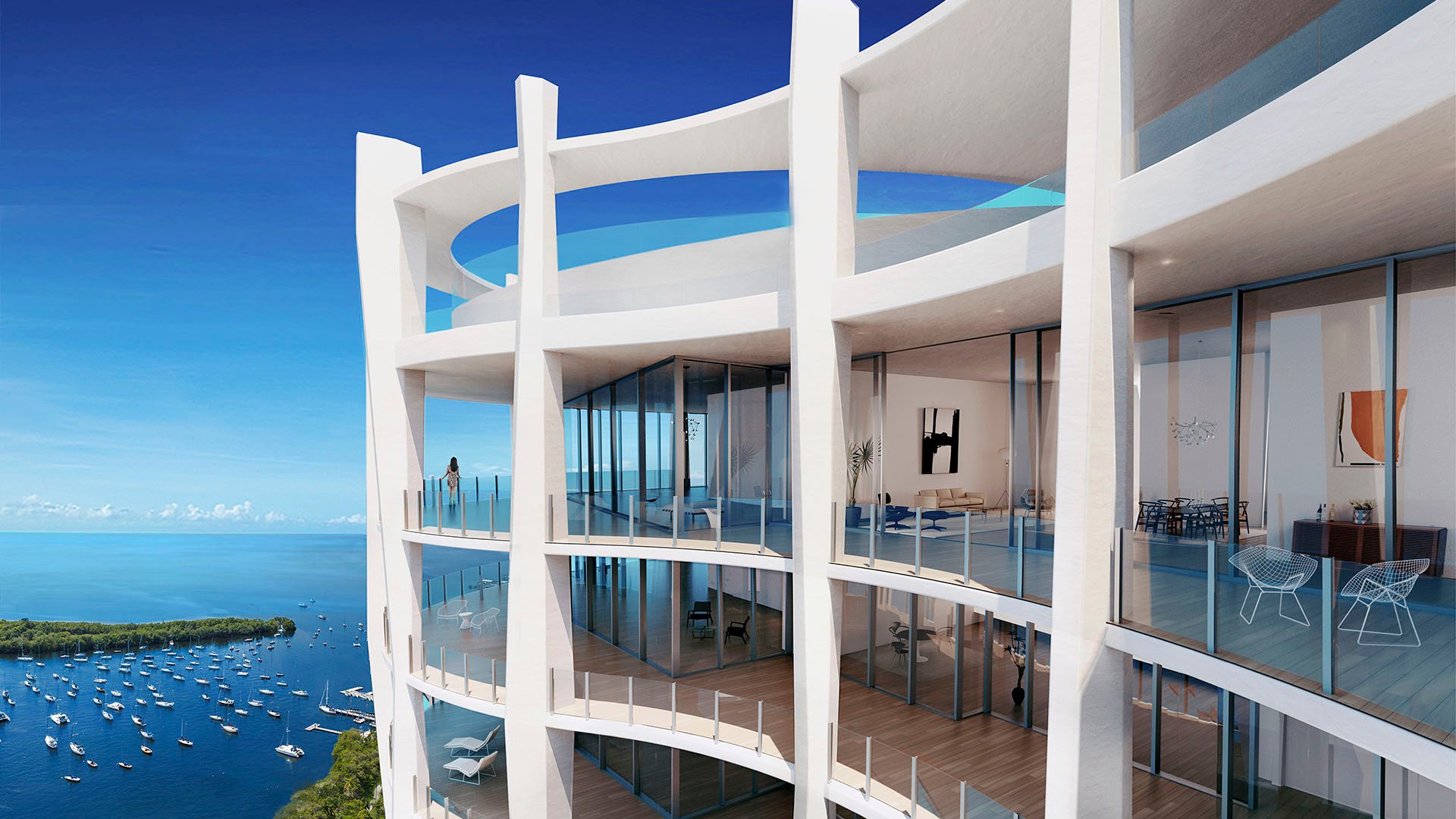
Waterview is not a single category. Buyers should separate beauty from permanence, privacy from exposure, and terrace enjoyment from interior experience. Some views are cinematic only at certain times of day. Others work quietly from the primary suite, living room, kitchen, and outdoor areas, creating a more complete residential experience.
The first question is not simply, “Can I see water?” It is, “How much of my daily life is shaped by the water?” A long view from one corner of a balcony may photograph well, but a broader view plane from the main living spaces can feel more valuable in everyday use. Buyers should walk the residence at different moments when possible, paying attention to glare, heat, privacy, nearby activity, and how the view changes when seated rather than standing.
The second question is whether the view depends on conditions outside the unit owner’s control. Mature landscaping, neighboring parcels, future maintenance choices, and common-area decisions can all influence the lived experience of a waterfront home. In the luxury segment, the best view is not just beautiful. It is legible.
For buyers who value a wellness-oriented interpretation of the Grove lifestyle, The Well Coconut Grove may enter the comparison set not simply as a residence, but as a way to consider how indoor calm, outdoor access, and service expectations align with the water-oriented life buyers are seeking.
Waterfront ownership in South Florida requires a sober insurance conversation before an offer becomes emotionally difficult to reconsider. Buyers should ask early for the insurance picture at both the individual residence and building or association level. This is not only about premium cost. It is about coverage structure, deductibles, exclusions, reserves, claims history, and how the building’s management communicates risk.
The most sophisticated buyers treat insurance as part of the acquisition architecture. They ask who maintains what, how the association funds major needs, whether documentation is organized, and how quickly the relevant parties can provide clear answers. When answers are slow, vague, or incomplete, that may not be a reason to walk away automatically, but it is a reason to slow down.
A waterfront residence can be compelling and still require a more conservative ownership budget. That budget should include not only visible carrying costs but also the potential for changing premiums, special assessments, maintenance cycles, and upgrades to building systems. The goal is not to avoid waterfront exposure altogether. The goal is to own it knowingly.
Buyers considering new-construction opportunities should not assume that newness alone resolves the insurance question. Newer buildings may offer modern systems and current design expectations, but each property still deserves its own review. Documentation, governance, construction quality, and long-term maintenance philosophy matter as much as the sales presentation.
In Coconut Grove, building quality is not only about marble, millwork, or the name on the lobby. The deeper question is how the structure performs, how systems are maintained, and how the residence will age in a waterfront environment. Luxury buyers should look at windows and doors, terrace drainage, mechanical systems, waterproofing, common-area upkeep, and the practical ease of service access.
A strong building feels calm. Elevators operate with consistency. Lobbies and corridors show maintenance discipline. Staff understand protocols. Mechanical areas are not an afterthought. Management can answer questions without theatricality. These details may not be as seductive as a sunset terrace, but they often determine the quality of ownership.
Boutique-scale residences such as Arbor Coconut Grove can appeal to buyers who prefer a more intimate residential rhythm, while larger luxury settings may offer a different sense of service depth and amenity breadth. Neither approach is inherently superior. The right choice depends on how the buyer defines privacy, convenience, staffing, and long-term control.
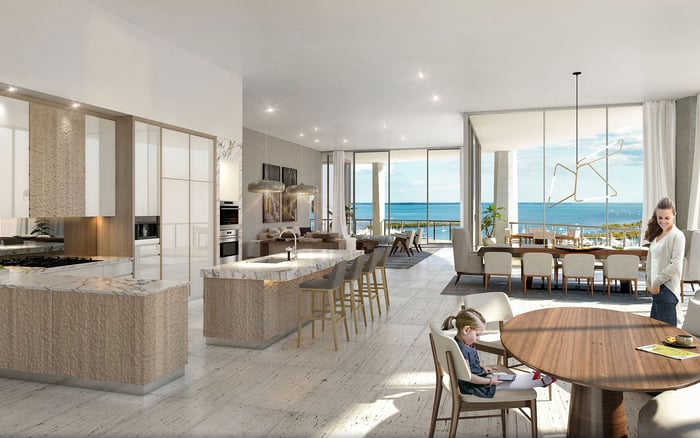
Buyers should also study the residence itself. Are ceilings, room proportions, and terrace dimensions aligned with how the buyer actually lives? Is the kitchen designed for entertaining, daily cooking, or display? Does the primary suite feel protected from guest areas? Can art, lighting, and furniture be placed without fighting the architecture? Waterfront living is at its best when the floor plan supports serenity rather than simply framing scenery.
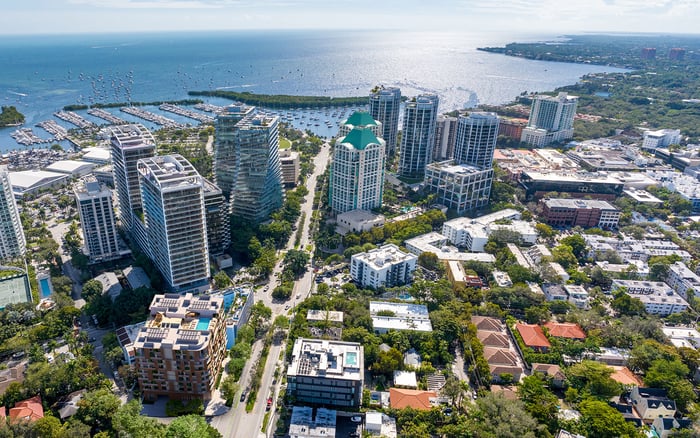
Coconut Grove attracts buyers who want atmosphere without surrendering sophistication. The most successful purchases combine a feeling of retreat with the practical infrastructure of a well-run building. This is why a buyer should compare not only the unit, but the approach, arrival sequence, staff culture, parking experience, storage, pet policies, guest flow, and ease of daily errands.
Residences such as Mr. C Tigertail Coconut Grove and Vita at Grove Isle may sit in different buyer conversations, yet both illustrate the importance of looking beyond a single checklist. The Grove buyer is often choosing a lifestyle composition: water, greenery, privacy, design, service, and neighborhood intimacy.
The highest-value decision is rarely the most impulsive one. It is the purchase in which the buyer understands tradeoffs and still feels confident. A slightly less dramatic view with stronger building quality may outperform a more photogenic residence with unresolved ownership questions. A boutique building may feel personal and peaceful, while a larger building may offer broader services. A new residence may feel effortless, while an established one may reveal its strengths through a proven ownership culture.
Before choosing a Coconut Grove waterfront residence, buyers should request and review the materials that clarify ownership. That may include association documents, budgets, reserve information, insurance materials, maintenance history, rules, renovation policies, and any available building condition information. The purpose is not to turn a lifestyle purchase into a legal exercise. It is to protect the lifestyle the buyer is paying for.
A private tour should be conducted with patience. Arrive through the same path residents use. Observe staff interaction. Listen for noise between rooms and from adjacent areas. Stand on the terrace and sit inside. Test how the residence feels with doors closed. Study natural light. Consider furniture placement and art walls. Ask how deliveries, guests, service providers, and seasonal absences are handled.
Finally, compare the residence to the buyer’s real use case. A primary residence, pied-a-terre, family base, and seasonal retreat each require different priorities. Waterfront living can be deeply rewarding, but only when the property supports the buyer’s actual pattern of life.
What matters most when buying Coconut Grove waterfront property? The strongest purchases balance view quality, building fundamentals, insurance clarity, and lifestyle fit rather than focusing on scenery alone.
Is every waterview residence valued the same way? No. Buyers should examine how visible, private, and usable the water view is from the main living spaces and terrace.
When should insurance be reviewed? Insurance should be discussed early, before negotiations become emotionally or financially committed.
Does new construction automatically mean lower ownership risk? No. Newer buildings still require review of documentation, systems, governance, and maintenance planning.
Why does association quality matter? A well-managed association can influence maintenance, communication, budgeting, and the long-term ownership experience.
Should buyers prioritize a larger building or a boutique building? The answer depends on privacy preferences, service expectations, amenity needs, and tolerance for shared decision-making.
How should buyers compare Coconut Grove projects? Compare daily living patterns, not just finishes, including arrival, parking, staff, terrace use, views, and service access.
Are waterfront carrying costs predictable? They should be modeled conservatively, since insurance, maintenance, reserves, and association decisions can change over time.
What role does architecture play in long-term value? Strong architecture supports light, proportion, privacy, furniture placement, and a residence that feels composed over time.
What is the best mindset for a Coconut Grove waterfront buyer? Be romantic about the setting, but disciplined about the building, documentation, and total ownership picture.
For a tailored shortlist and next-step guidance, connect with MILLION.
If branded residences are on your mind — as a home or as an allocation — we would be glad to share what we are seeing, privately.
Begin a quiet conversation