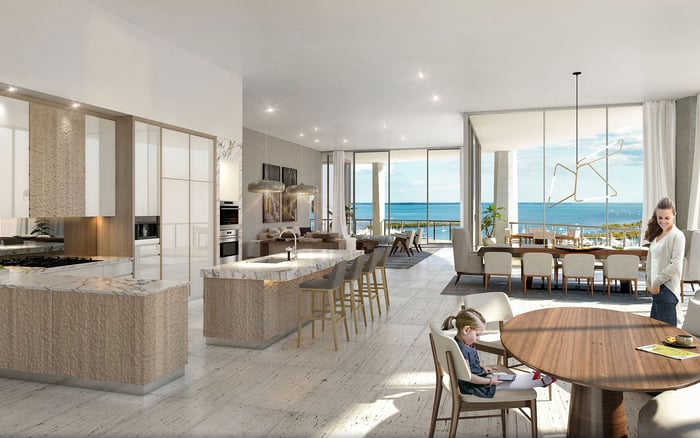
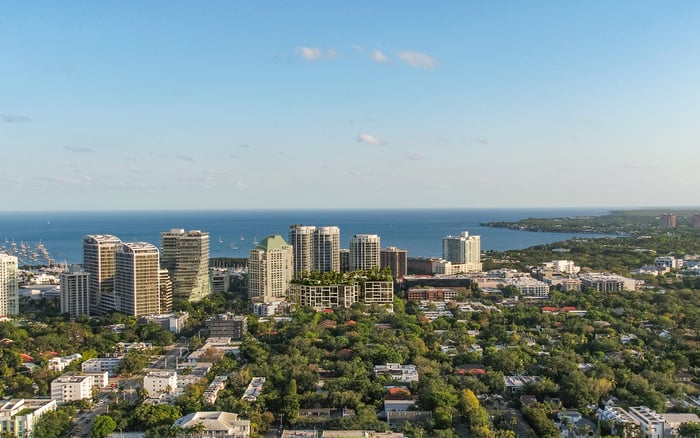
In Coconut Grove, the most enduring form of luxury is not spectacle but shade: mature canopy, layered gardens, and architecture that reads as an extension of the landscape. Botanical architecture is the Grove’s natural dialect, translating into deep terraces, porous facades, and residences designed to live with humidity, breezes, and filtered light. This editorial looks at five new-construction projects in Coconut Grove that align with that sensibility, then outlines how to evaluate plant-forward design in a way that matters for ownership: privacy, maintenance, resilience, and long-term desirability.
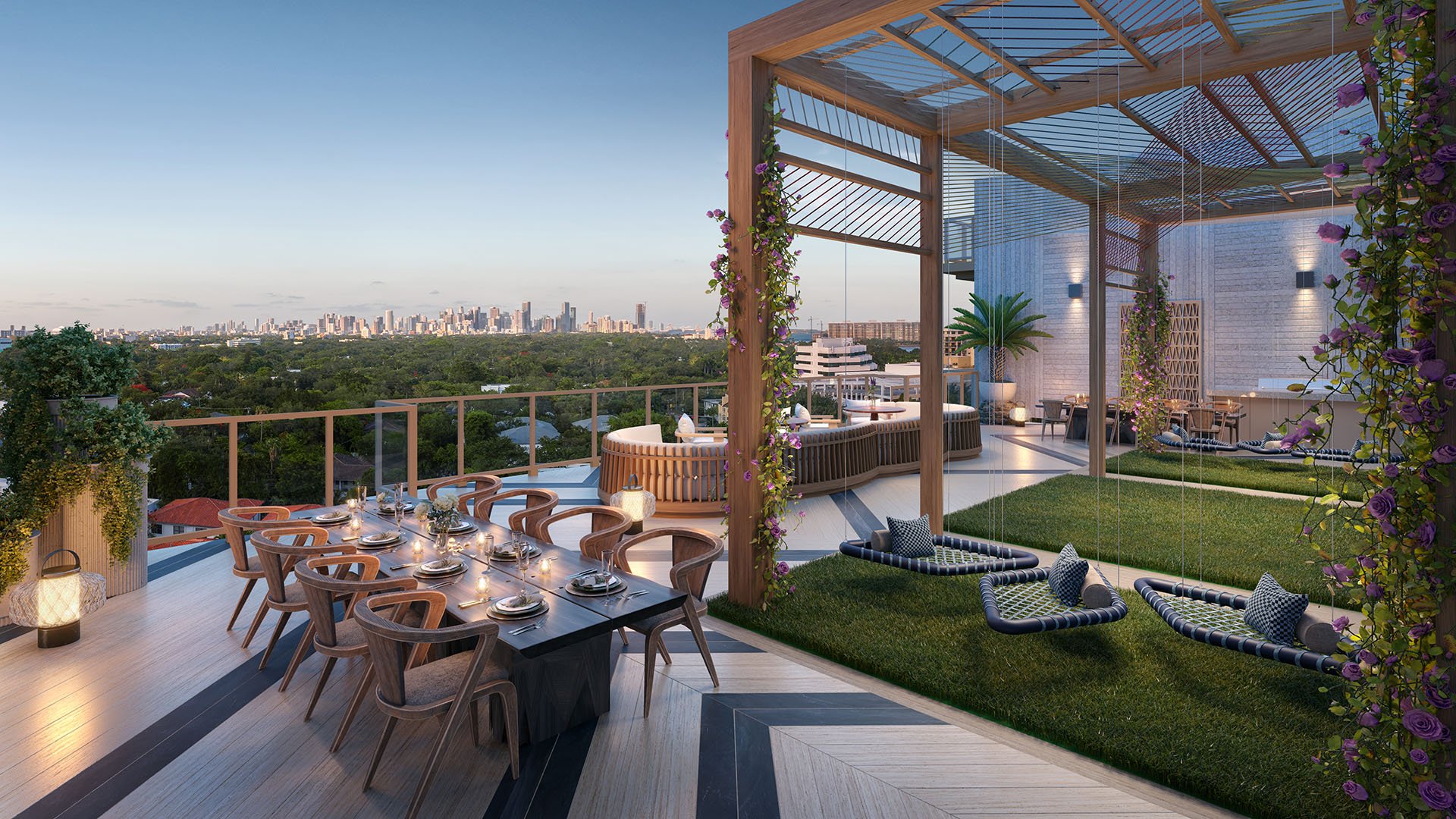
Coconut Grove has always prized a particular kind of luxury: discreet, verdant, and deeply livable. Here, botanical architecture isn’t an aesthetic add-on-it’s a performance strategy. Landscape becomes a functional layer of the building, shaping light, cooling outdoor rooms, softening sightlines, and delivering privacy without walls.
In practical terms, plant-forward design in the Grove often shows up as deep balconies and terraces, screened courtyards, shaded arrival sequences, and facade rhythms that encourage cross-breezes. The goal isn’t a theatrical “vertical garden,” but a coherent relationship between structure and canopy-architecture that feels embedded in its setting rather than placed on top of it.
For buyers, the value proposition is straightforward: botanical architecture can elevate everyday living while safeguarding the more delicate elements of luxury-privacy, comfort, and a sense of calm.
Botanical architecture is as much about restraint as it is about abundance. The projects below are ranked for how naturally they align with Coconut Grove’s landscape-first identity, and for how convincingly they translate greenery into usable space.
1. The Well Coconut Grove - wellness-led living with a garden mindset
A botanical sensibility pairs naturally with a wellness narrative: shaded outdoor moments, restorative courtyards, and a quieter transition from street to residence. The Well Coconut Grove reads as an especially compatible fit for the Grove, where buyers often prioritize daily ritual and indoor-outdoor ease over flash.
For the design-minded purchaser, the key question is whether the landscaping functions as an integrated system-planting that frames views, buffers neighbors, and reinforces privacy on terraces.
2. Four Seasons Residences Coconut Grove - polished service culture in a tropical setting
In Coconut Grove, branded luxury tends to land best when it feels locally calibrated. Four Seasons Residences Coconut Grove signals a high-comfort lifestyle where botanical elements typically do double duty: establishing an elevated arrival experience while making outdoor living feel genuinely resortlike.
For buyers who entertain, the botanical layer is most compelling when it creates distinct outdoor “rooms,” not just decorative planting-shade that keeps you outside longer, and landscape that improves the acoustics and intimacy of open-air spaces.
3. Park Grove Coconut Grove - a modern landmark that still reads as garden-forward
A Grove icon doesn’t need to be quaint. The strongest modern towers here still honor the neighborhood’s defining asset: its green volume. Park Grove Coconut Grove is emblematic of that approach, where contemporary form is tempered by landscape and terrace life.
At this scale, botanical architecture succeeds when it makes height feel human-layered amenity decks, planted edges that create privacy, and outdoor circulation that feels more like a garden promenade than a corridor.
4. Opus Coconut Grove - boutique scale, intimate outdoor moments
Smaller, design-driven buildings often benefit from proportion: courtyards can feel more personal, and planting can be curated to read as a private garden rather than a public gesture. Opus Coconut Grove aligns with a buyer profile that values calm and specificity.
The most persuasive botanical moves at the boutique level are the ones you’ll use every day: a shaded drop-off, planted thresholds, and terraces designed for real furniture-not a token chair.
5. Arbor Coconut Grove - nature-driven cues in a residential expression
“Botanical” can mean many things, but the most authentic version supports livability: cooling shade, discretion, and a softened street edge. Arbor Coconut Grove sits comfortably within the Grove’s preference for greenery as an organizing principle.
For end users, the test is whether the landscaping feels durable and deliberate-species choices that tolerate the local climate, planting that frames and screens, and outdoor spaces that feel protected rather than exposed.
In a market where nearly every new project mentions nature, buyers should evaluate botanical architecture the way they would evaluate glazing or structural systems: as a set of decisions with real consequences.
First, look for depth. Deep terraces and shaded loggias aren’t just lifestyle features; they’re microclimate tools. They reduce heat gain, protect exterior finishes, and extend the hours when outdoor space is genuinely comfortable.
Second, look for hierarchy. The strongest botanical buildings choreograph greenery from public to private: a planted arrival that sets the tone, a courtyard or garden layer that calms the building’s core, and private outdoor rooms that operate as true extensions of the interior.
Third, look for intention around privacy. Coconut Grove buyers rarely want to live on display. Planting should be positioned to shield sightlines, soften adjacency, and create discretion on terraces.
Botanical architecture can be a long-term asset-but only when it’s maintained and engineered with the same seriousness as the rest of the building.
Ask how the landscape is irrigated, and what kind of access exists for maintenance without disrupting residents. Confirm that planters, drains, and waterproofing are treated as critical systems. A beautifully planted terrace loses its appeal quickly when water management becomes an afterthought.
Resilience matters as well. In coastal South Florida, landscaping contends with wind, intense sun, and periodic salt exposure. A sophisticated botanical concept anticipates those conditions through appropriate species selection and practical detailing.
Finally, consider desirability. The Grove’s enduring appeal isn’t just location-it’s atmosphere. Projects that feel settled into a garden context tend to age more gracefully than those chasing the look of the moment.
When executed well, botanical architecture improves the daily ergonomics of luxury.
It reframes arrival, making the transition from city to home feel quieter. It supports indoor-outdoor living that’s usable, not symbolic. And it shapes light-softer mornings, calmer afternoons, and fewer harsh reflections in glass-dominant interiors.
For entertaining, it can create a spatial sequence that reads as effortless: a shaded outdoor threshold, a comfortable terrace, and a view that feels curated by planting rather than exposed by design.
Before committing, align the romance of green living with the practical realities of ownership.
Confirm that terraces are proportioned for real use. Evaluate privacy from neighboring buildings and from across the street. Consider wind exposure on higher levels, and whether planting choices reflect that reality.
Also ask yourself whether the “botanical” narrative is architectural or decorative. True botanical architecture shows up in the building’s massing, shade strategy, and outdoor-room planning. Decorative greenery is often confined to the lobby and marketing imagery.
In Coconut Grove, the difference isn’t academic. It determines whether a building will feel like the Grove in ten years-or simply like a new building that happens to be located there.
What is botanical architecture in a Coconut Grove context? It is architecture that treats landscape as a functional layer, shaping shade, privacy, and livable outdoor rooms.
Does botanical design usually mean higher maintenance? Often yes, but well-designed systems anticipate irrigation, drainage, and access so upkeep feels seamless.
Are terraces more important than “green walls”? For most owners, yes. Deep, shaded terraces typically deliver more comfort and daily utility than vertical displays.
How can planting improve privacy in a condo? Strategic screening softens sightlines and creates separation on terraces without relying on hard barriers.
What should buyers ask about planters and waterproofing? Ask how water is managed and maintained, and whether planters are engineered as core building systems.
Will botanical architecture help with heat and glare? It can. Shade and layered planting can reduce direct sun exposure and make outdoor spaces usable longer.
Is botanical architecture only for low-rise boutique buildings? No. Taller buildings can use planted decks, terrace edges, and layered amenity levels to humanize scale.
How do I tell if the greenery is real or just marketing? Look for it in the building’s form and outdoor-room planning, not only in the lobby or renderings.
Does Coconut Grove’s identity favor this style long-term? Yes. The neighborhood’s value is tied to canopy, shade, and a quieter, garden-oriented lifestyle.
Which projects should I explore first if I want a plant-forward lifestyle? Start with buildings where landscape and outdoor living are central to the concept, then compare terrace usability and privacy.
To compare the best-fit options with clarity, connect with MILLION Luxury.
If branded residences are on your mind — as a home or as an allocation — we would be glad to share what we are seeing, privately.
Begin a quiet conversation