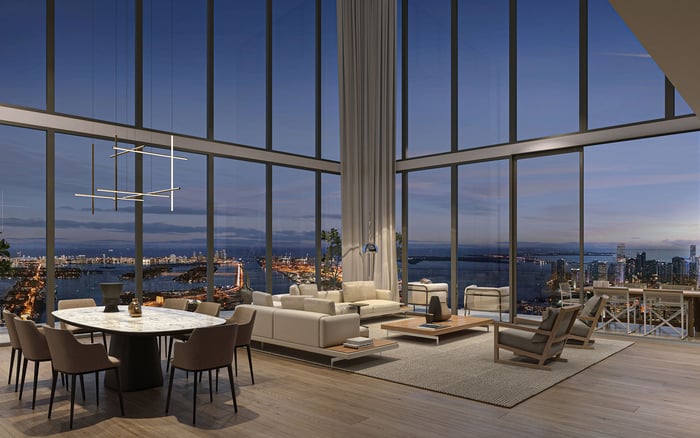
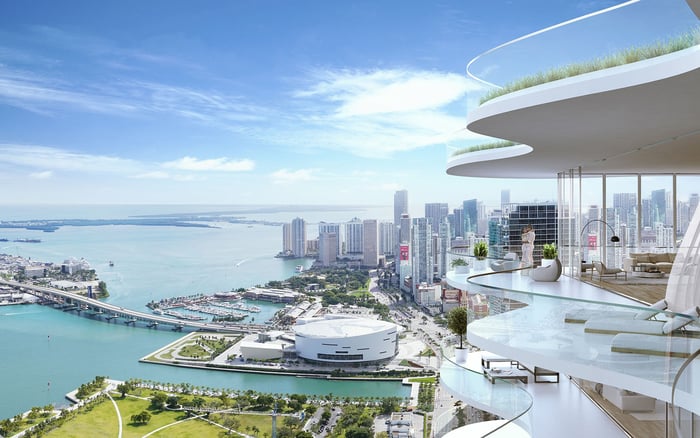
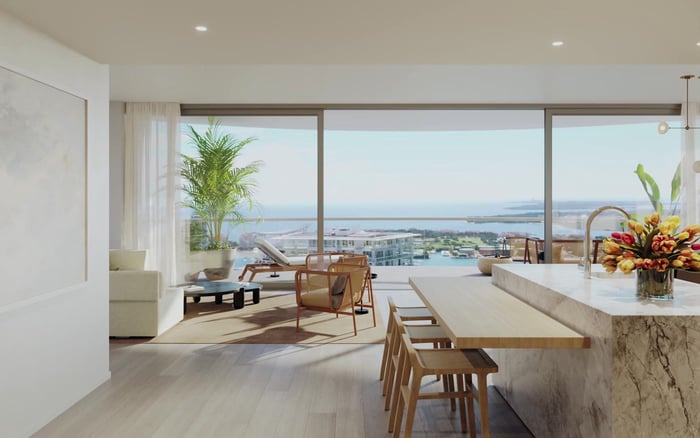
A buyer-focused guide to judging whether a South Florida penthouse terrace is genuinely usable, protected, and proportionate to the lifestyle premium it commands.
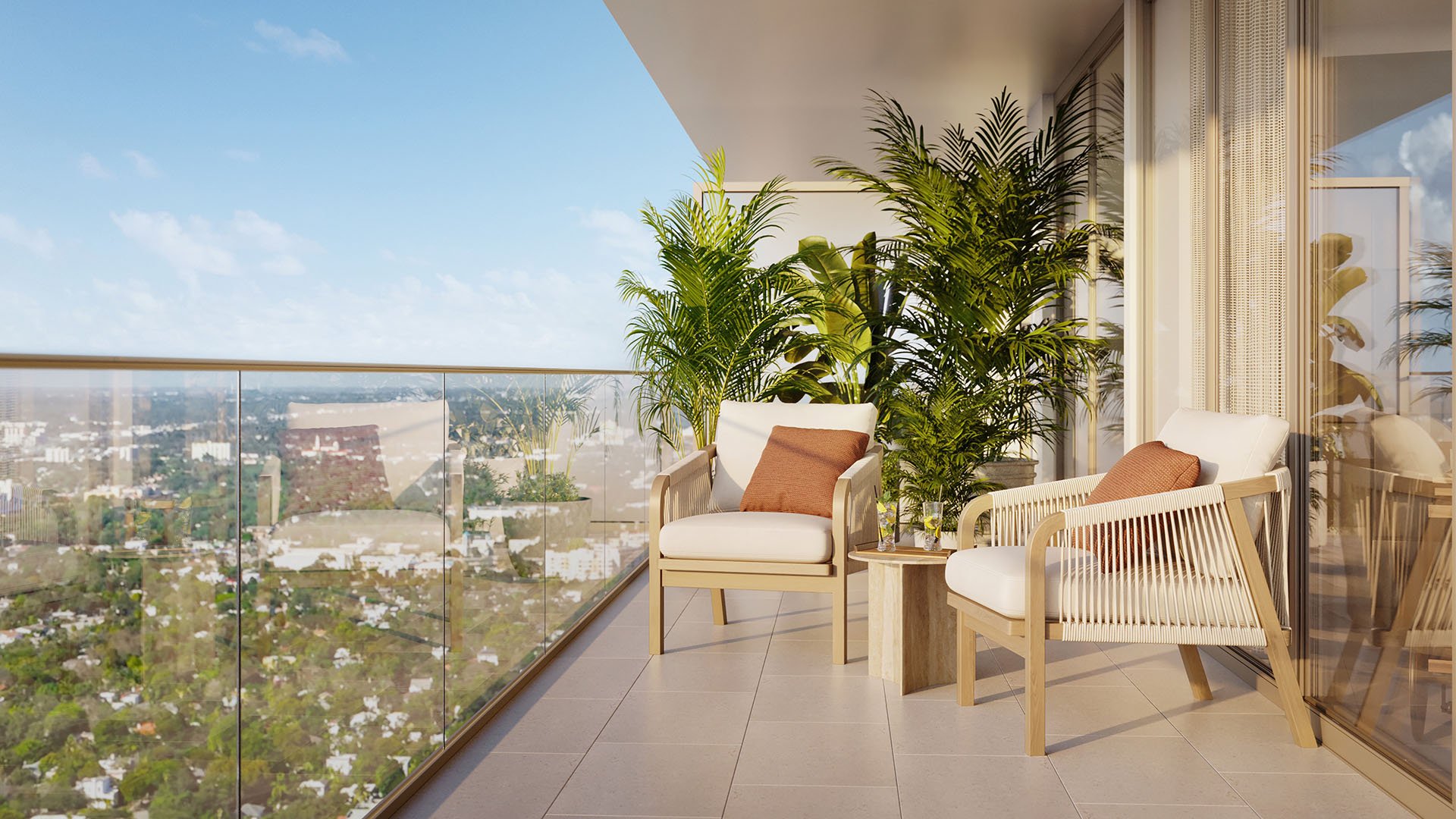
In South Florida, a penthouse terrace is never merely exterior square footage. It is a second living room, a dining room in the sky, a sunrise observatory, and often the emotional reason a buyer chooses one residence over another. Yet the terrace premium retains its power only when the space can be used with ease. Wind protection is what turns a dramatic outdoor platform into an everyday luxury.
The distinction is subtle. A terrace may photograph beautifully, frame the ocean, and still feel too exposed for morning coffee, dinner service, or a quiet evening conversation. Another may be more restrained in size yet better shielded by architecture, setbacks, parapets, sidewalls, landscape elements, or the building’s own massing. For a serious penthouse buyer, the question is not simply how large the terrace is. The better question is how often it will feel comfortable.
The most desirable exposure is not always the most livable exposure. Oceanfront outlooks can be magnificent, but a fully exposed edge may perform very differently from a terrace wrapped by building corners or partially recessed into the residence. In Miami Beach, Brickell, Sunny Isles, Fort Lauderdale, Palm Beach, and other coastal markets, buyers should study how a terrace receives prevailing breezes, direct sun, reflected heat, and storm-season gusts.
A protected terrace often has a layered quality. It may offer a primary view corridor while using side returns, overhangs, or architectural fins to soften crosswinds. It may have more than one outdoor zone, allowing the owner to choose a calmer corner at breakfast and a more open edge at sunset. The best layouts do not force every activity into the most exposed point of the plan.
For search clarity, many buyers place this topic within penthouse, terrace, balcony, high-floors, oceanfront, and Miami Beach priorities, but the real evaluation is more nuanced than any label.
A terrace should be reviewed with the same discipline as an interior plan. Begin with depth. A narrow ledge can be pleasant for standing, but it may not support dining, lounging, circulation, planters, and service without feeling crowded. A deeper terrace, especially one with meaningful wall surface and more than one furniture zone, tends to perform better in wind because seating can be pulled away from the outer rail.
Corners deserve special attention. They can deliver cinematic views, but they may also accelerate wind. A recessed corner, by contrast, can create a surprisingly calm pocket. Look for usable wall length, sheltered door locations, and places where furniture can sit without blocking access. If the terrace wraps around the residence, ask whether each segment has a distinct purpose or whether much of the space is ornamental.
Also study the relationship between indoor rooms and exterior zones. A terrace outside a primary suite may call for privacy and quiet. A terrace off the great room may need dining, entertaining, and direct service from the kitchen. A terrace accessed only through a secondary room may be less useful than its square footage suggests.
Wind protection lives at the edges. Glass railings preserve views, but they do not always create the same sense of enclosure as taller parapets, partial walls, or architectural side returns. The most successful designs balance openness with a feeling of containment. A buyer should stand, sit, and move through the terrace rather than judge it from the threshold.
Door systems matter as well. Large sliding or pocketing glass panels can create a resort-like indoor-outdoor connection, but their performance depends on alignment, sealing, hardware quality, and ease of operation. A terrace that requires heavy effort to open, close, or secure may be used less often than expected. In a South Florida penthouse, the transition from interior calm to exterior exposure should feel deliberate, not abrupt.
If the building permits screens, shutters, shades, or other protective elements, understand exactly what is allowed. Some communities strictly control anything visible from the exterior. Others limit planters, umbrellas, heaters, grills, storage, or built-in furniture. The most expensive terrace is the one a buyer imagines customizing, only to learn that the association or building design does not permit the intended use.
Wind is only one part of terrace comfort. South Florida terraces must also contend with sun, humidity, salt air, rain, and rapid weather changes. A well-protected terrace usually solves several of these conditions at once. Overhangs can reduce glare and soften rainfall near seating areas. Recessed zones can protect fabrics and finishes. Proper drainage keeps the space from feeling damp or neglected after a passing shower.
Materials should be judged with a maintenance mindset. Flooring, railings, hardware, lighting, planters, cushions, and built-ins all age differently in a marine environment. Buyers should ask how finishes have performed, what replacement standards apply, and whether the terrace has been maintained to the level expected of a luxury residence.
Lighting is another signal of seriousness. A terrace designed for real use will have thoughtful evening illumination, not merely decorative points of light. It should support dinner, conversation, and safe circulation without overwhelming the night view. The goal is atmosphere, not brightness.
A single showing rarely tells the full story. Morning, afternoon, and early evening can each reveal a different terrace personality. A sunrise-facing space may be glorious early and intense later. A west-facing terrace may deliver memorable sunsets but require a shade strategy. A high-floor terrace may feel calm during one visit and brisk during another.
If possible, stand in the seating zones rather than near the doors. Listen for wind noise around railings, corners, and overhead elements. Notice whether conversation feels natural. Observe whether doors stay composed when opened. Look at existing furniture placement, if any. Owners often arrange furniture where the terrace is most comfortable, even if that is not the most dramatic spot in photographs.
Privacy should also be assessed in person. A terrace may feel elevated but still be visible from neighboring towers, amenities, or adjacent wings of the same building. Wind protection and privacy often work together, since screens, walls, and setbacks can create both shelter and discretion.
A penthouse terrace can be the most seductive part of a purchase, which is why diligence should begin early. Ask what outdoor modifications are permitted, what approvals are required, and whether any prior alterations were properly completed. Clarify responsibility for waterproofing, railings, drains, exterior lighting, and door systems. Review whether the terrace is part of the residence, a limited common element, or governed by another ownership structure.
Insurance, maintenance, association rules, and vendor access can affect how the space lives over time. So can service logistics. If a buyer envisions catered dinners, large planters, sculpture, outdoor kitchens, or substantial furnishings, the practical path for delivery and installation should be understood before closing.
The finest wind-protected terraces share a quiet confidence. They do not rely on scale alone. They offer shelter without sacrificing drama, openness without discomfort, and architectural beauty that remains useful when the weather is not perfect. In South Florida, that balance is not a detail. It is the essence of penthouse living.
What makes a penthouse terrace wind-protected? It is usually a combination of orientation, enclosure, setbacks, sidewalls, overhangs, railings, and furniture zones that reduce exposure while preserving the view.
Is a larger terrace always better in South Florida? Not necessarily. A smaller terrace with better depth, shelter, and layout can feel more luxurious than a larger but overly exposed platform.
Should I prioritize ocean views or wind comfort? The strongest residences balance both. A spectacular view has less practical value if the terrace is uncomfortable for daily use.
How can I evaluate wind during a showing? Sit in the actual seating areas, open and close the terrace doors, listen for wind noise, and notice whether conversation feels easy.
Are glass railings enough to protect a terrace from wind? Glass railings may help at the perimeter, but true comfort often depends on side protection, recesses, overhangs, and overall building form.
Can I add screens or shades after purchase? Possibly, but approvals vary by building. Confirm association rules, exterior design restrictions, and permitted materials before relying on changes.
Why does terrace depth matter? Depth allows furniture to sit away from the outer edge, creates better circulation, and gives the terrace more than one usable zone.
What should I ask about drainage? Ask how water is directed, who maintains drains, and whether any ponding, staining, or prior repairs have been disclosed.
Does a high floor always mean more wind? High-floors can feel more exposed, but architecture, orientation, and surrounding massing can create surprisingly calm outdoor areas.
When is the best time to inspect a terrace? Visit at different times when possible, especially morning, afternoon, and early evening, to understand sun, shade, privacy, and breeze.
For a tailored shortlist and next-step guidance, connect with MILLION.
If branded residences are on your mind — as a home or as an allocation — we would be glad to share what we are seeing, privately.
Begin a quiet conversation