A buyer-focused comparison of how The Perigon Miami Beach and Rivage Bal Harbour pursue the same Atlantic-facing ambition through two distinct architectural strategies: minimalist transparency versus tiered massing.
In South Florida's top tier of oceanfront living, the view is not a decorative bonus. It is the organizing principle. That distinction is especially clear in The Perigon Miami Beach and Rivage Bal Harbour, two highly ambitious addresses that make Atlantic exposure central to their design logic.
Both projects sit firmly in the ultra-premium conversation. More important than pricing, however, is how each building seeks to deliver visual command of the ocean. The two developments pursue the same goal through markedly different architectural means.
For the buyer comparing Miami Beach and Bal Harbour, this is not merely a question of aesthetics. It is a question of how architecture shapes daily experience: the morning light entering the great room, the breadth of horizon visible from a sofa, the degree to which a terrace feels like an extension of the interior, and whether lower floors can retain a strong relationship to the Atlantic.
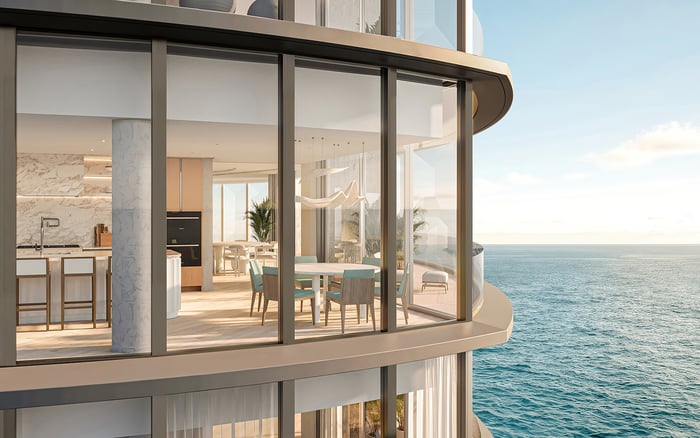
The Perigon is designed around water-facing living with a visual language rooted in restraint. Rather than relying on a dramatic tower silhouette to engineer views, it emphasizes floor-to-ceiling glazing, open layouts, and minimal interruption between the principal living spaces and the ocean beyond.
This approach is subtle, but also exacting. When a residence is composed with broad glazing and reduced internal obstruction, the eye can travel without friction. In practical terms, that means living rooms, dining areas, and primary suites can feel visually tethered to the Atlantic rather than simply adjacent to it. The effect is architectural quiet, not spectacle.
Perigon's orientation is particularly important. Its planning centers on direct eastern and, in some lines, northeastern exposure, creating a more immediate relationship with sunrise and open water. For purchasers who want a residence to read almost as a lens on the Atlantic, that orientation has real value. In the language of luxury real estate, this is a flow-through-units sensibility translated into an oceanfront condominium, where interior openness does much of the view work.
The same design philosophy carries into shared spaces. Expansive terraces and amenity areas are positioned to capitalize on panoramic outlooks, reinforcing the idea that the building's identity is inseparable from its water frontage. In that respect, The Perigon belongs in the same refined Miami Beach design conversation as Shore Club Private Collections Miami Beach and The Delmore Surfside, where architecture treats the coastline as a primary interior asset rather than a backdrop.
If The Perigon seeks to remove barriers, Rivage Bal Harbour seeks to sculpt advantage. The project's defining move is a stepped, tiered composition intended to preserve Atlantic views for a greater number of residences, including lower floors.
That difference is essential. Rivage depends more heavily on tower form itself. Its massing is designed to widen visual access, reduce the sense of stacked sameness common to oceanfront towers, and improve the likelihood that multiple levels retain meaningful exposure to the horizon. For a buyer, this can translate into a more even distribution of prized sightlines within the building.
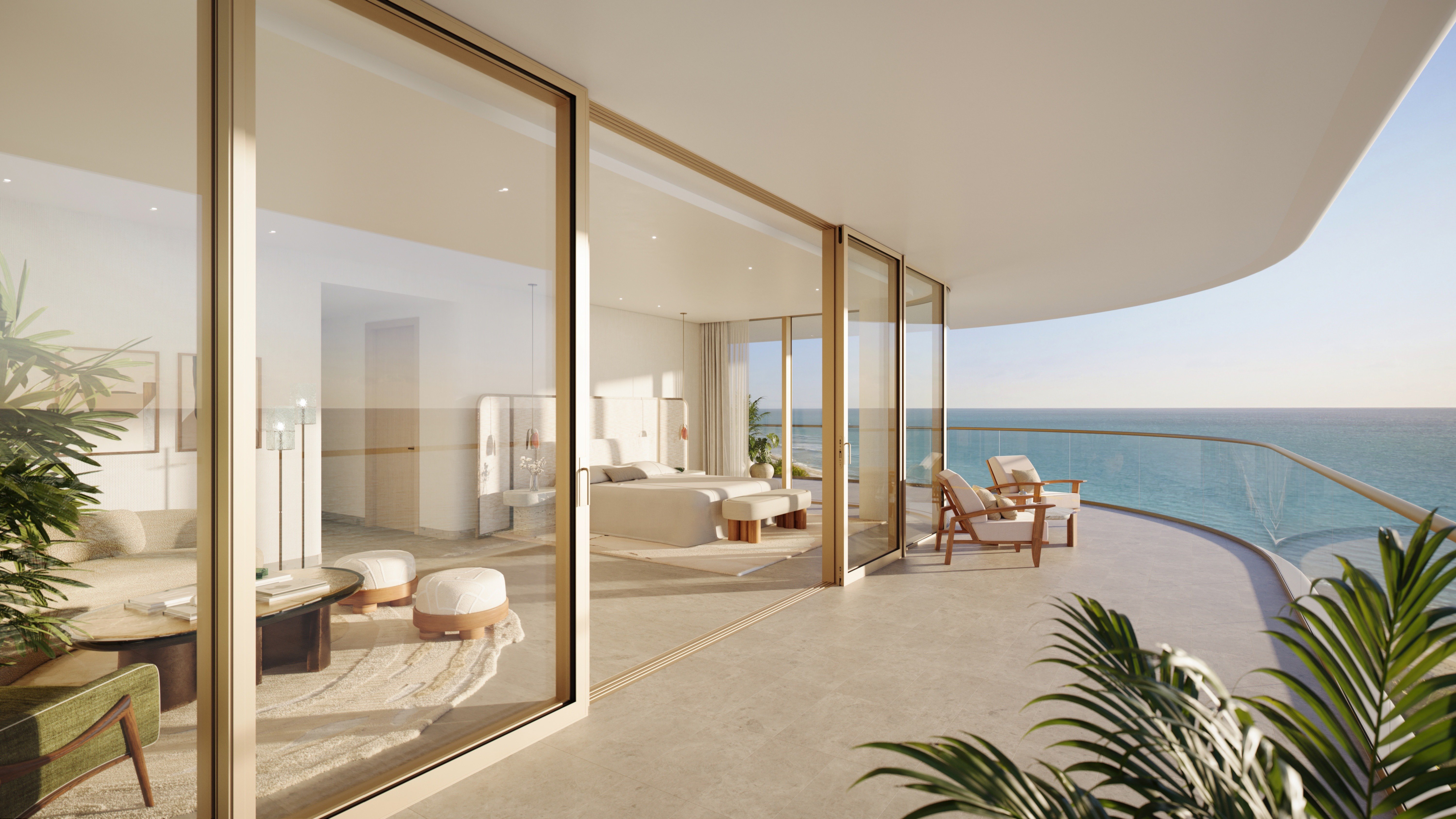
Rivage also uses floor-to-ceiling glass and glass balcony railings to maintain continuity between interior and exterior. Yet its most distinctive element may be the balcony strategy. Wraparound and extended terraces enlarge the usable viewing edge, broadening sightlines and encouraging residents to experience the ocean not only from inside the residence but from a more expansive outdoor perimeter.
Orientation further separates the project from The Perigon. Rivage centers on a south-to-southeast exposure profile, which can produce a longer daylight arc and a different quality of illumination across the year. For some buyers, that means a more layered relationship to both water and sun. In the broader Bal Harbour and Surfside context, it sits alongside highly view-conscious addresses such as Oceana Bal Harbour and The Delmore Surfside, where elevation, terrace depth, and visual continuity are treated as premium commodities.
The clearest way to understand these two projects is this: The Perigon optimizes the Atlantic from within the plan, while Rivage optimizes it through the form of the building.
Perigon is for the buyer who values visual purity. Its strength lies in transparency, broad glazing, and layouts that reduce internal competition with the ocean. The architecture aims to make the residence feel calm, open, and nearly frictionless in its relationship to the water.
Rivage is for the buyer who values architectural intervention. Its tiered tower composition, extended balcony language, and stacked viewing platforms suggest a more overtly engineered approach to sightlines. The building does not simply frame the view. It actively redistributes it.
This is also where floor level becomes a more nuanced consideration. At Perigon, the conversation often centers on the quality of direct east-facing transparency. At Rivage Bal Harbour, it shifts toward how massing helps preserve outlooks across floors and how terrace geometry expands usable visual frontage. Neither strategy is inherently superior. Each reflects a different definition of maximization.
Orientation is often discussed in technical terms, but owners experience it emotionally. Direct eastern exposure tends to deliver a purer sunrise condition and a more straightforward connection to open water. Southeast-oriented exposure can broaden daylight character and create a slightly more varied relationship between sea, sky, and sun movement.
Outdoor space intensifies that distinction. Perigon's expansive terraces read as calm extensions of the interior, reinforcing its minimalist ethos. Rivage's wraparound and extended balconies operate more like architectural instruments, widening the horizon and emphasizing movement around the perimeter.
For buyers prioritizing terrace depth, waterview quality, and high-floor versus low-floor strategy, the comparison becomes highly personal. Some will prefer the meditative clarity of Perigon's quieter envelope. Others will respond to Rivage's stepped composition and the sense that the building has been carved to defend visual privilege.
In the ultra-luxury market, view optimization is one of the few design decisions that consistently supports enduring desirability. Finishes can be changed. Furnishings can be replaced. The geometry of sightlines cannot.
That is why both projects matter beyond their immediate neighborhoods. They illustrate an increasingly sophisticated South Florida standard, one in which the premium attached to oceanfront real estate is not just about location, but about how precisely a building extracts value from that location. The Perigon Miami Beach and Rivage Bal Harbour are both expressions of that logic.
For the sophisticated buyer, the decision ultimately comes down to whether luxury is best expressed through restraint or orchestration. Perigon offers a nearly seamless conversation between residence and Atlantic. Rivage offers a more sculpted, strategic command of the horizon. Both are compelling. The better fit depends on how one prefers to live with the sea.
What is the core architectural difference between The Perigon and Rivage Bal Harbour? The Perigon emphasizes minimalist transparency and open interiors, while Rivage relies more on stepped massing and terrace geometry to shape views.
Which project is more focused on direct eastern exposure? The Perigon is more closely associated with direct eastern and northeastern Atlantic exposure.
Which building emphasizes southeast-facing light? Rivage Bal Harbour is more closely aligned with a south-to-southeast orientation for daylight and ocean exposure.
Do both developments use floor-to-ceiling glass? Yes. Both projects use expansive glazing to strengthen the relationship between interiors and the Atlantic horizon.
How does Rivage try to improve views on lower floors? Its stepped, tiered tower composition is intended to preserve stronger Atlantic outlooks across more levels, including lower residences.
How does The Perigon maximize views without dramatic massing? It reduces internal obstructions and uses broad glazing so sightlines remain open from key living spaces.
Are terraces important in both projects? Yes. Perigon emphasizes expansive terraces, while Rivage places greater emphasis on wraparound and extended outdoor viewing edges.
Which project may appeal more to buyers who prefer quiet, minimalist design? The Perigon may resonate more with buyers who want the architecture to recede and let the water dominate.
Which project is more architecturally expressive in its tower form? Rivage is the more overtly sculpted composition, using geometric staggering as a core part of its value proposition.
Why do Atlantic views matter so much in this market? In South Florida's highest tier, protected ocean outlooks are a primary driver of daily experience and long-term desirability.
For a confidential assessment and a building-by-building shortlist, connect with MILLION Luxury.
If branded residences are on your mind — as a home or as an allocation — we would be glad to share what we are seeing, privately.
Begin a quiet conversation