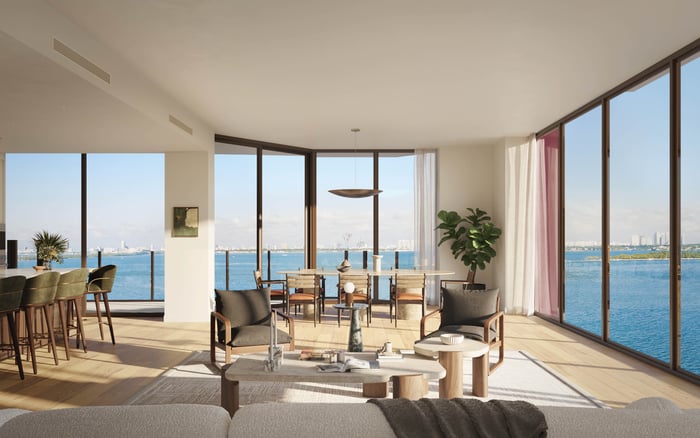
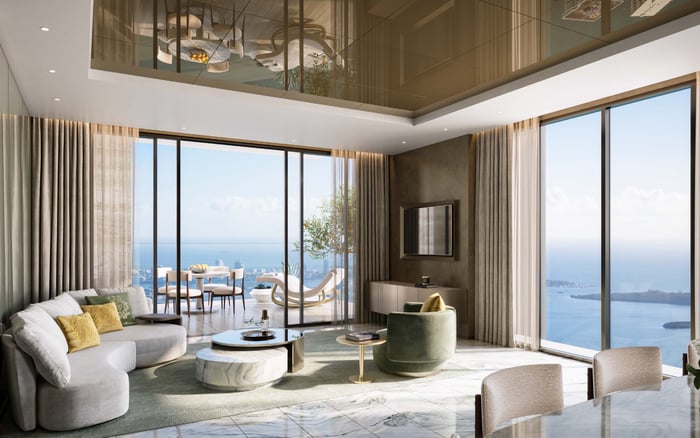
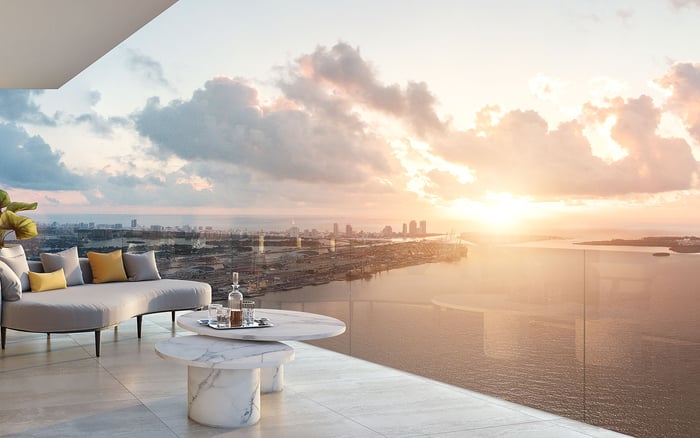
A discreet buyer’s guide to the five bayfront residence profiles that best support whole-floor privacy, from full-floor homes to penthouse-level retreats and low-density waterfront settings.
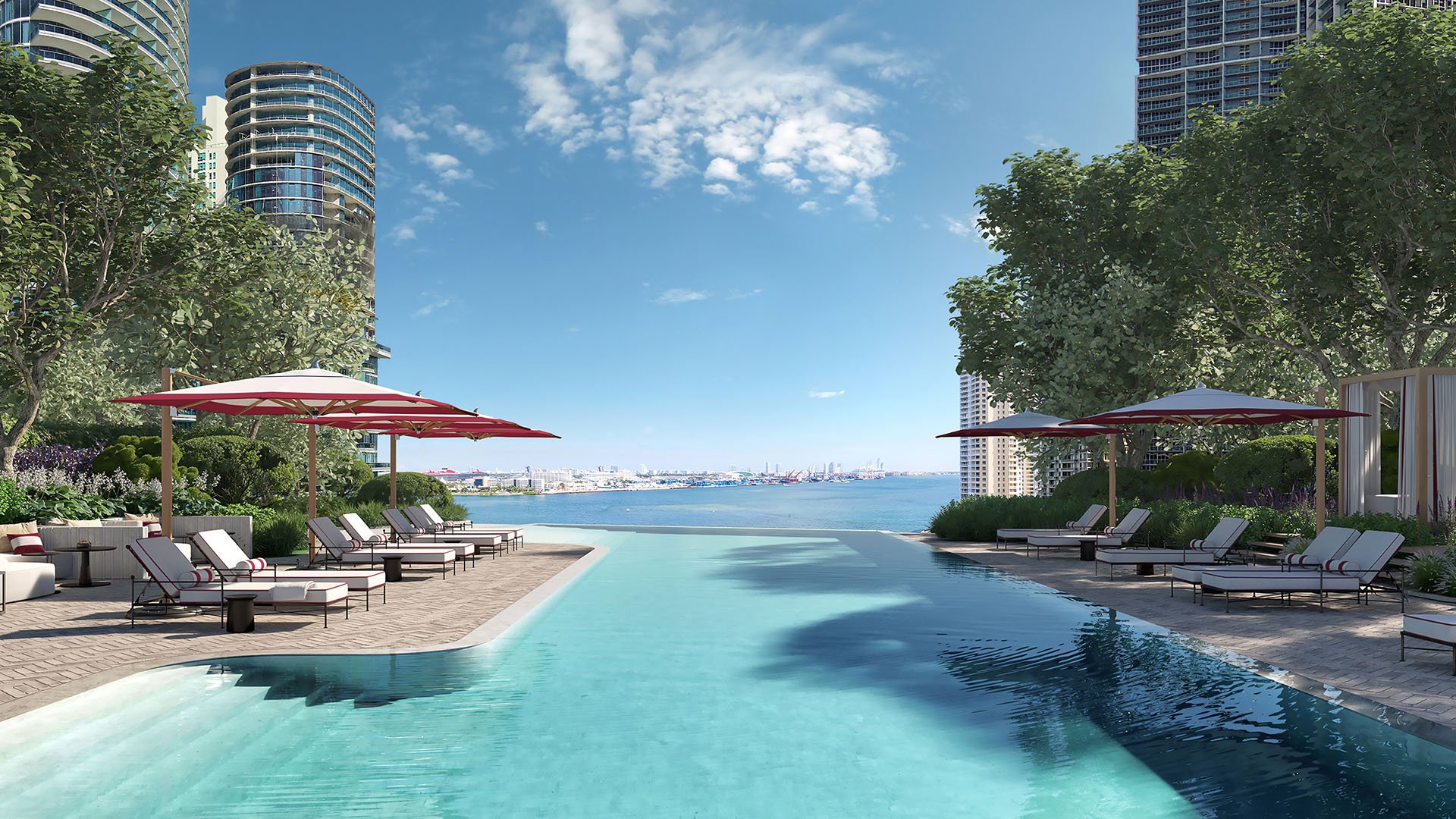
For a certain South Florida buyer, privacy is no longer measured only by gates, height, or a respected address. It is measured by the number of thresholds between the street and the living room, by how many people share an elevator, by whether a terrace feels exposed, and by how calmly a residence receives guests without turning daily life into a performance.
Whole-floor privacy has become one of the most precise requests in the upper tier of the waterfront market. It speaks to a buyer who wants the light, air, and drama of bayfront living without the corridor culture of a conventional condominium. The best examples feel closer to private homes in the sky, with controlled arrival, lateral scale, and enough separation between entertaining spaces, family rooms, and bedroom wings to let the floor plan function quietly.
Area shorthand such as Brickell, Coconut Grove, and Miami Beach matters less than the specific way a building handles circulation. A glamorous skyline can lose its appeal if the route home feels public. Conversely, a restrained bayfront building can feel exceptional when the elevator opens directly into a private vestibule and the residence unfolds across the full width of the view.
1. Full-floor bay residence - private arrival
The purest version of whole-floor privacy is a residence that occupies an entire level. The appeal is not only square footage. It is the absence of shared corridors, the ability to separate service and social movement, and the sense that the home has its own landing rather than a common hallway.
For buyers who entertain, this profile is especially strong. Guests can arrive through a composed entry sequence, while family bedrooms, staff functions, and back-of-house areas remain discreetly removed. The result is a residence that reads as a private waterfront home, even within a vertical building.
2. Penthouse bay residence - height with separation
A penthouse can deliver the most commanding form of bayfront privacy when its elevation is paired with thoughtful planning. Height alone is not enough. The better questions are whether the residence avoids direct overlook, whether outdoor areas feel usable rather than symbolic, and whether the arrival sequence protects the home from unnecessary exposure.
This profile suits buyers who want a sense of command without sacrificing calm. The strongest penthouse residences use expansive glazing, generous terraces, and carefully organized interior zones to create a home that feels removed from the city while remaining connected to the water.
3. Flow-through bay residence - light on both sides
A flow-through layout can be compelling for buyers who want privacy with natural ventilation, multiple exposures, and a more residential sense of depth. The value lies in the way the home breathes. Bay-facing living areas can open toward water, while secondary exposures give bedrooms and informal spaces a quieter identity.
Flow-through planning also helps reduce the feeling of a single-view apartment. It gives the residence a more complete architectural rhythm, with morning and evening light moving through different rooms. For buyers comparing options, water-view quality should be judged by both the primary panorama and the quality of the secondary outlooks.
4. Boutique bayfront residence - fewer neighbors, fewer encounters
Low-density waterfront buildings can offer a different kind of privacy from larger, amenity-driven towers. Fewer residences often mean fewer shared moments in elevators, lobbies, and pool decks. For buyers who value discretion, that daily quiet can matter as much as the scale of the home itself.
This profile works best when boutique does not mean compromised. The right residence still needs meaningful water frontage, strong ceiling heights, graceful parking, and a lobby experience that feels staffed and secure without feeling theatrical. Privacy should be effortless, not dependent on avoidance.
5. Estate-style bay residence - indoor-outdoor discretion
An estate-style bay residence is defined by how naturally it connects interior space to open air. A deep terrace can create a true outdoor room, but only if it is protected from neighboring sightlines and proportioned for real use. Privacy outdoors is often harder to achieve than privacy indoors.
For buyers who host family dinners, keep a morning wellness routine, or spend evenings on the water side of the home, this profile can be especially satisfying. It offers the romance of bayfront living with a more grounded rhythm, provided the building design shields the terrace from unwanted visibility.
The first showing of a bayfront residence often begins with the water, but the second showing should begin with the arrival. How does a resident move from vehicle to lobby, from lobby to elevator, and from elevator to home? Is there a private vestibule? Are service routes separated? Does the residence reveal itself gradually, or does the front door open directly into the most public part of the plan?
Privacy is also acoustic. Buyers should consider the location of mechanical spaces, amenity levels, elevator banks, and outdoor gathering areas. A visually private home can still feel exposed if sound travels from shared spaces or if terraces align too closely with neighboring outdoor rooms.
The most desirable residences also balance scale with manageability. A whole floor should feel expansive, not inefficient. Wide living rooms, separated bedroom suites, practical storage, discreet staff access, and generous kitchen planning can make a large residence feel serene rather than oversized.
Begin with the elevator. A private or semi-private elevator experience is often the first practical indicator that a residence was designed for discretion. Next, study the vestibule. A true arrival space gives the homeowner control over the reveal, allowing art, lighting, and architecture to create a composed transition.
Then examine the plan. Bedroom wings should not sit directly beside the main entertaining area. Service access should support caterers, housekeeping, and deliveries without crossing the formal living path. If the residence has a terrace, stand outside long enough to understand sightlines from neighboring buildings and amenity decks.
Finally, test the residence at different times of day whenever possible. Morning light, afternoon glare, evening reflections, and nighttime visibility can change how private a home feels. The best bayfront residences remain comfortable across all those conditions.
South Florida’s luxury buyer often wants contradiction resolved: proximity without exposure, water without spectacle, service without intrusion, and social space without the feeling of being observed. Whole-floor living answers that desire because it gives the owner control over sequence and scale.
It also supports flexible ownership. A residence can function as a primary home, a seasonal retreat, or a family gathering place without feeling temporary. The layout can accommodate formal dinners, quiet mornings, visiting relatives, and private work with fewer compromises than a conventional stacked plan.
For the most discerning buyers, the question is not simply which building has the most impressive view. It is which residence offers the most composed life around that view. The answer is usually found in the details: arrival, separation, sightlines, terrace usability, and the subtle confidence of a plan that does not need to announce itself.
What does whole-floor privacy mean in a bayfront residence? It usually means the home occupies an entire level or is planned to minimize shared circulation, direct neighbor exposure, and public arrival points.
Is a private elevator essential for whole-floor privacy? It is not the only factor, but it is one of the clearest signals that the residence prioritizes controlled access and discreet arrival.
Are penthouses always more private than lower full-floor residences? Not always. A lower full-floor home with better separation, quieter circulation, and protected terraces may feel more private than a higher home with exposed outdoor space.
Why does terrace design matter so much? A terrace is only valuable for private living if it is deep enough to use and shielded from direct views from adjacent buildings or amenity areas.
How should buyers evaluate water-view quality? Buyers should consider not only the main water view, but also side exposures, glare, nighttime visibility, and how the view feels from seated positions.
Does boutique always mean more private? Boutique can mean fewer daily encounters, but the building still needs strong staffing, secure access, and a plan that avoids unnecessary shared thresholds.
What makes a flow-through plan attractive? It can provide light from multiple directions, better ventilation, and a more house-like sense of depth across the residence.
Should buyers prioritize the building or the specific floor plan? Both matter, but the floor plan often determines whether the home actually lives privately day to day.
Can a bayfront residence be private in a dense neighborhood? Yes, if the arrival sequence, elevator configuration, terrace orientation, and interior zoning are carefully resolved.
What is the most overlooked privacy detail? The route used by staff, deliveries, and service providers is often overlooked, yet it can strongly affect how discreetly the home functions.
For a discreet conversation and a curated building-by-building shortlist, connect with MILLION.
If branded residences are on your mind — as a home or as an allocation — we would be glad to share what we are seeing, privately.
Begin a quiet conversation