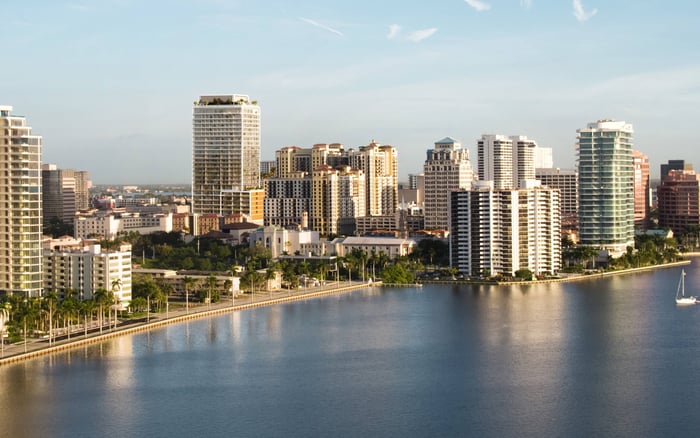
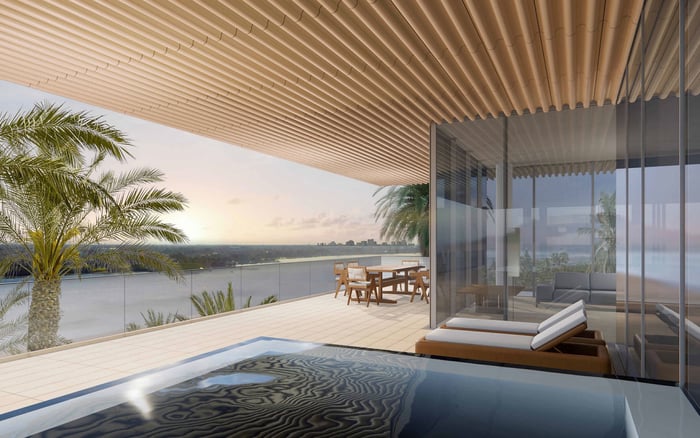
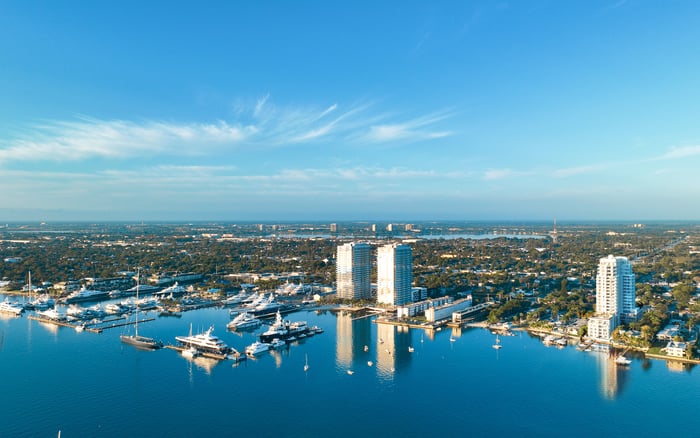
Banyan Tree Residences West Palm Beach enters the branded market with a residential-only, wellness-led identity that feels notably different from the usual resort playbook. Set in Downtown West Palm Beach, the project frames luxury around daily rituals, environmental systems, and long-term ownership rather than hotel theatrics. For discerning buyers in Palm-beach and West-palm-beach, its appeal will depend on whether that sanctuary concept translates from intent into execution.
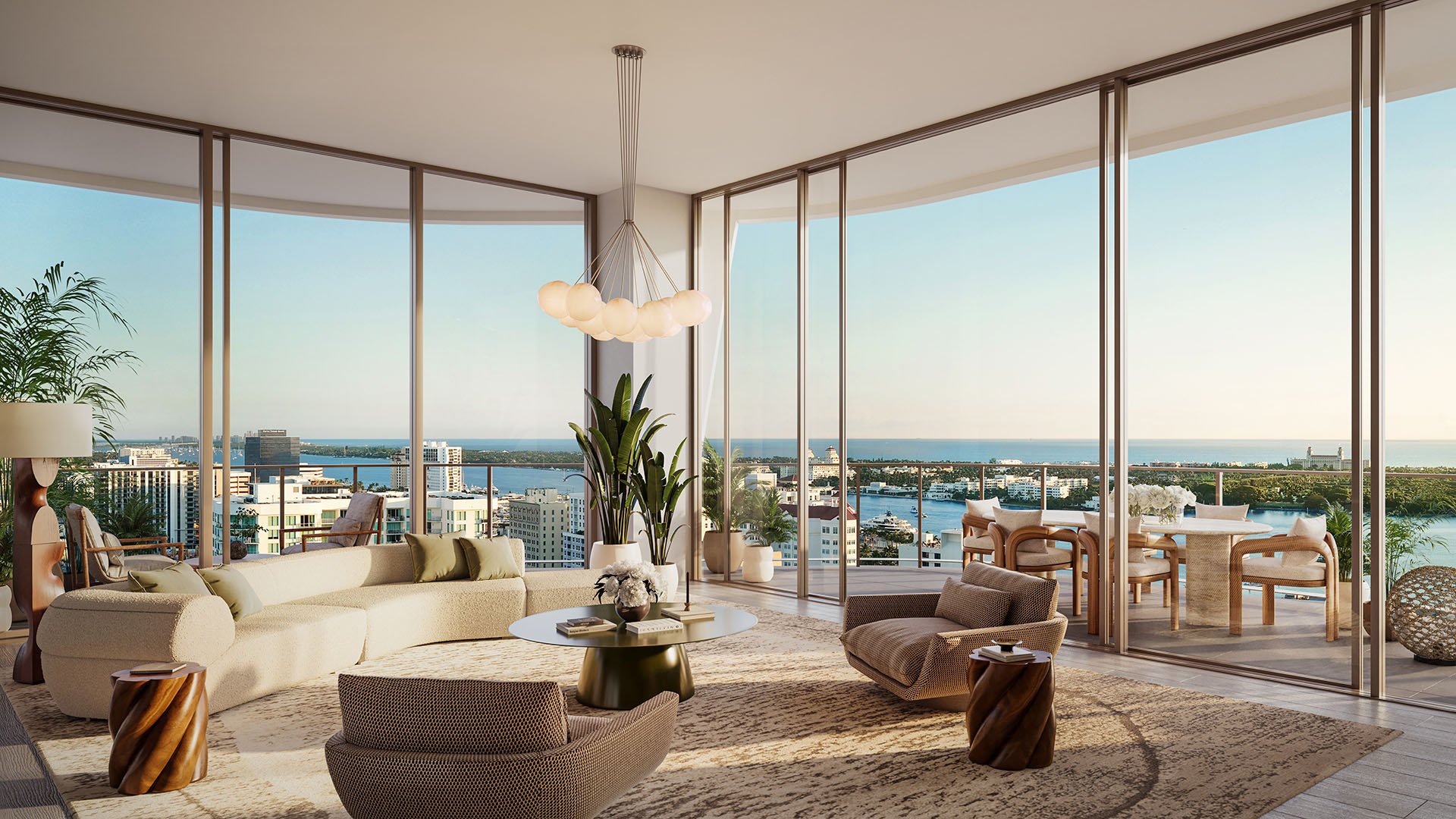
In South Florida, wellness has become one of luxury real estate’s most overused terms. Too often, it signals a predictable amenity package: a spa room, a juice bar, perhaps a meditation lawn staged for marketing photography. The more demanding test is whether a project makes wellness feel structural rather than decorative. That is the central question surrounding Banyan Tree Residences West Palm Beach.
What makes this project notable is not simply its use of the language of sanctuary. It is that the development is framed as a residential-only offering in Downtown West Palm Beach, without hotel operations or a transient guest component. That distinction matters. It suggests a building conceived for owners who will actually live with its decisions every day, rather than visitors passing through for a long weekend.
For buyers tracking the evolution of branded living in West-palm-beach and the broader Palm-beach market, that premise immediately separates Banyan Tree from the region’s more familiar hospitality-adjacent formulas. It places the project closer to an urban residential proposition than a beachfront fantasy, and that alone reflects a more disciplined idea of luxury.
The branded-residence category has been conditioned by spectacle. Water features, pool decks, and service narratives often do the heavy lifting, even when the underlying residential experience remains conventional. Banyan Tree appears to be arguing for something more subtle: that luxury today may be less about visual performance and more about how a building regulates light, air, calm, and routine.
That is where the project’s wellness positioning becomes more compelling. Publicly described features include dedicated yoga and meditation spaces, circadian-rhythm lighting, air-quality monitoring, and biophilic design principles. Those are not incidental touches if they are properly executed. They point to a residence intended to shape mood and function throughout the day, not merely offer a place to unwind after it.
This is also why the project avoids feeling interchangeable with a condo-hotel model. A resort cliché sells escape. A true residence has to support repetition. Morning light, indoor-outdoor transitions, acoustic calm, and environmental quality matter far more in the thousandth use than in the first impression. If Banyan Tree delivers on that quieter ambition, it could stand apart from more performative branded launches.
That shift is increasingly relevant as buyers compare South Florida’s next generation of branded addresses. In Miami, wellness-forward conversations have also taken shape around projects such as The Well Coconut Grove and House of Wellness Brickell, where the promise extends beyond a spa floor and into daily residential habits. Banyan Tree’s West Palm interpretation appears more restrained, and perhaps more residential for that reason.
Location does more than establish value. It sets behavioral expectations. Because Banyan Tree Residences West Palm Beach is positioned in Downtown rather than on the beach, its identity is naturally less tied to vacation imagery. That urban placement reinforces the idea that the target buyer is a full-time or long-term owner, someone more interested in an elegant routine than in resort churn.
This matters for the social texture of a building. Resident-focused classes, workshops, and community programming suggest a stable internal culture rather than a revolving cast of short-stay users. In practical terms, that can mean better continuity, more privacy, and a calmer rhythm of use across shared spaces. For affluent buyers who want branded polish without the feeling of living inside a hospitality machine, that is a meaningful distinction.
It also places Banyan Tree into a richer conversation about what West-palm-beach is becoming. The city’s premium inventory is increasingly broad, from waterfront statements like Alba West Palm Beach to legacy-leaning branded entries like The Ritz-Carlton Residences® West Palm Beach and lifestyle-driven offerings such as Mr. C Residences West Palm Beach. Banyan Tree’s opportunity is to define a lane that is less about waterfront theatrics and more about private equilibrium.
The strongest part of the concept is that wellness is presented as a whole-building framework rather than a singular amenity. Natural light, water, indoor-outdoor transitions, and nature-linked materials all suggest a design language aimed at reducing visual noise rather than amplifying it. For a sophisticated buyer, that is more persuasive than over-programming.
There is also an appealing sophistication in the project’s stated blend of personalization and science-backed systems. A private wellness-concierge-style service tied to fitness, nutrition, and sleep support suggests that the building is attempting to serve the resident holistically, not simply aesthetically. Add a wellness-oriented food and beverage concept with an emphasis on nutrition and locally sourced offerings, and the picture becomes coherent.
Just as important, sustainability is not treated as a separate moral layer. It is folded into the wellness thesis through efficient water and energy systems and references to LEED and wellness certifications. At the top end of the market, buyers increasingly expect environmental performance and personal well-being to coexist within the same luxury proposition.
The concept is attractive, but sophisticated buyers know the difference between a compelling brief and a finished building. Many of the most specific talking points remain pre-delivery intentions, and the project has been described within a pre-construction window with projected completion around 2026 to 2027. As ever in New-construction, execution is the entire story.
That means purchasers should focus less on the poetry of sanctuary and more on the translation of that promise into built reality. How will lighting systems actually perform in private residences? How discreetly will air-quality monitoring be integrated? Will biophilic design feel elegant or thematic? Will resident programming feel cultivated or obligatory? These are the questions that determine whether wellness luxury matures into something credible.
Pricing has been described as beginning around the $2 million range and above, though details remain limited. In that context, expectations will be exacting. Buyers are not simply acquiring square footage or a branded name. They are buying confidence that the building will support a certain state of living over time.
Can Banyan Tree Residences West Palm Beach deliver wellness luxury without leaning on resort clichés? Yes, in theory, and more plausibly than many branded residences because the ingredients are unusually aligned. Residential-only positioning, a Downtown setting, environmental wellness systems, and resident-centered programming all support a more mature idea of luxury.
But the project’s ultimate success will depend on whether it preserves restraint. The most convincing wellness residences do not insist on their virtue. They feel calm, intelligent, and deeply livable. If Banyan Tree can maintain that discipline, it may become one of West-palm-beach’s more distinctive new addresses, especially for buyers who want branded service without resort noise, and who see Investment value in daily quality rather than spectacle.
Is Banyan Tree Residences West Palm Beach a hotel-branded condo-hotel? No. It is presented as a residential-only project without hotel operations or a transient guest component.
What makes its wellness positioning different? The concept is built around architecture, environmental systems, and resident programming rather than a simple spa-led amenity story.
Why does the Downtown location matter? Downtown supports an urban residential identity in West-palm-beach and signals appeal to long-term owners rather than vacation users.
What wellness features have been described publicly? Reported features include yoga and meditation spaces, circadian-rhythm lighting, air-quality monitoring, and biophilic design.
Who is the likely buyer profile? The project appears aimed at affluent full-time residents and long-term owners seeking a calmer branded lifestyle.
Is this positioned as Palm-beach luxury or city luxury? It reads as a blend of both, pairing Palm-beach polish with a more urban, everyday residential rhythm.
How does it compare with other branded residences? Its differentiator is restraint: less hotel theater, more emphasis on lived wellness and stable community culture.
Is pricing fully established? Guidance has placed it from roughly $2 million and above, but detailed pricing remains limited.
Is the project already completed? No. It has been discussed in pre-construction or design phases, with a projected completion window around 2026 to 2027.
What should buyers watch most closely? In Pre-construction, the key issue is whether the promised wellness systems and service model are executed with precision.
When you're ready to tour or underwrite the options, connect with MILLION.
If branded residences are on your mind — as a home or as an allocation — we would be glad to share what we are seeing, privately.
Begin a quiet conversation