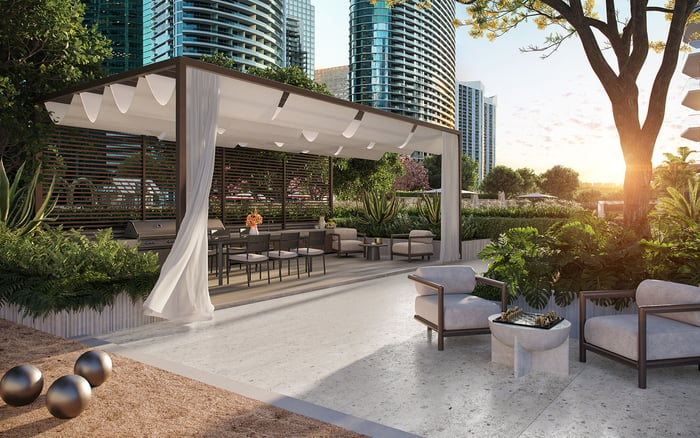
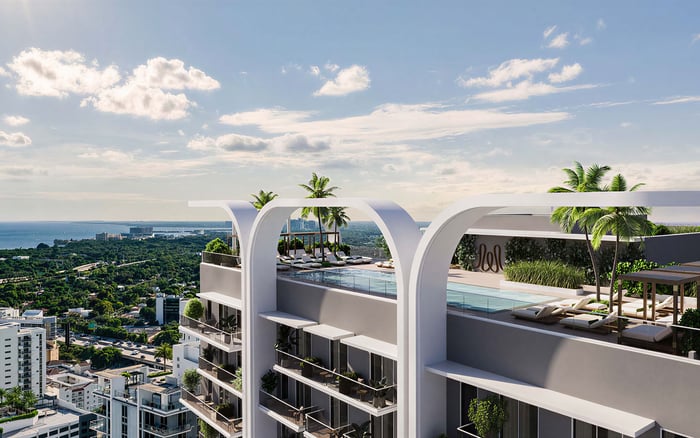
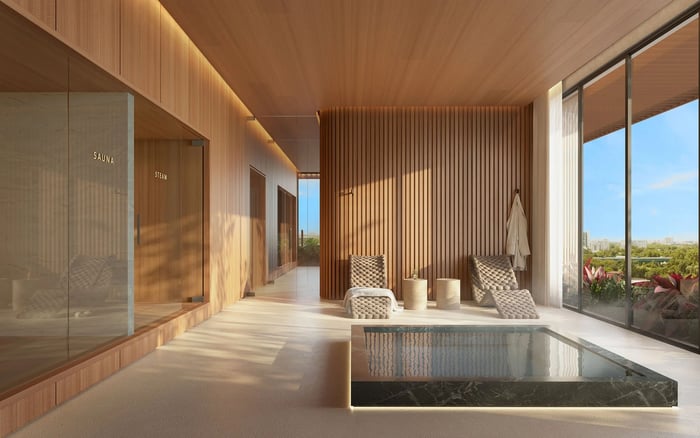
For South Florida buyers, the right luxury feature is not just an aesthetic choice but an operating decision. Deep terraces, plunge pools, and expansive glass walls each shape ownership differently through service frequency, outsourcing ease, and the severity of deferred care. The essential distinction is simple: plunge pools ask for constant routine, expansive glass walls require periodic specialist attention, and deep terraces carry the highest consequence if neglected because envelope failures can migrate into concrete, finishes, and interior spaces below.
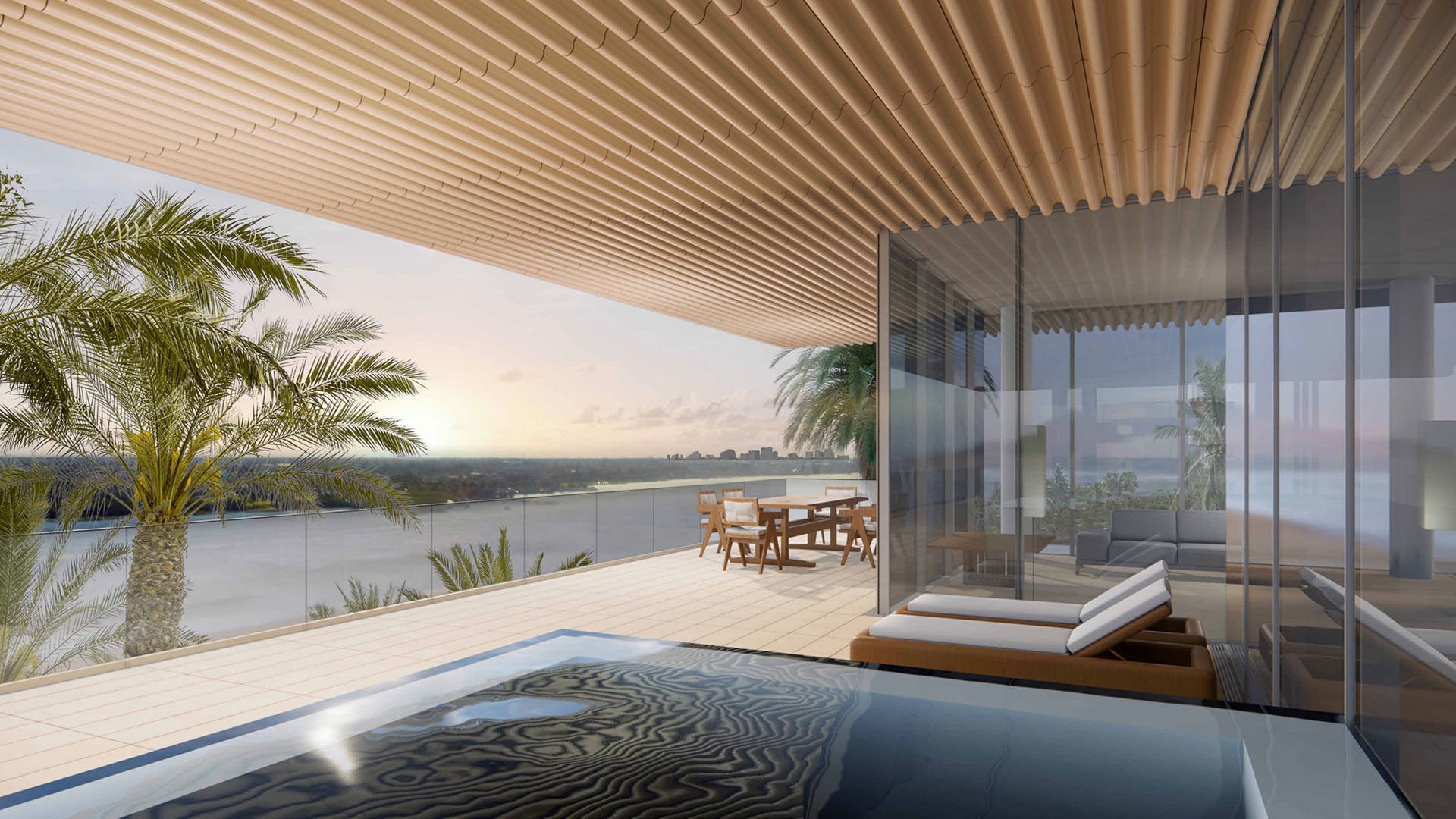
In South Florida, ultra-premium buyers rarely choose between deep terraces, plunge pools, and expansive glass walls on appearance alone. The more useful question is operational: which feature asks the most of the owner, which can be delegated most easily, and which becomes most expensive when care is deferred.
For MILLION readers, that framework matters because maintenance burden is not one-dimensional. It combines frequency, complexity, and consequence. A feature that needs weekly service may still be easier to live with than one that requires infrequent but highly specialized repairs. In that sense, plunge pools, glass walls, and terraces each occupy a distinct place on the ownership spectrum.
Across Miami Beach, Brickell, and Sunny Isles, many of the region’s most desirable homes are designed around these exact elements. At developments such as 57 Ocean Miami Beach and The Perigon Miami Beach, indoor-outdoor living is central to the experience. In Una Residences Brickell and Glass House Boca Raton, expansive glazing and view-driven design sharpen the appeal while also defining what attentive ownership looks like in a coastal climate.
A clear comparison begins with three filters.
First, ask how often the feature requires service. Plunge pools typically lead on frequency because water chemistry, circulation, skimming, and cleaning are recurring obligations. Even when the vessel is compact, the routine does not disappear.
Second, ask how easy that service is to outsource. Pool care is often the most straightforward to place under contract. By contrast, terrace and glazing issues may require specialty trades, façade access, or building-envelope expertise.
Third, ask what happens if maintenance is deferred. This is where the ranking changes. A cloudy pool is unpleasant and may damage finishes or equipment if neglected long enough, but a failing terrace membrane or blocked terrace drain can threaten the building fabric itself. Large glass systems often sit in the middle: they can perform beautifully for years, but neglected seals, gaskets, frames, and drainage paths may lead to moisture intrusion, air leakage, or comfort issues.
A deep terrace remains one of the most coveted expressions of South Florida luxury because it extends living space into the landscape and frames water, skyline, or golf-course views. Yet it is also the feature buyers should scrutinize most carefully.
The reason is simple. Terrace failures tend to be building-envelope failures. If waterproofing, flashing, slope, joints, or drainage are compromised, water can migrate into structural framing, finishes, and occupied space below. In a coastal environment, exposed slabs also face a harsher aging cycle. Salt-laden air can contribute to concrete distress over time, including cracking and spalling tied to reinforcement corrosion.
That does not mean terraces are high-maintenance in a weekly sense. They are not. Most periods of ownership involve observation, cleaning, and periodic inspection rather than constant service. The burden is more episodic and more technical. When problems do arise, owners often need specialized contractors for membrane work, expansion joints, waterproofing corrections, concrete repair, and pressure cleaning rather than light household upkeep.
For buyers considering homes with broad exterior living rooms, it is worth paying close attention after heavy rain and after hurricane season. Ponding water, blocked drains, cracks, failed sealant lines, and staining patterns are rarely cosmetic details in a South Florida setting. They are often the first signs of a more expensive problem.
Pool ownership feels more active because the service rhythm is constant. A plunge pool requires testing and balancing sanitizer and pH, keeping circulation systems functioning properly, skimming debris, brushing surfaces, and monitoring filtration. In practical terms, that means weekly or near-weekly attention.
Yet plunge pools are often the easiest feature to budget for because the work is repetitive and widely outsourced. For many owners, that predictability matters more than the service frequency itself. A standing service contract can reduce personal effort considerably, which is why even busy second-home owners often find a plunge pool less burdensome than expected.
There is also a containment advantage. When pool maintenance slips, the initial problems are usually confined to water quality, interior surfaces, or equipment. Unless a leak goes undetected, neglect is less likely to compromise the main structure of the residence. Storm preparation is also more operational than architectural, with the emphasis on securing equipment and following property procedures rather than correcting the shell of the building.
In projects where amenity-rich living is part of the proposition, buyers may still prefer a residence that lets the building absorb much of the operational complexity. That is one reason properties such as St. Regis® Residences Brickell are so compelling to owners who value hotel-style oversight alongside private residential comfort.
Expansive glass walls are often the most seductive feature in a contemporary residence. They dissolve the boundary between interior and exterior, amplify light, and make a view feel immersive rather than framed. They also bring a recurring maintenance obligation that is easy to underestimate.
In coastal South Florida, salt spray, airborne debris, and mineral deposits steadily reduce clarity. Left in place too long, residue can mark the surface and make restoration more difficult. The burden here is less about constant mechanics and more about preserving finish quality. Cleaning is routine, but the scale and access requirements of large glazing systems can elevate even simple work.
More important is what owners do not see immediately. Large glass assemblies need periodic review of sealants, gaskets, frames, hardware, and weep systems. If these elements fail, the result may be water intrusion, drafts, operational issues, or moisture accumulation around adjacent finishes. In humid interiors, condensation near large glazed areas can also contribute to mold risk when surfaces remain damp.
That is why glass should be viewed as a middle-burden feature. It does not demand weekly chemistry work like a pool, but each professional intervention may require higher-skill glazing trades or specialized access. After severe weather, storm-readiness checks become especially important, particularly for impact-rated systems and their hardware.
If the comparison is framed around total ownership burden in South Florida, the order is usually this.
First, deep terraces. They may not require the most frequent service, but they are the most consequential to defer because drainage and waterproofing failures can escalate into structural and below-slab damage.
Second, expansive glass walls. They require recurring cleaning and periodic component inspections, and while neglect is usually less destructive than a failed terrace assembly, the service events can be specialized and expensive.
Third, plunge pools. They require the most regular attention, but the workload is repetitive, highly outsourceable, and generally easier to budget for over time.
For buyers comparing product types, this is often the more elegant conclusion: choose the feature whose maintenance profile best matches your ownership style. If you want a highly predictable operating routine, a plunge pool may feel surprisingly manageable. If you prize dramatic architecture and panoramic light, large-format glass can be entirely reasonable with disciplined service intervals. If you want a vast exterior salon, a deep terrace remains unmatched, but it should come with an especially serious attitude toward inspection and post-storm review.
Before closing on any residence where balcony, terrace, major glazing, or private water features define the lifestyle, buyers should ask not only what they see, but what must be maintained behind the scenes. Which items are owner obligations and which fall to the association. How often are drains, sealants, joints, hardware, and waterproofing reviewed. What post-storm inspection routines are standard. And if service is outsourced, who manages it and on what cadence.
That line of questioning tends to separate a merely beautiful residence from a truly well-run one. In South Florida, where humidity, UV exposure, wind, storms, and coastal salt are part of the backdrop, the most successful ownership experiences usually come from disciplined stewardship rather than reactive repair.
Which feature usually has the highest maintenance risk? Deep terraces usually carry the highest risk because drainage or waterproofing failures can affect structure, finishes, and the space below.
Which feature needs attention most often? Plunge pools typically need the most frequent care because water chemistry, filtration, and cleaning are ongoing tasks.
Which feature is easiest to outsource? Pool service is generally the simplest to outsource through recurring maintenance contracts.
Are expansive glass walls mainly a cleaning issue? No. Cleaning is part of the burden, but seals, gaskets, frames, hardware, and drainage paths also need periodic inspection.
Why are terraces more consequential than pools? Terrace problems can migrate into the building envelope and slab, while pool issues are more often contained to the vessel and equipment.
Does South Florida make all three harder to maintain? Yes. Salt air, humidity, UV exposure, and storms increase wear on terraces, glass systems, and pools alike.
What should buyers inspect on a terrace? Focus on drainage, slope, cracks, joints, waterproofing, and any signs of ponding or staining after rain.
Can neglected glass walls affect interior conditions? Yes. Failed seals or persistent condensation can contribute to moisture issues, drafts, and in some cases mold risk.
Are plunge pools cheaper to live with than terraces? They are often more predictable to budget for because the maintenance is repetitive, even if it is more frequent.
What is the smartest ownership approach? Match the feature to your tolerance for routine service, specialist intervention, and the consequences of deferred care.
For a confidential assessment and a building-by-building shortlist, connect with MILLION.
If branded residences are on your mind — as a home or as an allocation — we would be glad to share what we are seeing, privately.
Begin a quiet conversation