A practical touring guide for high-end buyers comparing Auberge Beach Residences & Spa Fort Lauderdale, Origin Bay Harbor Islands, and Vita at Grove Isle through the lens of governance, amenities, climate resilience, owner costs, privacy, and daily lifestyle.
A luxury condominium tour is designed to seduce. The lobby lighting is composed, the terrace doors glide open, and the view does much of the work. For serious South Florida buyers, however, the most valuable part of a private showing is not the first impression. It is the sequence of questions that reveals how the building actually lives after closing.
That is especially true when comparing Auberge Beach Residences & Spa Fort Lauderdale, Origin Bay Harbor Islands, and Vita at Grove Isle. Each name signals a distinct lifestyle proposition, from oceanfront resort-style living to bayfront neighborhood rhythm to a more private Grove Isle conversation. The buyer’s task is to translate mood into obligations, access, rules, and future costs.
This guide is intentionally practical. Ask questions that cannot be answered by renderings, listing photography, or a five-minute walk through the amenity level. The best tour is not merely beautiful. It is revealing.
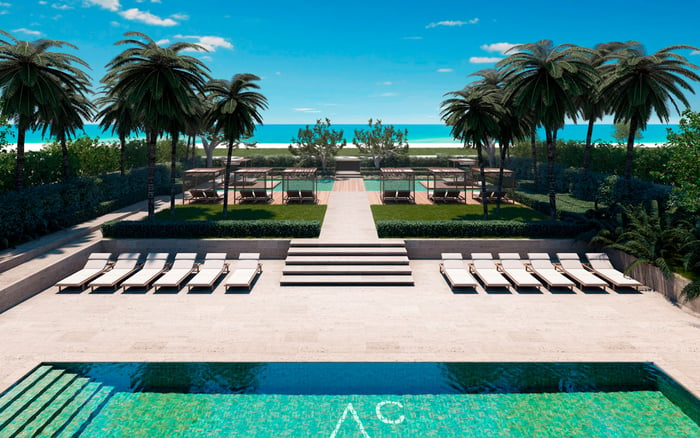
Auberge Beach Residences & Spa Fort Lauderdale should be toured as both a private residential building and a resort-influenced environment. On Fort Lauderdale Beach, that hybrid identity can be central to the appeal, but it also deserves close scrutiny. Ask how branding affects service standards, staffing expectations, spa programming, and owner costs.
The key question is not whether service feels elevated on the day you tour. It is who is contractually responsible for delivering that service, and who pays when standards change. Request the written relationship among the condominium association, the hospitality operator, the spa operator, and any food-and-beverage venues. If there is a restaurant, spa access, pool service, valet operation, concierge program, or branded residential programming, ask which entity controls it and how owners influence future changes.
Then separate private privilege from public-facing energy. Which amenities are owner-only, and which may be shared with guests, restaurant patrons, spa users, or other non-residents? A resort atmosphere can be glamorous, but an owner should understand peak-day access, guest protocols, reservation systems, and the feel of the building when hospitality activity is at its highest.
At Auberge, the Atlantic view is central to the experience, but oceanfront exposure is also an operating condition. Ask how salt air, wind, storms, and sun affect maintenance reserves, façade upkeep, balcony repairs, hurricane procedures, and insurance premiums. A residence can be visually spectacular and still require disciplined long-term capital planning.
During the showing, do not treat all views as equal. Ask how views, terrace privacy, wind exposure, and sun orientation vary by tower, floor, and stack. A higher floor may deliver drama, while a different stack may offer a calmer terrace or more desirable light at the hours you actually use the home. Visit at more than one time of day if possible, and stand on the terrace long enough to understand noise, wind, glare, and sight lines.
Before relying on the tour impression, request the current association budget, reserve study, insurance details, pending assessments, litigation disclosures, and maintenance history. These materials often matter as much as finishes. They show whether the building’s luxury posture is supported by a durable financial framework.
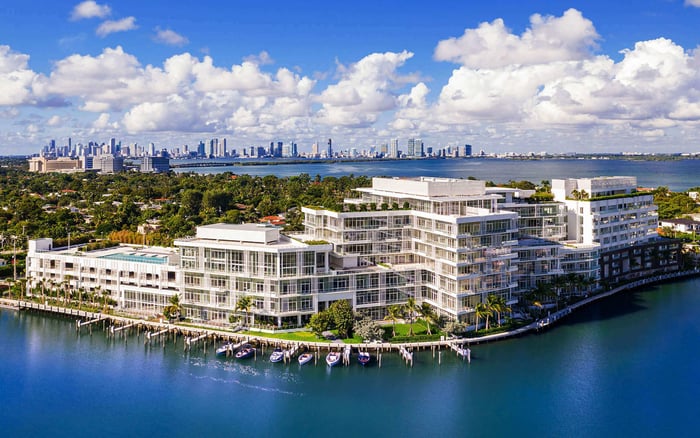
Origin Bay Harbor Islands should be approached through the lens of waterfront living, neighborhood access, and building operations. The question is not simply whether the view is pleasant. Ask how bayfront orientation, boat traffic, bridge access, and surrounding development may affect noise, privacy, views, and resale appeal over time.
Bay Harbor Islands has its own residential cadence, distinct from nearby Bal Harbour, Surfside, and Miami Beach. During a tour, ask how the building’s lifestyle compares with those neighboring options. Will you walk often, drive frequently, rely on valet, or treat the residence as a seasonal retreat? The right answer depends on how you intend to live, not just how the property is marketed.
Monthly fees deserve a line-by-line conversation. Ask what amenities are included and whether there are separate charges for parking, storage, marina access, guest use, fitness, pool service, or concierge services. Two residences with similar purchase prices may carry different ownership experiences if access, services, and add-on costs are structured differently.
For Origin, ask for details on construction quality, window ratings, flood mitigation, generator coverage, storm protocols, and expected long-term maintenance in a waterfront setting. These questions are not pessimistic. They are part of owning responsibly in South Florida, where climate resilience and insurance markets increasingly shape carrying costs.
Also ask how daily rules will affect the way you live. Rental rules, pet rules, guest access, package handling, valet policies, and amenity reservation systems can define the resident experience. A buyer who entertains frequently, travels often, has pets, receives high-volume deliveries, or expects extended family visits should understand the building’s protocols before becoming emotionally committed.
The same discipline applies to resident culture. A building with quiet full-time owners feels different from one with a more transient rhythm. Ask how the association communicates, how amenity conflicts are handled, and how management responds to issues after hours. Luxury is not only design. It is friction removed from daily life.
Vita at Grove Isle belongs in the same disciplined touring conversation, even when the initial impression feels self-explanatory. Do not let a refined setting replace due diligence. Ask how governance will work, what rules shape guest access and amenity use, how budgets are structured, and what insurance and reserve planning look like.
For Vita, the buyer’s questions should focus on privacy, access, operating costs, construction delivery, association decision-making, and the expected tone of resident life. If the residence is being considered as a primary home, ask about everyday arrival, service flow, package handling, visitor management, and maintenance response. If it is a second-home purchase, ask how the building handles prolonged owner absences, vendor access, and storm preparation.
This is where buyers often reveal their true priorities. Some want hotel-level service. Others want calm, discretion, and minimal shared activity. Some will value expansive amenities, while others care more about governance, privacy, and predictability. The tour should clarify which lifestyle the building is built to support.
Across Auberge, Origin, and Vita, the highest-value questions are future-oriented. What can change without an owner vote? What requires association approval? How are service contracts renewed? How are budgets adjusted? How are reserves funded? How are disputes handled? How are insurance increases absorbed?
A polished sales environment can make all three properties feel effortless. Ownership is where the details appear. Ask for documents, not just assurances. Ask for examples, not just descriptions. Ask how decisions are made when owners disagree. The right residence should be beautiful on tour and coherent on paper.
What is the first question to ask at Auberge? Ask how the resort layer affects service standards, staffing, spa programming, and owner costs.
Should buyers ask which amenities are private? Yes. Owner-only amenities and shared-access amenities can create very different daily experiences.
Why do oceanfront maintenance questions matter? Salt air, wind, storms, façade upkeep, balcony repairs, and insurance can materially affect long-term costs.
What should I ask about views at Auberge? Ask how views, terrace privacy, wind exposure, and sun orientation vary by tower, floor, and stack.
What is most important at Origin Bay Harbor Islands? Focus on bayfront orientation, boat traffic, bridge access, privacy, neighborhood walkability, and fees.
Should I compare Origin with nearby areas? Yes. Compare its lifestyle with Bal Harbour, Surfside, and Miami Beach before deciding where value feels strongest.
What fee questions should I ask at Origin? Ask what monthly fees include and whether parking, storage, marina access, guests, fitness, pool service, or concierge service cost extra.
What should Vita buyers clarify during a tour? Ask about governance, access, amenity rules, operating costs, insurance planning, privacy, and resident culture.
Are documents as important as the physical tour? Yes. Budgets, reserves, insurance details, assessments, disclosures, and rules often reveal what the tour cannot.
What is the best mindset for touring these residences? Treat beauty as the opening impression and due diligence as the path to confident ownership.
If you'd like a private walkthrough and a curated shortlist, connect with MILLION.
If branded residences are on your mind — as a home or as an allocation — we would be glad to share what we are seeing, privately.
Begin a quiet conversation