A discreet buyer’s guide to approaching a South Florida purchase when tax migration, lifestyle, family logistics, and long-term residency planning are part of the move.

For a buyer moving from Chicago to Surfside, or from California to South Florida with Chicago still part of the family or business map, the real estate decision is only one chapter. The larger move is about residency, rhythm, privacy, asset location, school calendars, family governance, and the daily architecture of a new life.
That is why the phrase California tax migration should not be reduced to buying a sunny condominium and forwarding mail. Sophisticated buyers typically approach the move as a coordinated plan. The residence must support the personal facts behind it: where one actually lives, where important records sit, where family members spend meaningful time, and how a Florida home functions in relation to business interests, legacy planning, and travel.
This is not tax advice. It is a real estate framework for buyers who want the property portion of a migration plan to be deliberate rather than reactive.
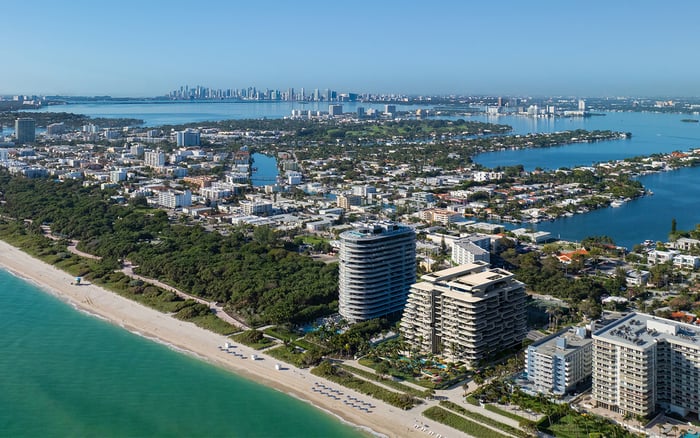
Surfside occupies a rare position within South Florida. It is quieter than central Miami Beach, more residential than Brickell, and directly adjacent to Bal Harbour. For many relocating buyers, that combination matters. The area can feel discreet without being isolated, polished without becoming theatrical, and walkable without sacrificing access to the ocean.
For buyers evaluating oceanfront living, The Delmore Surfside represents the kind of address that draws attention from those who want a residence to feel private, contemporary, and enduring. In this part of the market, the real question is not simply whether a building is beautiful. It is whether the building supports how the buyer intends to live after the move.
That includes service culture, arrival sequence, parking, storage, guest flow, staff access, outdoor space, pet policies, and building governance. A tax-motivated relocation can falter if the home itself is not comfortable enough to make the new state feel genuinely primary.
The topic pairs Chicago with Surfside and references California tax migration because many high-net-worth buyers think in multi-state patterns. A household may have business ties in Illinois, family in California, a legacy home elsewhere, and a future primary residence in Florida. The South Florida purchase becomes a strategic anchor, but it must align with the broader picture.
Buyers should begin with counsel before relying on assumptions. Residency planning can involve domicile, time spent in different places, voter registration, driver licensing, estate documents, banking relationships, business operations, and the practical evidence of daily life. A beautiful Florida address is important, but it is not the entire story.
From a property standpoint, the buyer should ask a plain question: can this home support the life I am representing it to support? If the answer is yes, the purchase may help create coherence between personal intent and daily behavior. If the answer is no, the home risks becoming an occasional pied-a-terre rather than a convincing center of gravity.
Surfside is not the only answer. Miami Beach offers a broader range of design statements, hospitality energy, and cultural access. Buyers who want a more iconic beachfront setting may study The Perigon Miami Beach, where the appeal is tied to architecture, beach proximity, and a more expansive Miami Beach lifestyle.
Bal Harbour offers another tone: refined, compact, and internationally recognized. It tends to appeal to buyers who prize ease, luxury retail proximity, and a quieter residential cadence. Rivage Bal Harbour fits the conversation for those comparing Surfside privacy with Bal Harbour polish.
Brickell, by contrast, is urban, vertical, and business-forward. For buyers whose Florida move is tied to finance, executive travel, or a desire to remain in the city’s daily commercial current, The Residences at 1428 Brickell may feel more practical than the beach. The point is not that one submarket is better. It is that each supports a different version of Florida residency.
A migration purchase should be tested through five lenses. First is daily usability. Does the floor plan work for full-time living, not only long weekends? Large closets, a true office, secondary bedrooms, service access, and outdoor living can matter more over time than a dramatic first impression.
Second is governance. Buyers should understand association structure, rules, reserve culture, rental limitations, renovation policies, insurance posture, and decision-making norms. In luxury condominiums, the intangible quality of governance can shape the ownership experience as much as the view.
Third is privacy. Some buyers want anonymity, while others prefer a social building with visible hospitality energy. A buyer leaving a highly visible professional life may need a different environment than a buyer seeking a more connected seasonal community.
Fourth is liquidity. Even when the goal is long-term residency, an exit strategy matters. Scarcity, architecture, location, maintenance quality, and buyer depth all influence future optionality.
Fifth is lifestyle proof. If Florida is intended to become primary, the property should make that choice easy. Beach access, wellness amenities, dining patterns, proximity to airports, school routines, and family visitation all become part of the real estate analysis.
New-construction residences can be appealing to migration buyers because they often reduce the need for immediate renovation and may offer contemporary layouts, wellness programming, security design, and amenity packages that match current expectations. They can also require careful review of timelines, deposits, delivery assumptions, and how life will be managed before completion.
Established buildings offer a different comfort. The buyer can experience the lobby, staff culture, elevator cadence, parking, light, sound, and neighborhood pattern before committing. In a relocation scenario, that certainty can be valuable.
The best choice depends on personality and timing. A buyer who needs immediate residency stability may favor a completed home. A buyer planning a phased move may prefer the long view of a pre-completion purchase. Either way, the property should fit the migration calendar rather than force the household into a schedule that undermines the plan.
Before signing, assemble the right advisory circle. Real estate counsel, tax counsel, estate planning counsel, insurance advisors, and a deeply local property advisor should be aligned. Their roles are different, but the purchase becomes stronger when the advice is coordinated.
Then examine the residence like a long-term operating asset. Review carrying costs, association rules, insurance expectations, maintenance responsibilities, parking rights, storage, pet rules, guest policies, and renovation constraints. For waterfront or oceanfront property, consider how the building is maintained and how ownership responsibilities are communicated.
Finally, walk the lifestyle. Visit at different times of day. Drive the airport route. Test the grocery pattern. Have dinner nearby on a quiet weekday. Understand how the address feels in season and outside peak periods. The strongest migration purchase is not merely defensible on paper. It is livable in practice.
Is buying in Surfside enough to establish Florida residency? No. A purchase can support a residency plan, but buyers should coordinate legal and tax guidance around the full set of residency facts.
Why do relocating buyers consider Surfside? Surfside offers oceanfront proximity, a quieter residential scale, and easy access to Miami Beach and Bal Harbour.
Should California tax migration buyers choose a primary residence or second home first? The intended use should be clear before purchase. If the home is meant to support residency, it should function comfortably as a primary residence.
How does Brickell compare with Surfside? Brickell is more urban and business-oriented, while Surfside is quieter, more residential, and beach-focused.
Is new construction better for a relocation purchase? It can be, especially for modern layouts and amenities, but timing, delivery, and contract terms should be reviewed carefully.
What should Chicago buyers prioritize when moving to South Florida? They should prioritize daily usability, travel logistics, building governance, privacy, and alignment with professional advice.
Do association rules matter for tax migration planning? They matter because rules affect how the home can actually be used, occupied, renovated, or shared with family and guests.
Is Bal Harbour a substitute for Surfside? It can be for some buyers, especially those seeking a polished, compact luxury environment near shopping and the ocean.
How early should advisors be involved? Advisors should be involved before contract execution, particularly when residency, estate planning, and entity ownership are being considered.
What makes a migration purchase successful? The home should match the buyer’s legal plan, lifestyle expectations, privacy needs, and long-term ownership strategy.
For a tailored shortlist and next-step guidance, connect with MILLION.
If branded residences are on your mind — as a home or as an allocation — we would be glad to share what we are seeing, privately.
Begin a quiet conversation