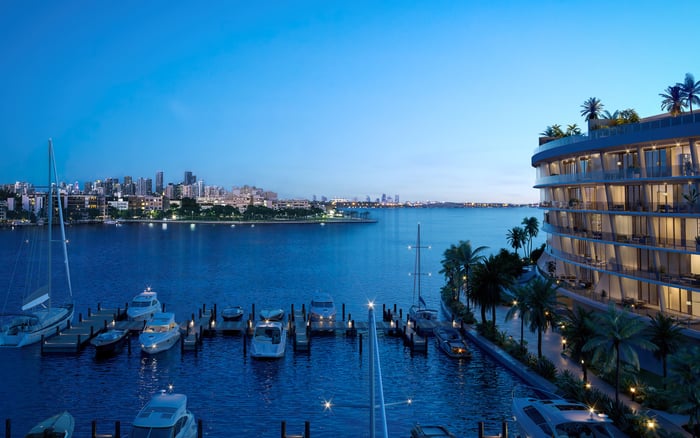
A buyer-focused look at how Ziggurat Coconut Grove fits the rising preference for secure, low-maintenance, lock-and-leave ownership in one of Miami’s most established lifestyle neighborhoods.
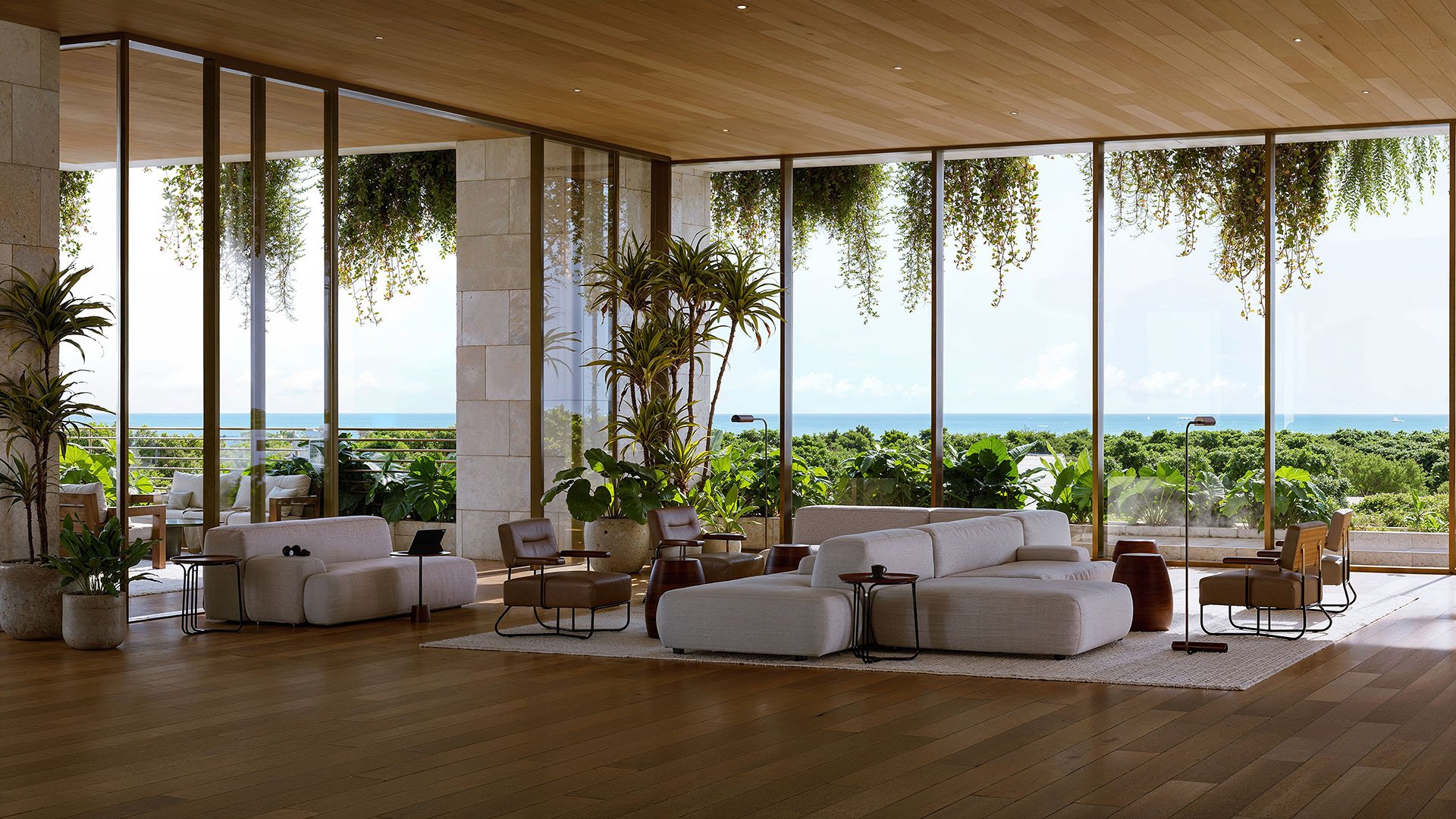
For affluent buyers, lock-and-leave ownership is not simply a smaller home or a lighter calendar. It is a way of owning in Miami that reduces friction when the residence is not in daily use. Security, maintenance, flexibility, and ease of absence become central to the purchase decision, especially for those considering a pied-à-terre, seasonal residence, or secondary home.
That is the context in which Ziggurat Coconut Grove belongs. The project is best understood not as a generic Miami luxury tower, but as a Coconut Grove residential offering set within a neighborhood where lifestyle is already the reason to buy. The question is less whether a buyer wants Miami, and more whether they want Miami without the operational weight that can come with maintaining a private home from afar.
Lock-and-leave is ultimately about confidence. When an owner departs for another residence, an extended trip, or a yacht itinerary, the home should not feel fragile in their absence. The building, its governance, and its day-to-day structure should allow ownership to continue smoothly, even when the owner is not present to supervise every detail.
Coconut Grove has a different cadence from Miami’s higher-density corridors. Its appeal rests in a village-like identity, mature tree canopy, waterfront setting, parks, marinas, and established civic spaces. The neighborhood feels lived-in rather than newly assembled, which is precisely why many buyers are drawn to it.
That same charm can create a more complex ownership equation. A single-family home in the Grove may offer privacy, garden space, and architectural individuality, but it can also require more active oversight. Landscaping, exterior maintenance, storms, security, vendors, access, and routine inspections all become part of the owner’s life, whether handled directly or through staff.
For some buyers, that is desirable. For others, especially those who divide their time among multiple residences, the objective is different. They want the Grove’s restaurants, canopy streets, waterfront walks, boating culture, and neighborhood familiarity without taking on the full operational burden of a house.
Waterfront living and marina access are part of the broader emotional pull. Coconut Grove’s boating culture encourages frequent returns, not necessarily permanent residence. A buyer may want a place that supports spontaneous weekends, winter stays, and family visits, while remaining manageable during long absences.
Ziggurat Coconut Grove enters the discussion where lifestyle preference meets ownership practicality. It is part of a broader luxury-condo conversation in Miami around low-friction ownership, but its relevance is especially Grove-specific. The buyer is not merely choosing services over space. The buyer is choosing a way to enjoy Coconut Grove with fewer day-to-day property decisions.
That is why the project can be read alongside other Grove addresses that have shaped expectations for high-end condominium living. Four Seasons Residences Coconut Grove reflects the continued appetite for service-oriented residential models in the neighborhood, while Park Grove Coconut Grove can enter the same buyer-side comparison set for upscale vertical living close to the water. These comparisons are not about matching specifications. They are about understanding the buyer psychology that favors curated enjoyment over private-property administration.
Boutique does not mean casual in this segment. It often means a more deliberate ownership experience, where the residence is intended to feel personal but not burdensome. For Ziggurat Coconut Grove, the lock-and-leave lens emphasizes the importance of building systems, services, and governance. Those factors can make absence feel closer to presence, because the owner is relying on an organized residential structure rather than a patchwork of individual arrangements.
The lock-and-leave buyer is often highly mobile. They may already own a primary residence elsewhere, keep a family home in another market, or spend extended periods traveling. Miami functions as a base, a winter refuge, a lifestyle consideration, or a familiar point of return.
For that buyer, Coconut Grove offers a softer alternative to more visibly urban Miami neighborhoods. It has the maturity of an established district, with proximity to the bay, parks, marinas, schools, cultural life, and everyday conveniences. The neighborhood can feel residential without feeling remote.
This is where Ziggurat Coconut Grove’s positioning becomes relevant. It belongs to a market conversation shaped by boutique luxury residences, waterfront living, and high-service ownership models. The value proposition is not only what the owner experiences while present, but also how little emotional residue remains when they leave.
Lifestyle matters here because many buyers are not trying to recreate the demands of a primary estate. They want the Grove in a more edited form: a morning walk under the canopy, dinner close to home, access to the bay, and the ability to depart without turning the residence into a management project.
The single-family home remains one of Coconut Grove’s defining ownership formats. It can offer privacy, land, architectural individuality, and the feeling of permanence. For families who live in Miami full-time, or for owners with a strong preference for control, that model can be compelling.
But for a buyer who is absent for long periods, the same strengths may become obligations. A house has more independent systems, more exterior exposure, and usually more vendor coordination. Even with a property manager, decisions continue to surface. The ownership experience can be rewarding, but it is rarely passive.
A lock-and-leave condominium reframes the trade-off. The owner may accept a more structured environment in exchange for predictability. Shared systems, association oversight, controlled access, and coordinated maintenance can simplify the calendar. The point is not that one format is superior. It is that the ideal format depends on how the buyer intends to live.
In the Grove, that distinction is especially important because the neighborhood appeals to both full-time residents and global part-time owners. A project like Ziggurat Coconut Grove sits closer to the second group’s concerns: how to enjoy the neighborhood deeply without supervising a property constantly.
The most important lock-and-leave questions are practical. How does access work when the owner is away? How are common areas and building systems managed? What maintenance responsibilities remain inside the residence? How responsive is the residential structure when something needs attention during an owner’s absence?
Buyers should also consider governance. In a high-value condominium, the association framework, rules, reserves, communication standards, and maintenance culture can matter as much as design. A residence may be beautiful, but lock-and-leave ownership depends on reliability over time.
Security is another core issue. Buyers should understand the building’s approach to controlled entry, deliveries, guests, vendors, and emergency access. The goal is not theatrical security, but quiet confidence.
The surrounding competitive set can help frame expectations. The Well Coconut Grove reflects how wellness and managed residential life are increasingly part of the Grove conversation, while Arbor Coconut Grove illustrates the continued appeal of neighborhood-scale condominium living. Each address may speak to a different buyer, but together they show why the Grove is no longer only a single-family-home story.
The most persuasive luxury in Coconut Grove may be the ability to come and go without ceremony. A lock-and-leave residence should allow a buyer to arrive with little preparation and depart with little anxiety. In that sense, Ziggurat Coconut Grove fits a larger shift in ultra-premium ownership: from accumulation toward ease.
This is not a retreat from luxury. It is a refinement of it. The buyer still wants place, design, privacy, and neighborhood identity. But they also want the residence to cooperate with a global life. Coconut Grove’s appeal is emotional, rooted in canopy, water, memory, and rhythm. Lock-and-leave ownership simply asks whether that emotion can be delivered with less operational drag.
For the right buyer, Ziggurat Coconut Grove belongs exactly there: at the intersection of established Grove character and the modern demand for low-friction ownership.
What does lock-and-leave mean in Coconut Grove? It refers to secure, low-maintenance ownership that allows residents to leave for extended periods with fewer property-management concerns.
Why is Ziggurat Coconut Grove relevant to this conversation? Ziggurat Coconut Grove fits the discussion because it is positioned as a Grove residential offering for buyers who value easier ownership.
Is lock-and-leave ownership only for seasonal buyers? No. It can also appeal to bi-city owners, international buyers, frequent travelers, and anyone who wants a Miami home with less oversight.
How does this differ from owning a single-family home in the Grove? A single-family home can offer more control, but it may also require more active maintenance, security planning, and vendor coordination.
Why does Coconut Grove attract secondary-home buyers? The neighborhood combines a village-like feel with mature canopy, waterfront access, parks, marinas, and an established residential identity.
Does lock-and-leave mean giving up a sense of place? Not necessarily. In Coconut Grove, the goal is often to preserve neighborhood character while reducing day-to-day ownership friction.
What should buyers ask before purchasing? They should review building governance, maintenance responsibilities, access procedures, security protocols, and communication standards.
Is Ziggurat Coconut Grove best viewed as a Miami tower? No. It is better understood through the lens of Coconut Grove and the specific lifestyle expectations of that neighborhood.
Why do services and governance matter so much? They shape how smoothly the residence functions when the owner is away, which is central to lock-and-leave ownership.
Who is the ideal lock-and-leave buyer in the Grove? The ideal buyer wants a refined Coconut Grove base that supports frequent returns without demanding full-time property oversight.
To compare the best-fit options with clarity, connect with MILLION.
If branded residences are on your mind — as a home or as an allocation — we would be glad to share what we are seeing, privately.
Begin a quiet conversation