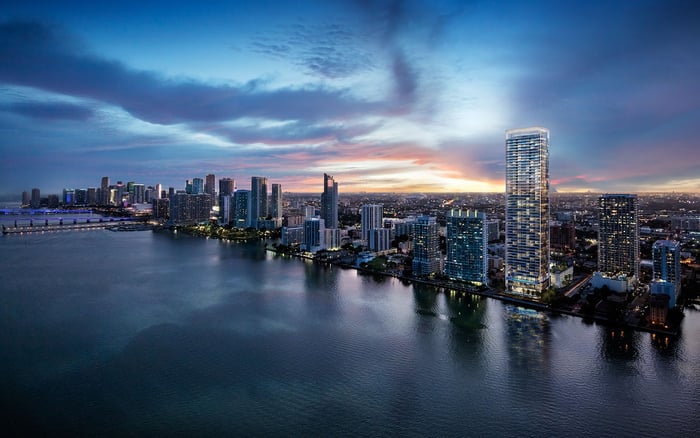
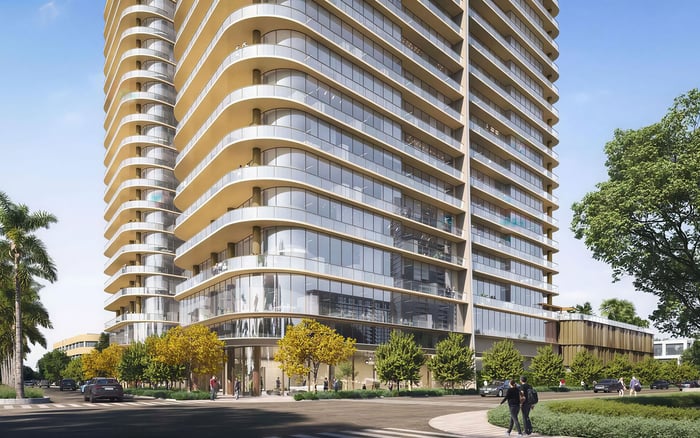
Brickell and Wynwood are no longer competing on the same terms. Brickell is Miami’s established, brand-forward vertical neighborhood: liquid, internationally recognized, and increasingly defined by amenity-rich towers. Wynwood, by contrast, is evolving from a cultural destination into a live-work district, with office growth and design-led residential inventory that tends to enter at a lower price point than Brickell’s new-build pipeline. For buyers, the choice is less about which neighborhood is “hot” and more about aligning a purchase with how you plan to use the home: as a primary residence with daily transit convenience, as a pied-à-terre with hospitality-style service, or as a flexible asset where rental rules and future neighborhood maturation matter.
South Florida’s luxury condo buyer is no longer weighing two versions of the same Miami. Brickell is the polished, finance-forward vertical neighborhood where global recognition, tower living, and brand signaling shape both pricing and demand. Wynwood is a cultural district maturing into a mixed-use residential address, with inventory that often reads more boutique, more design-led, and typically enters at a lower price point than Brickell’s new-build pipeline.
This choice is not just aesthetic. It is a new-construction and investment decision with real underwriting implications: delivery timelines, rental rules, resale liquidity, and the type of neighborhood momentum you are effectively buying into.
Brickell’s 2025 performance looks like a mature luxury market that is still moving, but on a more deliberate clock. The area recorded 989 condo sales with an average sale price of $884,490 and roughly 106 average days on market. The takeaway is not that buyers vanished. It is that buyers are taking time, comparing buildings, negotiating, and scrutinizing HOA economics, view corridors, finish quality, and the practical differences between newer and older product.
Monthly pricing also showed meaningful swings. The average monthly sale price peaked at $1,178,028 in May and landed at $789,842 in December. Price per square foot tracked a similar arc, reaching $868 in May and $756 in December. For end-users, that volatility is a reminder that “Brickell” is a starting point, not a sufficient filter. For investors, it reinforces a building-first approach and a realistic assumption that time on market can expand even in an active neighborhood.
Within the luxury subset, Brickell led Greater Downtown Miami in Q2 2025 luxury condo sales volume with 62 sales, down from 85 in Q2 2024. Price per square foot for Brickell luxury condos in Q2 2025 was $884, slightly below $894 in Q2 2024, and down from $937 in Q1 2025. Days on market rose substantially year over year. The signal reads as normalization: well-positioned units still attract attention, but the buyer is not sprinting.
Brickell continues to win on daily utility. It suits residents who want an urban routine that feels genuinely walkable and transit-connected, with services, dining, and offices concentrated in a compact core. A subtle advantage, particularly for households that split time across cities, is the Miami-Dade Metromover, a free automated people-mover system serving Downtown Miami and Brickell. That kind of low-friction mobility has a direct lifestyle payoff: fewer car trips, easier evenings out, and a smoother weekday rhythm.
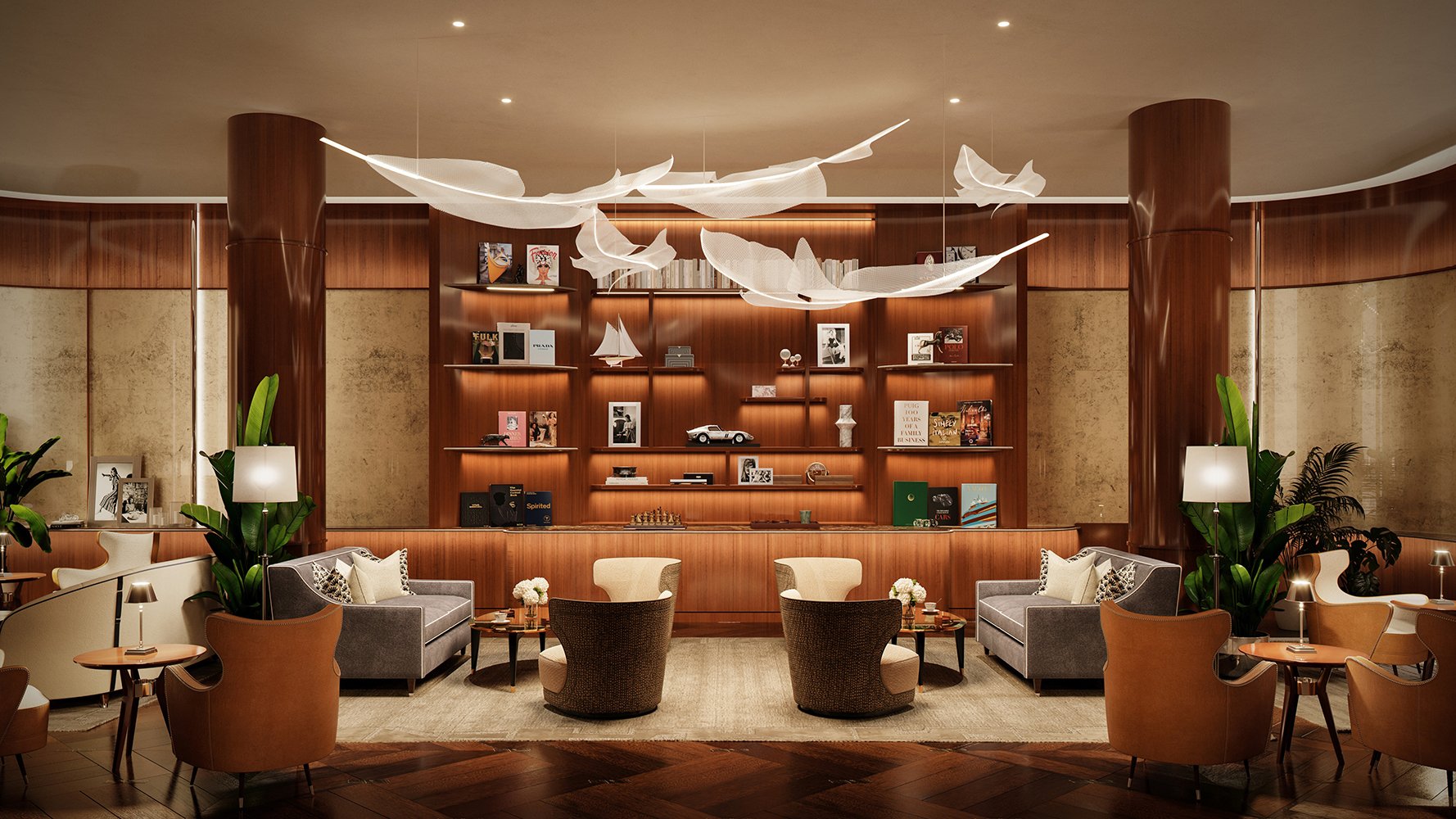
Brickell’s luxury positioning is also increasingly brand-forward. The premium is no longer just about height and water views. It is about operational consistency, management standards, and amenities that feel closer to hospitality than a traditional condo association.
In Brickell’s current cycle, the market is paying for execution. The Residences at 1428 Brickell markets approximately 80,000 square feet of amenities, including a rooftop observatory level with a pool and lounge bar. It also promotes a photovoltaic “Solar Backbone” concept integrated into the tower’s design, a notable cue for buyers who want performance and future-facing engineering included in their definition of luxury.
In the same branded lane, Cipriani Residences Brickell is positioned as a branded condo project with a target delivery timeframe shown as 2028 on marketing materials. For buyers considering pre-delivery purchases, that timeline is not a footnote. It ties directly to construction risk, financing conditions, and opportunity cost, as well as what competing inventory may look like at completion. The upside is access to a newer product cycle with an amenity and service profile aligned with how buyers are shopping today.
At the very top of the skyline conversation, marketing materials for Waldorf Astoria Miami Residences list penthouses priced up to $50 million. Even if you are not shopping at that tier, it frames how far the branded segment has stretched and how strongly service, scarcity, and perception are being priced.
Wynwood’s appeal is inseparable from its identity. Wynwood Walls, a major outdoor street art destination, opened in 2009 and helped define the neighborhood’s visual language. Art-basel week also amplifies the district’s calendar, with Art Week programming that draws satellite fairs, exhibitions, and nightlife.
What is changing is the weekday story. Wynwood’s next phase is increasingly tied to employment, office growth, and daytime density. Amazon expanded its Wynwood Plaza footprint to over 75,000 square feet following an initial lease. The broader Wynwood Plaza project has been described as a 266,000-square-foot office tower at 95 NW 29th Street with modern features such as terraces and floor-to-ceiling windows. For residential buyers, that kind of office gravity can matter: more consistent foot traffic, restaurants that can survive beyond peak weekends, and a stronger sense of neighborhood continuity.
On pricing, MILLION Luxury’s Brickell vs. Wynwood new-construction overview frames Brickell as the higher-priced, brand-heavy pipeline, while Wynwood’s offerings skew more boutique and design-forward. The same overview notes that Wynwood entry pricing for smaller units often lands in the high-$400Ks to mid-$500Ks, typically below Brickell’s new-build entry points. That does not make Wynwood “cheap.” It makes it a different thesis: earlier-stage, more variable, and more sensitive to micro-location.
Wynwood tends to reward buyers who are comfortable underwriting change. If you are considering a primary residence, evaluate how daily life feels outside peak weekends, not only during marquee events. If you are buying for flexibility, rental rules should sit next to finishes on your checklist.
A practical example of the district’s range is The Standard Residences (Wynwood/Midtown), which lists available units priced roughly $629,900 to $880,900 with sizes about 436 to 969 square feet. That profile can fit buyers who want a smaller footprint paired with a highly curated lifestyle layer.
Meanwhile, Twenty Sixth & 2nd Wynwood markets flexible use, including the ability to list residences and some workspaces on Airbnb. That can be a differentiator, but it is also where disciplined buyers slow down. Short-term rental permissions influence building culture, operational wear and tear, and the eventual resale audience.
When choosing between Brickell and Wynwood, anchor on use-case, not headlines.
Brickell tends to fit buyers who want predictable luxury signaling, transit convenience, and the option to prioritize branded-service living. The trade-off is competition: many buyers are making the same comparisons, so standout value often comes down to specifics such as layout efficiency, HOA structure, and protected view corridors.
Wynwood tends to fit buyers who want cultural proximity, a more design-forward tone, and a willingness to hold through neighborhood evolution. The trade-off is variability. Two blocks can feel like different markets, and future supply can reset comps quickly.
Some buyers decide they do not want to choose between Brickell’s finance-core urbanity and Wynwood’s creative-district energy. They want coastline, hospitality, and a residential format that still feels serviced. That is where Miami Beach’s branded residential conversation becomes relevant.
Casa Cipriani Miami Beach speaks to a specific buyer profile: discreet service culture, a members-club sensibility, and a lifestyle that reads curated rather than purely convenient.
For a different expression of the same idea, Shore Club Private Collections Miami Beach points to Miami Beach’s continuing ability to translate legacy hospitality into modern ownership. Across Brickell and the beach, the through-line is clear: luxury is increasingly measured by operations as much as architecture.
In Brickell, watch the relationship between pricing and time on market. The 2025 stats already show a longer decision cycle, and Q2 luxury pricing dipped quarter over quarter. That combination can create opportunity for disciplined buyers who know exactly what they want and can act when the right unit comes to market.
In Wynwood, watch office momentum and how it reshapes the weekday cadence. Cultural districts can thrive on energy, but real estate values tend to stabilize when daily utility becomes part of the narrative.
Across both neighborhoods, focus on the spread between marketing and reality. New projects often communicate aspirational pricing and completion windows as part of positioning. Sophisticated buyers anchor on what is publicly disclosed, what is contractually defined, and what comparable closed sales imply for the moment you plan to exit.
Is Brickell still a strong luxury market in 2026? 2025 data indicates Brickell remains active and liquid, but buyers are taking longer and negotiating more carefully.
What does “days on market” tell me as a buyer? It reflects how quickly units are selling; longer timelines can increase your leverage on price and terms.
Why do branded residences matter in Brickell? They often compete on service standards and amenity scale, which can influence demand and resale perception.
What is unique about The Residences at 1428 Brickell? It markets approximately 80,000 square feet of amenities and a rooftop observatory level, plus a photovoltaic “Solar Backbone” concept.
What should I know about Cipriani Residences Brickell timing? Marketing materials show a target delivery timeframe of 2028, which matters for planning and opportunity cost.
Is Wynwood mainly an art neighborhood or a real residential one? It started as a cultural destination, and office growth and mixed-use development are strengthening it as a residential district.
How does Art-basel affect Wynwood real estate? It heightens seasonal demand and visibility, but long-term value depends on everyday livability and supply dynamics.
Are there price benchmarks for Wynwood new condos? Some listings show units roughly $629,900 to $880,900 for about 436 to 969 square feet, depending on the project.
Should I consider Airbnb-friendly buildings in Wynwood? They can add flexibility, but short-term rentals can affect building culture, maintenance, and resale buyers.
When does Miami Beach make more sense than Brickell or Wynwood? When you prioritize hospitality-style service and coastal lifestyle over commuting convenience or a creative-district vibe.
For tailored guidance on Brickell, Wynwood, and Miami Beach acquisitions, connect with MILLION Luxury.
If branded residences are on your mind — as a home or as an allocation — we would be glad to share what we are seeing, privately.
Begin a quiet conversation