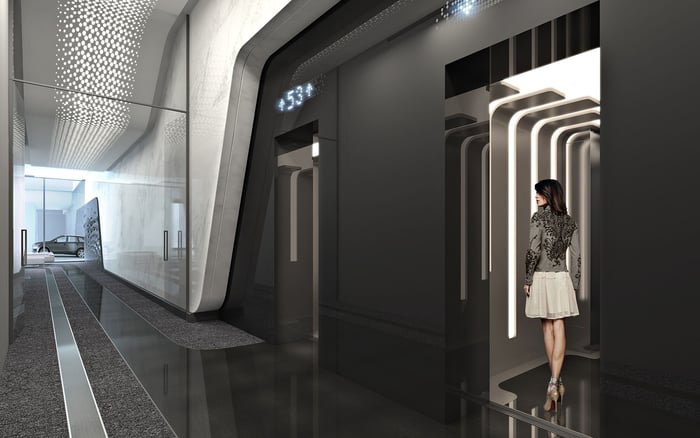
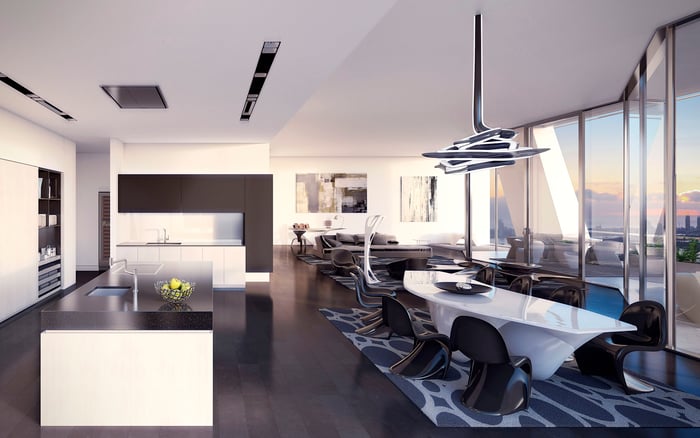
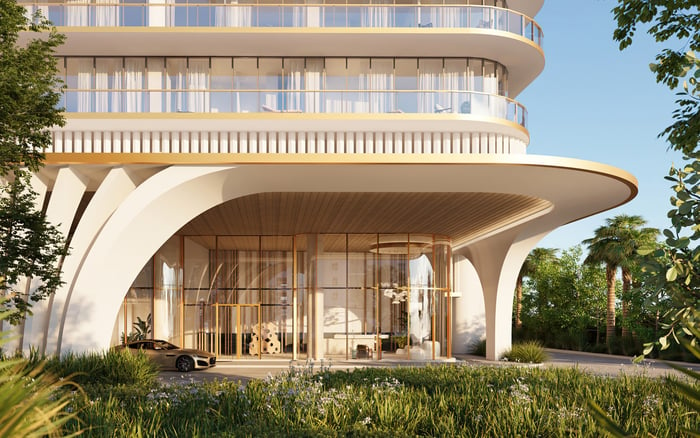
One Thousand Museum stands apart in Downtown Miami because its architecture treats structure as identity. The tower’s external exoskeleton is not a decorative afterthought but the defining move of the design, shaping its silhouette, supporting more open interiors, and reinforcing its place in the city’s ultra-luxury conversation. For buyers, developers, and design-minded observers, its significance lies in how engineering performance, spatial efficiency, and visual drama are fused into one coherent residential statement.
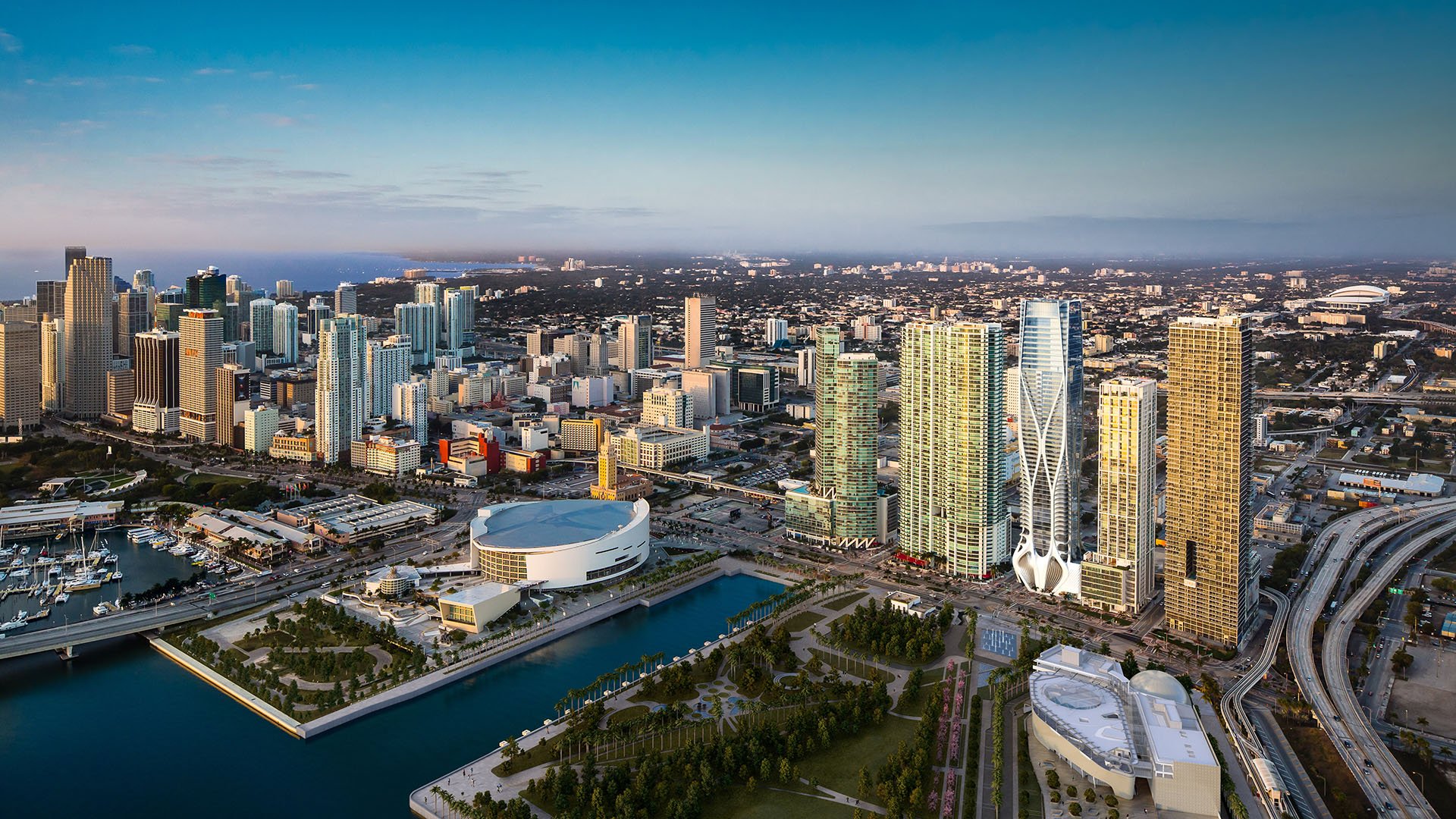
In a city where luxury towers often compete on height, amenities, and waterfront positioning, One Thousand Museum sets itself apart through a rarer ambition: making structure the central architectural event. Rising in Downtown Miami near Biscayne Bay, the tower presents a diagonal exterior lattice that reads immediately as both engineering and image. That duality gives the building its lasting significance.
The exoskeleton is the tower’s defining move. Rather than concealing structural performance behind glass and cladding, the building expresses it on the exterior. The façade becomes a visible framework of support, one that shapes the tower’s sculptural profile while serving a practical role. In luxury residential design, where visual identity can easily slip into ornament, One Thousand Museum stands out because its most memorable feature is inseparable from how the building stands.
For discerning buyers in Downtown, that distinction matters. The market increasingly rewards projects whose design logic is legible, not merely branded. That helps explain why architect-driven residences, from Aston Martin Residences Downtown Miami to Waldorf Astoria Residences Downtown Miami, are judged not only by finish levels but by whether their architecture contributes something original to the skyline conversation.
The architectural value of an exoskeleton is not limited to appearance. At One Thousand Museum, shifting more structural work to the exterior frame reduces reliance on interior columns. In residential terms, that has an immediate effect on plan quality. Large-format homes benefit from broader spans, cleaner sightlines, and a stronger sense of uninterrupted volume.
That spatial openness is especially meaningful in an ultra-luxury tower with a limited number of residences, where buyers expect homes to feel expansive rather than compartmentalized. Residences ranging from three-bedroom layouts to penthouses benefit from a design strategy that allows interiors to prioritize flow, scale, and flexibility. The result is architecture that serves daily life as convincingly as it serves the skyline.
This is one reason the tower remains relevant in the broader new-construction conversation. In the upper tier of the condo market, square footage alone is not enough. What matters is how efficiently that space is organized, how complete the rooms feel, and how naturally living, dining, and entertaining areas can unfold. One Thousand Museum’s exoskeleton supports that premium value proposition by helping maximize usable interior space.
For comparison, contemporary buyers also gravitate toward projects where plan efficiency and visual clarity define the residential experience, whether in Casa Bella by B&B Italia Downtown Miami or Aria Reserve Miami. Yet One Thousand Museum remains distinctive because its spatial advantages are visibly tied to its engineering language.
At approximately 62 stories, One Thousand Museum holds a commanding place in the Miami skyline. Height alone does not confer architectural importance, but here vertical scale amplifies the building’s formal ambition. The diagonal lattice is integrated into the building envelope, giving the tower a profile that shifts with viewpoint, daylight, and distance.
Seen from Biscayne Boulevard, the frame reads as a powerful urban object. Seen against the water and sky, it becomes more fluid, almost skeletal in silhouette. That changing visual character is central to its appeal. The building does not present a flat or fixed image. It offers a shifting one, and that dynamism often marks the difference between a tower that is merely prominent and one that is memorable.
Its setting reinforces that status. Positioned near Biscayne Bay and close to Miami’s cultural core, the tower pairs iconic architecture with one of the city’s most visible corridors. In practical terms, that gives residents both prestige of address and a highly legible relationship to the urban fabric. In editorial terms, it helped establish Downtown as a serious setting for design-led ultra-luxury residential development rather than simply a district of new inventory.
That influence can be felt across the surrounding market. Today, trophy residential positioning in Downtown is also advanced by buildings such as Faena Residences Miami Downtown Miami, where architecture and identity are similarly expected to operate in tandem.
Authorship matters in luxury real estate, especially when a building is meant to endure as more than a sales narrative. One Thousand Museum was designed by Herzog & de Meuron, the Swiss practice whose body of work has given it a global reputation across culturally significant and residential projects alike. In Miami’s architect-branded market, that pedigree deepens the tower’s stature.
What distinguishes this association is that the design does not rely on the architect’s name alone. The exoskeleton expresses a clear architectural thesis: structure can be expressive, useful, and market-relevant all at once. The building’s identity is therefore not imported through branding. It is embodied in the form itself.
For buyers, that carries a subtle but meaningful implication. Prestige in the luxury sector can come from service, scarcity, or address, but design prestige is harder to manufacture. It depends on whether a project offers a coherent idea. One Thousand Museum does, and that coherence is visible from the façade to the planning logic within.
Many towers aspire to be iconic. Far fewer manage to feel inevitable, as though no other structural language would have made equal sense. One Thousand Museum succeeds because its exterior frame is not an accessory. It is the building’s ordering principle. That is what allows it to remain convincingly Ultra-modern rather than merely dramatic.
The tower includes the high-touch amenities and services expected of a trophy residential address. But its enduring appeal is architectural. In a market where the language of luxury can quickly become interchangeable, this building retains singularity.
For the South Florida audience following this market, the lesson is straightforward. Lasting residential value at the top end often comes from the relationship between design intelligence and livability. One Thousand Museum embodies that relationship with uncommon clarity. Its exoskeleton is significant not simply because it is unusual, but because it turns technical necessity into spatial quality and a lasting civic image.
What makes One Thousand Museum architecturally significant? Its external exoskeleton merges structural performance with a distinct visual identity, making the tower recognizable and functionally advanced at once.
Who designed One Thousand Museum? The tower was designed by Herzog & de Meuron, a globally recognized Swiss architectural practice.
Where is One Thousand Museum located? It is located in Downtown Miami near Biscayne Bay and the city’s cultural core.
How tall is One Thousand Museum? The tower rises 62 stories, giving it major skyline presence in Downtown Miami.
Why does an exoskeleton matter in a luxury residence? By moving structural work outward, it helps reduce interior columns and supports larger, more open living spaces.
What kind of floor-plan benefit does the design create? The structure supports broader spans, cleaner sightlines, and more uninterrupted interior volume.
What types of homes are discussed in the building? The article references large-format residences, including three-bedroom layouts and penthouses.
Is the exoskeleton decorative or structural? It is both expressive and structural, which is precisely why the design carries architectural weight.
Why is the project important to Downtown Miami? It helped define Downtown as a destination for design-led ultra-luxury residential development.
What is the best way to shortlist comparable options for touring? Start with location fit, delivery status, and daily lifestyle priorities, then compare stacks and elevations to validate views and privacy.
When you're ready to tour or underwrite the options, connect with MILLION Luxury.
If branded residences are on your mind — as a home or as an allocation — we would be glad to share what we are seeing, privately.
Begin a quiet conversation