An authoritative buyer’s guide to understanding how developer warranties typically apply to custom finishes in a Florida luxury condominium context when project-specific terms are not publicly confirmed.
For buyers considering Maison D'Or South Flagler, the most important point is also the most disciplined: custom-finish warranty coverage should be evaluated through contract documents, not assumptions attached to a luxury brand narrative. Publicly available material does not establish verified project-specific warranty terms for custom finishes, so the prudent lens is Florida new-construction practice.
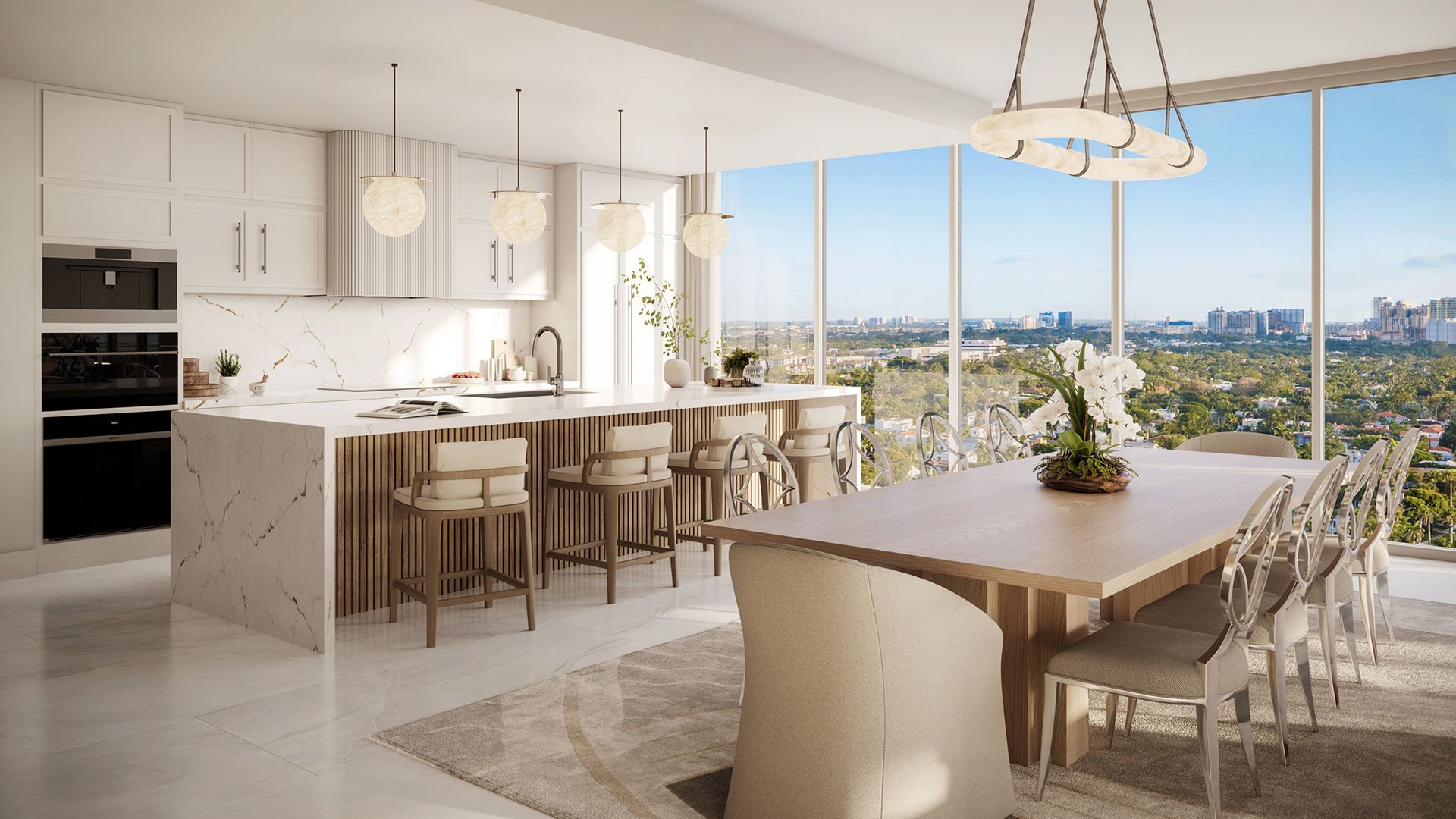
That distinction matters. In a high-design residence, finishes are often the emotional center of the purchase: book-matched stone, bespoke cabinetry, imported tile, decorative plumbing fittings, specialty paint systems, integrated appliances, and tailored millwork. Yet those same elements are frequently treated differently from structural or life-safety components when warranty language is drafted. A buyer who assumes all visible craftsmanship is uniformly covered may discover, after closing, that the contract separates design selections from core building obligations.
In West Palm Beach, where newer luxury inventory sits within a sophisticated competitive set, finish packages can carry meaningful premium value. That makes warranty precision not a technical footnote, but a core part of acquisition strategy.
In practice, custom finishes usually refer to the layers a resident sees and touches every day. Think natural stone countertops, slab backsplashes, wide-plank flooring, tile assemblies, lacquered millwork, specialty hardware, plumbing fixtures, lighting trim, wall coverings, and upgraded paint applications. In many condominium purchase agreements, these items are not treated the same as slabs, roofs, mechanical systems, or building-envelope work.
The contract may distinguish between a defect in installation and ordinary variation in natural materials. Veining in marble, tonal differences in wood, grout shading, hairline settling at caulk joints, and patina development on metal fixtures may be characterized as normal conditions rather than warrantable failures. For a luxury purchaser, that language deserves close reading because the project’s most expensive visual elements may carry the narrowest remedies.
Florida condominium law gives buyers a useful framework for understanding rights and obligations around development disclosures and ownership structure, but it does not replace the need to read the actual purchase package line by line. The controlling question is simple: what does the signed agreement say about the limited warranty, the exclusions, and any assignment of manufacturer coverage?
The most common mistake is assuming that a developer provides one blanket promise for everything delivered inside the residence. Luxury projects rarely work that simply. Custom finish items are often covered, if at all, through a mix of limited developer obligations, manufacturer warranties, supplier warranties, and installer responsibilities.
That means a cabinet-finish issue may be treated differently from a tile-lippage issue, and both may be treated differently from a plumbing-fixture defect. Some remedies may be limited to repair rather than replacement. Some may exclude cosmetic conditions unless they exceed an articulated tolerance. Some may require the buyer to proceed directly against the manufacturer or subcontractor if the warranty has been assigned at closing.
This is where discreet diligence becomes essential. A purchaser should review whether upgraded or customized selections are carved out entirely, whether owner-supplied materials are excluded, whether natural-material variation is exempt, and whether labor is covered for reinstallation or only the product itself. Those details shape the real value of the warranty far more than a polished sales presentation ever could.
For any luxury condominium purchase, the hierarchy of documents matters. Begin with the purchase agreement itself, then move to any limited-warranty exhibit, finish schedules, upgrade addenda, punch-list procedures, and assignment forms for third-party warranties. If the project is marketed under a related entity or evolving naming convention, make sure the responsible developer and builder are clearly identified in writing.
The buyer should also confirm who is expected to administer claims after closing. If the developer remains the first point of contact, the process may be more streamlined. If warranties are assigned out, the owner may need to engage directly with the stone fabricator, cabinet vendor, fixture manufacturer, or installer. In an ultra-luxury residence, that administrative distinction can determine whether a problem is resolved elegantly or becomes a fragmented service exercise.
Local permitting and inspection records may help confirm that work was properly permitted and approved, but permit sign-off is not the same as a private promise to correct finish performance after closing.
Not every finish item carries the same risk profile. Stone deserves special attention because many contracts exclude naturally occurring fissures, movement in veining, or tonal variation unless the issue rises to a clear installation defect. Tile and flooring deserve similar review because tolerance language may govern lippage, grout appearance, transition alignment, and acclimation-related movement.
Cabinetry and millwork are equally important in a Palm Beach luxury residence. The warranty may distinguish between structural failure of a component and ordinary expansion, contraction, or finish wear. Fixtures and hardware also require care, especially if the visible brand cachet of the residence depends on designer plumbing fittings or appliance packages. In many cases, the product warranty belongs more to the manufacturer than to the developer.
Buyers comparing residences in Palm Beach and neighboring enclaves often look at finish quality across projects such as Alba West Palm Beach, Forté on Flagler West Palm Beach, Mr. C Residences West Palm Beach, Shorecrest Flagler Drive West Palm Beach, and The Ritz-Carlton Residences® West Palm Beach. The lesson is not that one project has better warranty protection than another absent verified documents. The lesson is that in this tier of the market, finishes are part of the asset thesis, so warranty language should be evaluated with the same seriousness as price positioning, view corridor, and association structure.
A prudent buyer should ask for the complete purchase agreement and every warranty-related exhibit before becoming comfortable with any representation about custom finishes. Review the definitions section first, then isolate every reference to exclusions, cosmetic conditions, natural materials, owner maintenance, assignment, notice requirements, and claim deadlines.
Next, identify whether the seller is promising repair, replacement, credit, or sole discretion in choosing the remedy. Determine whether the warranty begins at closing, substantial completion, or another milestone. Confirm whether punch-list completion interacts with later warranty rights. If a finish item is sourced from a third party, ask whether the manufacturer warranty is transferable and, if so, whether transfer documentation is automatic or must be requested.
Finally, retain a Florida real estate attorney with new-construction experience to review these provisions before closing. In a boutique luxury transaction, legal review is not a defensive gesture. It is simply the polished way to protect a highly curated investment.
When project-specific warranty terms are not publicly established, the elegant move is restraint. Buyers should avoid relying on generalized expectations about luxury development and instead request the original documentation that controls remedies. If Maison D'Or South Flagler is being marketed off-market, pre-announcement, or under a different entity structure, that makes documentary confirmation even more important.
The central takeaway is straightforward: the finer the finish package, the more exacting the warranty review should be. Bespoke interiors create distinction, but they also create categories of risk that are often narrowed by exclusions, supplier terms, and procedural requirements. In West Palm Beach, sophistication means understanding both the beauty of the offering and the paper that governs it.
Are Maison D'Or South Flagler custom finishes publicly confirmed as covered by a developer warranty? Public materials do not establish verified project-specific custom-finish warranty terms, so buyers should rely on the actual contract package.
Do custom finishes usually have the same coverage as structural components? Not typically. Items such as stone, cabinetry, tile, paint, and fixtures are often treated separately or more narrowly.
What documents should a buyer request first? Ask for the purchase agreement, limited-warranty exhibit, exclusions, finish schedules, and any manufacturer warranty assignments.
Can a developer exclude upgraded or bespoke selections? Yes. Luxury upgrade packages and customized selections are often addressed through carve-outs or narrower remedies.
Who handles a claim if warranties are assigned? The buyer may need to pursue the manufacturer, installer, or subcontractor directly rather than the developer.
Does permit approval guarantee finish quality? No. Permitting and inspections address code and administrative compliance, not private warranty obligations on finishes.
Why do natural materials need special review? Contracts often distinguish between a true defect and inherent variation in marble, wood, metal, or tile.
When does a finish warranty usually start? The answer depends on the contract. Some warranty periods may begin at closing, substantial completion, or another stated milestone.
Is legal review really necessary in a luxury condo purchase? Yes. An attorney experienced in Florida new-construction can evaluate exclusions, notice rules, and assignment language.
What is the best way to shortlist comparable options for touring? Start with location fit, delivery status, and daily lifestyle priorities, then compare stacks and elevations to validate views and privacy.
For a tailored shortlist and next-step guidance, connect with MILLION Luxury.
If branded residences are on your mind — as a home or as an allocation — we would be glad to share what we are seeing, privately.
Begin a quiet conversation