A buyer-focused editorial on One Thousand Museum Downtown Miami as a collectible residential work, defined by Herzog & de Meuron authorship, sculptural skyline presence, and Downtown Miami’s evolution into a luxury design market.
For certain buyers, a Miami residence is not merely a place to stay. It is an acquisition, a point of view, and a lasting expression of taste. One Thousand Museum Downtown Miami sits squarely in that category, where the value proposition begins with authorship and extends to the way the building performs as an object on the skyline.
The tower was designed by Herzog & de Meuron, the internationally recognized Swiss architecture firm, and that authorship changes the buyer conversation. This is not simply a Downtown luxury condominium with an interesting exterior. It is a residential address whose identity is inseparable from a global architectural name. For collectors accustomed to reading provenance, edition, condition, and cultural relevance in art, the same instincts apply here.
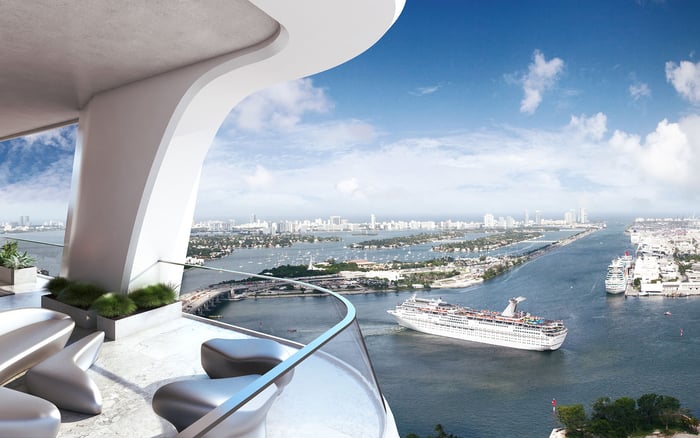
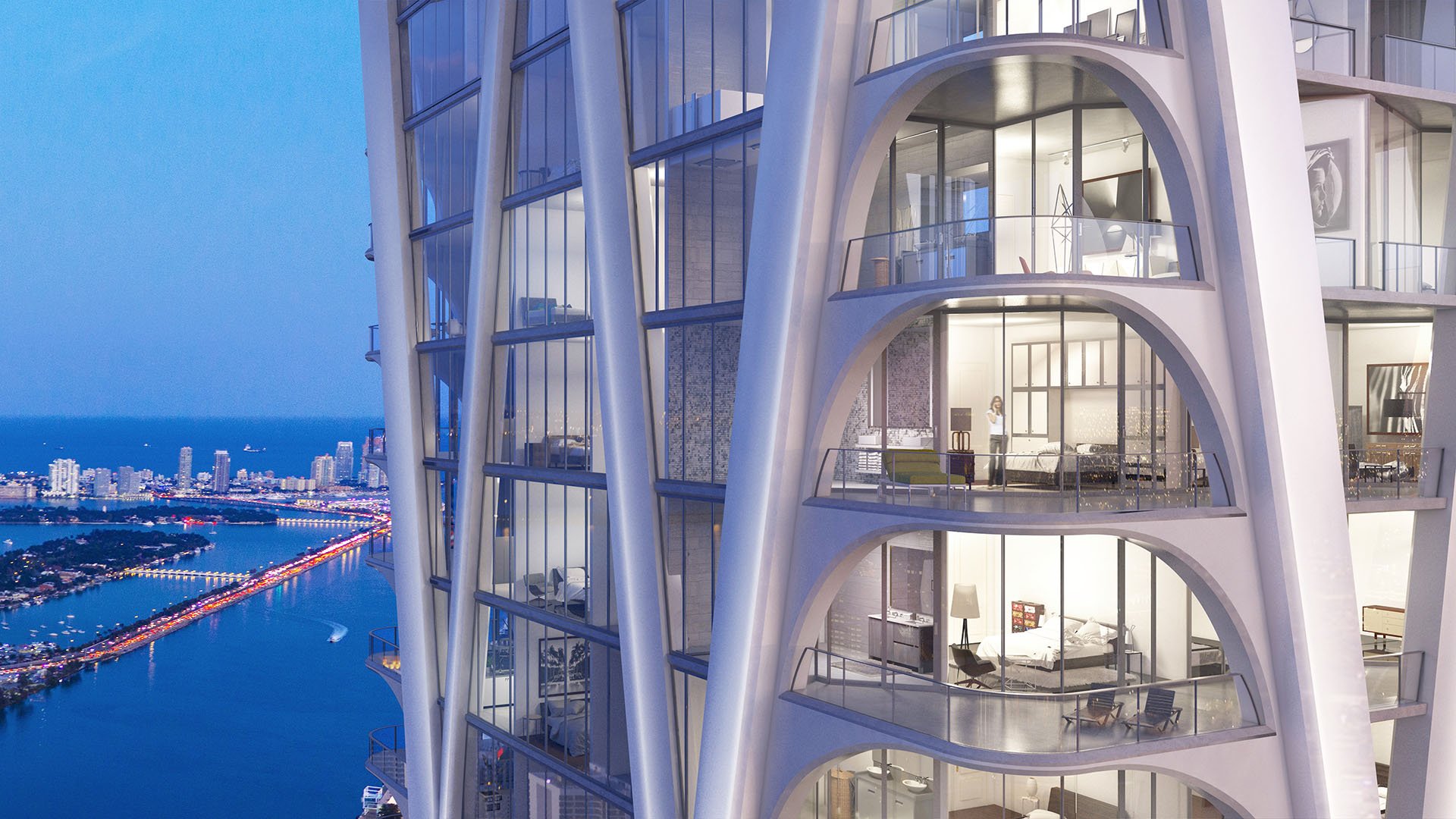
The most persuasive way to understand One Thousand Museum is as a livable architectural object. Its exterior is dramatic and sculptural, giving the tower a skyline identity recognizable from multiple perspectives. The façade is not treated as decoration. Its complex geometric language creates depth, shadow, and shifting visual effects, making the building feel less like a static surface and more like a designed presence.
The buyer for One Thousand Museum is not simply chasing square footage, views, or amenity volume. Those considerations still matter, but the deeper attraction is architectural pedigree. Herzog & de Meuron authorship gives the residence a connection to contemporary design culture that few residential towers can claim.
That distinction matters in Miami’s upper tier, where many properties compete through waterfront position, branded hospitality, private services, and skyline visibility. A building with a strong architectural signature offers another layer: intellectual ownership. The purchaser is not only buying an apartment. The purchaser is buying into a complete design proposition.
This is where the comparison to blue-chip contemporary art becomes useful. The most serious collectors rarely buy because an object is merely attractive. They buy because authorship, context, rarity, and long-term relevance converge. One Thousand Museum speaks to that same sensibility. It gives the owner a home with recognizable design DNA, one that can be discussed in the language of architecture rather than only in the language of real estate.
Downtown Miami has evolved from a primarily commercial core into a mixed-use luxury residential market. That transformation gives One Thousand Museum an urban context distinct from beachfront or island living. The address participates in a denser, more metropolitan Miami, where skyline presence is part of the experience.
In this setting, architecture is not hidden behind gates or softened by resort landscaping. It has to hold the street, meet the skyline, and perform in a tropical urban environment. One Thousand Museum is positioned for visual impact, durability, and climate-aware material choices, all central considerations in South Florida. Its design responds to Miami not as a neutral backdrop, but as an active condition.
The tower also belongs to a broader Downtown conversation that includes other highly visible residential statements. Buyers comparing the area may also study Aston Martin Residences Downtown Miami, Waldorf Astoria Residences Downtown Miami, and Faena Residences Miami Downtown Miami as part of a wider shift toward design-led vertical living. One Thousand Museum, however, is best read through the lens of architecture first.
In many luxury condominiums, the amenity deck carries the marketing weight. At One Thousand Museum, the exterior itself becomes the first amenity, defining the emotional and cultural value of ownership before a buyer enters the private residence.
The sculptural envelope gives the building a strong public identity. It creates recognition, which is especially meaningful for owners who care about the image and intelligence of a property. In a market where many residences promise privacy and finish quality, the visible architectural statement becomes a differentiator.
The façade’s geometry also matters because it allows the tower to change visually with light and angle. This is a subtle but powerful trait. Collectible architecture should reward repeated looking, much like an artwork that reveals different qualities as conditions shift. A buyer may experience the building from the street, from another tower, or from across the city, and the object remains active.
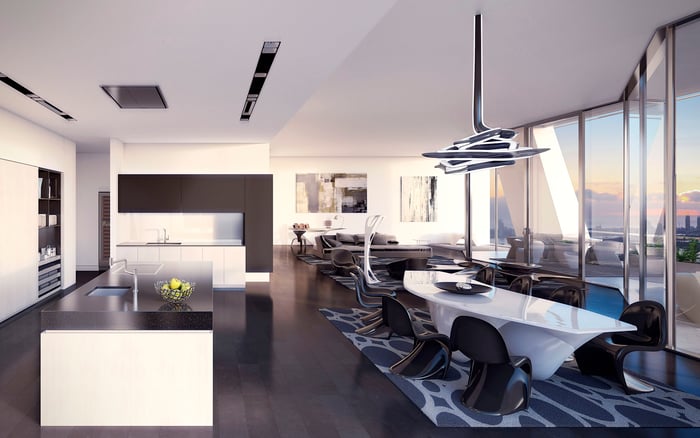
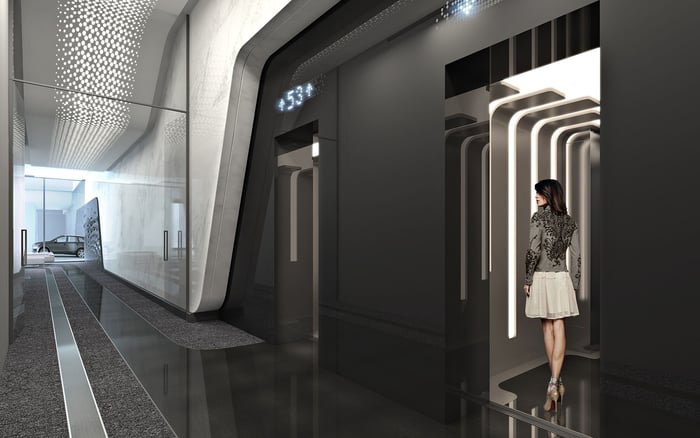
One Thousand Museum is not positioned as a tower where design stops at the private threshold. The building is framed as a comprehensive architectural environment, with design attention extending into shared spaces, circulation areas, amenity areas, and street presence.
That continuity matters to sophisticated buyers. A residence with architectural credibility can lose authority if its common spaces feel generic. Here, the broader proposition is that the building’s identity runs through the entire experience. Arrival, movement, and shared environments contribute to the same design argument as the exterior.
For buyers comparing architecture-forward residences in Miami, it is useful to consider how different projects express design intent. A Brickell buyer might look at The Residences at 1428 Brickell for another kind of urban luxury proposition, while a Downtown collector may remain focused on the authorship and sculptural identity of One Thousand Museum. The correct choice depends on whether the buyer prioritizes address, service culture, views, brand association, or architectural collectibility.
The editorial case for One Thousand Museum is clear: it is a Downtown residential tower where architecture is central to the value proposition. The acquisition case still requires discipline. Current resale pricing, available inventory, HOA fees, and transaction history should be verified before any decision is made.
This is especially true for buyers who already understand art markets. A strong name and a powerful object do not eliminate the need for careful diligence. They make the diligence more nuanced. The right apartment, exposure, floor position, view corridor, condition, and ownership costs all shape the final calculus.
Search behavior can also be revealing. Buyers may arrive through terms such as One Thousand Museum Downtown Miami, Downtown, Ultra-modern, High-floors, Waterview, and Resale, but the final decision should be more refined than a keyword match. The central question is whether the property’s design authorship, urban presence, and private residential experience align with the buyer’s long-term sense of value.
For the right owner, One Thousand Museum is not about conspicuous abundance. It is about living inside a building with architectural consequence. That is a quieter form of luxury, and often the more enduring one.
What makes One Thousand Museum different from a conventional luxury condo? Its central value proposition is architectural authorship and sculptural identity, not simply location, finishes, or amenities.
Who designed One Thousand Museum? The building was designed by Herzog & de Meuron, the internationally recognized Swiss architecture firm.
Why does architectural authorship matter to buyers? Authorship can give a residence cultural identity and design credibility, similar to provenance in a serious art collection.
Is One Thousand Museum best suited to art collectors? It is especially relevant for buyers who view residential architecture as a collectible asset comparable to art.
How should buyers think about the exterior design? The sculptural façade is integral to the building’s identity and creates depth, shadow, and changing visual effects.
Does the design extend beyond the private residences? Yes. The tower is positioned as a complete architectural environment including shared spaces and street presence.
Why is Downtown Miami important to the story? Downtown has evolved into a mixed-use luxury residential market, giving the tower an urban and skyline-driven context.
Is One Thousand Museum only about visual impact? No. Its design also responds to Miami’s urban and tropical context, including durability and climate-aware material choices.
What should buyers verify before making an offer? Buyers should verify current inventory, resale pricing, HOA fees, and transaction history before committing.
How should One Thousand Museum be framed in a portfolio? It is best understood as a livable architectural object within Miami’s ultra-premium residential market.
For a tailored shortlist and next-step guidance, connect with MILLION.
If branded residences are on your mind — as a home or as an allocation — we would be glad to share what we are seeing, privately.
Begin a quiet conversation