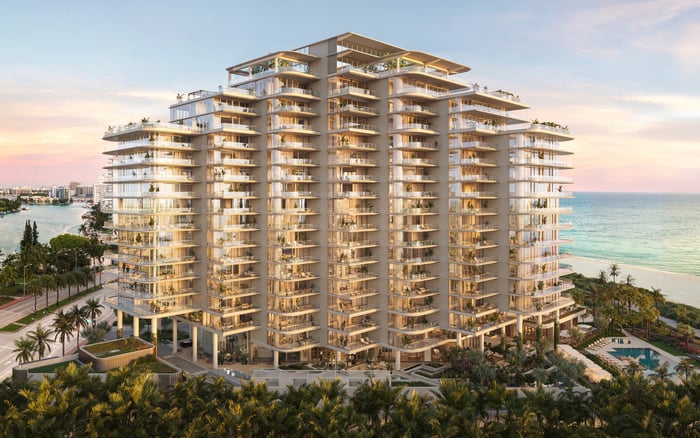
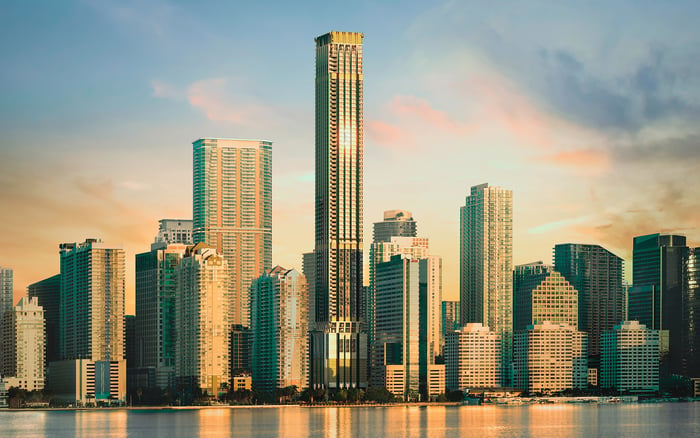
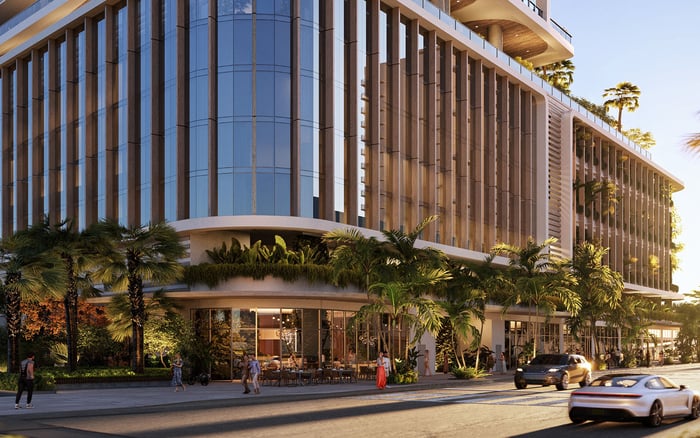
Art Basel concentrates global high-net-worth travel into one week. For South Florida real estate, it acts as a discreet marketing window where culture, hospitality, and trophy inventory intersect.
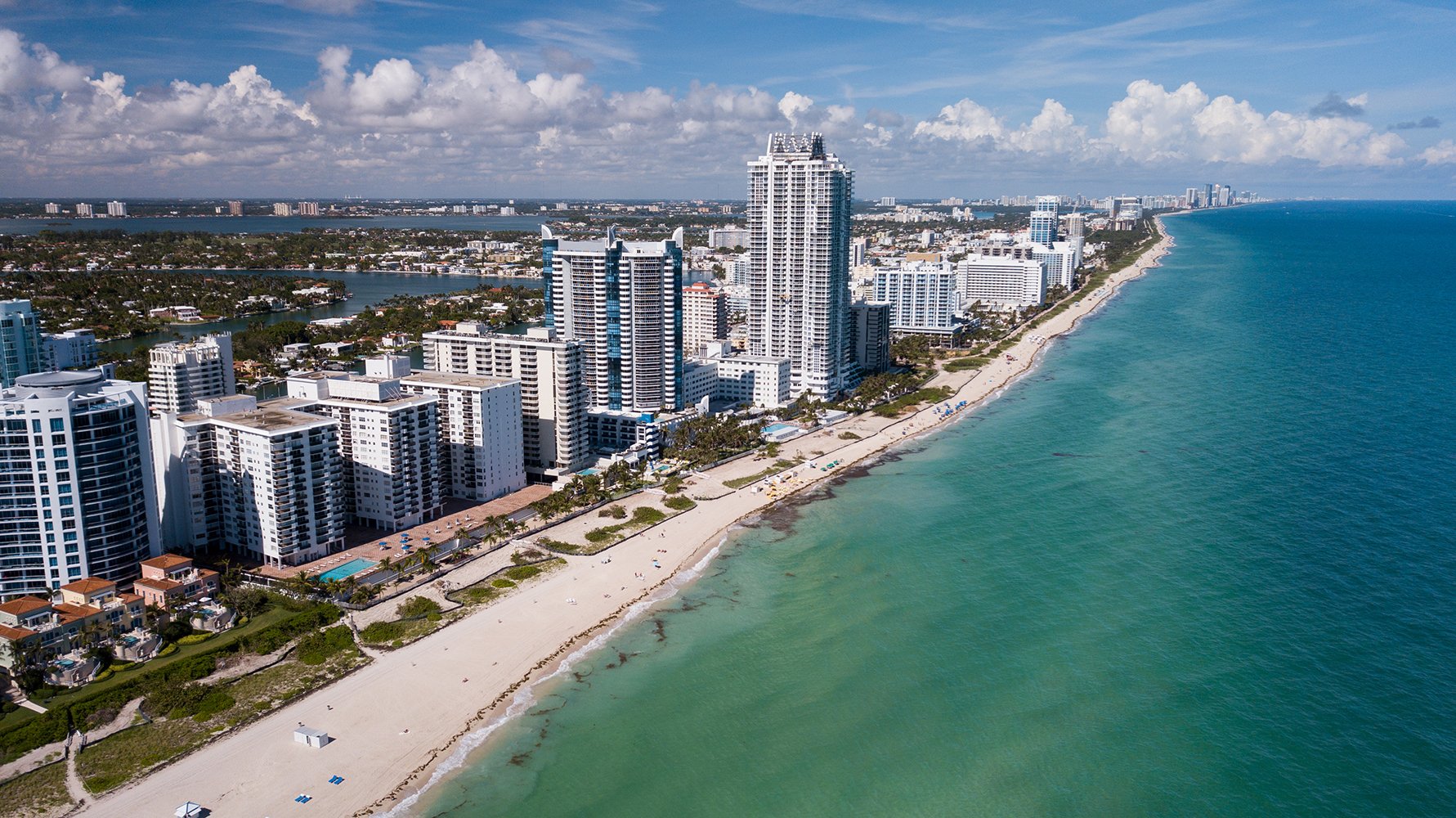
Art Basel Miami Beach is not simply an art fair that happens to land in South Florida. In the Miami market, it operates as a concentrated week of global attention, when culture, hospitality, dining, and high-touch retail all peak at the same time. For real estate, that compression matters. Professionals across Miami routinely point to the week as a meaningful economic driver, with reported estimates of roughly $565 million in regional impact tied to visitor spending and related activity.
The scale of the event explains why the city behaves differently. Art Basel Miami Beach has reported hosting 283 galleries and drawing more than 80,000 visitors, with attendance spanning 43 countries and territories. Even as parts of the broader art market have softened, industry coverage has noted that Art Basel still delivers for Miami Beach. The signal is clear: the fair’s halo effect can extend beyond art and into adjacent luxury categories, including branded residential product.
For buyers, the significance is practical rather than performative. When collectors, tastemakers, and global decision-makers arrive at once, Miami becomes a live showroom. During Art Basel week, developers and brokers tend to intensify private events, showings, and outreach because qualified prospects are already in-market, already moving between neighborhoods, and already calibrated to rarity. The best opportunities are rarely loud. They are curated, scheduled, and handled with discretion.
Luxury real estate activity during Art Basel is less about spontaneous purchasing and more about accelerated decision-making. Many visitors already know Miami. What the week provides is a reason to prioritize: to see multiple neighborhoods in a compressed itinerary, to compare lifestyle tradeoffs in real time, and to experience the city at its most activated.
In ultra-premium positioning, three themes surface again and again.
First, design as a credential. In Miami’s top tier, architecture and interiors function like provenance. The conversation is not only about amenities. It is about authorship, coherence, and whether a building reads as intentional from the arrival sequence to the last detail.
Second, art integration as a lifestyle signal. Across new condominium development, the line between residential common space and gallery space has blurred. Curated collections, museum-grade lighting, and exhibition-like corridors are used to communicate taste, not just luxury. For many buyers, that curation is part of the value proposition because it suggests that the building is managed and presented with an editor’s eye.
Third, service as a differentiator. Branded residences are not simply “nice buildings.” They are an ownership model that borrows hospitality DNA, with concierge infrastructure and a sense of operational certainty. In the premium market, service is often the deciding factor between two similar view corridors.
Art Basel is a moment when these themes land with unusual force because the buyer is already in a collecting mindset. The best sales galleries understand that. They do not sell square footage as the headline. They sell narrative, rarity, and long-term identity, and they do it in a way that respects the buyer’s time.
Miami-beach remains the city’s most cinematic stage during Art Basel. It is also where trophy scarcity is easiest to grasp: there is only so much oceanfront, and many of the most sought-after addresses sit within a tight cultural corridor. During art week, the neighborhood feels like a series of interconnected rooms, with hotels, galleries, and dining destinations positioned close enough to make the lifestyle feel effortless.
A single headline has become shorthand for the market’s ceiling. Shore Club Private Residences, at 1901 Collins Avenue, has been widely covered for a $120 million penthouse sale, frequently cited as a South Florida condo price record. Whether a buyer treats that figure as an outlier or a benchmark, the psychological effect is real. It reinforces a key point about Miami Beach: the market is not simply regional. It presents itself, and is often understood, as global.
That same corridor allows buyers to compare different expressions of Miami Beach luxury in one sweep. Some prioritize modern quiet and privacy. Others want a social rhythm and a more public sense of arrival. Others treat the residence as an art object in itself, where the building’s identity matters as much as the interior plan.
For those drawn to a lifestyle synchronized with the cultural calendar, Shore Club Private Collections Miami Beach is often discussed as a case study in how brand, location, and scarcity can converge. Meanwhile, established ultra-luxury product continues to shape buyer expectations around finish, privacy, and curated living. In that context, Setai Residences Miami Beach reads less like a conventional condominium and more like a service-forward residence with an unmistakably international sensibility.
Art Basel amplifies the Miami-beach effect because buyers can test-drive the neighborhood as it is meant to be lived. Mornings can start quietly. Afternoons can revolve around museum and gallery adjacency. Nights can move seamlessly between dining and cultural programming. For a buyer weighing not only a property, but a second-home cadence, that lived experience is often more persuasive than any brochure.
A notable shift in new-construction marketing is how frequently developers position the building itself as a cultural platform. This is not limited to hanging art on walls or staging a lobby with decorative pieces. It is about commissioning, curating, and designing circulation spaces to feel like exhibitions, with lighting, scale, and material choices that support the idea of a permanent collection.
For the ultra-premium buyer, that distinction matters. A tower that reads like a gallery can feel more timeless than a tower that reads like a resort. During Art Basel week, this positioning becomes especially persuasive because buyers are literally moving between collections and then returning to private residences that aspire to the same level of editorship.
Miami Beach is particularly suited to this approach, where art, fashion, and hospitality already overlap. Faena House Miami Beach is frequently associated with the broader idea of lifestyle-as-culture, appealing to buyers who view a residence as part of their personal collection rather than a purely functional second home.
The underlying point is simple and increasingly decisive: in Miami, luxury is being defined by curation. Buildings compete on taste, not only on views. For a buyer navigating the top of the market, that taste is not decoration. It is a signal about the project’s stewardship and the brand of living it intends to sustain over time.
If Miami-beach is the cultural theater, Brickell functions as the operational headquarters. During Art Basel, many buyers want both: Miami Beach energy and the ease of being near the city’s financial core, major transportation routes, and marinas. Brickell’s appeal is straightforward. It is a global-city neighborhood with an efficient daily rhythm, and it supports a lifestyle that can pivot between business and leisure without friction.
Brickell’s strength is range within a premium envelope. The market can accommodate a buyer who wants a more boutique feeling on the water, as well as a buyer who prefers the familiarity and service language of a brand. That flexibility plays well during art week, when visitors are balancing events, meetings, and showings across a tight schedule.
For those seeking a waterfront address that reads as deliberate and design-forward, Una Residences Brickell is marketed as a 48-story luxury tower with approximately 135 units, a scale that can feel more tightly held than larger multi-tower ecosystems. For buyers who equate scarcity with calm, that smaller unit count can be part of the draw.
Brickell’s broader branded-residence momentum also fits Art Basel’s visitor profile: international, time-sensitive, and accustomed to service. The neighborhood performs well during the week because a buyer can attend Miami-beach programming and still return to a home base that behaves like a global city. For many, that combination is the point: culture within reach, convenience at the center.
Wynwood is a different proposition. It is not the beachfront fantasy and it is not the corporate core. It is a culture district where galleries, street art, and event programming are not adjacent perks. They are the main amenity. In a market that increasingly values walkability and neighborhood identity, Wynwood offers a distinct kind of relevance.
During Art Basel, Wynwood’s value proposition sharpens. The district’s programming becomes more concentrated, the collector energy skews younger, and the design language reads more experimental. For some buyers, that feels current and alive. For others, it reads as portfolio diversification within South Florida: a second residence that behaves differently than a Miami-beach retreat and does not attempt to compete with it.
Branded residential concepts have been marketed directly into this idea, including NoMad Wynwood, which has been promoted as a branded residential play with roughly 329 units and published entry pricing in the mid-six figures. The larger takeaway is not the unit count. It is the demand logic: when culture districts become globally legible, adjacency can translate into durable desirability.
In other words, Wynwood is not trying to be Miami Beach. It is leveraging a different type of prestige, one built on creative credibility and an address that places the owner inside the week’s cultural footprint.
It is difficult to discuss Miami’s luxury pipeline without acknowledging the international buyer base. A market report from the Miami Association of Realtors has stated that international buyers accounted for 52% of Miami new-construction developer-unit sales in the measured period, with buyers coming from 73 countries. The same report attributes roughly 86% of international new-construction buyers to Latin America.
For sellers and developers, those figures help explain why Miami can support a steady flow of branded and design-forward inventory. The demand pool is not limited to local end users. For buyers, the implication is more strategic. Liquidity is shaped by global confidence, and Miami’s appeal tends to strengthen when buyers are seeking stability, access, and a recognized lifestyle market.
Art Basel is one of the few weeks when that international thesis becomes visible in person. You hear the languages in the lobby. You see how quickly private events fill. You sense the global cadence at dinner and in the galleries. The demand base is not abstract. It is present, moving through the same corridors, evaluating the same buildings, and comparing Miami to other world cities.
For serious buyers, Art Basel week can be used well, but only with structure. The city is designed to distract, and the calendar is built to overwhelm. A disciplined approach keeps the week productive.
Prioritize neighborhoods before buildings. Start with how you want to live, not what photographs best. Decide whether Miami-beach, Brickell, or Wynwood is your primary rhythm, then narrow to the product type and the few buildings that best match that cadence.
Tour with a filter. Fewer, higher-quality showings typically outperform a packed schedule. Go in with a clear scorecard that reflects the realities of premium ownership: view corridor, privacy, service level, building culture, and long-term resale narrative. When you compare properties through that lens, the decision becomes cleaner.
Separate social access from transaction timing. Many private events are about relationship-building rather than immediate conversion. Let the week accelerate your information gathering and your neighborhood confidence. Then, as needed, finalize terms when you are back in a calmer schedule and can negotiate with full attention.
Treat art integration as a useful tell. If a building’s cultural programming feels authentic rather than staged, it often correlates with stronger brand stewardship. Stewardship matters in the long run because it shapes how a property is maintained, positioned, and protected over time.
Art Basel is, ultimately, a visibility window. Buyers are present. Inventory is presented at its best. The advantage goes to those who move through the week with a plan, a short list, and a team that can keep the process discreet.
Is Art Basel directly responsible for higher condo prices? Art Basel is better understood as an accelerator of exposure and decision-making. Pricing is ultimately driven by scarcity, product quality, and global demand, but the week can intensify attention around trophy inventory.
Why does Miami-beach feel different during art week? Because the fair concentrates a global luxury audience into a tight corridor. Hospitality, dining, and cultural programming become unusually dense, which highlights the neighborhood’s lifestyle value in real time.
Is Brickell a better choice than Miami-beach for a second home? It depends on how you intend to use the residence. Brickell often suits buyers who prioritize convenience and a global-city feel, while Miami-beach emphasizes resort adjacency and cultural theater.
How important are branded residences in Miami right now? Branding is increasingly central to how new-construction product is positioned, particularly for international buyers who value consistent service standards and reputational signaling.
What is the smartest way to shop during Art-basel week? Plan fewer showings, focus on neighborhoods first, and use the week to validate lifestyle fit. Then negotiate with clarity after the social calendar cools.
For private buying and selling guidance tailored to Art Basel season, connect with MILLION Luxury.
If branded residences are on your mind — as a home or as an allocation — we would be glad to share what we are seeing, privately.
Begin a quiet conversation