A discreet, buyer-oriented look at when signature architecture translates into real, durable value in South Florida, and when the premium is really about the full lifestyle product.
South Florida has never lacked for iconic silhouettes. What has changed is the mindset of the ultra-premium buyer. Today’s top-end purchaser is often as analytical as they are aspirational, and they tend to separate what photographs well from what holds up when the market normalizes. The real question is not whether a celebrated architect can create a memorable building. It is whether the name on the façade translates into durable value when inventory rises, when tastes shift, or when the mood turns from exuberant to selective.
Globally, the “starchitect” phenomenon has always tracked closely with celebrity dynamics and wealth concentration. A small group of widely recognized designers frequently orbit the same capital, the same developers, and the same top-tier sites. In residential real estate, that can feel like a shorthand for quality. In practice, it behaves more like a signal. It draws attention, supports a narrative, and can shorten a buyer’s decision timeline by making a project instantly legible.
For an investment-minded purchaser, the cleanest framework is to treat the architect’s name as one variable among many. In South Florida, where light, water, views, and amenity ecosystems often drive the deepest demand, the more useful question becomes: what portion of the premium is truly design pedigree, and what portion is simply a better product on better land?
That distinction matters because headline architecture can be persuasive at launch. The resale market, however, is less romantic. It measures livability, operations, and competitive positioning with a blunt kind of clarity. A signature name may elevate a building’s profile, but the building still has to perform as a home and as an asset.
In the luxury condo market, a celebrated designer tends to deliver two tangible advantages, and both are real when the fundamentals support them.
First is immediate recognizability. A widely covered building that is easy to describe becomes a social object. In a market where many purchases are discretionary, the ability for a home to communicate taste, status, and discernment can matter almost as much as comfort. Recognizability also increases top-of-funnel interest, including international interest, because the story travels quickly.
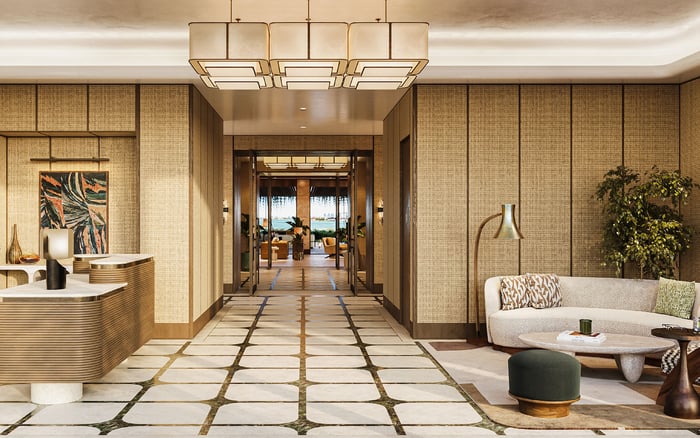
Second is confidence in intentionality. Buyers often associate a known architect with a cohesive experience: the arrival sequence, the lobby proportions, the material palette, the way a residence frames light and view, and the way common spaces feel day after day. That is not the same as celebrity alone. The design quality effect shows up in hedonic research contexts, but the practical takeaway is simple: good design can exist without a famous name, and a famous name does not automatically guarantee the quiet, day-to-day livability that ultimately drives resale.
In South Florida, these benefits become most potent when they are reinforced by the core fundamentals. A beachfront address with meaningful setback, thoughtful floor plates, and a service culture that feels polished will typically outperform a design-forward building that is merely photogenic. The market may talk about architecture, but it tends to reward the full experience.
When buyers want a clearer stress test for the “starchitect premium,” it helps to look at markets with long, transparent sales histories across multiple cycles. New York provides a well-watched set of examples, and the underlying lesson is relevant even if South Florida’s buyer psychology is different.
Frank Gehry’s 8 Spruce Street, a 76-story residential tower often referred to as “New York by Gehry,” is frequently cited as a high-design building that launched successfully soon after the financial crisis. Contemporary reporting also highlighted other signature-architect residential projects that absorbed and priced well even in a cautious environment. The point is not that a famous name guarantees pricing power. The point is that when a building’s product is coherent and its story is credible, pedigree can support liquidity even when buyers are careful.
In the same period, Robert A.M. Stern’s Superior Ink in the West Village became a headline example of perceived pedigree value. Reporting described a dramatic resale where a unit bought for $25 million in 2009 was resold for $31.5 million about a year later. This is not a universal result and it should not be treated as a forecast. It does, however, illustrate the mechanism: a building with a strong narrative, scarcity, and a buyer base that values authorship can find demand when generic luxury stock feels interchangeable.
Jean Nouvel’s 53 West 53, next to MoMA, also shows how “trophy” units can set the public storyline. A multi-floor penthouse was publicly marketed around $65 million, creating a psychological ceiling for the building in the public imagination. For buyers, the takeaway is practical and disciplined: do not underwrite from the penthouse. Underwrite from the building’s typical unit performance, because that is what determines the depth of resale demand across the stack.
South Florida buyers can use this lesson without importing New York’s specifics. The rule is consistent: narrative can help, but the secondary market is the judge. A signature name is only as valuable as the building’s ability to remain desirable when attention moves on.
South Florida’s luxury condo market is built on a different emotional center of gravity than Manhattan. Here, light, water, privacy, and service often outrank architectural theory. That does not diminish design. It simply changes what design must do to earn a premium.
In this region, the best architecture functions as an amplifier. It sharpens the experience of the site, it makes the lifestyle feel effortless, and it signals a level of seriousness that resonates with sophisticated buyers. Importantly, the name alone rarely carries the price. The price is carried by a complete package: land, views, floor plans, amenity spend, and operations.
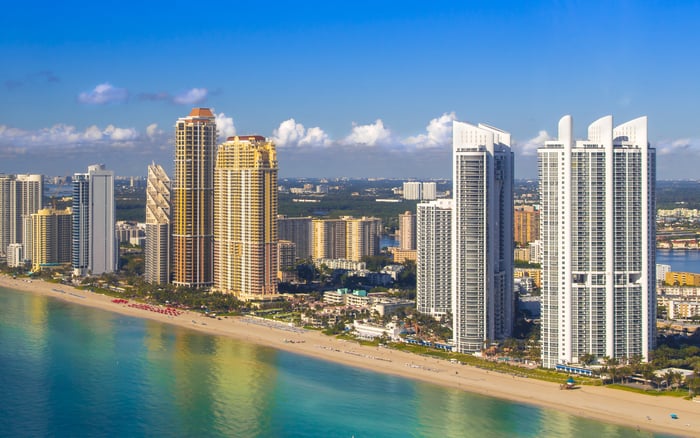
In Sunny Isles, for example, Jade Signature Sunny Isles Beach is widely covered as a high-profile luxury project designed by Herzog & de Meuron. The appeal, however, is not only authorship. It is the way a disciplined design language supports an oceanfront lifestyle: a considered arrival, view corridors that feel intentional, and a sense of privacy that premium buyers increasingly demand. In this pocket of the market, design is rewarded most when it makes daily life calmer, quieter, and more complete.
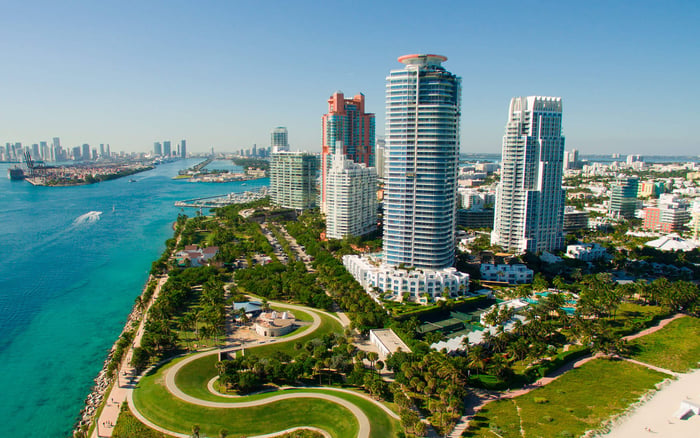
In Miami Beach, the same logic holds, but the buyer mix can be even more narrative-driven. Newer towers are often evaluated as much by “brand clarity” as by finishes. Five Park Miami Beach speaks to a modern appetite for a full residential ecosystem, where architecture is paired with wellness, amenities, and a neighborhood lifestyle that feels curated rather than incidental.
For buyers who treat Miami as a second home, hospitality-grade service cultures also matter. Projects like Setai Residences Miami Beach and The Ritz-Carlton Residences® Miami Beach illustrate how “luxury” is increasingly defined by operational excellence: privacy protocols, staffing standards, and the reliability of the owner experience. In these environments, architecture is not the whole story, but it is often the first chapter.
When buyers say they want Miami Beach, they often mean a specific blend of walkability, design, and discretion. A recognized architect can make that blend instantly legible. The building still has to deliver, especially once the initial launch energy fades and the market compares it directly to other luxury options.
If your goal is to evaluate whether a design-forward condo is worth its price relative to nearby luxury inventory, focus on the product stack, not the marketing story. In South Florida, premium pricing is usually defensible when multiple layers work together.
Land and view geometry. South Florida’s most defensible premium is still coastline and open water sightlines. A beautiful façade cannot compensate for compromised exposure.
Floor plan intelligence. The most valuable “design” is often invisible. It shows up as good proportions, usable outdoor space, and circulation that feels effortless. These elements drive long-term satisfaction, which later shows up as resale velocity.
Amenity spend and operations. Many high-design projects bundle architecture with a robust amenity program and a service model that reduces friction. Put differently: the architect’s name may bring you to the building, but the operations keep you there.
Sustainability and comfort performance. Global business research has increasingly connected sustainable buildings with financial outperformance and premium behavior. In residential, buyers often experience that as quieter interiors, better air, improved glazing, and more thoughtful mechanical systems. The market rarely prices these features as “green” in conversation, but it often rewards them as comfort, reliability, and lower regret.
This is why a celebrated architect is best understood as an amplifier. When paired with superior fundamentals, the name can widen demand, deepen international interest, and protect narrative value. When the fundamentals are average, the name risks becoming a layer of cost rather than a layer of liquidity.
Iconic design can carry real execution risk. Signature architecture often involves non-standard geometry, custom façade systems, and unique structural solutions. Those choices can translate into higher costs, longer timelines, and more opportunities for value engineering. A project can begin with a strong design vision and still land in a finished product that is compromised in subtle but important ways.
The most cited cautionary tales are typically public infrastructure projects. Santiago Calatrava’s World Trade Center Transportation Hub, the Oculus, became a prominent example of a signature design associated with very high costs and controversy over value versus expense. A Miami condo is not an infrastructure megaproject, but the lesson scales down cleanly: complexity has a price, and someone pays it.
In residential towers, the “icon tax” can surface later in less glamorous categories: façade maintenance, replacement cycles for bespoke components, and the association’s long-term budgeting. For a buyer, the question is not whether a building is ambitious. The question is whether the building is maintainable at the standard its buyer profile expects, without turning ownership into a perpetual assessment story.
This is also where resale reality asserts itself. A building’s launch narrative can be powerful, but the secondary market is a different judge. Inventory dashboards and building-level sales history in other markets show that signature buildings can perform well, yet they can also trade unevenly across unit types. The best outcome is not a single record-setting sale. It is consistent liquidity across the stack, in normal market conditions.
Before paying for pedigree, treat the decision like discreet due diligence.
Start with comparables that are truly comparable. Match for view, exposure, unit size, and building age. If the design-forward building still commands a premium, ask why. If the answer is only the architect’s name, be cautious. If the premium is supported by stronger layouts, better privacy, higher service standards, or meaningfully superior views, it becomes easier to justify.
Then evaluate the building as a lived object. The best luxury assets feel inevitable in daily use, not just impressive on a tour.
Finally, separate narrative value from exit value. Narrative value is the pleasure of owning something culturally legible. Exit value is the ability to sell without forcing a discount when the market is normal rather than euphoric. Buyers often confuse the two because both can feel like “prestige.” Only one reliably shows up in the transaction data.
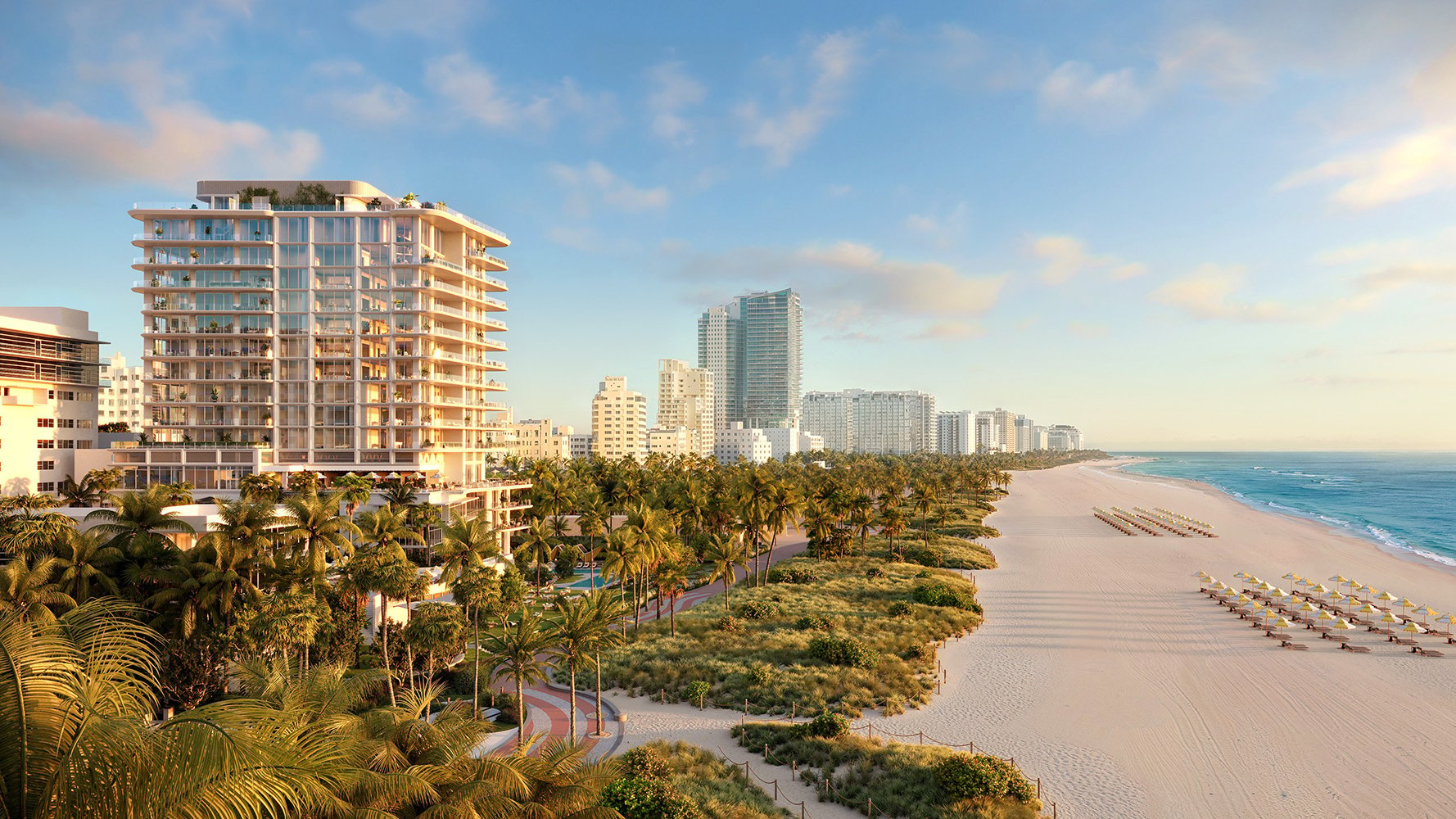
In this sense, 57 Ocean Miami Beach is a useful type of case study for buyers who prefer quiet luxury. 57 Ocean Miami Beach positions the product around a refined beachfront lifestyle where design is meant to feel inevitable, not performative. That is often where the most durable premiums live: not in the loudest statement, but in the most complete, least regretful ownership experience.
Does a starchitect guarantee higher resale value? No. A famous name can broaden buyer demand, but resale is ultimately driven by location, view quality, floor plan performance, building operations, and how the product compares to competing luxury inventory.
Why do some signature buildings hold up better across cycles? They tend to combine strong fundamentals with a simple, credible narrative. The building remains desirable even when buyers become more selective and substitutes become more visible.
Should I pay more for a “trophy” penthouse in a signature tower? Treat trophy pricing as its own category. It can influence the building’s public story, but it should not be used as the primary benchmark for typical units or as the foundation for an underwriting model.
What is the biggest risk in highly customized architecture? Long-term stewardship. Non-standard façade and amenity systems can be more expensive to maintain, and those costs can surface through association budgets and replacement cycles over time.
Explore curated South Florida opportunities with MILLION Luxury.
If branded residences are on your mind — as a home or as an allocation — we would be glad to share what we are seeing, privately.
Begin a quiet conversation