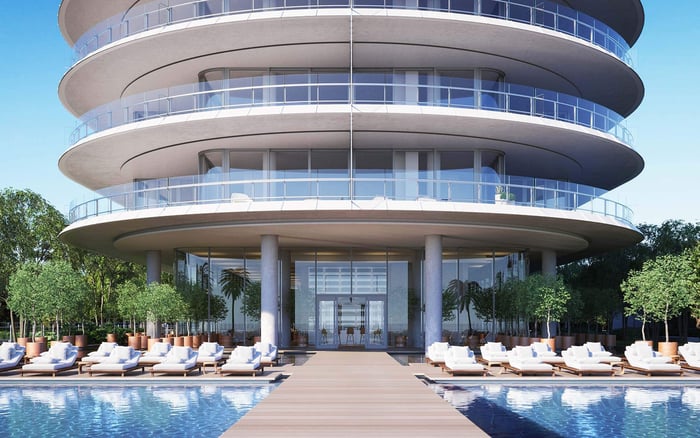
At $20 million, South Florida’s ultra-luxury market splits into two distinct propositions: Miami Beach’s turnkey, service-forward penthouse lifestyle and Palm Beach’s land-first, privacy-driven estate ownership. Using publicly reported benchmarks, this guide maps what the same budget can look like in the sky versus on the sand, and the hidden ownership considerations sophisticated buyers weigh before choosing their coastline.
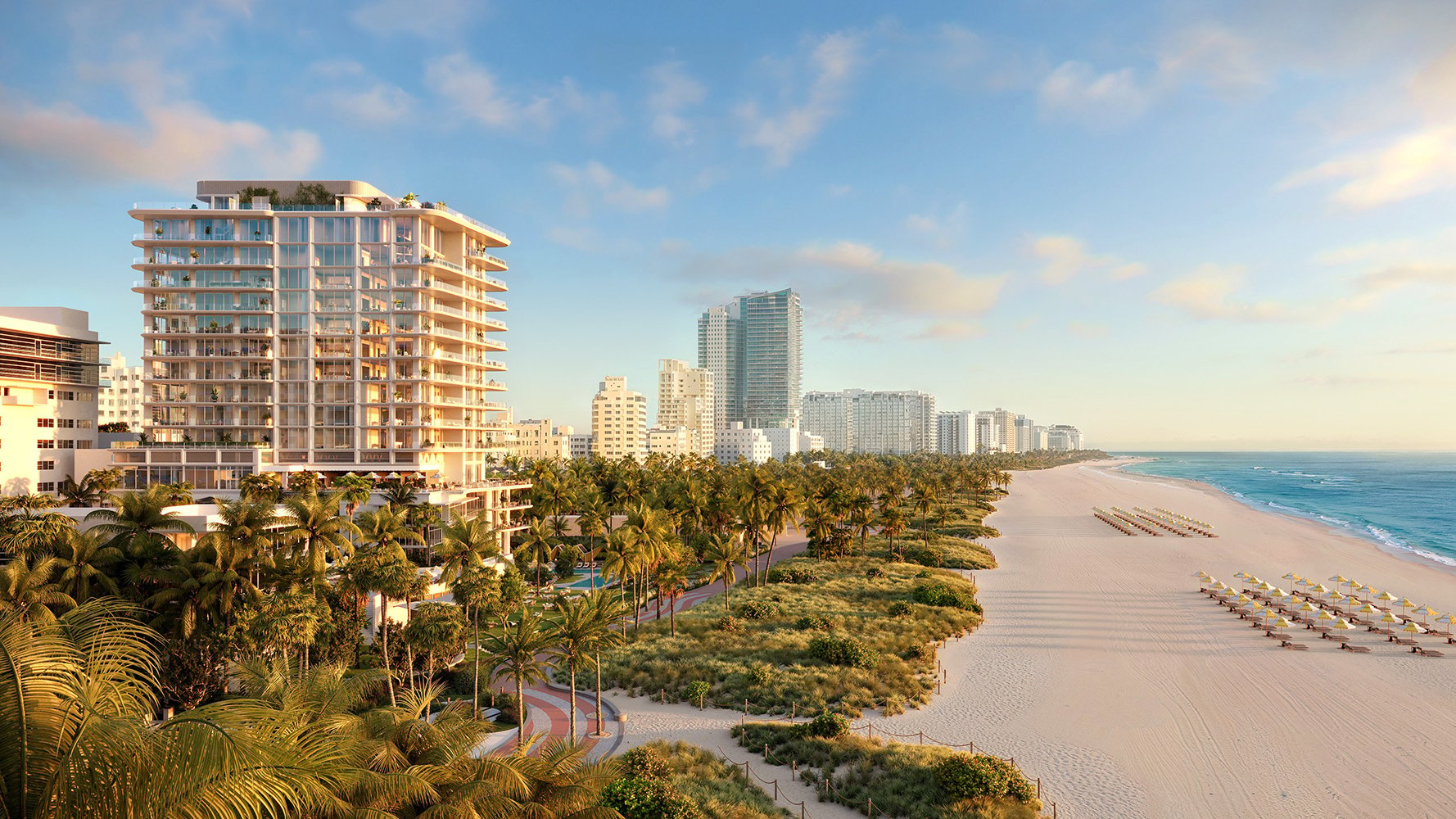
At $20 million, South Florida presents two luxury propositions that rarely intersect. In Miami Beach, value is engineered upward: height, exposure, finish level, and a day-to-day routine designed around concierge-forward convenience. In Palm Beach, the same budget is often allocated outward: land, oceanfront frontage, privacy, and the quieter authority that comes with ownership that can feel generational.
For buyers who spend time in both markets, the decision is usually not about which option is “better.” It is about what you want the home to do for you. Miami’s most coveted condominiums increasingly operate like private clubs with residential keys: managed, programmed, and designed to remove friction. Palm Beach’s oceanfront estates tend to function more like compounds with a social calendar: private, perimeter-controlled, and dependent on a well-run household operation.
What follows is a practical translation of what $20 million can represent in each market, grounded in widely reported benchmarks. It also addresses the ownership costs and demand signals that sophisticated buyers evaluate once the initial tour, and the champagne, are behind them.
The modern Miami Beach ultra-luxury proposition is vertically integrated. Architecture, interiors, and amenities are curated to deliver a residential experience that is often described as hotel-like, but with the privacy and control of ownership. A highly visible example is Five Park Miami Beach, a new 48-story tower that has been promoted as Miami Beach’s tallest residential building.
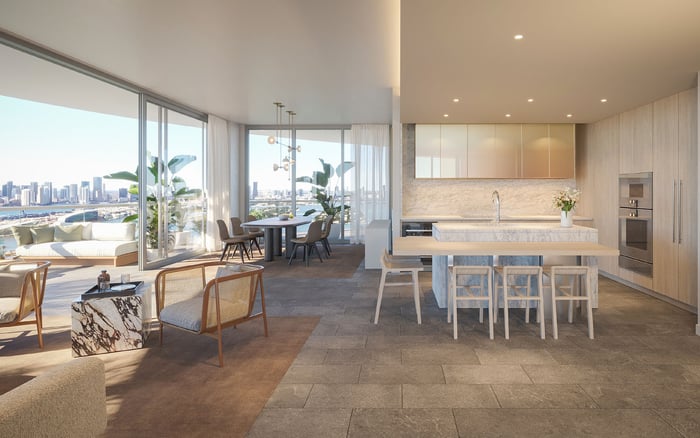
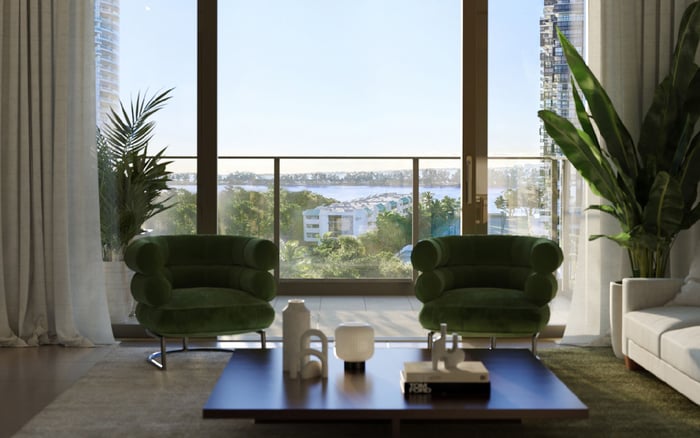
Five Park publicly released a penthouse collection with headline pricing that lands directly in this budget band: Canopy Penthouse 01 reported at $20 million and Canopy Penthouse 02 reported at $19 million. The $20 million penthouse has been described as offering 7,923 square feet of interior space with four bedrooms and six bathrooms, plus a 1,863-square-foot, south-facing Terrace with wide water and city views. In Miami Beach, that specific combination of scale and exposure is the currency of trophy living.
At this level, design is not cosmetic. Buyers are often paying for coherence: a residence that reads as a complete point of view rather than a collection of expensive materials. The penthouse interiors have been credited to Meyer Davis, a firm widely associated with hospitality-forward luxury and the branded sensibility reshaping the top end of Miami condominium inventory.
Then comes the amenity multiplier. Five Park’s Canopy Club has been described as 50,000-plus square feet, which signals how developers want buyers to value lifestyle programming as part of the home itself. Food and beverage at the Canopy Club has been publicized as curated by Chef Michelle Bernstein and restaurateur Jeffrey Chodorow. For a Second-home owner, that detail is not peripheral. It is operational. It reduces decision fatigue, lowers the friction of entertaining, and makes the building feel fully staffed and fully realized.
The broader Miami Beach condo market offers variations on the same theme: refined service, strong design narratives, and a premium on move-in certainty. Buyers who gravitate toward Shore Club Private Collections Miami Beach often do so for a similar reason: the sense that the property is not only a residence, but a managed experience. Those who prefer a globally recognized hospitality cadence tend to lean toward Setai Residences Miami Beach, where the value proposition is tightly tied to service culture and predictability.
The throughline is simple: $20 million in Miami Beach tends to buy time. It buys the ability to arrive, turn the key, and live within a framework that is designed to perform consistently, whether you are there for a weekend, a season, or a full-time base.
Palm Beach luxury is often described in language that feels almost antique compared with Miami’s vertical vocabulary: land, setbacks, hedges, gates, and direct access. Marketing around $20 million and above in the oceanfront estate segment frequently emphasizes privacy, compound-style layouts, and outdoor living that reads like a personal resort.
A telling market signal is that land itself can approach this threshold. A prime Palm Beach lot near Mar-a-Lago was reported to have sold for nearly $20 million. Without parsing the particulars of any single parcel, the implication is still clear. In Palm Beach, the land component can be the asset, and the home can become a flexible overlay.
For a buyer, that changes the definition of luxury. At this budget, Palm Beach is frequently a choice to control the perimeter. Privacy is not a shared amenity delivered through building staff or common-area policy. It is physical, embedded in the ownership structure, and reinforced by setbacks and landscape. Direct frontage becomes the everyday luxury, not an elevated view corridor from a terrace.
The trade-off is operational reality. An estate asks more of its owner, or at least more of the owner’s team. Landscaping, exterior maintenance, storm preparedness, staffing, and security systems are not line items hidden inside a monthly statement. They are ongoing responsibilities that require oversight. For some families, that is precisely the appeal. The home becomes legacy infrastructure, especially for buyers who want a sense of permanence that condominium ownership, by definition, shares with others.
In other words, while Miami’s condominium model is optimized for ease and continuity of service, Palm Beach’s estate model is optimized for control and separation. Both are luxuries. They are simply luxuries expressed through different forms of ownership.
In South Florida, $20 million sits at an important intersection. It is unmistakably ultra-luxury, yet it can also be the entry point into the most publicized trophy tier, especially in Miami, where record trades have pushed the ceiling materially higher.
Recent sales coverage in the Surf Club area has reported an $86 million condo sale described as a Miami-Dade record, at roughly $5,357 per square foot. The same reporting cited a Four Seasons Residences at the Surf Club sale around $38.2 million at roughly $6,731 per square foot. Regardless of how a buyer feels about any particular building, those numbers matter because they reset the narrative around what scarcity can command.
For a $20 million buyer, this impacts decision-making in two concrete ways.
First, it explains why best-in-class residences that still start with a “1” can feel competitive. You are participating in a market where the top is demonstrably higher. That reality influences seller expectations and the pace at which true outliers trade.
Second, it clarifies what should be optimized. When the top end is paying aggressively for singularity, a $20 million condominium purchase becomes an exercise in selecting the most defensible form of rarity within that band. That often means prioritizing an exceptional Terrace, a compelling floor plan that reads as irreplaceable, a building with durable demand drivers, and an amenity ecosystem that remains desirable across cycles.
In Palm Beach, the same psychology expresses itself differently. Scarcity is frequently tied to oceanfront frontage and land constraints rather than a penthouse stack. The numbers can be less visible because estate transactions do not always lend themselves to clean price-per-foot narratives in the way vertical real estate does. Still, the core principle holds: scarcity wins. In Palm Beach, scarcity often starts at the property line.
At $20 million, the purchase price is only the beginning of the underwriting conversation. Experienced buyers plan for what happens after closing: the friction that follows ownership, and how it affects both lifestyle and long-term hold quality.
Florida’s no state income tax is widely cited as a reason high earners choose the state, and it can be a meaningful tailwind for domicile planning. At the same time, ownership costs have not been static. A Fortune report noted that Florida property taxes increased sharply, citing a 47.5% rise from 2019 to 2024. Even if any individual property’s trajectory differs, the trend is a reminder that carrying costs can re-rate quickly, and that sophisticated underwriting should include room for volatility.
In Miami’s condo market, another friction point has become more widely discussed: special assessments and the broader cost structure of building maintenance and reserves. Reports have highlighted “surprise costs” tied to assessments and the financial requirements of condominium ownership. In practice, this means a $20 million penthouse buyer should treat the building’s long-term capital plan as part of the asset, not as background paperwork. What is being reserved, what is being deferred, and how transparently the building communicates planned work can matter as much as the finishes inside the residence.
Palm Beach estate ownership has its own versions of friction: staffing, exterior repairs, and the cost of maintaining a high standard of landscape and security. Condos concentrate many of these costs into common charges and, at times, assessments. Estates distribute them across vendors, management, and household operations.
If your $20 million purchase is also an investment, the cost question becomes even more precise: which ownership structure delivers the highest quality of life per dollar of ongoing friction, given the way you actually live? For some buyers, paying for a building’s infrastructure is the most rational choice. For others, paying for a private perimeter is the point.
South Florida is often described as equity-driven at the top of the market. One local Realtor association report characterized Palm Beach County as an all-cash-heavy market, citing approximately 51.3% of deals as all-cash, compared with roughly 43% in Miami in that same coverage.
For ultra-luxury buyers, those percentages matter less as conversation starters and more as indicators of market mechanics. Higher cash intensity can reduce sensitivity to rate volatility. It can also keep the best properties liquid, even when broader segments slow, because the buyer pool is less dependent on financing conditions.
At the same time, statewide narratives have pointed to cooling conditions and shifting momentum in parts of Florida’s housing market. For a $20 million buyer, “cooling” should not be translated as “no opportunity.” It should be translated as “more selectivity.” In both Miami Beach and Palm Beach, the most coveted offerings tend to remain insulated, but the definition of “coveted” becomes sharper. Properties that are merely expensive can sit. Properties that feel singular, correctly positioned, and operationally clean tend to transact.
This is where sophisticated buyers separate headlines from signal. They watch what trades quickly, what receives multiple offers, and what requires price movement to find traction. They also pay close attention to the quality of the asset’s story. In Miami, that story is often tied to building identity, service culture, and lifestyle infrastructure. In Palm Beach, it is more often tied to location, frontage, and privacy.
A $20 million decision is best made by translating lifestyle into non-negotiables. The more precisely you define your intention, the less emotional the process becomes, and the more architectural it feels.
Start with how you want to arrive.
Then map your privacy tolerance.
Finally, decide what kind of “view” you value.
For buyers leaning toward the Miami Beach model, it is useful to compare how buildings express service and identity. The Ritz-Carlton Residences® Miami Beach speaks to buyers who prioritize a globally consistent service language, while Five Park Miami Beach represents a newer generation of amenity scale and design-forward positioning.
In either market, the smartest $20 million buyers purchase clarity. They know whether the home is meant to be a Second-home, a base for long weekends, a seasonal headquarters, or a legacy hold. Once that intention is defined, the right choice becomes less about emotion and more about fit, function, and the long-term ease of ownership.
Is $20 million considered “trophy” pricing in South Florida? Yes. It sits at the entry point of the most publicized trophy tier, especially in Miami, where record condo sales have pushed the ceiling substantially higher.
What is the clearest advantage of a Miami Beach penthouse at this budget? Turnkey living with professional management, plus high-impact views and building amenities that can function like a private club.
What is the clearest advantage of a Palm Beach oceanfront estate at this budget? Land and privacy, often with direct frontage, where the daily luxury is control over space and seclusion.
Which market is more “cash-driven”? Public reporting has characterized Palm Beach County as more all-cash than Miami in aggregate, with both markets still heavily skewed toward equity buyers.
For a private consultation on positioning a $20 million purchase in Miami Beach or Palm Beach, connect with MILLION Luxury.
If branded residences are on your mind — as a home or as an allocation — we would be glad to share what we are seeing, privately.
Begin a quiet conversation