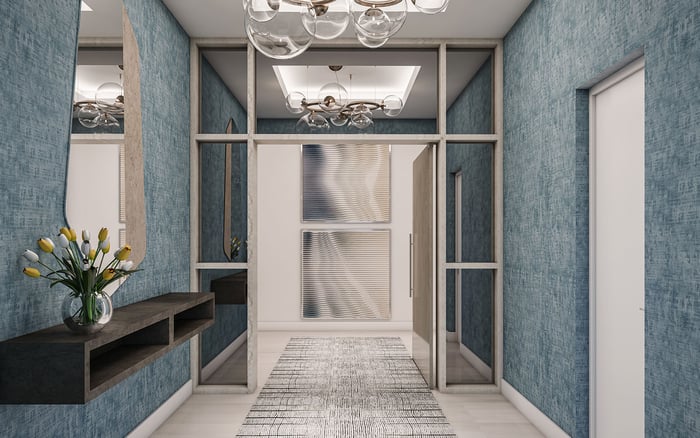
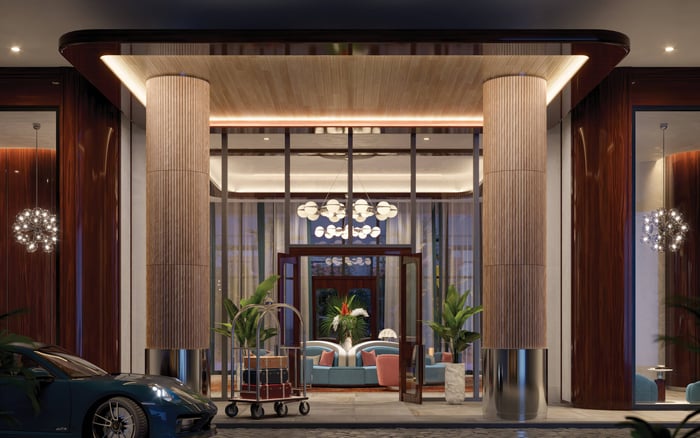
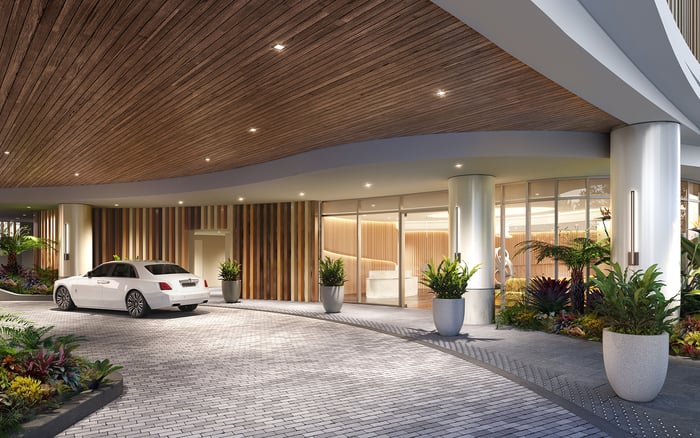
In Palm Beach County, the luxury condo proposition has become less about square footage and more about time: how effortlessly a residence can be arrived to, secured, serviced, and left again. Late-2025 sales momentum, a cash-heavy buyer base, and a growing preference for hospitality-grade amenities are converging to make well-run condominium living the most pragmatic expression of coastal luxury for many seasonal owners. This editorial explores the market signals, the lifestyle logic, and the due diligence that matters when convenience is part of the investment thesis.
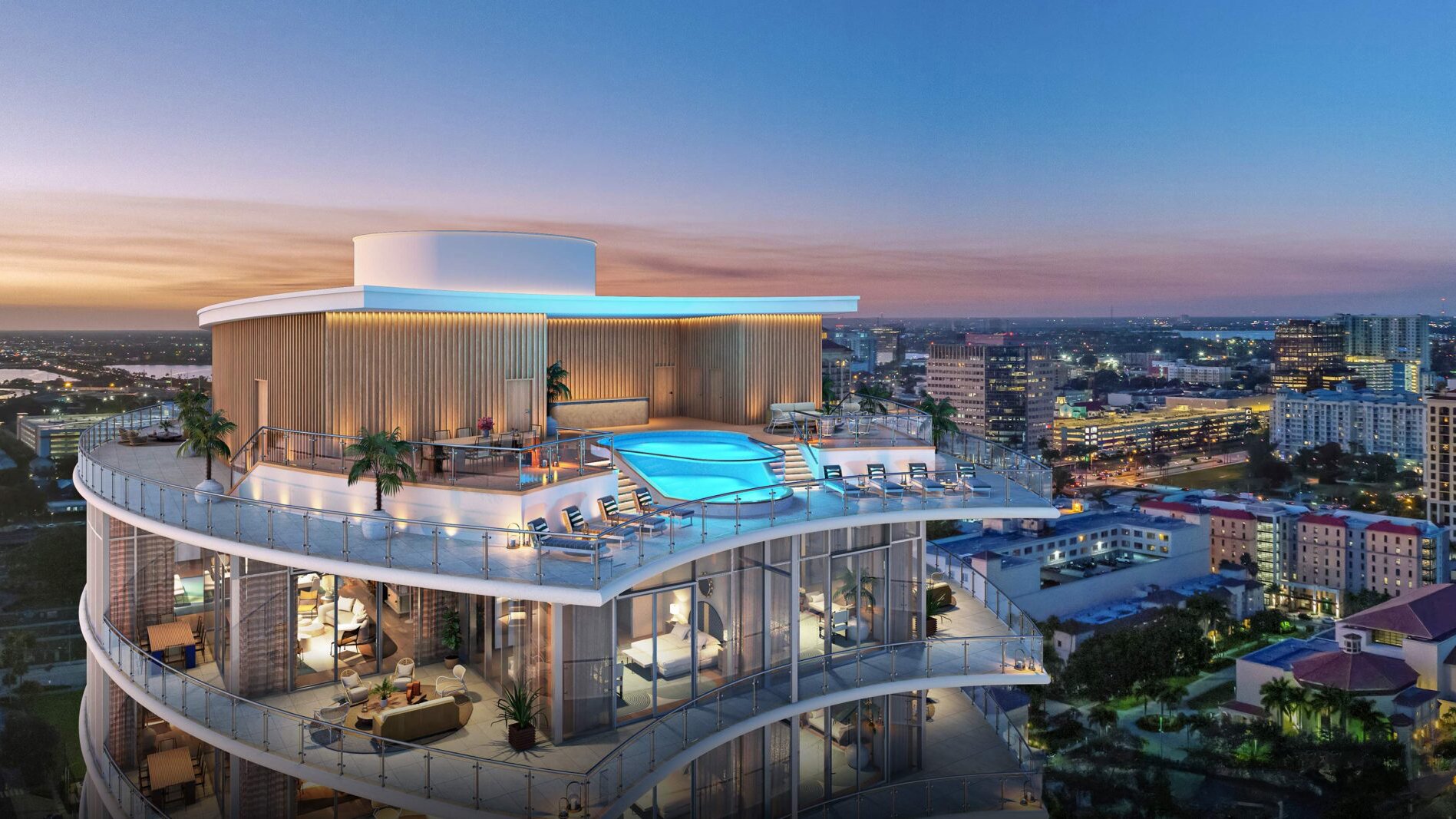
Palm Beach County finished late 2025 with condo momentum that looks less like a short-lived bounce and more like a clear vote for turnkey, professionally managed living. In November 2025, condo sales were reported up 20.7% year over year to 705 units, while the median condo price rose 3.2% year over year to $320,000. The same snapshot showed broader housing activity, with total residential sales rising 19.7% year over year to 1,706.
For luxury buyers, the more instructive signal is not just volume or median pricing. It is liquidity, and the ability of discretionary demand to execute regardless of interest-rate noise or shifting headlines. Cash transactions represented 56.5% of condo sales and 41.4% of single-family home sales in that period. That mix points to a market where the buyer pool remains decisively capable, and where purchases are often driven by lifestyle priorities first.
That matters in Palm Beach County because the luxury second-home decision is frequently about protecting time. Owners want a residence that is easy to arrive to, easy to secure, and easy to leave. When that is the goal, the appeal of condominium ownership becomes less about maximizing square footage and more about minimizing friction.
Layer in national commentary that the county was on pace for one of its stronger years for $10M-plus home sales, and the outline sharpens. The ultra-luxury tier is being sustained by wealth formation, quality-of-life preferences, and migration dynamics that continue to favor Florida’s broader posture. In this context, lock-and-leave condominiums are not a compromise. For many seasonal owners, they are the most pragmatic expression of coastal luxury.
The appeal of a luxury condo is not simply that someone else changes a lightbulb. It is that operational complexity is engineered out of the ownership experience.
In typical condominium ownership, associations handle exterior maintenance and common areas. That structural division of responsibility is what makes a residence viable for seasonal use. When you are away from South Florida, the building is still running: landscaping is managed, façades and shared mechanical systems are maintained, staffing schedules continue, and common spaces remain presentation-ready. In a well-run tower, your home does not go dormant just because you are not on-site.
For high-net-worth owners, this is the heart of the value proposition. A single-family home can be extraordinary, but it is also a small operating business that requires vendor coordination, security planning, storm preparation, and ongoing oversight. In a condominium, much of that work is centralized and standardized. The owner buys into a system built to manage the day-to-day.
The trade-off is financial and contractual rather than emotional. The ongoing responsibility shifts into HOA or condo fees, and the fine print matters. Fees can cover building maintenance, amenities, shared infrastructure, and staffing. Fees can also change as costs rise or as capital needs come into focus. For the part-time owner, this is often less a drawback than a pricing model, but it needs to be reviewed the way you would review an operating statement.
This is why so many buyers increasingly treat the condominium decision as delegated management. In the lexicon of MILLION Luxury clients, “low maintenance” is not shorthand for inexpensive. It is shorthand for controlled: a predictable system, professional standards, and a day-to-day experience that does not require the owner to be a full-time operator.
At the top end, the definition of luxury has moved beyond interiors alone. Increasingly, luxury condominiums mirror five-star hospitality, not as a marketing flourish, but as a daily operating standard. Concierge coordination, valet, security, and curated amenity programming translate into an experience where the building functions like a private club with deeded ownership.
That shift is especially clear in branded and hospitality-inflected developments. A project such as Mr. C Residences West Palm Beach signals the broader trend: buyers who want downtown access still want a residence that behaves like a well-run hotel in the moments that matter, arrival, departure, privacy, and service.
Even in non-branded towers, expectations have tightened. Seasonal owners increasingly want staff who can coordinate vendors, accept deliveries, keep common areas pristine, and maintain a calm, discreet atmosphere that can be difficult to replicate in single-family ownership, especially for owners who are not present year-round.
This is also why amenities are being assessed differently. A pool deck, a fitness center, and a residents’ lounge are no longer just features. Buyers are evaluating whether they are properly maintained, whether staffing levels support the building’s promise, and whether service protocols feel seamless rather than improvised. In today’s market, the “luxury” in luxury condominium living is often experienced most vividly in what you do not have to think about.
Palm Beach remains an unrivaled address for buyers who want island proximity and a social calendar refined over generations. The most coveted condominium inventory often reads like a roster of legacy prestige and scarce coastal product.
Breakers Row is frequently positioned as an ultra-exclusive oceanfront community closely linked to The Breakers resort lifestyle. The Palm Beach Biltmore, opened in 1925 and later converted to residences, continues to attract seasonal residents who prize history, location, and full-building services. Elsewhere, buildings such as Il Lugano on the Intracoastal side are marketed for privacy and controlled access, while newer-era oceanfront product like 3550 South Ocean illustrates a modern preference for smaller-count, higher-finish coastal buildings. Via Flagler Residences have also been described as ultra-scarce, aligning with demand for privacy paired with walkable access to dining and retail.
At the same time, West Palm Beach’s Intracoastal corridor has matured into a compelling alternative for high-end vertical living, with a different value proposition: waterfront views, newer construction, and proximity to downtown culture and dining. For some buyers, West Palm Beach is the more contemporary expression of Palm Beach County living, still close to the island, but anchored by a city’s energy.
Within that orbit, the waterfront and downtown pipeline is defining a new luxury center of gravity. Forté on Flagler West Palm Beach reflects the appeal of Flagler Drive’s water-facing lifestyle, where the visual theater of the Intracoastal is part of daily life. Alba West Palm Beach is marketed as a boutique luxury tower with wellness and amenity emphasis, with delivery timing marketed for 2026, a reminder that new construction in this submarket is as much about future inventory positioning as it is about immediate occupancy.
For buyers drawn to the clarity of a legacy hospitality flag, The Ritz-Carlton Residences® West Palm Beach speaks to an appetite for service-forward living in the city core. And for those whose lifestyle revolves around boating access, The Ritz-Carlton Residences® Palm Beach Gardens is marketed around an Intracoastal-front concept with a private marina, reinforcing how marine access continues to command a premium.
Ultimately, the choice is not simply Palm Beach versus West Palm Beach. It is tradition versus momentum, discretion versus downtown convenience, and legacy prestige versus newer-build efficiency. Both can deliver lock-and-leave ease, but the backdrop you choose will shape how the residence feels every time you arrive.
In Palm Beach County, the sophistication of the luxury buyer is often most evident in due diligence. The best buyers do not only tour a residence. They underwrite the building.
A practical framework:
First, treat monthly fees as part of the residence’s true carrying cost, then ask what those fees represent operationally. Are services and amenities properly staffed? Are common areas being maintained at a level that matches the purchase price? Fee totals are not inherently good or bad. What matters is whether the spend is producing an experience and a standard of care consistent with the building’s positioning.
Second, pay close attention to reserves and the culture of maintenance. Buildings that defer capital work can create future pressure on owners, both financially and psychologically. Special assessments can materially change the cost equation, and they are not simply a line item. They influence resale perception, liquidity, owner satisfaction, and how confidently a buyer can view the building as a stable long-term hold.
Third, understand the rules that shape daily living, especially for seasonal use. Renovation policies, delivery procedures, pet restrictions, and guest rules all affect the lived experience. The smoothest lock-and-leave ownership is often found in buildings whose policies are clear, consistently enforced, and aligned with the expectations of a luxury owner.
Finally, remember that “low maintenance” does not mean no maintenance. Interior repairs and upgrades remain the owner’s responsibility. The most successful seasonal setups are those where interior scope is predictable and manageable, and the exterior scope is professionally handled by a building with proven systems.
South Florida luxury includes an unglamorous truth: preparedness is part of ownership. In storm-prone coastal regions, condo and HOA-managed buildings often centralize key elements of hurricane preparation, including common-area protections, coordinated vendors, and building-wide planning.
For a second-home owner, that centralization is more than convenience. It can reduce the need to coordinate last-minute shutters, landscaping, or emergency inspections from afar. It also tends to create a clearer playbook for how the property is secured and monitored when conditions change.
That said, a buyer should still understand what the building does and does not handle. “Managed” is not the same as “automatic.” The practical advantage is that the operational burden is often lighter than in single-family ownership, and the response is typically organized at the building level rather than reinvented each season by an individual owner.
The Palm Beach calendar still shapes negotiating dynamics. Local-market commentary has pointed to periods where homes sold below asking on average and days on market lengthened, patterns often used to argue that off-season and summer shopping can improve buyer leverage.
For a luxury buyer, leverage rarely means pushing for an aggressive discount. More often, it means securing a more thoughtful process and better terms. It can look like negotiating inspection timelines that are realistic rather than rushed. It can mean gaining access to reserve studies, financials, and clarity on upcoming capital work without competing against a compressed season’s urgency.
It can also mean better choice. Quieter months may allow a buyer to be more selective about stack, view corridor, exposure, and noise patterns. In a category where the difference between “good” and “right” can come down to sunlight angles, elevator proximity, or the feel of the arrival sequence, being able to choose carefully is itself a form of value.
In practice, the best timing is personal. If you need the residence for this season, the market will not wait. But if your objective is to buy well, not just buy, quieter months can create a more orderly path to a decision.
In Palm Beach County, the right condo is rarely defined by a single feature. It is defined by alignment: between your lifestyle, the building’s operating standards, and the long-term stewardship of the asset.
Start with lifestyle geography. If your ideal day begins with the island’s beach clubs and ends with an early dinner near Worth Avenue, the Palm Beach side may be non-negotiable. If you want museums, restaurants, and a more urban rhythm, the West Palm Beach waterfront and downtown core may fit better. Both can deliver prestige, but they deliver it with different tempo.
Next, decide how much service you actually want. Some buyers prefer a discreet, quieter building with limited programming and fewer moving parts. Others want true hotel-adjacent ease, with staff who can coordinate everything from car services to housekeeping. Be honest about your habits, because service is not an accessory. It shapes the culture of the building, the budget, and the day-to-day feel of ownership.
Then assess the building as a long-term asset. Look for evidence of stewardship in the visible areas, such as lobbies, elevators, and amenity spaces, and in the less visible back-of-house operations. Ask for recent capital work history. A pristine unit in a poorly managed building is not a luxury purchase. It is a future negotiation.
Finally, validate privacy and security. Controlled access, thoughtful arrival sequences, and professional staffing are not merely comforts. They are central to why lock-and-leave living is rational in the first place.
Is a luxury condo always easier than a single-family home for seasonal use? Often, yes. Condos commonly place exterior and common-area maintenance with the association, which can simplify ownership for part-time residents.
Do HOA fees replace maintenance costs, or add to them? They largely shift certain costs into a shared structure. Owners still have interior responsibilities, and fees or special assessments can change over time.
Why do branded or service-forward buildings attract luxury buyers? Many buyers value predictable service, staffing, and security that can approximate a resort experience while preserving the privacy of a residence.
Can summer shopping in Palm Beach County improve negotiating position? It can. Off-season dynamics have been associated with longer days on market and transactions below asking in some periods, which may translate into more measured negotiations.
For a discreet, buyer-led approach to Palm Beach County’s most compelling addresses, explore with MILLION Luxury.
If branded residences are on your mind — as a home or as an allocation — we would be glad to share what we are seeing, privately.
Begin a quiet conversation