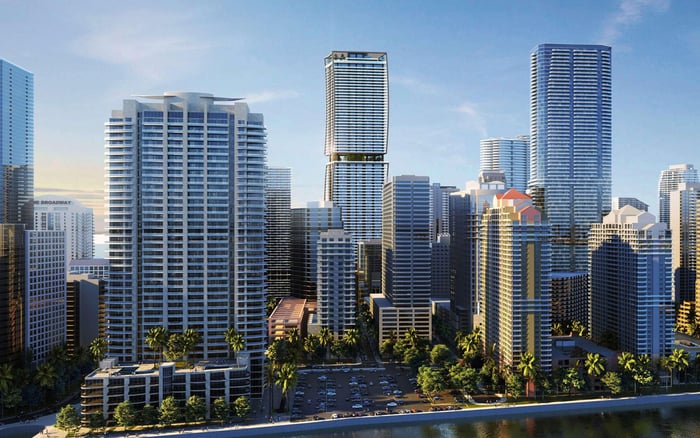
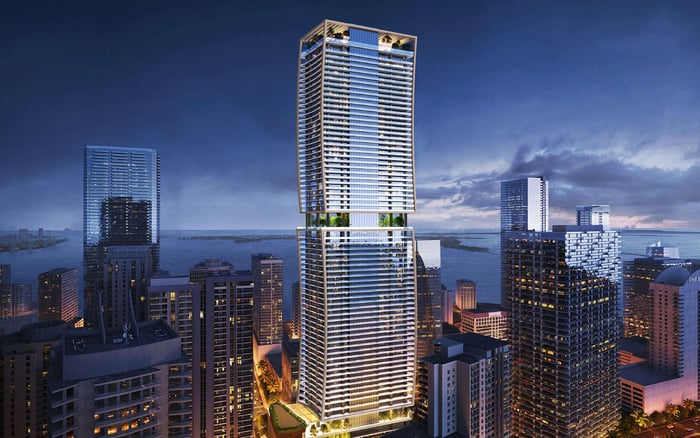
A discreet, buyer-oriented comparison of two Brickell pre-construction towers, focusing on deposit schedules, timelines, density, and how rental policy can change the investment calculus.
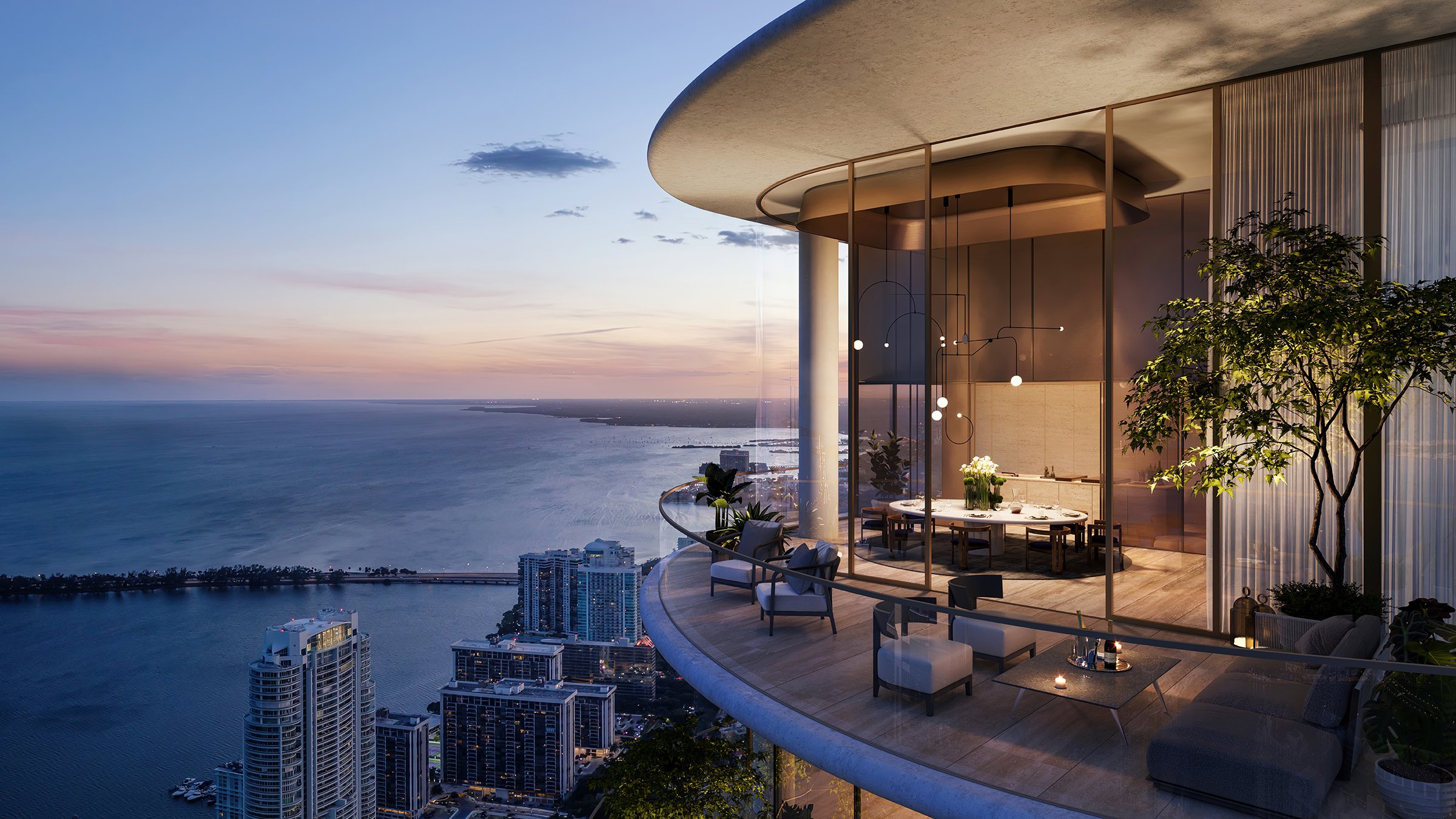
Brickell remains Miami’s most liquid proving ground for pre-construction: global demand, design-led launches, and deposit schedules that may look similar on paper while feeling materially different in real life.
Two towers capture that range with unusual clarity: The Residences at 1428 Brickell and ORA by Casa Tua Brickell. Both sit in the same ultra-prime district, both carry a design-forward pedigree, and both are pitched to sophisticated end users and investors. Still, their density, lifestyle intent, and cash timing create very different risk profiles.
For most buyers, this is not a “better vs worse” choice. It is a question of fit: which contract cadence aligns with your balance sheet, your tolerance for operational complexity, and your holding plan.
The Residences at 1428 Brickell is planned as a 70-story condominium tower developed by Ytech, with architecture by Arquitectonica and interiors by Antonio Citterio (ACPV Architects). Public materials describe a limited collection of 189 residences, a meaningful signal in Brickell where many buildings are significantly larger. The project is also marketed as Miami’s first solar-powered residential high-rise.
ORA by Casa Tua, developed by Fortune International Group, is positioned as a hospitality-branded residential concept. Public listings describe a 76-story tower with about 540 residences, with architecture by Arquitectonica and interiors by m2atelier. It is widely marketed for short-term rental flexibility, with a minimum stay requirement commonly stated as three days.
That single policy distinction can shape the buyer mix, turnover, and day-to-day expectations long before pricing becomes the deciding factor.
In Miami, pre-construction deposits commonly land in the 30% to 50% range, typically paid in tranches tied to contract signing and construction milestones. The headline percentage is only the opening line. The lived experience is driven by timing.
Front-loaded schedules demand liquidity early, sometimes before you have clarity on rate cycles, portfolio liquidity events, or even whether the home will be used primarily by you or placed into a leasing program. Back-loaded schedules can feel calmer month-to-month, but they concentrate capital calls later, often when buyers are also planning furnishing, moving, and other close-to-delivery costs.
There is also a legal and risk-profile layer. Florida condo purchases typically provide a rescission period commonly stated as 15 days after receipt of condominium documents. In addition, under Florida’s deposit framework, the first 10% of the purchase price is generally escrow-protected, while later deposits may be handled differently depending on contract terms. Many contracts allow deposits beyond the first 10% to be used for construction costs if structured appropriately. None of this makes any one project “safe” or “unsafe,” but it does mean each tranche should be treated as its own liquidity event and risk decision.
For The Residences at 1428 Brickell, the commonly published deposit structure totals about 40% prior to closing: 20% at contract, 10% roughly three months after contract, and 10% at top-off, with the balance due at closing.
Two practical implications follow.
First, the schedule is comparatively staged. You commit 20% immediately, then the next tranche arrives after a short interval rather than at a major milestone like groundbreaking. For buyers managing liquidity across multiple assets, that spacing can reduce friction while still keeping you aligned with progress.
Second, the absolute dollars are substantial because publicly disclosed starting pricing is around $2.9M for a two-bedroom plus den. At that entry point, 20% is approximately $580,000 at contract. The next 10% is about $290,000, followed by another $290,000 at top-off. Before closing, you have deployed roughly $1.16M, excluding any upgrade selections or other buyer-side costs.
In parallel, the project’s positioning reads as owner-centric luxury rather than a short-term rental platform. For many buyers, that implies a quieter resident culture and fewer operational variables, a value proposition that can matter as much as amenities.
ORA by Casa Tua’s published deposit structure is commonly shown as about 50% pre-closing, often described as 20% at contract, 20% at groundbreaking, and 10% at a construction milestone, with 50% due at closing.
Compared with a staged approach, this is meaningfully more front-loaded. The second 20% at groundbreaking can arrive sooner than buyers expect if they mentally anchor to a multi-year delivery horizon. For portfolio buyers, it can also overlap with other capital calls, making timing as important as total percentage.
Because ORA is marketed from about $950,000 for studios up to the low-$4M range depending on residence type, the deposit dollars vary widely. At the entry point, a 20% contract deposit is roughly $190,000, and a second 20% at groundbreaking would be another $190,000. For larger residences, the same tranches can quickly move into seven figures.
ORA’s short-term rental posture, with a minimum stay requirement commonly stated as three days, can increase flexibility for certain investment strategies. It can also introduce a different operational reality than a building oriented primarily around long-term occupancy. The right approach is to align expectations with how you plan to use the residence, not only what is permitted.
Timelines are estimates and can shift due to permitting, supply chain, and construction variables. Publicly available timelines commonly cite a Q4 2028 projected delivery for The Residences at 1428 Brickell and an April 2029 estimated completion for ORA by Casa Tua.
A difference of a few months can matter when you are coordinating:
In a market where multiple towers may deliver within a similar window, the more relevant question is not which date is “sooner,” but whether your deposit cadence and anticipated liquidity line up comfortably.
Density is one of the cleanest predictors of how a building feels once it is operating.
With 189 planned residences, The Residences at 1428 Brickell reads as a lower-density, limited-collection concept by Brickell standards. In practical terms, fewer neighbors can mean less elevator congestion, a calmer amenity rhythm, and more continuity among owner-occupants.
With about 540 planned residences, ORA by Casa Tua is intentionally larger. More residences can support a different energy and often a broader range of unit types and buyer profiles. If short-term rentals are a meaningful part of the building’s identity, turnover can increase and staffing expectations can shift accordingly.
Neither model is inherently superior. The right fit depends on whether you are buying a primary residence, a second-home pied-à-terre, or an asset designed to flex between personal use and revenue periods.
Many Brickell buyers build a two-neighborhood rhythm: weekday efficiency in the financial district, with weekends oriented toward sand, dining, and Miami’s cultural calendar. If you are shaping that South Florida portfolio, it helps to consider how a Brickell pre-construction commitment complements Miami Beach holdings.
For buyers who want a members-club cadence and a highly serviced environment, Casa Cipriani Miami Beach is often part of the conversation. For those drawn to iconic beachfront legacy with a private-collection sensibility, Shore Club Private Collections Miami Beach offers a different expression of discretion. And for buyers who prioritize an established global luxury standard in Miami Beach, Setai Residences Miami Beach remains a reference point.
The strategic point is simple: choose Brickell for the daily engine, then calibrate Miami Beach for the emotional and social layer. That pairing often clarifies whether short-term rentals are a feature you truly need, or a complexity you would rather avoid.
When clients compare The Residences at 1428 Brickell and ORA by Casa Tua Brickell, three questions typically surface the clearest answer:
What is your capital comfort zone in the first 12 months? A 40% schedule that is staged differently can feel far less disruptive than a 50% schedule that accelerates at groundbreaking. The percentage gap matters, but timing usually drives real-world stress and opportunity cost.
Are you optimizing for privacy or flexibility? A lower-density, owner-leaning building may better serve buyers seeking long-term serenity. A hospitality-branded concept with short-term rental allowances may better serve buyers prioritizing optionality and who are comfortable with operational nuance.
Is your exit plan resale-driven or lifestyle-driven? If the plan is primarily lifestyle, you can prioritize daily feel, design authorship, and resident culture. If the plan is portfolio-driven, you may focus more on leasing rules, carrying costs, and how much cash is deployed before the unit can be used.
In all cases, treat deposit schedules as part of asset allocation. In Brickell, the contract is not simply a reservation; it is a multi-year capital plan.
What does pre-construction mean in Brickell? It refers to purchasing a condo before completion, typically with staged deposits tied to defined milestones.
How many residences are planned at The Residences at 1428 Brickell? Publicly disclosed materials describe 189 total residences.
How tall is The Residences at 1428 Brickell? It is planned as a 70-story tower.
What is the published deposit schedule at 1428 Brickell? Commonly published terms total about 40% pre-closing, staged across contract, a post-contract tranche, and top-off.
What is ORA by Casa Tua’s published residence count? Major project listings describe about 540 residences.
What is ORA by Casa Tua’s published deposit structure? It is commonly shown as about 50% pre-closing, including a sizable tranche at groundbreaking.
Are short-term rentals allowed at ORA by Casa Tua? It is marketed as allowing short-term rentals with a minimum stay requirement commonly stated as three days.
Is 1428 Brickell positioned for short-term rentals? It is generally positioned as a private, owner-occupant or long-term style luxury building.
When are these projects projected to deliver? Publicly available timelines commonly cite Q4 2028 for 1428 Brickell and April 2029 for ORA by Casa Tua, subject to change.
What buyer protection concepts should I know before wiring deposits? Florida condo purchases typically include a rescission period, and the first 10% is generally escrow-protected while later deposits may be treated differently depending on the contract.
For private guidance on Brickell deposit strategy and positioning, work with MILLION Luxury.
If branded residences are on your mind — as a home or as an allocation — we would be glad to share what we are seeing, privately.
Begin a quiet conversation