Affluent female buyers are increasingly defining South Florida’s ultra-luxury housing brief, from privacy-first condominium living to flexible layouts for multigenerational households. National luxury data points to women’s expanding ownership, decision influence, and investable-asset control, while local pay-gap dynamics underscore why the top end of the market is where their leverage is most visible. This editorial maps what that means for product, design, and neighborhood choices across Miami Beach, Brickell, and beyond.
Luxury housing has always mirrored cultural power. In 2025, that reflection is clearer than ever: women are shaping what the top of the market wants next. Coldwell Banker Global Luxury describes this as the rise of “She-Elites,” a cohort of wealthy, influential women whose preferences are increasingly directing demand. In the same reporting, nearly all luxury property specialists surveyed say women either share decision-making or serve as the primary decision-maker in luxury home purchases.
The numbers are not merely symbolic. In the U.S., women with $5M+ net worth are reported to own 15.2% of luxury real estate, and globally 13.1%. Meanwhile, Sotheby’s International Realty research cited by HousingWire projects women will control $34 trillion - about 38% of investable assets - by 2030. In practical terms, that combination of ownership, liquidity, and influence is moving the market beyond “amenity rich” and toward a more precise brief: homes that deliver privacy, wellness, flexibility, and a level of finish that makes everyday life feel intentional.
South Florida is uniquely responsive to preference shifts because it concentrates lifestyle-driven demand. Here, the decision to buy is often intertwined with identity - how one moves through the city, how one hosts, how one rests, and how one protects time. In that context, “who decides” can matter as much as “what is it.”
Yet it is also a market where affordability pressures are real, especially for median earners. Florida Realtors, citing Zillow research, notes that single women’s U.S. homeownership rate fell from 28.6% in 2021 to 24.5% in 2022. And in Florida’s four largest metros, fewer than 3% of women earning the median salary could afford a median-listed home, versus 8.9% nationally. Layer in Miami-Dade’s reported wage gap - where women earned about 79 cents for every $1 earned by men among full-time workers - and the contrast sharpens: women’s influence is increasingly most visible at the top of the market, where capital, not income, is the gating factor.
This does not make the trend purely financial. It makes it architectural. It is why buyer-driven refinement appears first in ultra-luxury condos, trophy residences, and design-forward new development.
In today’s luxury market, the premium is no longer just square footage - it is frictionlessness. A 2025 analysis from FirstTeam Real Estate argues that millennials are elevating luxury expectations toward turnkey, move-in-ready homes and higher design standards. That dovetails with what many high-net-worth women are selecting for: a residence that performs immediately and beautifully, without the cognitive load of “projects.”
In South Florida, this often translates to fully serviced, privacy-forward living - especially in locations where lifestyle is outdoors, but daily operations are best handled quietly. On Miami Beach, the appeal of branded and service-rich residences reads as a form of control: fewer logistical variables, more predictability, and a team that can operationalize everything from arrivals to maintenance.
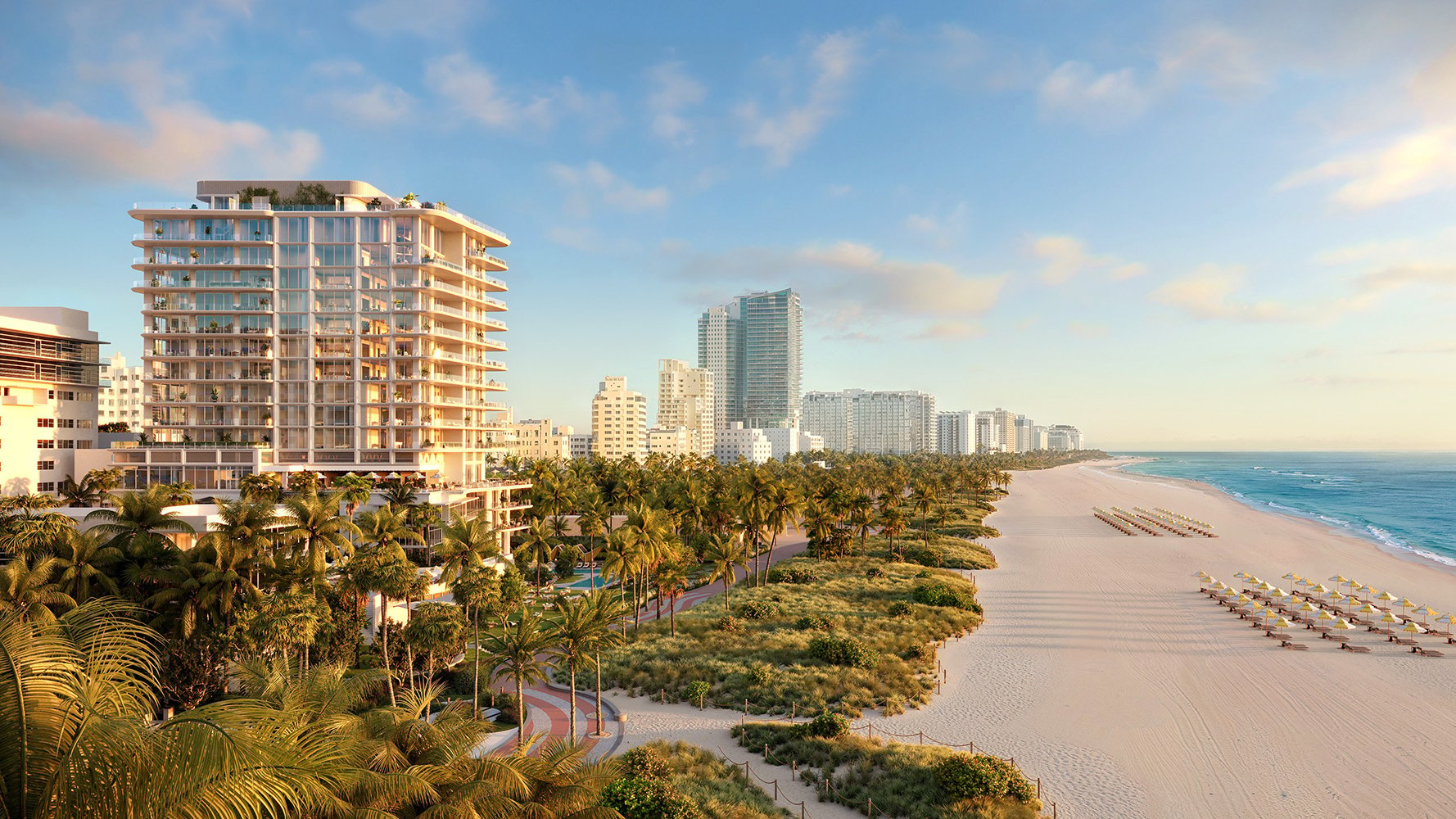
For buyers who want Miami Beach access with a quieter, more residential cadence, 57 Ocean Miami Beach reflects coastal positioning that prioritizes calm over spectacle. For those drawn to a more hotel-adjacent level of service, a property such as Setai Residences Miami Beach aligns with the broader turnkey expectation now associated with top-tier living.
One of the clearest shifts in the luxury conversation is how directly buyers are discussing multigenerational living, visiting family, and flexible separation. Coldwell Banker Global Luxury reports that about 45% of luxury property specialists cite flexible layouts for multigenerational living as a top client priority.
In South Florida, flexibility is not only about children or aging parents. It is also about protecting discretion: a guest suite that functions as a true second domain, an office that can become a wellness room, a media lounge that can close off for privacy, and circulation patterns that allow a home to feel expansive even when occupied.
This is where new development product and high-design renovations tend to outperform. Buyers at this level are not simply asking for “more rooms.” They are asking for smarter adjacency, stronger sound separation, and clear zones that reflect modern life: work, hosting, restoration, and travel.
South Florida has long marketed indoor-outdoor living, but the rationale has evolved. Coldwell Banker Global Luxury reports that more than 60% of luxury specialists say clients prioritize indoor-outdoor living and stronger connections to nature.
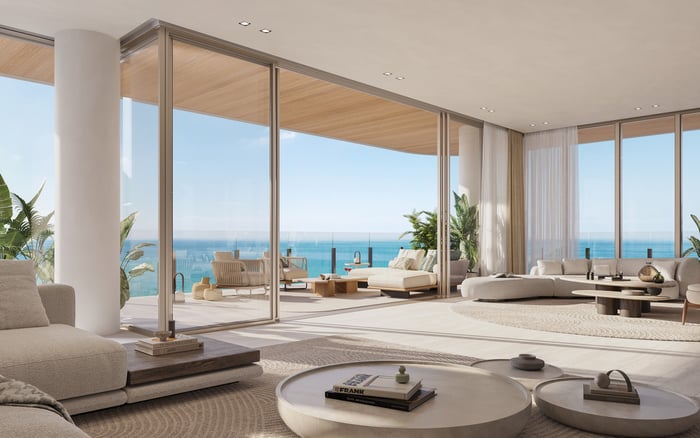
For many affluent women, that connection reads as wellness infrastructure. It is the ability to start the day with light and air, to host without feeling exposed, to have outdoor space that is as comfortable as interior space, and to be near the ocean without compromising security.
The strongest contemporary residential experiences make that transition feel inevitable, not performative. In Miami Beach, projects that emphasize service and privacy can support that wellness-first lifestyle. Residences such as The Ritz-Carlton Residences® Miami Beach are often understood through that lens: an environment designed to reduce decision fatigue so the home becomes a sanctuary, not a second job.
As women’s influence expands on the demand side, leadership visibility is rising on the supply and advisory side as well. Bisnow’s 2025 “Women Leading Real Estate” in South Florida expanded its recognition list to 38 women, up from 20 the prior year - an indicator of broader representation across development, brokerage, and advisory.
In the local ecosystem, several widely profiled leaders underscore how female perspective is shaping product and positioning. Lissette Calderon is publicly positioned as founder and CEO of Neology Group, a woman-led development firm active in South Florida. Danielle Naftali is highlighted by Naftali Group as Executive VP of Marketing, Sales and Design, reflecting how branding and product strategy have become central to luxury absorption. On the brokerage side, profiles of Mayi de la Vega (ONE Sotheby’s International Realty) and Alicia Cervera Lamadrid (Cervera Real Estate) reinforce a core reality of South Florida: new development and ultra-luxury resale markets are often navigated through relationships and expert orchestration.
For buyers, this matters. Representation and advisory alignment are increasingly part of the value proposition - especially when the transaction is not only financial, but reputational.
Miami Beach remains a global address, but the center of gravity has shifted toward residences that deliver social proximity without social exposure. This is where the preferences associated with the “She-Elites” trend become most legible: discretion, high-touch service, and interiors that feel personal rather than performative.
For those who prefer a members-club sensibility with residential intent, Casa Cipriani Miami Beach fits the broader direction of the market: curated hospitality as an extension of home life. The choice is not about being seen; it is about access on your terms.
This is also why Miami Beach stays relevant for buyers who travel frequently. When a residence can be secured, maintained, and made ready without constant oversight, the home becomes a dependable base - not another set of to-dos.
Three patterns are emerging in how ultra-luxury purchases are being evaluated, particularly among women who are either primary decision-makers or equal partners in the decision.
First, control of environment. That means sound, privacy, security, and the ability to modulate how open or closed a home feels day to day.
Second, quality that is felt, not announced. Higher finish standards are not simply about brands or materials; they show up in daily touchpoints, lighting, and the effortless performance of the home.
Third, optionality. The future is being priced in: a home that can support multigenerational visits, changing work patterns, and evolving family structures without needing to be fundamentally rethought.
In a market where wealth transfer dynamics are widely discussed, the “silver tsunami” narrative cited by HousingWire, via Sotheby’s International Realty research, helps explain why younger affluent buyers can move quickly - and why the product standard is rising. The money is increasingly ready. The question is whether the home is.
What does “She-Elites” mean in luxury real estate? It refers to wealthy, influential women whose preferences are increasingly shaping luxury housing demand.
Are women really leading luxury purchase decisions now? Luxury specialists widely report women are primary or shared decision-makers in most luxury purchases.
How significant is women’s luxury real estate ownership? Reported figures place U.S. luxury ownership among women with $5M+ net worth at 15.2%.
Why is South Florida a focal point for this trend? The region concentrates lifestyle-driven luxury demand, making preference shifts visible quickly.
What home features are being prioritized most? Flexible layouts and indoor-outdoor living are repeatedly cited as top priorities by luxury specialists.
Is multigenerational living influencing floor plan choices? Yes, many buyers want layouts that support guests and family while preserving privacy.
How does indoor-outdoor living relate to wellness? Buyers often see light, air, and nature connection as daily wellness infrastructure, not décor.
What role does the wealth transfer play in luxury buying? Research discussions suggest intergenerational wealth movement can help fund purchases and trade-ups.
Is affordability a concern for women outside the luxury tier? Florida data suggests affordability can be especially constrained for median-earning women in major metros.
How should buyers approach an ultra-luxury purchase today? Focus on discretion, operational ease, and flexible design that can adapt to future life changes.
For a confidential assessment and a building-by-building shortlist, connect with MILLION Luxury.
If branded residences are on your mind — as a home or as an allocation — we would be glad to share what we are seeing, privately.
Begin a quiet conversation