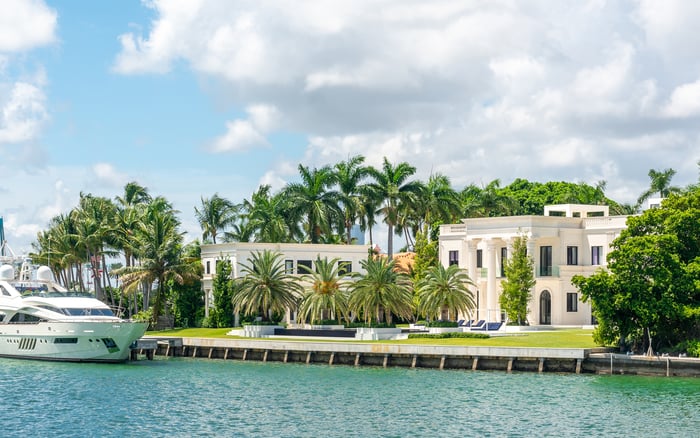
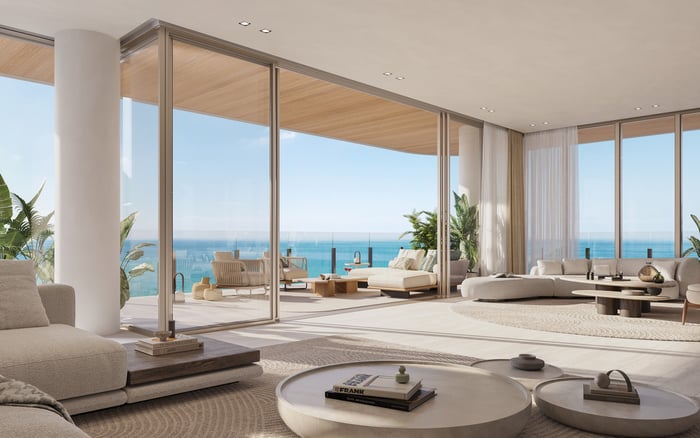
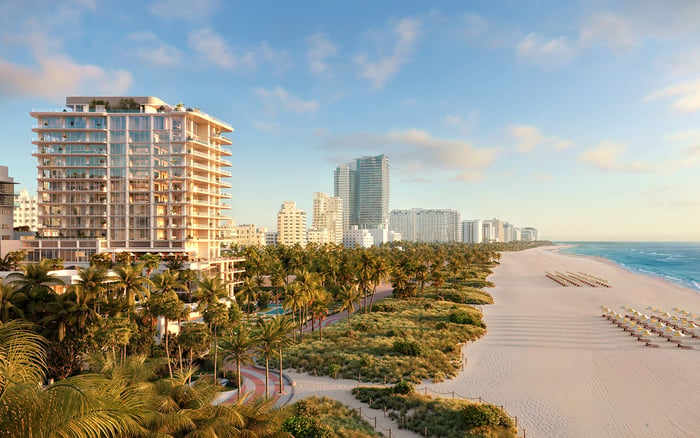
Miami’s ultra-luxury market continues to trade at rarefied price points with a distinctly cash-led buyer profile and deep global demand, while Austin offers a different kind of prime: executive-driven, lifestyle-forward, and increasingly price-sensitive as inventory has built. For South Florida buyers comparing a primary residence, a tax-friendly second home, or a capital-preservation play, the decision in 2026 hinges less on headlines and more on structure: liquidity, carrying costs, governance, and how each city performs when momentum cools.

Ultra-luxury buyers rarely choose between cities on a single variable. The real decision is portfolio-level: where capital feels most protected, where lifestyle is most immediate, and where resale liquidity is most predictable.
South Florida enters 2026 with an ultra-prime narrative that has proven durable. In 2025, hundreds of $10M-plus homes changed hands - among the strongest annual totals on record locally. Just as telling is deal structure: roughly four out of five $10M-plus closings have been all-cash, a pattern that typically compresses timelines, reduces financing risk, and keeps negotiations centered on terms rather than lender constraints.
Austin arrives at the same moment with a different texture. Texas posted record $1M-plus home sales volume over a recent 12-month period, and Austin represented a meaningful share of that activity. Yet by late 2025, the market tone shifted - more sellers than buyers, rising active listings, and roughly four months of supply. In practice, that means an ultra-luxury buyer can often be more deliberate in Austin, using time and choice as leverage.
For a South Florida reader, the takeaway is not that one city “wins.” It’s that Miami behaves more like an international capital market, while Austin is operating like an elite regional market moving through a normalization cycle.
Miami’s top end has become a cash-forward arena. When closings are dominated by cash, pricing can still be negotiated - but execution becomes more certain. In 2026, that certainty matters for buyers who prioritize privacy, speed, and clean delivery.
The second defining factor is breadth of demand. Across South Florida’s new-construction and pre-construction pipeline, global buyers have represented a majority share of purchases across dozens of countries, with particularly large representation from Latin America. That international layer matters because it can support absorption even when domestic sentiment turns cautious.
Condominium performance reinforces the point. In Q3 2025, Miami’s $2M-plus condo segment logged hundreds of closed sales, with a median price in the high seven figures and a median price per square foot near the four-figure mark. At the ultra-prime end, Fisher Island pricing has held to a rarified range, and select Miami Beach submarkets have posted notable year-over-year gains in price per square foot.
When buyers ask why Miami’s luxury product keeps holding attention, the answer is rarely just weather. It’s the combination of global demand, service-heavy residential offerings, and a market that’s comfortable transacting at scale.
Austin’s ascent has been powered by corporate expansion, drawing executives, founders, and senior talent into neighborhoods where privacy, top schools, and architectural land value concentrate. Major employers have established meaningful Austin-area footprints, creating a deep bench of high-income households and entrepreneurial upside.
But in 2026, the conversation shifts from “can you find a property?” to “can you buy it well?” Late-2025 conditions pointed to a more buyer-friendly market, with a clear imbalance between sellers and buyers and a visible build in inventory. Pricing across the broader metro also repriced meaningfully from 2022 peaks - a reminder that even high-growth markets can cool when rates, supply, and sentiment change.
For the ultra-luxury buyer, that repricing can be a feature, not a flaw. It may reopen entry points into prime pockets that were previously bid to perfection. The discipline is separating prime from merely expensive - anchoring on location, build quality, and long-term desirability.
Price per square foot is a useful compass, not a verdict.
In Austin, million-dollar homes have traded at an average price per square foot far above the statewide average for all homes. That spread signals scarcity in the neighborhoods that matter most, and a premium for proximity to the city’s core lifestyle.
In Miami, the metric can be even more revealing because micro-markets behave like separate countries. One island can trade at levels that make other luxury districts feel comparatively “value,” while oceanfront and trophy addresses can move on their own cycle.
Still, the metric hides two core realities:
In other words, in 2026 the best buyers in both cities underwrite the asset - not the average.
Sophisticated buyers rarely stop at purchase price. They model the full annual cost stack.
In Miami, ownership carry costs can be unusually high due to insurance burdens. Homeowners insurance can represent a higher premium-to-value ratio than many major metros, and hurricane deductibles are often structured as a percentage of dwelling coverage. Flood insurance is typically separate from standard homeowners policies, adding another layer to underwriting.
For condominiums, that math extends to HOA structures, reserves, and the service ecosystem. That doesn’t make Miami less attractive; it makes diligence more consequential. The buyer who wins in 2026 is the one who reads the budget like an investor and tours the building like an operator.
Austin’s carry costs can look simpler by comparison, but buyers should still underwrite taxes, maintenance, and any future capital improvements. The difference is that Austin’s current market posture may allow more negotiation around inspection items and credits.
Ultra-luxury is increasingly experiential. In South Florida, the most competitive residences sell a lifestyle that is curated, efficient, and discreet.
For buyers who want hotel-grade service within a residential framework, Miami Beach remains a core corridor. Properties such as Setai Residences Miami Beach appeal to buyers who value a refined arrival sequence, a consistent standard of care, and a social scene that can be embraced - or avoided - on demand.
For a more classic branded-residential approach, The Ritz-Carlton Residences® Miami Beach speaks to buyers who prioritize predictability, service culture, and a familiar luxury language.
And for oceanfront purists focused on low-density coastal living, 57 Ocean Miami Beach fits the buyer who wants an intimate building profile with beachfront presence.
Miami’s advantage is not that every building is perfect. It’s that the city offers multiple versions of luxury, each with its own cadence of privacy, service, and setting.
When 81% of $10M-plus closings are all-cash, negotiations change. Buyers can move decisively, sellers can prioritize clean contracts, and closings can be timed around travel schedules and estate planning.
That matters for 2026 because it signals resilience. A market with heavy cash participation can still reprice, but it may do so with fewer distressed signals. That supports a calmer resale environment - especially at the top end, where optionality and discretion are prized.
Add the global component in new construction and pre-construction demand, and you get a market supported by multiple demand sources. That diversity can help sustain absorption even when one buyer cohort pauses.
Austin’s best buyer in 2026 is often an operating executive or entrepreneur who wants a primary residence that feels like a retreat, but functions like a base of operations. The market’s shift toward higher inventory can reward patience, particularly for buyers willing to negotiate structure: closing timelines, furnishings, repairs, and pricing that reflects today’s conditions rather than yesterday’s momentum.
Prime submarkets remain the thesis. Buyers who anchor their search in the most established luxury neighborhoods can still capture long-term desirability, even as the broader metro works through a period of repricing.
If you are weighing Miami versus Austin, these questions tend to surface in private underwriting meetings rather than at open houses:
Is the priority lifestyle immediacy or long-term land scarcity?
Do you need global resale liquidity, or are you optimizing for personal use?
How sensitive are you to annual carry costs, including insurance structures?
Are you buying a service ecosystem (Miami) or a neighborhood-driven estate (Austin)?
Do you want a market that moves quickly (Miami cash culture) or one that may reward negotiation (Austin’s current balance)?
For many ultra-luxury households, the answer is not binary. Miami can serve as the high-functioning coastal base, while Austin becomes the lifestyle counterpoint - with room to expand and negotiate.
For those who want a private-club sensibility integrated into residential life, Casa Cipriani Miami Beach signals a distinctly social, service-led approach that aligns with certain buyer psychographics.
Is Miami still a strong market above $10M in 2026? Recent activity included hundreds of $10M-plus closings in 2025, suggesting continued depth at the top end.
How common are all-cash deals at the top of Miami’s market? All-cash has been the dominant structure in $10M-plus closings, reinforcing speed and certainty.
Is Austin luxury cooling or simply normalizing? Conditions shifted toward a more buyer-friendly environment, with more inventory and greater leverage for patient buyers.
Which city has more international demand? South Florida new construction and pre-construction has seen a majority share of global buyers across many countries.
What is the biggest hidden cost in Miami ownership? Insurance structure can materially affect annual carry costs, and flood coverage is often separate from standard policies.
Do Miami condos still command premium pricing? The $2M-plus condo segment has sustained significant sales volume, with pricing that supports a premium narrative.
Where do Miami’s highest price-per-square-foot signals show up? Ultra-prime pockets like Fisher Island and select Miami Beach submarkets have posted especially elevated $/SF levels.
Is Austin a good value compared to Miami on a $/SF basis? Austin can offer more space for the dollar, but prime neighborhoods still trade at a meaningful premium within Texas.
Should buyers prioritize resale liquidity or lifestyle? The strongest outcomes typically come from aligning the property’s use-case with the market’s liquidity profile.
Can a buyer reasonably own in both Miami and Austin? For many ultra-high-net-worth households, a two-market strategy can balance coastal service luxury with hill-country lifestyle.
For a confidential assessment and a building-by-building shortlist, connect with MILLION Luxury.
If branded residences are on your mind — as a home or as an allocation — we would be glad to share what we are seeing, privately.
Begin a quiet conversation