Surfside offers international buyers a discreet coastal base with access to Miami Beach, Bal Harbour, oceanfront residences, and a calm, highly residential daily rhythm.
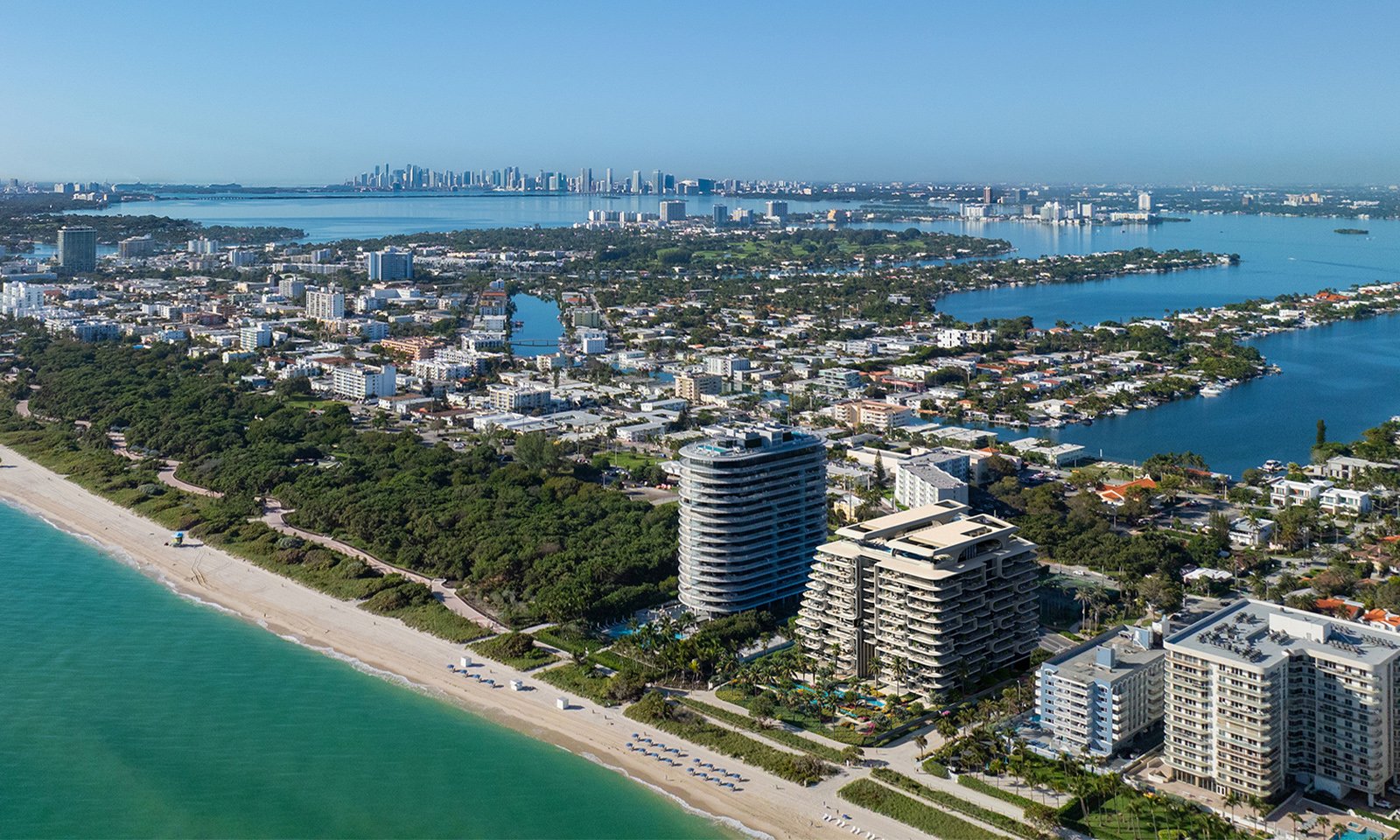
For international buyers, Surfside has a particular appeal: established, discreet, and easy to understand. It is not a district that demands constant performance. Instead, it offers a quieter coastal rhythm within the broader South Florida luxury map, where a residence can function as a seasonal retreat, family base, or long-horizon holding without feeling removed from the region’s best-known destinations.
That balance matters. Many global buyers want access to Miami’s culture, dining, design, and aviation connections, but not every buyer wants to live at the center of the highest-energy environment. Surfside occupies a more composed lane. It benefits from proximity to Miami Beach and Bal Harbour while preserving a distinctly residential personality. For clients who value privacy, walkability, ocean air, and a measured sense of place, the neighborhood can feel unusually practical.
The result is not merely a beach address. Surfside can serve as a polished South Florida base, especially for buyers weighing lifestyle quality against convenience, building scale, and the daily experience of ownership.
International buyers often evaluate property through several lenses at once. The residence must be beautiful, but it must also be manageable from afar. It should offer comfort for family visits, support efficient arrivals and departures, and sit within a neighborhood that feels legible after long periods away. Surfside answers those questions through simplicity rather than spectacle.
The area’s strongest attribute is its restraint. A buyer can be close to the social and commercial orbit of Bal Harbour, close to the wider lifestyle pull of Miami Beach, and still return to a calmer residential setting. That distinction is meaningful for owners who use South Florida intermittently. A base should not require explanation each time the family arrives. It should feel intuitive, secure, and easy to enjoy.
Surfside also appeals because it is not dependent on a single buyer profile. It can work for families seeking beach access, couples who want a refined second home, or investors focused on scarce coastal inventory in a recognized luxury corridor. The unifying theme is discretion. The neighborhood is not trying to be everywhere at once, which is precisely why it can feel sophisticated.
Surfside’s luxury conversation is closely tied to its oceanfront residential inventory. Buyers are drawn to buildings that emphasize direct coastal living, privacy, and a more intimate sense of arrival. In this context, boutique is not simply a marketing word. It describes a preference for residential experiences that feel controlled, personal, and quietly serviced.
Buildings such as The Delmore Surfside help frame the current conversation around new luxury in the neighborhood, while Ocean House Surfside speaks to buyers who want the Surfside name attached to a clearly residential coastal setting. For international clients, these projects are often considered not only as homes, but as operating platforms: where guests will arrive, how the building feels during quieter months, how the residence functions when the owner is abroad, and what level of privacy is preserved.
Oceanfront living also has an emotional clarity that travels well across cultures. A waterfront residence is easy to understand, whether the buyer is coming from Europe, Latin America, the Middle East, or the Northeast. The appeal is visual, practical, and enduring. In Surfside, that appeal is paired with a lower-key neighborhood identity that avoids the feeling of overexposure.
The power of Surfside is not isolation. It is adjacency. Miami Beach is close enough to remain part of the owner’s lifestyle, from dining and wellness to art, hotels, and social programming. Bal Harbour adds another layer of refinement, with its polished retail culture and established luxury residential reputation. Yet Surfside itself retains a more relaxed day-to-day atmosphere.
That geography matters for international buyers because a second home is often judged by how frictionless it feels. If every outing requires a major decision, the residence becomes less useful. If the neighborhood feels too intense, the home may become tiring. Surfside occupies the middle position. It offers access to the region’s well-known pleasures without requiring the buyer to live inside their busiest expressions.
This is why comparisons with nearby buildings often become nuanced. A buyer may admire the stature of The Surf Club Four Seasons Surfside, then evaluate how that service-oriented coastal identity compares with other Surfside or Bal Harbour options. Another may consider the architectural intimacy associated with Arte Surfside while weighing layout, views, and building culture. The decision is rarely only about square footage. It is about the kind of South Florida life the buyer wants to repeat.
For buyers who live abroad or divide time among several cities, practical ownership questions are central. Surfside can be attractive because it offers a straightforward lifestyle proposition: arrive, settle in, move easily between beach, dining, shopping, and broader Miami access, then leave the residence in a building environment designed for high-value ownership.
Still, due diligence should be exacting. International buyers should look closely at building governance, rental policies, pet rules, service structure, security protocols, staff continuity, maintenance expectations, and the day-to-day culture of the association. These factors can matter as much as the view. A spectacular residence in a building that does not fit the owner’s use pattern may become less compelling over time.
Buyers should also consider how the home will be used across generations. Will adult children visit independently? Will staff or extended family need separate accommodations nearby? Is the residence meant for holidays only, or for longer stays during the winter season? Surfside’s appeal strengthens when the property is matched to a realistic ownership rhythm.
South Florida offers several luxury coastal identities. Sunny Isles Beach can feel more vertical and high-rise driven. Fisher Island is more private and enclave-like. Miami Beach carries broader cultural energy. Palm Beach has its own heritage and social code. Surfside sits apart by offering refinement without excessive complexity.
For the international buyer who wants a recognized Miami-area base but prefers a softer residential environment, that is a meaningful distinction. Surfside does not need to compete by being louder. Its value is in its composure, its coastal setting, and its proximity to neighboring destinations that add depth to the ownership experience.
Bal Harbour is part of that equation, especially for buyers who prioritize luxury retail and a polished village atmosphere. Miami Beach expands the lifestyle radius with dining, hotels, design, and nightlife. Surfside benefits from both while retaining a more intimate daily scale. That combination can make the neighborhood feel less like a vacation experiment and more like a repeatable home base.
The best Surfside purchase begins with lifestyle clarity. Buyers should decide whether they want maximum service, maximum privacy, the newest design language, the broadest views, or the most flexible family layout. Each priority can point to a different building or line within the same neighborhood.
The next step is to evaluate the building as an ecosystem. Lobby experience, arrival sequence, elevator privacy, staff discretion, amenity usefulness, and the surrounding pedestrian environment all shape the ownership experience. For international buyers, these details are not secondary. They determine whether the home feels effortless when time in residence is limited.
Finally, buyers should think about longevity. Surfside’s best properties are not only attractive today. They are positioned within a coastal corridor that remains central to South Florida luxury demand. That does not remove the need for careful underwriting, but it does explain why sophisticated buyers continue to study the neighborhood with seriousness.
Is Surfside a good fit for international second-home buyers? Yes, particularly for buyers who want a quieter coastal base with access to Miami Beach, Bal Harbour, and broader South Florida amenities.
What makes Surfside different from Miami Beach? Surfside generally offers a calmer residential atmosphere, while Miami Beach provides a larger lifestyle, hotel, dining, and cultural orbit nearby.
Why do buyers compare Surfside with Bal Harbour? The two areas are closely linked in the luxury conversation, with Bal Harbour adding a polished retail and residential context next to Surfside’s coastal setting.
Is oceanfront ownership central to Surfside’s appeal? Yes, oceanfront residences are a major part of the neighborhood’s luxury identity and are often the first focus for international buyers.
Are boutique buildings important in Surfside? Many buyers value boutique scale because it can create a more private, controlled, and residential ownership experience.
Should buyers focus only on new development? Not necessarily. New development can be compelling, but resale options may also suit buyers depending on layout, views, building culture, and timing.
What due diligence matters most for nonlocal owners? Building management, association rules, rental policies, maintenance standards, insurance context, and security procedures should all be reviewed carefully.
Can Surfside work for families? It can, especially for families seeking beach access, a quieter home environment, and proximity to surrounding South Florida destinations.
How should buyers evaluate service levels? Buyers should study staffing, arrival experience, privacy, amenity operations, and how the building functions when owners are away.
Is Surfside more about lifestyle or investment? For most luxury buyers, it is both: a lifestyle-led purchase supported by the scarcity and desirability of refined coastal ownership.
For a tailored shortlist and next-step guidance, connect with MILLION.
If branded residences are on your mind — as a home or as an allocation — we would be glad to share what we are seeing, privately.
Begin a quiet conversation