A discreet buyer’s guide to the impact-glass questions that matter before purchasing at The Residences at Mandarin Oriental, Miami, including HVHZ compliance, approvals, wind pressures, water infiltration, acoustics, thermal comfort, warranties, and long-term maintenance.
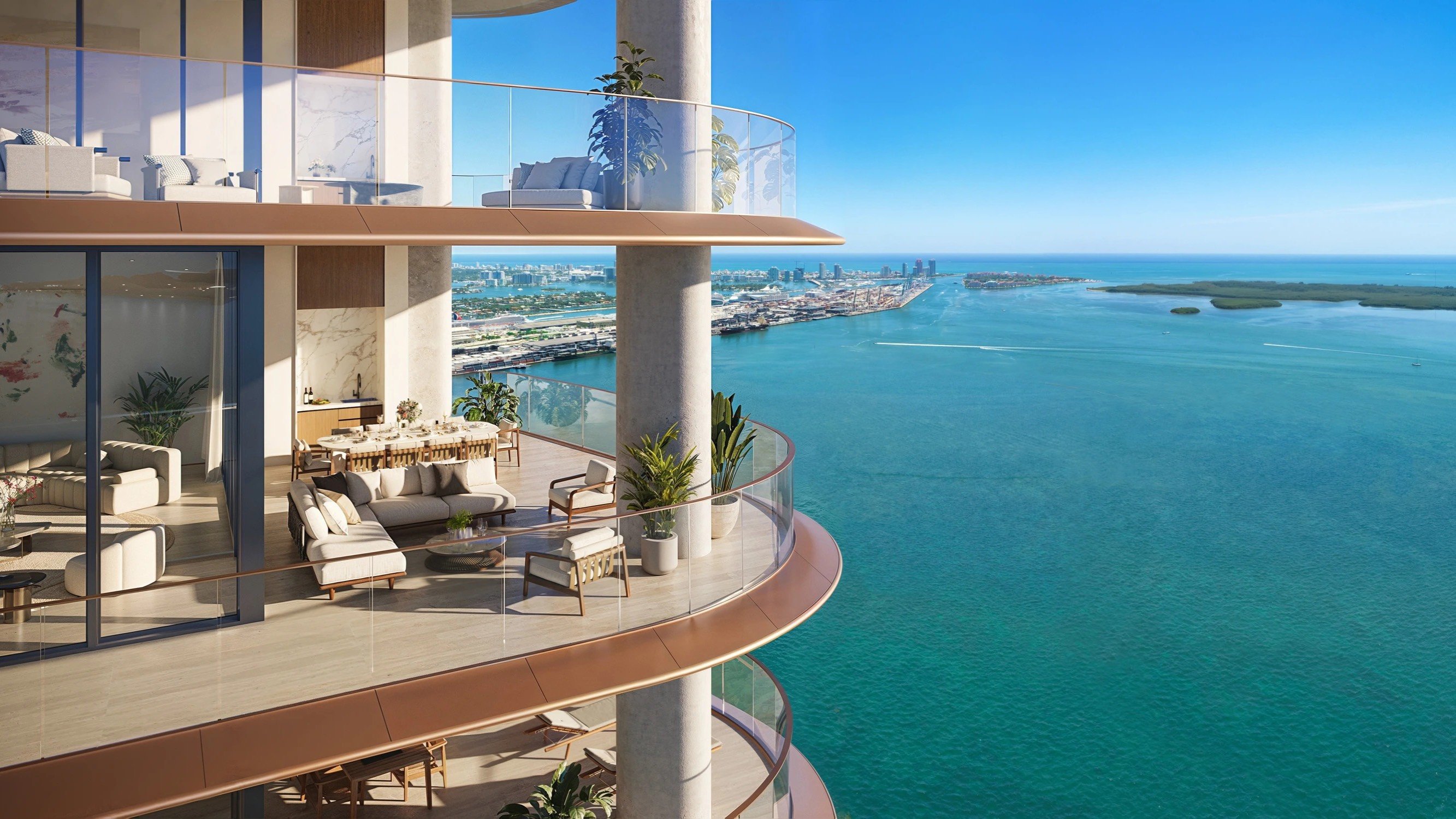
At The Residences at Mandarin Oriental, Miami, glass is not simply a design gesture. It is the lens through which the bay, skyline, daylight, privacy, climate, and storm exposure are experienced every day. For a buyer considering a high-value residence, the phrase “impact glass” should begin a conversation, not end one.
In Miami, especially in a waterfront setting, glazing is a technical system. Glass, frame, anchorage, sealants, balcony-door tracks, drainage paths, mullions, and installation method all contribute to performance. A beautiful wall of glass may appear effortless, but its specifications deserve the same scrutiny as the floor plan, service program, and ownership documents.
This is a buyer’s-guide topic where precision matters. The right questions are not adversarial. They are the language of informed luxury ownership.
Begin by asking for the exact impact-glass system specifications proposed or used for the residence. That means the glass makeup, laminate or interlayer type, frame material, anchorage, sealants, and confirmation of whether the entire assembly was tested as a system. A pane of laminated glass is only one part of the performance equation.
The distinction is essential. Buyers should ask whether the whole assembly, including the frame and installation conditions, was tested together. The most useful answer is not “yes, it is impact glass,” but a package of specifications showing how the glass, frame, fasteners, seals, and installation details work as one envelope.
This level of diligence is increasingly relevant across glass-forward towers in Brickell and greater Miami, from The Residences at 1428 Brickell to other high-rise residences where views and exterior performance are inseparable.
For a Miami-Dade property, buyers should ask whether the windows, balcony doors, operable panels, fixed glazing, and sliding-glass systems meet the Florida Building Code requirements applicable to the High Velocity Hurricane Zone. Do not assume that one approval covers every opening in a residence.
Request the Miami-Dade Notice of Acceptance numbers or Florida Product Approval numbers for every glazing and door system used in the specific residence type. This is especially important if the home includes a combination of fixed windows, operable windows, terrace doors, corner glazing, and oversized sliders. Each condition can carry different performance requirements.
If a sales description says “impact glass,” ask whether that rating applies equally to all glass conditions. Fixed windows and large sliding doors may not be identical assemblies. Corner units, broad exposures, and terrace conditions can introduce details worth reviewing before contract execution.
A sophisticated buyer should ask what design wind pressures were used for the exact residence under consideration. Upper-floor, corner, and penthouse residences can have different exposure assumptions than lower or interior units. The relevant question is not merely whether the tower has impact glass. It is whether the specific unit’s glazing was selected and approved for its elevation, orientation, and exposure.
Waterfront context adds another layer. Ask whether the glass system was selected with bay-facing wind loads and wind-driven rain risk in mind. Waterfront exposure is part of the lifestyle appeal, but it also belongs in the technical review. A residence that captures wide water views should be evaluated with the same attention to exterior-envelope performance.
The same principle applies across South Florida’s premium market. Buyers comparing Una Residences Brickell, Aston Martin Residences Downtown Miami, and other urban waterfront towers should ask project-specific questions rather than relying on broad category language.
Balcony conditions deserve particular attention because they combine glass, thresholds, tracks, drainage, hardware, seals, and frequent use. A balcony door may be opened daily, exposed to salt air, and expected to perform during severe weather. Ask whether the balcony-door and sliding-glass systems were tested under the same relevant hurricane protocols as the fixed glazing.
Request confirmation that the glazing assembly was tested for large-missile impact, cyclic pressure loading, and water infiltration under the applicable protocols. Impact resistance and water management are related, but they are not the same question. A system may be designed to resist impact while still requiring close review of water-infiltration performance.
Buyers should ask for the water-infiltration performance rating. In a bay-facing setting, wind-driven rain is a real-world concern. Also ask whether decorative façade elements, balcony railings, mullions, terrace geometry, or other architectural conditions affect the practical performance of the glazing system.
Storm performance is only one dimension of glass. The daily experience of a luxury residence also depends on quiet, privacy, solar control, and thermal comfort. Ask whether the glass has acoustic ratings, including STC or OITC values, so noise control can be evaluated with the same seriousness as hurricane performance.
Thermal performance matters as well. Buyers should ask for U-factor, solar heat gain coefficient, tint, low-E coating, and any other information that explains how the glass manages heat gain. In bay-facing residences, light and view are part of the value proposition, but heat control affects comfort, furnishings, art, and energy use.
These questions are not unique to one branded residence. They are part of the larger new-construction due-diligence conversation around high-design towers such as St. Regis® Residences Brickell, where buyers should understand the difference between visual drama and measurable performance.
Ask whether impact-glass specifications vary by elevation, exposure, stack, or residence type within The Residences at Mandarin Oriental, Miami. In a large tower, one should not assume that every opening is identical. If a residence has larger sliders, more corner glazing, or a different terrace condition, the supporting documents should address that difference.
Next, ask who manufactured and installed the glazing system. Request warranty language that explains whether coverage includes glass failure, seal failure, hardware, frames, installation defects, and water intrusion. A prestigious residence still requires clear allocation of responsibility if performance issues arise.
Finally, clarify maintenance obligations. Owners and the condominium association may have responsibilities for seals, tracks, drains, hardware, and balcony-door systems. Ask whether the condominium documents address these items, and whether insurers, lenders, or reserves rely on impact-glass certification when evaluating risk assumptions, premiums, or coverage.
Before moving forward, ask for the approvals, product numbers, design wind pressure information, test protocols, water-infiltration ratings, acoustic ratings, thermal-performance details, warranty terms, installer information, and maintenance obligations. If any answer feels overly general, request documentation for the specific residence.
For waterfront buyers, this is not a minor technical sidebar. It is part of the architecture of ownership. The most compelling glass is the glass that performs quietly, protects effectively, preserves comfort, and supports the long-term value of the residence.
Is “impact glass” enough information for a luxury condo buyer? No. Buyers should ask for the full system specifications, including glass, frames, anchorage, sealants, and testing.
Should I request Miami-Dade approval numbers? Yes. Ask for the Miami-Dade Notice of Acceptance or Florida Product Approval numbers for each applicable glazing and door system.
Do fixed windows and sliding doors always have the same rating? Not necessarily. Ask whether the rating applies to fixed windows, operable panels, terrace doors, corner glass, and oversized sliders.
Why do upper-floor or corner residences need extra review? Design wind pressures can vary by elevation, exposure, and unit location, so the specific residence should be evaluated.
Does impact resistance prevent water intrusion? Not automatically. Ask for water-infiltration performance ratings and how the system handles wind-driven rain.
Are acoustic ratings relevant for waterfront glass? Yes. STC or OITC ratings can help buyers understand privacy and noise control beyond storm performance.
What thermal details should buyers request? Ask for U-factor, solar heat gain coefficient, tint, low-E coating, and other heat-control specifications.
Can specifications vary within the same tower? Yes. Ask whether glass systems differ by elevation, exposure, stack, residence type, or terrace condition.
What warranty items matter most? Review coverage for glass failure, seal failure, hardware, frames, installation defects, and water intrusion.
Who should review technical glazing documents? A qualified façade, structural, or building-envelope consultant can help interpret approvals, ratings, and warranty language.
For a discreet conversation and a curated building-by-building shortlist, connect with MILLION.
If branded residences are on your mind — as a home or as an allocation — we would be glad to share what we are seeing, privately.
Begin a quiet conversation