A buyer-focused look at why certain bayfront residences in South Florida can feel more private than oceanfront condos, from sight lines and arrival sequences to terrace orientation, waterway character, and building scale.
In South Florida luxury real estate, privacy is often treated as a fixed amenity: a private elevator, a gated entry, a corner residence, a full-floor home. Those details matter, but the lived experience is more layered. Privacy is shaped by approach, orientation, scale, sound, landscaping, and the way a residence meets the water.
That is why some bayfront residences can feel more secluded than oceanfront condos, even when the oceanfront address appears more prestigious on paper. Oceanfront living delivers drama: open horizon, surf, beach access, and a powerful sense of place. Bayfront living often offers something quieter: controlled sight lines, softer movement, and a more residential rhythm. For the buyer who values discretion as much as the view, that distinction can be decisive.
The most private home is rarely defined by a single label. It is not simply oceanfront versus bayfront, tower versus boutique, or condo versus single-family. It is the sum of many design choices, each influencing how exposed or protected a resident feels from morning to night.
Oceanfront condos often face a magnificent, uninterrupted natural view. Yet along active beachfront corridors, neighboring towers may align in ways that create lateral exposure. A residence can have a sweeping ocean outlook while still feeling visible from adjacent balconies, amenity decks, or nearby buildings.
Bayfront settings can work differently. Curving shorelines, smaller islands, canals, landscaped edges, and setbacks can create a more layered visual field. Instead of a single dramatic plane, the view may unfold through water, gardens, docks, low-rise silhouettes, and distant skyline. That layering can make a home feel less on display.
This is why buyers comparing properties such as Onda Bay Harbor often focus not only on the water view, but also on what sits across, beside, and below it. A beautiful outlook is one thing. A beautiful outlook that does not feel watched is another.
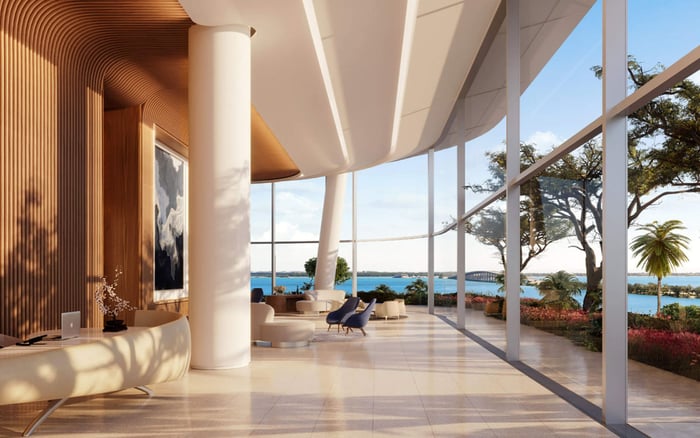
Privacy begins before the front door. The route from street to lobby, lobby to elevator, elevator to residence, and residence to terrace creates a psychological transition. In a highly active oceanfront building, that journey may carry a more public resort atmosphere, with beachgoers, guests, service teams, and shared amenities contributing to movement throughout the day.
Bayfront residences can sometimes offer a more composed arrival. The street may feel quieter. The waterfront edge may be less trafficked. The lobby may read more residential than resort. None of this is guaranteed by location alone, but the best bayfront properties use arrival as a form of discretion.
For buyers considering Brickell, the contrast can be especially revealing. A residence such as Una Residences Brickell participates in an urban waterfront context, where privacy is shaped by both building design and city energy. In that setting, the question is not whether the address is lively. It is whether the private realm feels clearly separated from the public one.
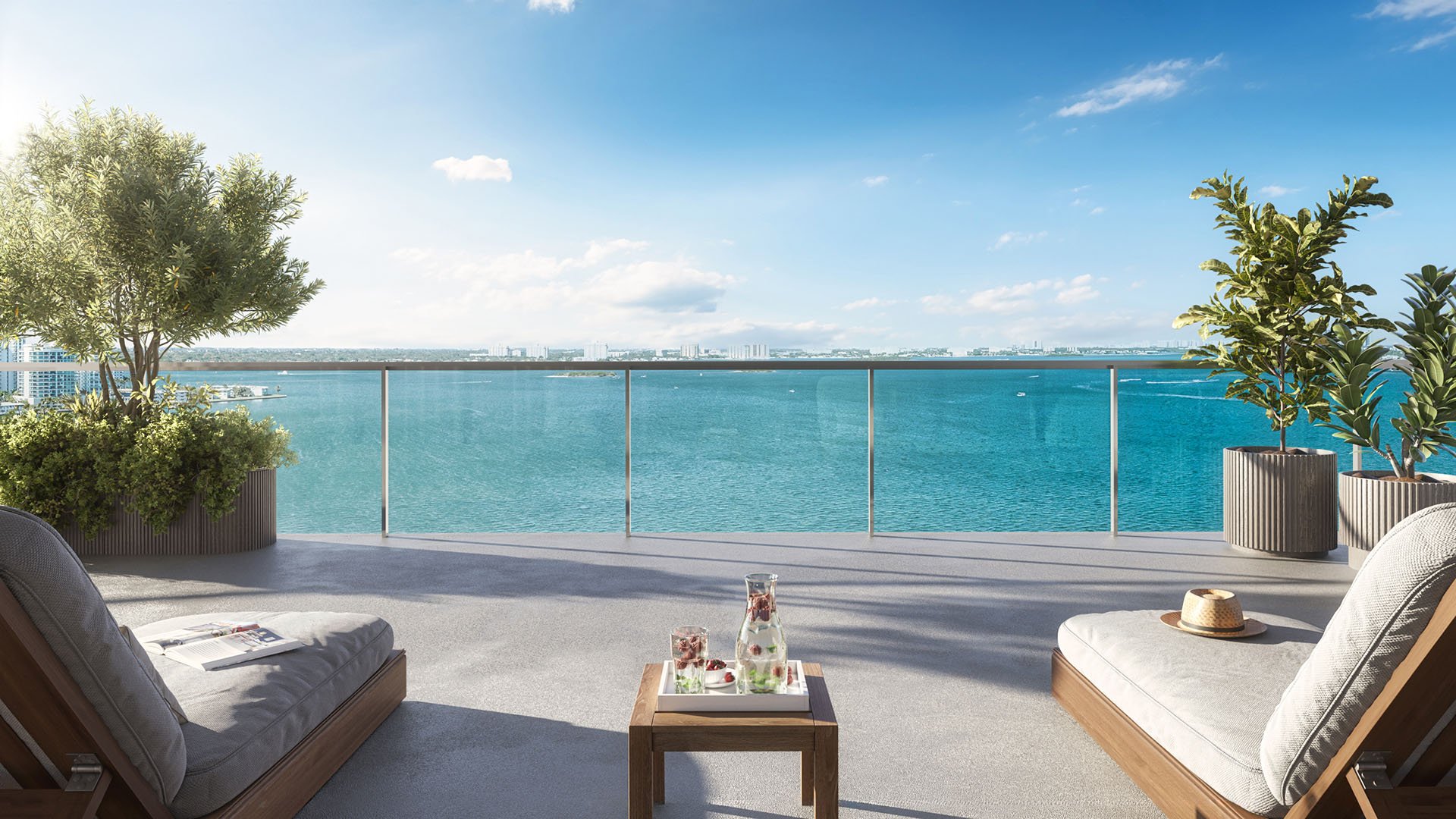
The ocean is vast, democratic, and visually commanding. It belongs to everyone. That is part of its allure. Bay water can feel more personal, especially when the residence overlooks a protected channel, a marina-like basin, or a quieter stretch of shoreline. The effect is less theatrical and more intimate.
That intimacy matters in daily life. Morning coffee on a bayfront terrace may feel less like occupying a stage and more like inhabiting an outdoor room. The water is still expansive, but it is framed. Boats may pass, light may shift, and the skyline may shimmer, yet the experience can remain residential rather than performative.
This distinction is central for buyers who want a water view without constant exposure. A bayfront home can offer water, sky, and reflection while reducing the feeling of being part of a public beachfront scene.
Privacy is strongly influenced by how many people share the same vertical life. A tall oceanfront condo with extensive amenities can still feel luxurious, but luxury does not always equal seclusion. Elevators, pools, gyms, valet areas, and lobby lounges all contribute to the social temperature of a building.
Bayfront properties may include both boutique and larger formats, but the more private-feeling examples tend to manage scale carefully. Fewer visual overlaps, thoughtful amenity placement, and quiet circulation paths can make a meaningful difference. Even when a building is not small, it can feel calmer if residents are not constantly moving through the same highly visible spaces.
North Bay Village illustrates why this matters for buyers evaluating waterfront alternatives. Continuum Club & Residences North Bay Village sits within a bay-oriented context where privacy depends on the relationship among water, skyline, neighboring buildings, and internal circulation. The right residence can feel connected to Miami while still removed from its pace.
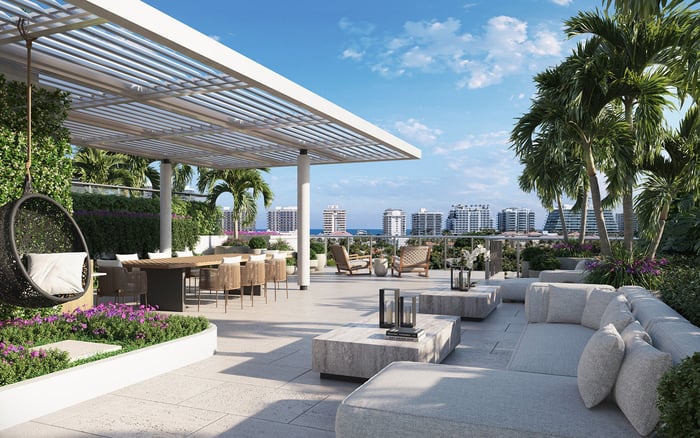
A terrace can either enhance privacy or undermine it. Width, depth, railing treatment, sidewalls, overhangs, and orientation all influence how exposed a resident feels. A large balcony that faces directly into neighboring outdoor space may be less useful than a smaller terrace with a more protected angle.
Bayfront terraces often benefit from oblique views. Instead of looking straight across to another stack of balconies, they may angle toward open water, landscaped edges, or distant urban silhouettes. This can create a subtle sense of refuge. Oceanfront terraces, by contrast, may maximize horizon views while placing residents within a more visible beachfront grid.
Sophisticated buyers should stand on the terrace at different times of day and look not only outward, but sideways and downward. Who can see you? What shared spaces are below? How does sound travel? Does the terrace invite actual use, or does it simply photograph well?
In the most successful waterfront residences, landscaping is not decorative. It is architectural. Palms, hedges, garden walls, planted setbacks, and shaded thresholds can soften exposure and make a building feel less direct. This is particularly important at lower levels, where residents may be closer to arrival courts, amenity gardens, waterfront promenades, or neighboring properties.
Bayfront sites often provide opportunities to choreograph the transition between land and water. The result can feel more like a private estate sequence than a typical condominium entrance. Coconut Grove buyers understand this instinctively, because the neighborhood often rewards homes that blend canopy, water, and discretion. At Vita at Grove Isle, the very idea of island-oriented living invites buyers to think about privacy as a complete environment rather than a single amenity.
The lesson is simple: a residence does not need to disappear to feel private. It needs to be buffered intelligently.
None of this diminishes the appeal of oceanfront living. For many buyers, the Atlantic horizon is irreplaceable. The sound of surf, the immediacy of the beach, and the emotional clarity of an ocean view remain among South Florida’s most coveted luxuries.
Oceanfront can also be highly private when a building is well planned, residences are properly separated, and amenities are managed with restraint. The best examples understand that beachfront glamour must be balanced by residential calm. For buyers drawn to Miami Beach, The Perigon Miami Beach represents the type of address where evaluating privacy means looking beyond the view alone and studying the full living sequence.
The point is not that bayfront is inherently better. It is that bayfront can be more private in ways that are easy to miss during a quick showing.
The most effective privacy evaluation is experiential. Visit the residence, pause in the lobby, ride the elevator, step onto the terrace, listen for activity, and watch how people move through the property. Ask whether the home feels calm at the points where you will actually live: the entry, the kitchen, the primary suite, the terrace, and the pool.
Compare the view corridor from multiple angles. Study neighboring buildings, not just the water. Notice whether the residence feels protected when seated, not only when standing at the glass. Privacy is often revealed at rest.
For South Florida’s most discerning buyers, the winning property is the one that allows the waterfront to be enjoyed without constant performance. Sometimes that is an oceanfront condo. Sometimes it is a bayfront residence with a quieter voice.
Are bayfront residences always more private than oceanfront condos? No. Privacy depends on design, orientation, neighboring buildings, circulation, and the way residents and guests move through the property.
Why can an oceanfront condo feel exposed? Oceanfront towers may share similar view corridors, amenity zones, and balcony orientations, creating more lateral visibility.
What should I look for on a bayfront terrace? Study side views, downward exposure, railing design, depth, and whether the seating area feels shielded from neighboring residences.
Does a higher floor automatically mean more privacy? Not always. Higher floors can reduce some exposure, but adjacent towers, amenity decks, and terrace angles still matter.
Is Brickell too urban for private waterfront living? Brickell can feel private when the residence separates arrival, amenity, and home life with thoughtful design and controlled circulation.
Do boutique buildings feel more private than larger towers? They can, but scale alone is not enough. Layout, staffing, amenity placement, and resident flow are equally important.
How important is landscaping for waterfront privacy? Very important. Planting, setbacks, walls, and shaded transitions can soften exposure and create a more residential experience.
Can a water view residence feel private without being on the ocean? Yes. Bay, channel, and island settings can offer water, light, and atmosphere with a calmer daily rhythm.
Should I prioritize view or privacy when buying waterfront? The strongest properties offer both, but buyers should decide how they want to live, not simply how the home photographs.
What is the best way to test privacy during a showing? Sit on the terrace, observe neighboring sight lines, listen for activity, and walk the full path from arrival to residence.
If you'd like a private walkthrough and a curated shortlist, connect with MILLION.
If branded residences are on your mind — as a home or as an allocation — we would be glad to share what we are seeing, privately.
Begin a quiet conversation