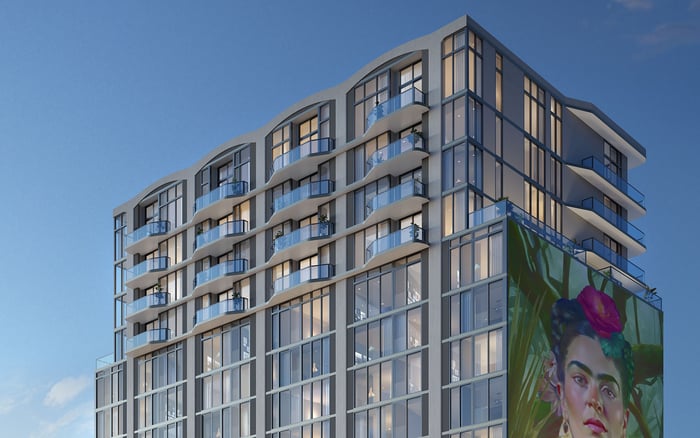
A buyer-focused comparison of two design-led Miami residential ideas, weighing expressive art-world energy against the quieter priorities of daily residential practicality.

Miami Design Residences Midtown Miami vs Frida Kahlo Wynwood Residences is not simply a question of which name feels more compelling. For a sophisticated buyer, the sharper question is whether the residence should function first as an art-world address or as a practical home within a design-forward Miami setting.
That distinction matters. In South Florida’s luxury market, buyers are increasingly drawn to residential concepts with cultural language, recognizable creative identity, and strong neighborhood associations. Yet after the first impression, daily experience becomes decisive. How easily does the home receive guests? How intuitive is the layout? Does the building feel calm when the surrounding neighborhood is animated? Is the ownership story clear enough to support long-term confidence?
A buyer studying Miami Design Residences Midtown Miami is likely to begin with the promise of design literacy and urban convenience. A buyer considering Frida Kahlo Wynwood Residences is likely to be drawn first to a stronger cultural and artistic signal. Both instincts are legitimate. The more disciplined exercise is deciding which one should lead the purchase.
Art-world energy can be powerful when handled with restraint. It gives a residence a story before anyone reaches the front door. It can shape the mood of arrivals, the tone of common spaces, and the way owners speak about the home to guests. In a city where design, hospitality, dining, and collecting often overlap, that identity can be meaningful.
For the right buyer, Frida Kahlo Wynwood Residences will naturally carry a more expressive emotional frame. The name itself suggests a residence that participates in a cultural conversation rather than hiding behind generic luxury language. That does not mean every buyer should treat it as a collectible object. It means the first lens is likely to be atmosphere, identity, and the pleasure of living near creative intensity.
The risk is mistaking narrative for livability. A residence can feel memorable in a presentation and still require close inspection as a day-to-day home. Buyers should pay attention to proportions, bedroom separation, storage, acoustic comfort, elevator experience, parking logic, guest flow, and the transition from public areas to private space. The best art-led residences are not theatrical all the time. They give owners the option to retreat.
Residential practicality is often underappreciated because it is less photogenic than a dramatic lobby or a famous creative reference. Yet for end users, it can be the truest luxury. Practicality is the pleasure of a floor plan that needs no explanation, a kitchen that works during a dinner party, a primary suite that feels private, and a building routine that supports rather than interrupts daily life.
This is where Miami Design Residences Midtown Miami may appeal to buyers who want design without constant performance. The title points to a design-conscious Midtown Miami address, but the stronger purchase logic may be usability. In this lane, the buyer is not rejecting beauty. The buyer is prioritizing a home that can absorb ordinary life gracefully.
That is especially relevant for owners who split time between residences, travel frequently, or expect the property to serve multiple purposes across a year. A practical residence should feel easy to return to, easy to close up, and easy to enjoy without managing too many moving parts. In luxury real estate, simplicity is not a lesser ambition. It is often the most expensive achievement.
Midtown Miami and Wynwood carry different associations in the mind of the buyer. Midtown Miami reads as connective, urban, and lifestyle-oriented. Wynwood reads as more expressive, visually active, and tied to Miami’s creative identity. Neither is inherently better. The distinction is about fit.
A buyer who wants a home base with a practical rhythm may be more receptive to the Midtown Miami side of the comparison. A buyer who wants the residence to feel plugged into cultural movement may prefer the Wynwood side. The key is separating where one likes to spend an evening from where one wants to wake up every morning.
That separation is essential. Some owners want proximity to energy without living inside its tempo. Others want the address itself to carry the pulse. In listing shorthand, the relevant filters might be Wynwood, New-construction, Pre-construction, Investment, Boutique, and Ultra-modern, but a refined buyer should translate each label into lived consequences. Does Boutique mean more intimacy or fewer services? Does Ultra-modern mean timeless restraint or a look that may date quickly? Does Investment mean flexible future appeal or simply a more speculative story?
The most useful comparison begins with the owner profile. If the buyer is an end user, the hierarchy should start with layout, privacy, light, storage, service, and neighborhood cadence. If the buyer is more investment-minded, the focus shifts to buyer depth, future resale clarity, rental policy, maintenance expectations, and how easily the residence can be explained to the next purchaser.
Branding should support those fundamentals, not replace them. A compelling name can open the door, but the floor plan must close the decision. A cultural concept can create distinction, but a building still has to function through weekday mornings, summer travel, family visits, and quiet evenings. Luxury buyers should be particularly careful when a residence’s identity is so strong that it risks narrowing the audience. Distinction is valuable only when it remains broadly desirable.
This is why neighboring and adjacent design-led projects help frame the decision. Kempinski Residences Miami Design District offers another way to think about name recognition and design-oriented positioning within Miami’s broader luxury map. Casa Bella by B&B Italia Downtown Miami points to a different expression of residential design branding, one that may attract buyers who want interiors and lifestyle language to be central to the purchase narrative.
These comparisons are not about declaring a winner by association. They are useful because they show how varied design-led living has become in Miami. Some residences lead with art. Some lead with hospitality. Some lead with architecture, furniture, or location. The discerning buyer should ask which kind of identity will still feel relevant after the first season of ownership.
Miami Design Residences Midtown Miami appears best suited to the buyer who wants design credibility while keeping daily practicality at the center of the brief. This buyer may value a contemporary urban setting but does not want the residence to feel overly conceptual. The emotional appeal is polished, usable, and design-aware rather than overtly theatrical.
Frida Kahlo Wynwood Residences appears better suited to the buyer who wants the home to carry a stronger artistic association. This buyer may be comfortable with a more expressive ownership story and may view the residence as part of a broader cultural lifestyle. For that buyer, the identity is not a distraction. It is part of the reason to buy.
The most interesting buyer, however, may be deciding between both impulses. Many Miami purchasers want art-world adjacency and practical comfort in the same property. In that case, the decision should be made at the level of tolerance. How much neighborhood energy is desirable? How much visual identity is welcome? How much flexibility will the owner want if life changes?
The better choice is not the more dramatic name or the safer concept. It is the residence whose identity matches the buyer’s actual life. Miami Design Residences Midtown Miami may be the more natural fit for someone prioritizing residential clarity. Frida Kahlo Wynwood Residences may be the more magnetic fit for someone seeking an address with stronger cultural charge.
For buyers at this level, the smartest move is to avoid false opposites. Art-world energy and residential practicality can coexist, but one usually leads. Decide which should lead before comparing finishes, amenities, or presentation language. That single decision will make every subsequent question more precise.
Is Miami Design Residences Midtown Miami the more practical option? It may appeal more naturally to buyers who want design identity with a strong emphasis on daily usability. Final judgment should come from reviewing plans, services, and ownership terms.
Is Frida Kahlo Wynwood Residences more art driven? The name and Wynwood context suggest a more expressive cultural identity. Buyers should still test that appeal against layout, privacy, and long-term livability.
Which residence is better for an end user? The better end-user choice is the one that supports daily routines most comfortably. Floor plan logic and building operation matter more than narrative alone.
Which residence is better for Investment? Investment potential depends on pricing, policies, carrying costs, buyer depth, and future resale clarity. A distinctive concept can help, but it should not be the only reason to buy.
Does a Boutique residence always feel more private? Not always. Boutique can suggest intimacy, but privacy depends on circulation, elevator design, staffing, unit mix, and how common spaces are managed.
Should buyers prioritize New-construction in this comparison? New-construction can be attractive for modern layouts and fresh building systems. Buyers should still review delivery expectations, finishes, and association structure.
Is Pre-construction riskier than buying completed property? Pre-construction can involve more uncertainty around timing, final execution, and market conditions. It can also offer early selection and a cleaner first-owner experience.
What does Ultra-modern mean for resale? Ultra-modern design can feel fresh and highly desirable when executed with restraint. Overly specific styling may narrow the future buyer pool.
Why does Wynwood matter in this decision? Wynwood adds a strong creative association to the residential story. Buyers should decide whether that energy is something they want around their home every day.
How should a buyer make the final choice? Start with lifestyle, then test the project against layout, privacy, services, carrying costs, and future exit strategy. The right residence should feel compelling and easy to live with.
To compare the best-fit options with clarity, connect with MILLION.
If branded residences are on your mind — as a home or as an allocation — we would be glad to share what we are seeing, privately.
Begin a quiet conversation