A practical luxury buyer guide to evaluating Miami waterfront property through the lens of dockage, vessel fit, marina convenience, access, privacy, and long-term usability.
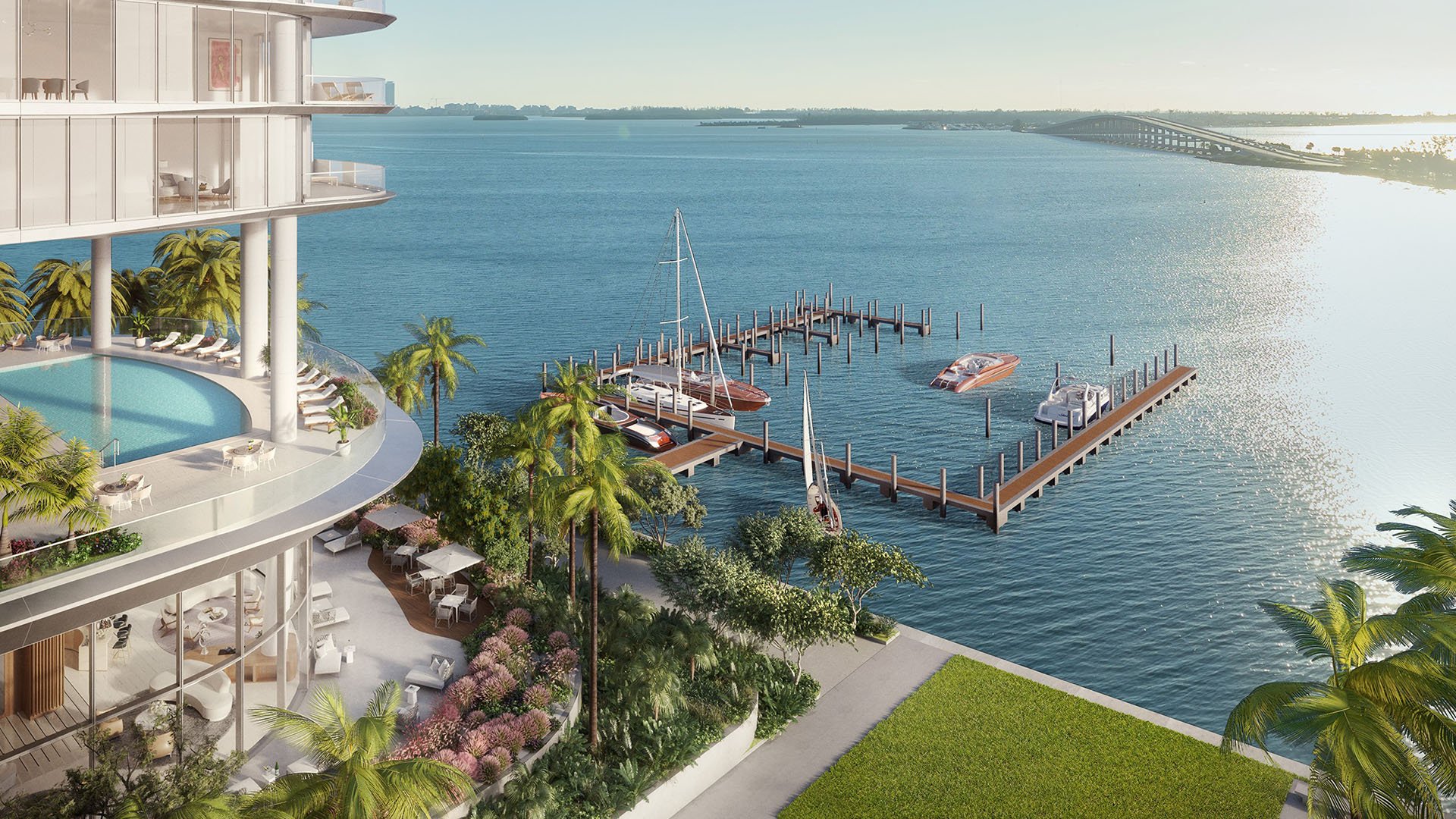
In Miami, waterfront real estate is often described through its views: bay, ocean, canal, skyline, sunrise, sunset. For the boating buyer, the more important question is quieter and more technical: how does the property actually function from the water?
The strongest waterfront address is not simply the one with the broadest outlook. It is the one that supports the vessel, the route, the privacy expectations, and the cadence of ownership. A residence may feel spectacular from the terrace yet fall short if dockage is impractical, access is constrained, or the boating experience depends on a chain of permissions. For sophisticated buyers, boating access is not a decorative amenity. It is a luxury utility.
That distinction matters across every format, from a single-family home with private water frontage to a condominium with managed waterfront amenities. A buyer considering Una Residences Brickell, for example, may be drawn to the elegance of Brickell waterfront living, but the boating conversation should remain distinct from the view conversation. The residence, the vessel, and the route should be evaluated together.
Dockage is where the romance of waterfront ownership becomes practical. A dock is not merely a place to tie a boat. It influences how often the boat is used, how spontaneous a departure can be, how easily guests board, and how comfortable the owner feels leaving the vessel in place.
The first priority is fit. Buyers should confirm whether the dock or slip can accommodate the vessel’s length, beam, and overall operating needs. The next priority is protection. Exposure, wake, wind, and neighboring traffic can affect the daily experience even when the setting appears serene. Then comes convenience: power, water, loading areas, proximity to parking or elevators, and the path between residence and vessel.
In the single-family market, private dockage may carry an emotional premium because it creates control. In the condominium market, that premium can depend on whether boating rights are deeded, assigned, licensed, limited, waitlisted, or subject to association rules. The distinction is not cosmetic. It can shape liquidity, ongoing cost, guest use, and resale positioning.
For buyers comparing waterfront condominiums such as Onda Bay Harbor, the right question is not only whether the building feels intimate and water-facing. It is whether the ownership structure supports the way the buyer actually boats.
Draft is one of the least glamorous words in luxury real estate, yet it can become one of the most consequential. It refers to the depth a vessel needs below the waterline to operate safely. A beautiful dock is of limited use if the vessel cannot comfortably reach it through changing conditions.
Clearance deserves the same attention. Where bridges, fixed structures, lifts, or narrow passages are part of a route, vessel height and operating profile should be reviewed before a buyer falls in love with the terrace. The route home should be considered as carefully as the residence itself.
This is where boating access becomes deeply personal. A center-console owner, a tender user, a sailboat owner, and a yacht owner may all define “excellent access” differently. Some buyers want the shortest possible route to open water. Others prioritize protected dockage, a quieter basin, or proximity to favorite social destinations. There is no universal best answer. There is only the property that matches the vessel and the life around it.
The most disciplined buyers treat the route as part of due diligence. They ask how the boat approaches, where it turns, what happens at low water, what the neighboring slips allow, and how the experience changes when guests, crew, provisions, or weekend traffic enter the picture.
Luxury condominiums have changed the way many buyers think about boating. Not every waterfront buyer wants the maintenance obligations of a private home. Some prefer vertical living, hotel-style service, security, fitness, dining, and lock-and-leave ease, while still wanting a meaningful relationship to the water.
That is why marina convenience is increasingly part of the buyer conversation. A managed waterfront setting can offer simplicity, but the details must be understood. Is access private or shared? Are slips limited? Are there size restrictions? Can an owner lease or transfer rights? Are captains, vendors, deliveries, and guests treated in a manner consistent with the buyer’s expectations?
A residence such as Vita at Grove Isle may appeal to buyers who value a quieter island-style sensibility within Miami’s broader waterfront landscape. Yet even in the most refined setting, boating access should be evaluated with operational discipline. The most elegant building experience should be matched by an equally elegant arrival and departure by water.
The same logic applies beyond Miami’s central neighborhoods. Buyers looking north into Broward may consider branded waterfront living such as St. Regis® Residences Bahia Mar Fort Lauderdale, where the broader lifestyle conversation naturally includes boating culture, service expectations, and access planning. The brand may frame the experience, but the vessel still defines the test.
The most successful waterfront purchases usually begin with a simple hierarchy. First, define the vessel and how it is used. Second, define the desired route. Third, define the property format: single-family, boutique condominium, large amenity building, or marina-adjacent residence. Only then should the buyer compare finishes, views, terraces, and amenities.
Privacy is another priority. Some owners enjoy a visible waterfront setting with energy and movement. Others prefer discretion, limited foot traffic, and a calmer arrival sequence. Security also matters, particularly when a property must accommodate guests, crew, maintenance providers, and deliveries without diminishing the residential experience.
Views should still be valued, but they should not distract from function. A broad water panorama can be extraordinary, yet a narrower view with superior usability may be the better boating purchase. Conversely, a residence without private dockage may still suit a buyer who prefers professional marina management or keeps a larger vessel elsewhere.
For Miami Beach buyers, a project such as The Ritz-Carlton Residences® Miami Beach illustrates why lifestyle, service, and waterfront atmosphere often sit beside boating questions rather than replacing them. The ideal residence is not only beautiful at sunset. It supports the owner’s habits on ordinary mornings.
A refined waterfront search should feel calm, not speculative. Before touring, buyers should prepare a vessel profile, preferred boating routes, guest patterns, service needs, and any tolerance limits around shared facilities. During tours, they should walk the path from residence to water, not just the path from lobby to living room.
It is also wise to separate marketing language from legal rights. Words such as access, waterfront, marina, dock, and slip can mean different things in different properties. Purchase documents, association materials, surveys, permits, rules, and professional inspections should confirm what is being acquired and what is merely nearby.
The highest-value decision is often not the most dramatic one. It is the residence where the owner will use the boat more often, with less friction, fewer compromises, and a greater sense of ease. In that sense, boating access is both a lifestyle feature and a measure of design intelligence.
Should a waterfront buyer prioritize a private dock or a marina slip? It depends on the vessel, desired control, service expectations, and how often the boat will be used. Private dockage may offer convenience, while a managed slip may offer operational simplicity.
What does draft mean in a purchase conversation? Draft refers to the depth a vessel needs below the waterline to operate safely. Buyers should confirm that the route and dockage can accommodate the boat comfortably.
Is a larger waterfront frontage always better? Not necessarily. Usability, protection, access, and the legal nature of dockage can matter more than frontage alone.
Why do bridges matter for boating access? Bridges can affect vessel height, routing, timing, and convenience. Any route involving clearance considerations should be reviewed before purchase.
How should condo buyers evaluate boating access? They should determine whether slips or dockage rights are deeded, assigned, licensed, limited, or governed by association rules. The legal structure is as important as the amenity itself.
What should be reviewed before making an offer? Buyers should review vessel fit, dock condition, access route, governing documents, use rules, and any professional inspections relevant to waterfront ownership.
Are waterfront views enough for a boating buyer? Views are valuable, but they do not guarantee practical boating access. The route, dockage, and daily usability should be evaluated separately.
How do lifestyle patterns influence neighborhood choice? Buyers who boat frequently may value convenience and short transitions, while occasional users may prioritize service, privacy, or broader residential amenities.
Can boating needs change the ideal floor plan? Yes. Storage, elevator access, guest flow, parking, service areas, and terrace visibility can all affect how naturally boating fits into daily life.
When should specialists be involved? Specialists should be involved early, particularly when dockage rights, vessel dimensions, route conditions, or association rules are central to the purchase.
For a discreet conversation and a curated building-by-building shortlist, connect with MILLION.
If branded residences are on your mind — as a home or as an allocation — we would be glad to share what we are seeing, privately.
Begin a quiet conversation