A discreet buyer’s guide to evaluating privacy in South Florida luxury condominiums, from amenity-floor circulation and pool-deck sightlines to elevator access, residence entries, and tour strategy.
In South Florida’s luxury condominium market, privacy is often described in broad terms: private arrivals, exclusive amenities, discreet service, secure elevators. For a serious buyer, those phrases are only the starting point. True privacy is felt in the small moments of ownership: stepping out of an elevator without crossing a crowd, swimming without feeling displayed, receiving guests without turning the residence lobby into a stage, and moving between home, wellness, dining, and parking with ease.
The most private buildings are not necessarily the quietest on paper. They are the buildings where circulation has been edited, amenity floors are composed with restraint, and residents are not forced through awkward transitions between public, semi-private, and personal space. In neighborhoods such as Brickell, Miami Beach, Sunny Isles, Bay Harbor Islands, and Coconut Grove, buyers should study privacy with the same rigor they bring to views, ceiling heights, finish packages, and service standards.
A useful rule: privacy is not one feature. It is a sequence.
Before reviewing the residence itself, study how you arrive. Does the building make residents, guests, valet, service teams, deliveries, and amenity users converge along the same path, or does it separate those movements with intention? A polished lobby can still feel exposed if every daily function passes through it.
On a private tour, slow down the arrival experience. Notice where a resident would pause, where a guest would be announced, and where the elevator bank sits in relation to seating, concierge, valet activity, and amenity entrances. The most discreet experience usually minimizes lingering in visible areas. It allows a resident to move from car to elevator to residence without unnecessary performance.
In vertical urban settings, projects such as The Residences at 1428 Brickell invite buyers to think carefully about how privacy works in a dense, high-design environment. The question is not simply whether the building is impressive. It is whether the daily path feels composed.
Amenity floors are where privacy succeeds or fails most visibly. A large amenity program can feel serene when it is divided into distinct zones. A smaller one can feel exposed if every activity is stacked into one continuous social field.
During a tour, ask yourself three questions. First, can residents use wellness, lounge, dining, work, and outdoor spaces without constantly crossing each other? Second, are high-traffic areas placed away from quiet rooms? Third, are circulation routes legible enough that guests do not wander through spaces meant to feel residential?
Privacy on an amenity floor often depends on thresholds. A door, vestibule, planted screen, shift in ceiling height, or turn in a corridor can create a sense of retreat. Open-plan amenities may photograph beautifully, but buyers should assess whether they offer enough places to withdraw.
This is especially important for buyers comparing new-construction towers, where amenity programming can be extensive. More amenities do not automatically equal more privacy. The better measure is how elegantly the building separates energy from calm.
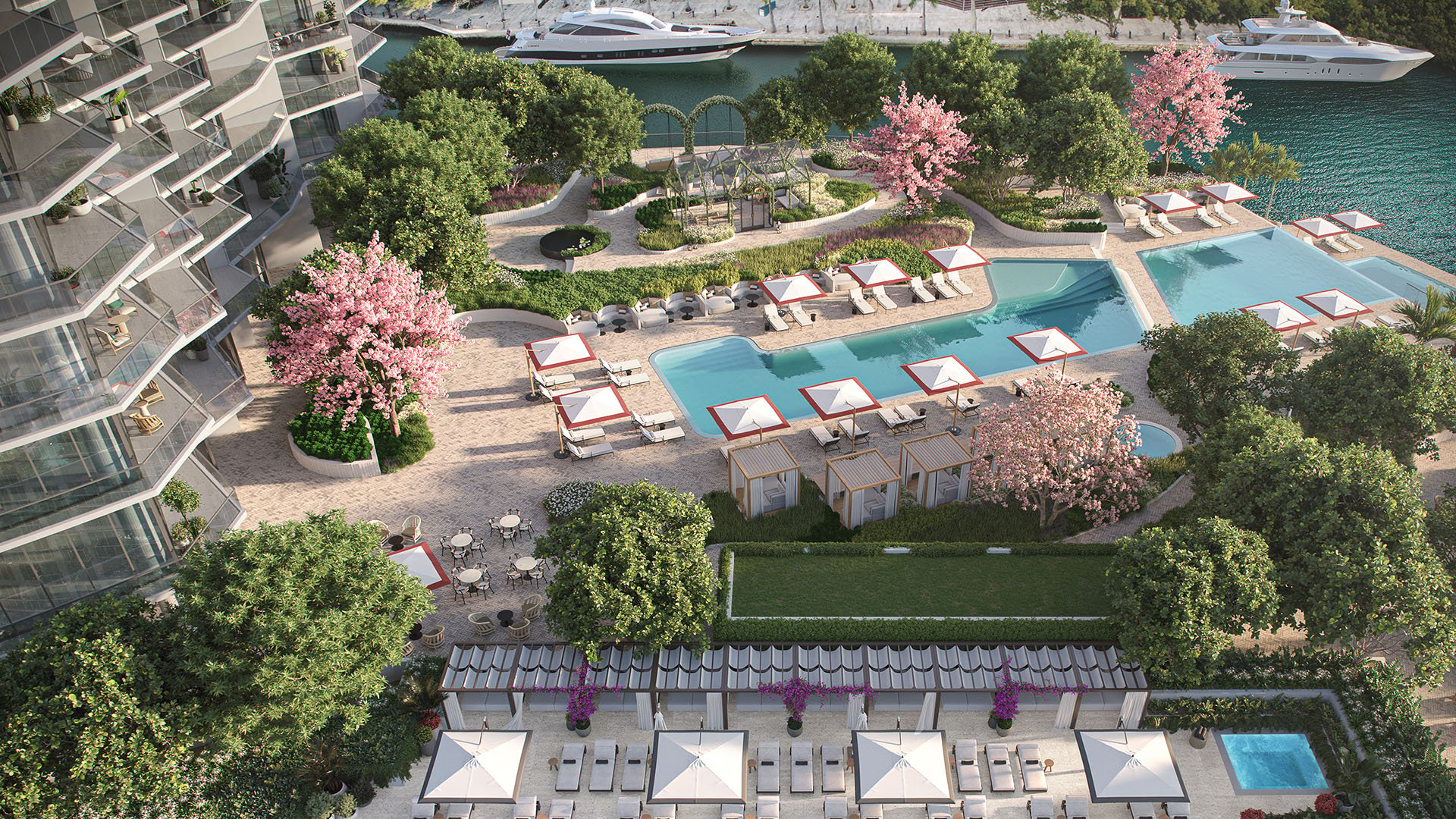
The pool deck is one of the most revealing places in any condominium. It tells you whether the building understands leisure as spectacle or refuge. The key is not only how the pool looks from above, but how it feels when you are seated, walking, swimming, or hosting.
Consider the sightlines from neighboring towers, amenity lounges, fitness areas, restaurants, terraces, cabanas, and residence balconies. A deck can appear private in renderings yet feel visually busy in person if too many windows, corridors, or public-facing edges overlook it. Conversely, a well-planted or carefully elevated pool environment can feel calm even in an urban setting.
In Miami Beach, where outdoor living is central to the residential experience, buyers looking at properties such as The Perigon Miami Beach should pay close attention to how outdoor leisure areas relate to arrival, beach access, neighboring buildings, and residence terraces. The goal is not isolation. It is graceful separation.
Also observe furniture spacing. If chaise lounges are tightly arranged, the experience may feel more like a club than a residential retreat. If seating zones create pockets, residents gain the option to be social or discreet.
Elevators shape privacy every day. A buyer should understand how many residence levels share an elevator, how guests are directed, where service circulation occurs, and whether amenity traffic intersects with residential arrivals.
The ideal elevator experience feels intuitive. Residents should not have to explain the building to every guest, nor should guests be able to drift casually into private corridors. The transition from lobby to elevator to residence floor should feel controlled without feeling theatrical.
Private or semi-private elevator arrangements can add another layer of discretion, but the design still deserves close study. Where does the elevator open? Is there a vestibule? Can another resident or guest see directly into the residence when the doors open? How close is the elevator to staff areas, trash rooms, storage, or mechanical corridors? Privacy depends on adjacency as much as access.
In Sunny Isles, where high-rise living is often defined by vertical movement and expansive views, buyers considering towers such as Bentley Residences Sunny Isles should evaluate the entire elevator ritual, not only the view once they arrive upstairs.
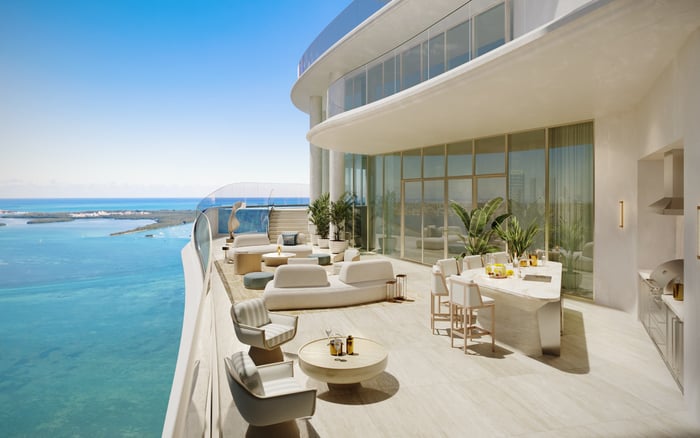
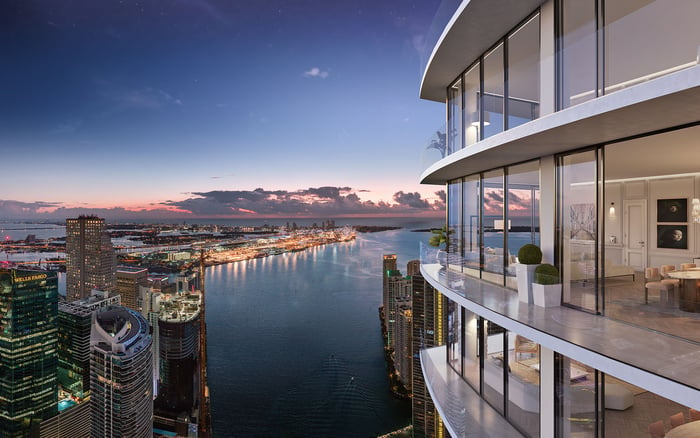
A balcony can be one of the most private places in a home, or one of the most exposed. The difference lies in orientation, depth, partitioning, neighboring angles, and the way outdoor space relates to shared amenities.
When touring, stand at the rail and look sideways, down, and back toward the building. Can neighboring residences see directly into the seating area? Does the terrace overlook an active amenity deck? Are there portions that feel protected from wind, sun, and view corridors? A deep terrace with awkward exposure may be less usable than a modest one with better orientation.
For waterfront and bayfront buyers, privacy is not only about avoiding eyes from nearby buildings. It is also about sound, movement, and the degree to which outdoor areas can support quiet morning and evening routines. Projects such as The Well Bay Harbor Islands can be evaluated through this lens: how does the residence support retreat once the door is closed?
The most effective privacy due diligence happens during the tour, before emotion takes over. Ask the sales team or building representative how guests are announced, how amenity access is managed, where deliveries occur, and how service teams move through the property. Ask to see the path from parking to residence, from residence to pool, from residence to fitness, and from lobby to amenity floor.
Visit at more than one time of day if possible. Morning, late afternoon, and evening can reveal different patterns of use. A pool deck that feels tranquil at noon may become more social later. An elevator bank that seems empty during a weekday tour may feel different during peak arrival hours.
Take notes in plain language. Buyers sometimes use shorthand such as Brickell, Miami Beach, Sunny Isles, pool, balcony, and new construction to compare the privacy character of different options. The goal is to move beyond impressions and create a decision framework.
A refined privacy review should include five categories: arrival, access, amenities, outdoor space, and operations. Arrival covers valet, lobby, guest reception, and the first visual impression. Access covers elevators, corridors, entry vestibules, and staff circulation. Amenities cover zoning, crowding, acoustic separation, and visibility. Outdoor space covers pool decks, terraces, landscaping, shade, and neighboring sightlines. Operations cover rules, staffing, guest procedures, delivery handling, and maintenance routines.
For buyers comparing highly serviced buildings, the quietest luxury is often operational. A building can have beautiful architecture, but if deliveries, guests, residents, staff, and amenity users all collide in the same areas, the privacy promise weakens. Conversely, a building with thoughtful choreography can feel deeply private even when located in a vibrant district.
The best purchase decision comes from seeing privacy as part of value. It affects comfort, resale appeal, daily enjoyment, and the way a residence supports family, guests, work, wellness, and entertaining.
What is privacy on an amenity floor? It is the ability to use shared spaces without feeling overly visible, crowded, or routed through unrelated activities.
Is a private elevator always better? Not always. A private elevator can be valuable, but the arrival vestibule, guest control, and adjacency to service areas matter just as much.
How should I evaluate a pool deck? Stand in seating areas, walk the perimeter, and study views from neighboring towers, lounges, terraces, and interior corridors.
Do higher floors guarantee more privacy? Higher elevation can help, but exposure from neighboring buildings, elevator sharing, and terrace orientation still need review.
What should I ask about guest access? Ask how guests are announced, escorted, admitted to amenities, and restricted from private residential areas.
Can amenities reduce privacy? Yes. If amenities are overconcentrated or poorly separated, they can create unnecessary traffic near quiet residential areas.
Why does corridor design matter? Corridors shape the final approach to the home and can affect noise, visibility, and the feeling of exclusivity.
Should I tour at different times? Yes. Different times reveal different resident patterns, amenity usage, valet activity, and elevator traffic.
How does outdoor privacy differ from indoor privacy? Outdoor privacy depends on sightlines, sound, landscaping, neighboring angles, and the way terraces relate to shared spaces.
What is the best way to shortlist comparable options for touring? Start with location fit, delivery status, and daily lifestyle priorities, then compare stacks and elevations to validate views and privacy.
For a discreet conversation and a curated building-by-building shortlist, connect with MILLION.
If branded residences are on your mind — as a home or as an allocation — we would be glad to share what we are seeing, privately.
Begin a quiet conversation