A discreet buyer’s guide to understanding brand licensing in South Florida branded residences, with practical questions to ask before committing to a long-term home.
For a buyer building a long-term South Florida base, the brand on the porte cochère is only the beginning. A name associated with fashion, hospitality, automotive design, wellness, or private club service can define the mood of a residence before a buyer ever enters the sales gallery. Yet sophisticated purchasers understand that brand presence is not a decorative detail. It is a business arrangement, often governed by licensing terms, operating standards, intellectual property permissions, and service obligations that may evolve over time.
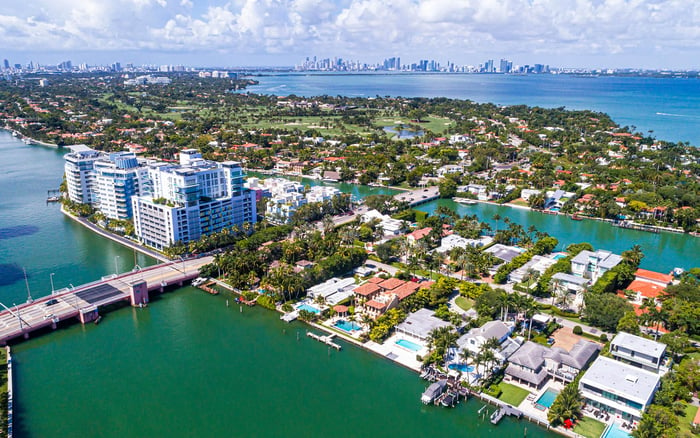
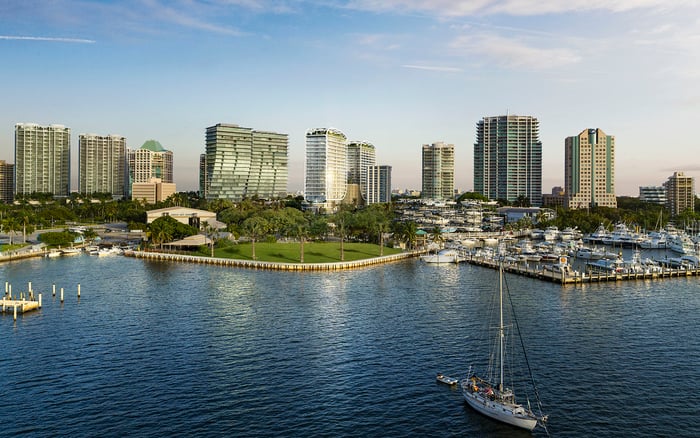
That distinction matters in South Florida, where branded living has become part of the region’s ultra-premium language. Brickell, Miami Beach, Sunny Isles Beach, Palm Beach, Fort Lauderdale, Surfside, and Bay Harbor Islands each express a different version of identity, privacy, arrival, and lifestyle. A residence such as 888 Brickell by Dolce & Gabbana may draw attention through a fashion-led point of view, while The Ritz-Carlton Residences® Miami Beach naturally invites questions about service culture and residential hospitality.
The prudent buyer is not asking only whether the brand is desirable. That is the easy part. The more important question is what the brand is contractually required to do, how long that obligation lasts, and what happens if the relationship changes.
Brand licensing in real estate generally refers to a structure in which a brand permits its name, marks, design language, or operating standards to be used in connection with a development. The scope can vary widely. In one project, the brand may influence architecture, interiors, service standards, amenities, or resident programming. In another, it may be more limited, centered on identity, visual presentation, and association.
For buyers of branded residences, the nuance is essential. Marketing materials may describe a lifestyle, but durable value sits in the documents. Buyers should understand which promises are embedded in condominium documents, purchase agreements, management agreements, licensing agreements, and ongoing association obligations. If a sales presentation suggests a particular service experience, ask where that experience appears in writing and who is responsible for delivering it.
This is especially important for second-home owners who expect consistency between visits. A buyer who spends part of the year in Brickell may value seamless arrival, staff familiarity, and reliable building standards. A family establishing a Miami Beach base may prioritize privacy, wellness spaces, beach proximity, and continuity of care. In both cases, the brand promise should be traceable to an enforceable structure, not merely an attractive brochure.
Licensing agreements are not necessarily permanent. They may include initial terms, renewal rights, performance standards, termination rights, or conditions that affect whether the brand remains attached to the property. A long-term owner should ask how long the brand license is expected to remain in place and what mechanisms govern renewal.
This does not mean buyers should be suspicious of every branded address. It means they should treat the brand as an asset with conditions. If a buyer intends to hold for a decade or more, the possibility of a brand transition is not academic. It can affect signage, staffing, service standards, resale storytelling, and the emotional confidence future purchasers bring to the building.
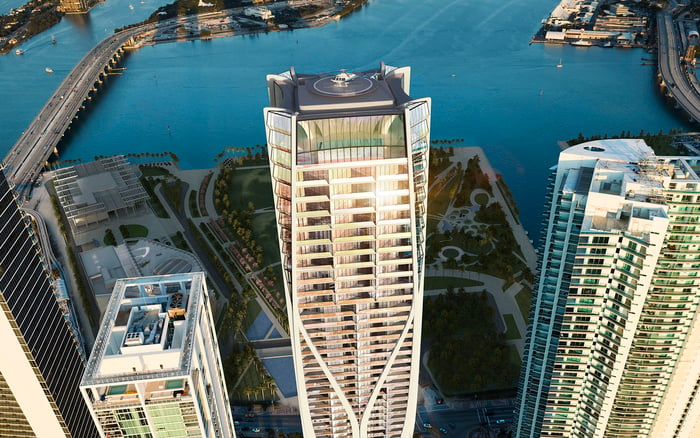
In Sunny Isles Beach, where skyline identity is a material part of the residential experience, a project such as Bentley Residences Sunny Isles naturally raises buyer interest in how design identity, brand association, and long-term building operations intersect. The same discipline applies across South Florida. Ask not only what the brand contributes at launch, but what it is obligated to support after residents have moved in.
A brand can elevate the ownership experience, but elevated service is rarely cost-neutral. Buyers should review how brand-related costs are handled, whether through association budgets, management fees, amenity operations, reserve planning, or separate charges for optional services. The central question is simple: what is included, what is optional, and what can change?
Luxury buyers are accustomed to paying for quality. The concern is not the existence of fees, but the clarity around them. A polished building with attentive staff, curated common areas, wellness programming, private dining, transportation coordination, or concierge support requires operational discipline. The documents should help a buyer understand who controls those standards and how future increases are approved.
For a long-term base, this is a lifestyle question as much as a financial one. A residence that feels effortless in year one should have a credible structure for feeling equally considered in year seven. Buyers should therefore measure the emotional appeal of the brand against the practical governance that sustains it.
The most elegant residences still operate within legal and association frameworks. Buyers should understand who appoints management, how standards are maintained, what role the brand retains after completion, and whether owners have meaningful visibility into major operating decisions. These questions become particularly important once control transitions from developer to association.
Some buyers assume that a prestigious name guarantees a uniform standard forever. In reality, the long-term experience depends on documents, budgets, leadership, resident culture, and professional management. A buyer considering St. Regis® Residences Brickell, for example, may be drawn to the expectation of polished residential service. The diligence question is how that expectation becomes operational obligation and ongoing oversight.
This is where experienced counsel and advisory representation become invaluable. The sales team can explain the vision. The buyer’s own advisors should test the mechanics.
Not every prestigious brand is right for every buyer. A long-term South Florida base should support daily life, not simply impress dinner guests. Some buyers want a highly serviced tower in Brickell with immediate urban energy. Others prefer the softness of Miami Beach, the privacy of Surfside, the water orientation of Sunny Isles Beach, or the quieter formality of Palm Beach.
The brand should reinforce that rhythm. Hospitality-led residences may suit owners who value service continuity and lock-and-leave ease. Design-led residences may appeal to those who prioritize interiors, materials, and cultural identity. Wellness-led properties may resonate with buyers focused on rituals, recovery, and daily balance. Waterfront residences may place marine access, views, and outdoor living at the center of the decision.
A buyer considering Palm Beach Residences is likely assessing a different lifestyle proposition than a buyer focused on a vertical Brickell address. Neither is inherently better. The right choice is the one where location, governance, brand role, and daily use align.
Before signing, buyers should ask for a plain-English explanation of the brand’s role. What does the brand design, approve, manage, inspect, or supervise? What is the duration of the license? What events could cause the brand relationship to end? What happens to the building name if it does? Are there minimum standards for service and maintenance? Who pays for brand-related obligations? How are disputes handled?
Buyers should also distinguish between representations and documents. A rendering, model residence, or hospitality narrative can express the spirit of a project, but the binding commitments are elsewhere. If a feature materially influences the purchase decision, it should be reviewed in the governing documents before execution.
This is the essence of a buyer’s-guide mindset: admire the vision, then verify the structure. South Florida’s best residences reward discernment. The most confident buyer is not the one who ignores fine print, but the one who understands it before the deposit becomes a commitment.
What is a brand license in a residential project? It is an agreement allowing a development to use a brand’s name, identity, standards, or related elements under defined conditions.
Does a branded residence always include hotel-style service? No. Service levels vary by project, so buyers should review the documents rather than rely on the brand name alone.
Can a brand leave a building after buyers close? The answer depends on the licensing and management documents, including term, renewal, and termination provisions.
Why does license duration matter for resale? Future buyers may value the continuity of the brand, so any uncertainty can influence positioning and buyer confidence.
Should I ask to see the licensing agreement itself? Buyers should ask what documents are available for review and have counsel explain the brand’s enforceable obligations.
Are brand-related fees usually included in association costs? They may be, but the structure varies. Buyers should confirm what is included, optional, or subject to future adjustment.
Do design-branded residences carry the same obligations as hospitality brands? Not necessarily. A design brand may focus on aesthetics, while a hospitality brand may involve operating standards or services.
Is Brickell different from Miami Beach for branded residences? The diligence is similar, but lifestyle priorities can differ, from urban access in Brickell to resort atmosphere in Miami Beach.
Should cash buyers still review brand terms closely? Yes. The issue is not financing, but long-term ownership quality, operating obligations, and resale clarity.
Who should help review these terms before signing? Buyers should work with experienced legal counsel and a trusted residential advisor familiar with luxury condominium documents.
To compare the best-fit options with clarity, connect with MILLION.
If branded residences are on your mind — as a home or as an allocation — we would be glad to share what we are seeing, privately.
Begin a quiet conversation