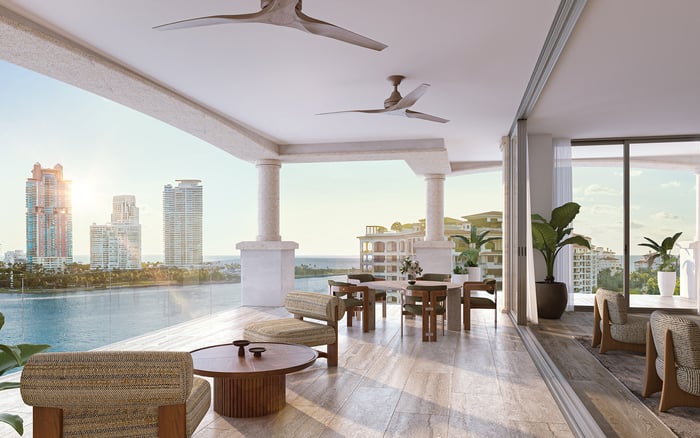
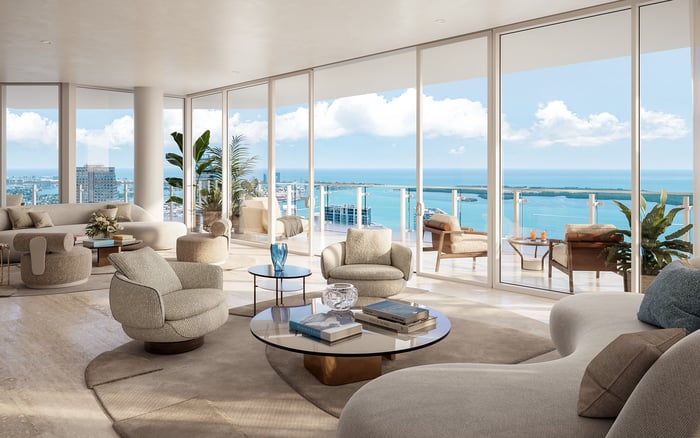
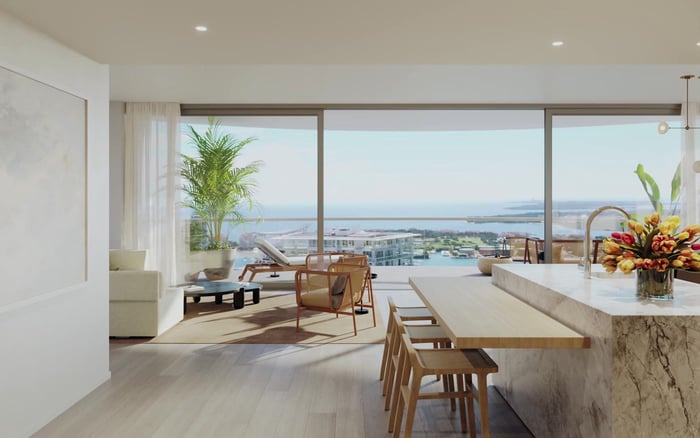
Faena Residences Miami Downtown Miami deserves attention from climate-conscious luxury buyers because storm-day livability is not just an engineering question. It is a composite of building resilience, interior calm, service continuity, and Downtown Miami access before, during, and after disruptive weather.
For South Florida’s most sophisticated condominium buyers, the question is no longer confined to finishes, views, and service culture. Those elements still matter, but Miami ownership now demands a broader reading of value: how does a residence perform when weather interrupts daily life?
That is where storm-day livability becomes a useful lens. It is not a single feature, and it should not be reduced to a sales phrase. It encompasses structural resilience, flood protection strategy, glazing performance, emergency procedures, service continuity, interior comfort, and the capacity of the surrounding neighborhood to resume function after a disruptive event. In that context, Faena Residences Miami Downtown Miami belongs on the shortlist for buyers who want climate-conscious high-rise living without sacrificing the emotional and aesthetic dimensions of luxury.
This is a buyer’s guide for a more demanding market. The best residences are now evaluated not only by how they entertain on a perfect evening, but by how they support calm, privacy, and continuity when residents may need to shelter in place.
Location has always shaped Miami real estate, but storm-day livability gives location a sharper meaning. A dense mainland urban setting can matter because post-storm life is not only about the residence itself. It is about access, infrastructure, mobility, services, and the practical convenience of being within an urban core.
Downtown Miami offers a setting where buyers can think beyond postcard waterfront living. The appeal is not merely proximity to dining, culture, and offices. It is the possibility of maintaining a functional routine when conditions are less than ideal. For some buyers, that can be more important than a seasonal amenity checklist.
Downtown, as a living environment, also allows buyers to compare new luxury towers through a more exacting lens. A residence that feels exceptional during normal conditions should also be examined for how residents enter, park, communicate, receive assistance, and remain comfortable during disruptions. For buyers considering other nearby high-rise options such as Aston Martin Residences Downtown Miami or Waldorf Astoria Residences Downtown Miami, the point is not simply which tower is more iconic. The stronger question is which environment best supports the owner’s life when convenience is tested.
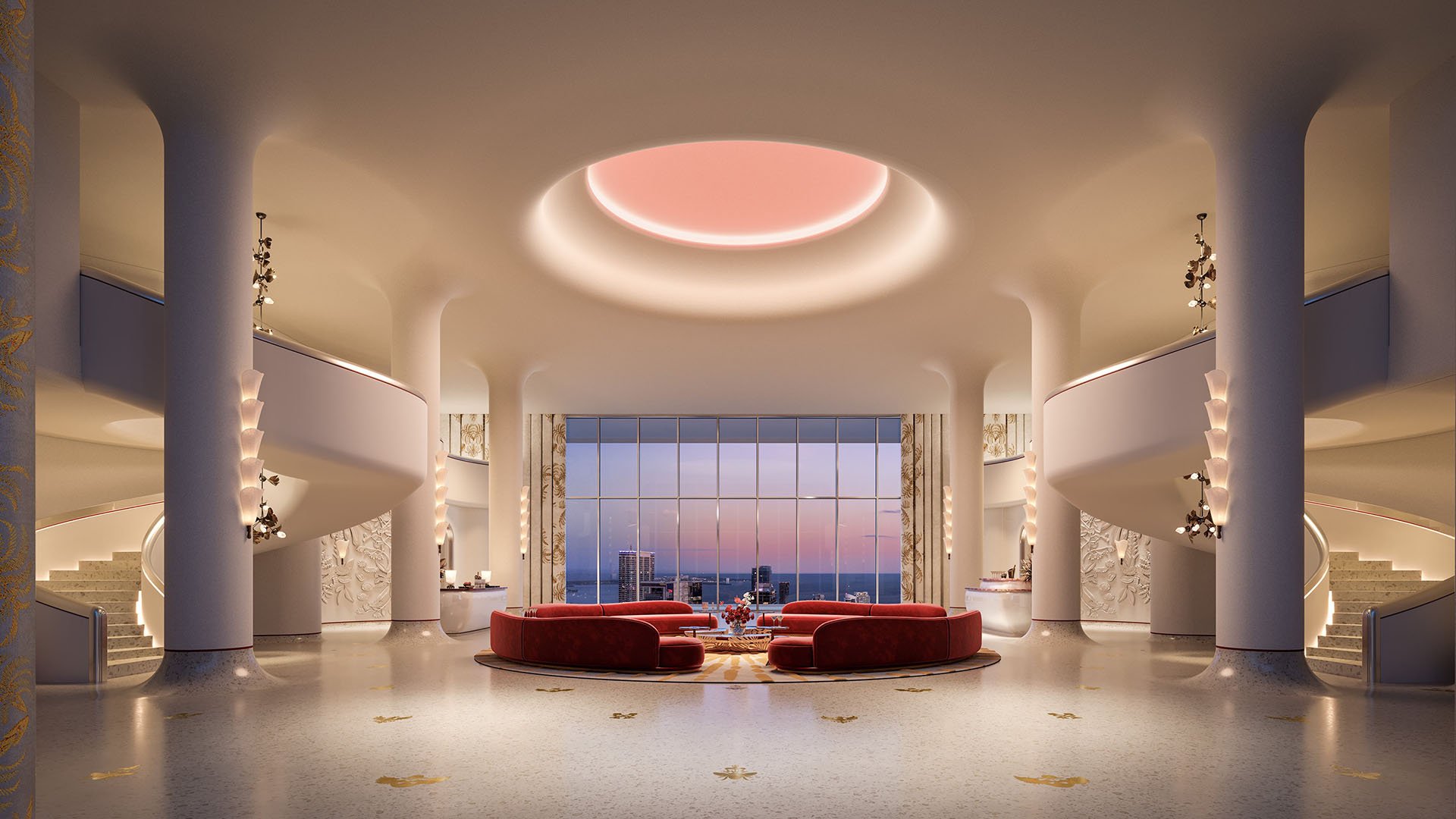
Faena’s brand identity is design-forward and hospitality-driven, which matters more than it may first appear. Storm-day livability is partly psychological. When weather forces a slower, more enclosed day, the quality of interiors, staff communication, private spaces, circulation, and service culture can meaningfully affect the resident experience.
Luxury buyers often focus on visual drama, but a storm-readiness lens rewards subtler forms of quality. Does the residence feel composed when outdoor amenities are unavailable? Is the private interior generous enough to support a full day at home? Are common areas conceived only as beautiful backdrops, or can they help residents feel settled and informed? These are the questions that turn design into lived resilience.
Faena Residences Miami Downtown Miami is not being positioned here as a building with specific verified technical guarantees. Buyers should request and review formal project documents for any claims related to glazing, emergency power, flood mitigation, code performance, and life-safety systems. The editorial point is more precise: Faena belongs in the conversation because its luxury proposition can be evaluated at the intersection of resilience, comfort, service, and urban continuity.
The strongest buyers in this segment ask direct questions. Storm-day livability should begin with the physical envelope: glazing specifications, balcony and terrace exposure, water intrusion strategy, and how the building is intended to perform during wind and rain events. These details should be verified through official disclosures rather than assumed from renderings or brand prestige.
Flood protection deserves the same rigor. Buyers should ask how parking, ground-level access, loading areas, lobby approaches, mechanical systems, and service corridors are addressed. In Miami, a beautiful arrival sequence is only one part of the story. The more valuable question is whether that arrival sequence remains practical when conditions are difficult.
Emergency operations are equally important. A buyer should understand communication protocols, staffing plans, elevator procedures, generator scope, access control, package and food delivery policies, and how residents are guided before and after severe weather. The goal is not to turn a home purchase into an engineering seminar. It is to ensure the ownership experience has been considered beyond the blue-sky day.
For new-construction buyers, these questions should be asked early, clearly, and in writing. The most confident purchasers are not the ones who assume resilience because a tower is new. They are the ones who know which claims are documented, which are aspirational, and which remain appropriate follow-up questions.
A storm-day livability lens does not eliminate the conventional luxury comparison. It refines it. Buyers may still compare Downtown Miami with Brickell, Edgewater, Miami Beach, and other waterfront markets, but the emphasis shifts from pure spectacle to daily continuity.
In Brickell, for example, a buyer might evaluate Baccarat Residences Brickell or The Residences at 1428 Brickell through a similar lens: what happens when the tower must function as a private refuge, service hub, and vertical neighborhood? That comparison is useful because it moves the conversation away from which amenity deck is more photogenic and toward which ownership experience feels most considered.
This is also where branded residences have an opportunity to prove their substance. A brand can add real value when it supports consistency, hospitality discipline, design coherence, and resident confidence. But brand alone is not resilience. Buyers should look for alignment between the promise of a lifestyle and the practical systems that protect that lifestyle under stress.
Faena Residences Miami Downtown Miami belongs on the shortlist not because every technical detail can be assumed, but because it invites the right evaluation. It sits within Downtown Miami, a dense mainland context where access and continuity are part of the ownership equation. It carries a design and hospitality identity that may support comfort during shelter-in-place conditions. It is part of a new-generation luxury conversation in which buyers increasingly expect buildings to be beautiful, service-oriented, and thoughtfully prepared.
That combination is the point. Storm-day livability is a composite value proposition. It asks whether a residence can remain elegant when outdoor life pauses, whether service culture can reduce friction, whether the urban setting can help daily life restart, and whether the building’s formal disclosures support the buyer’s expectations.
For the ultra-premium buyer, this is not fear-based purchasing. It is disciplined purchasing. The same clientele that scrutinizes stone selection, ceiling heights, arrival sequence, and view corridors should apply equal care to resilience, emergency planning, and resident continuity. In that more mature definition of luxury, Faena’s Downtown Miami proposition becomes compelling.
What does storm-day livability mean for a luxury condo buyer? It means evaluating how a residence supports safety, comfort, services, communication, and continuity during severe weather, not just how it looks in normal conditions.
Why is Faena Residences Miami Downtown Miami relevant to this discussion? It combines a Downtown Miami setting with a design-forward, hospitality-driven identity, making it a strong candidate for buyers using a storm-readiness lens.
Can buyers assume specific hurricane-rated systems at Faena? No. Specific claims about glazing, backup power, flood systems, or code performance should be verified through official project documents.
Why does Downtown Miami matter for storm-day planning? Its dense mainland urban setting can support access, infrastructure, services, and post-storm routine as part of the broader ownership experience.
Is storm-day livability only about engineering? No. It also includes staff communication, interior comfort, resident services, parking access, deliveries, and the ability to feel settled while sheltering in place.
How should buyers compare Faena with other towers? They should compare documented building systems, emergency procedures, service culture, private residence comfort, and neighborhood continuity.
Does a branded residence automatically offer better resilience? Not automatically. A brand may enhance hospitality and consistency, but buyers still need documented answers on building-level preparedness.
What should be asked about flood protection? Buyers should ask how ground-level access, parking, mechanical areas, loading zones, and service corridors are planned for disruptive weather.
Why is interior design part of storm-day livability? When residents must remain indoors, the quality of light, layout, acoustics, privacy, and calm can meaningfully shape the experience.
Who should prioritize this kind of analysis? Buyers seeking a primary residence, second home, or long-term Miami base should consider storm-day livability alongside views, amenities, and design.
When you're ready to tour or underwrite the options, connect with MILLION.
If branded residences are on your mind — as a home or as an allocation — we would be glad to share what we are seeing, privately.
Begin a quiet conversation