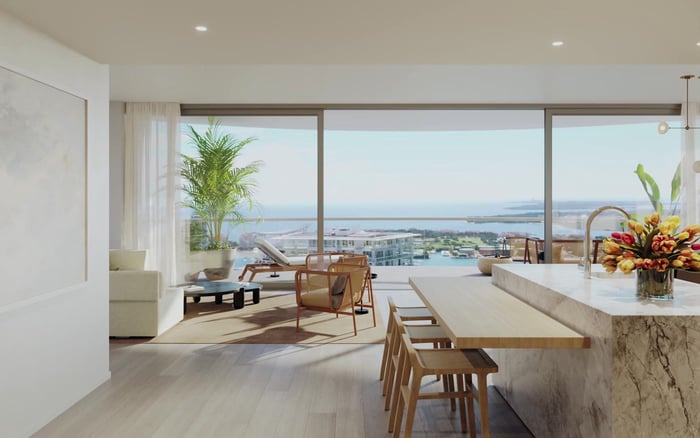
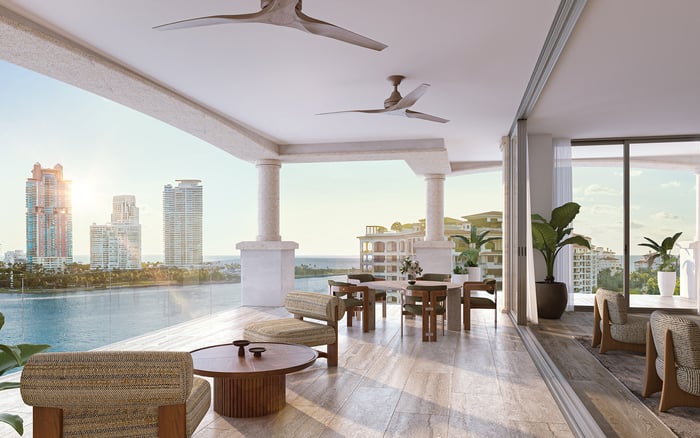
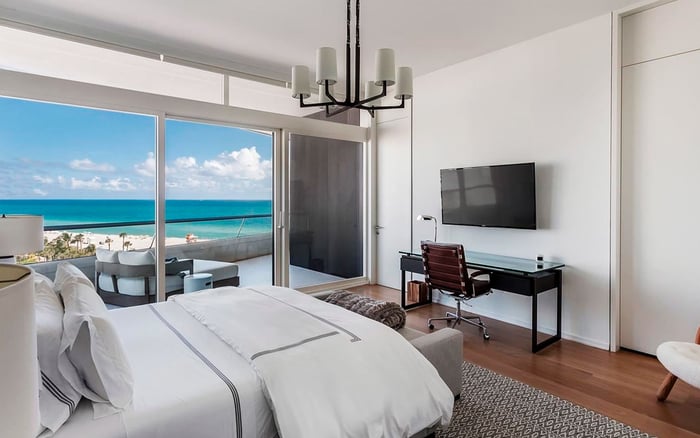
An editorial look at how Shoma Bay North Bay Village and Tula Residences North Bay Village belong in a quieter luxury conversation centered on service, restraint, and practical daily ease.
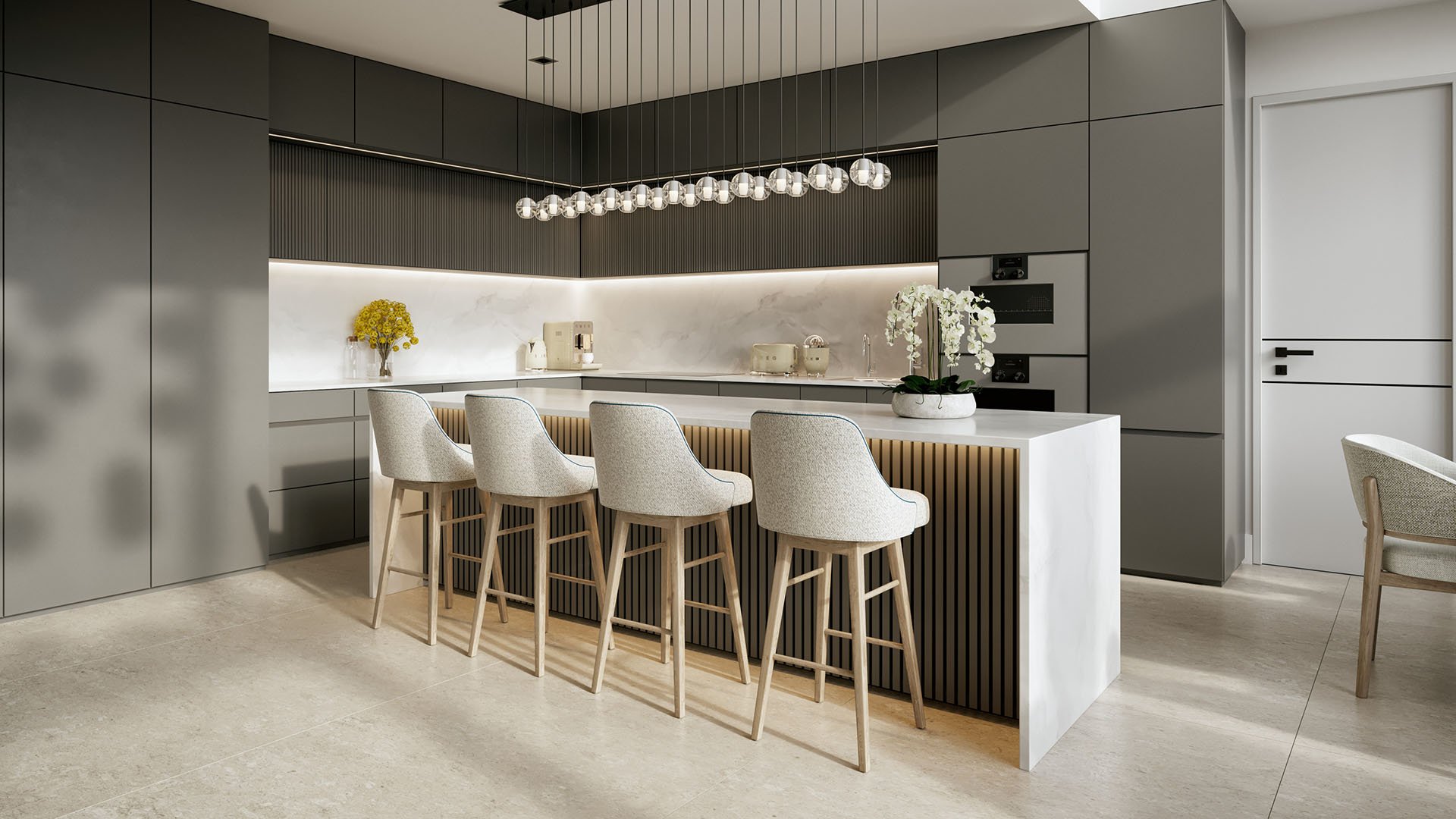
The most compelling luxury-residential conversation in South Florida is no longer defined simply by height, glamour, or a theatrical arrival sequence. Among sophisticated buyers, the sharper question is whether a building makes daily life feel more composed. Service matters, but not as performance. Privacy matters, but not as isolation. Design matters, but not when it overwhelms the resident.
That is the frame in which Shoma Bay North Bay Village and Tula Residences North Bay Village are best understood. The point is not which project can make the loudest statement. It is how North Bay Village is being considered by buyers who want waterfront proximity, access to Miami’s core neighborhoods, and a residential environment that feels managed without feeling staged.
In that sense, Shoma Bay North Bay Village anchors the current conversation as a named North Bay Village development with a usable project page. Tula Residences North Bay Village belongs in the same buyer discussion as a North Bay Village option, but the prudent reading is to focus on what is publicly presented at the time of review rather than assuming details that have not been clearly established.
North Bay Village has a particular advantage in the current market: it does not need to imitate Miami Beach, Brickell, or Sunny Isles to be relevant. Its appeal is more transitional and residential. It sits within the broader Miami orbit, yet it offers a different rhythm from the larger, more established luxury corridors.
For buyers drawn to high-service living without excess theater, that distinction matters. The ideal building in this category does not turn every amenity into a spectacle. It understands sequence, discretion, and usefulness. The lobby should feel considered. The staff model should feel intuitive. Shared spaces should support the resident’s actual week, not merely the brochure.
This is where the North Bay Village shorthand becomes meaningful. It signals a market still being defined, giving buyers a chance to evaluate projects less by inherited prestige and more by fit. Waterfront setting, access, building scale, and service philosophy all become part of the due-diligence conversation.
Shoma Bay can be discussed with confidence as a North Bay Village development. That alone gives it a defined place in the emerging local conversation, especially for buyers tracking how the village is repositioning itself within Miami’s luxury-residential map.
The more disciplined way to evaluate Shoma Bay is not to overstate what has not been verified, but to consider what its presence represents. It gives buyers a concrete point of reference in North Bay Village: a place to begin asking the right questions about service, building operations, residence planning, arrival experience, and long-term livability.
For a buyer accustomed to larger luxury environments, the key test is not whether Shoma Bay resembles a branded resort tower. The key test is whether the project’s final service model, residential mix, and operating culture feel aligned with the way the buyer actually lives. In the high-service category, the most valuable amenities are often the least theatrical: reliable staffing, clean circulation, efficient access, privacy, and spaces that remain pleasant after the opening season has passed.
Tula Residences North Bay Village should be approached with similar restraint. The name is part of the current North Bay Village discussion, but buyers should resist filling in blanks with assumptions. A project can be relevant before every detail is settled, but relevance is not the same as certainty.
For Tula, the most productive buyer questions are practical. What level of service is contemplated? How will the building distinguish hospitality from spectacle? How much of the experience is designed for residents rather than visitors? How will common areas support privacy, convenience, and everyday flow?
These questions are especially important in a market where luxury language can become inflated. Words such as wellness, concierge, private, and curated matter only if they translate into operating reality. The serious buyer wants to know whether the building will age gracefully, whether the resident experience will feel consistent, and whether the environment supports a calm version of Miami living.
North Bay Village does not exist in isolation. Buyers often compare it with Bay Harbor Islands, Miami Beach, Edgewater, and Brickell, not because those markets are identical, but because each offers a different answer to the same question: how much service, visibility, convenience, and privacy does the resident actually want?
A buyer considering Continuum Club & Residences North Bay Village may be thinking specifically about the village’s future luxury identity. Someone also looking at The Well Bay Harbor Islands may be weighing a more wellness-coded residential environment nearby. A buyer who keeps 2200 Brickell in the mix is likely testing whether urban convenience outweighs a quieter bayfront setting.
These comparisons are not about ranking one neighborhood above another. They are about temperament. Some buyers want the full pulse of the city. Others want the city within reach, but not at the front door. North Bay Village can speak to the latter group if its projects deliver service with discipline rather than spectacle.
The most important evaluation criteria are simple, but they require attention. First, study the arrival experience. Does the building feel calm, legible, and private? Second, study the service promise. Is it practical enough to be sustained, or does it rely on theatrical gestures? Third, consider the daily path from residence to car, lobby, water, fitness areas, and social spaces. Luxury reveals itself in friction, or in the absence of it.
Waterfront is central to the conversation, but water alone is not enough. A bay view can create emotional value, yet the building must still function. Lifestyle value comes from the way a residence supports mornings, evenings, guests, work, wellness, and privacy. Boutique appeal can be powerful when it means intimacy and control, but it must be balanced against staffing, maintenance, and long-term management.
For buyers, the strongest approach is to treat Shoma Bay North Bay Village, Tula Residences North Bay Village, and Continuum Club & Residences North Bay Village as part of a broader North Bay Village study. The goal is not to chase the loudest amenity package. It is to identify the building that will feel most composed after the novelty fades.
Why is North Bay Village part of the high-service living conversation? It offers a quieter residential setting within Miami’s broader luxury orbit, appealing to buyers seeking access without constant intensity.
Can Shoma Bay be identified as a North Bay Village development? Yes. Shoma Bay can be discussed as a North Bay Village development within the current luxury-residential conversation.
How should buyers evaluate Tula Residences North Bay Village? Buyers should focus on current disclosures, service expectations, residence planning, and how the project may fit their daily lifestyle.
What does high-service living without excess theater mean? It means attentive operations, privacy, and useful amenities without turning every shared space into a performance.
Is waterfront location enough to define luxury? No. Waterfront can be a major advantage, but service, circulation, privacy, and management quality determine long-term livability.
Should buyers compare North Bay Village with Brickell? Yes, if they are deciding between quieter bayfront living and a more urban, daily-convenience environment.
Is a boutique building always better for privacy? Not always. Boutique scale can help, but staffing, layout, access control, and building culture matter just as much.
What should be reviewed before choosing a new development? Buyers should review residence layouts, service model, ownership costs, delivery expectations, and the developer’s operating vision.
Who is the ideal buyer for this type of product? The ideal buyer values discretion, convenience, bay access, and service that supports daily life rather than dominating it.
What is the main takeaway for Shoma Bay and Tula? Both belong in the North Bay Village conversation, with Shoma Bay serving as the clearer reference point and Tula requiring careful buyer review.
For a discreet conversation and a curated building-by-building shortlist, connect with MILLION.
If branded residences are on your mind — as a home or as an allocation — we would be glad to share what we are seeing, privately.
Begin a quiet conversation