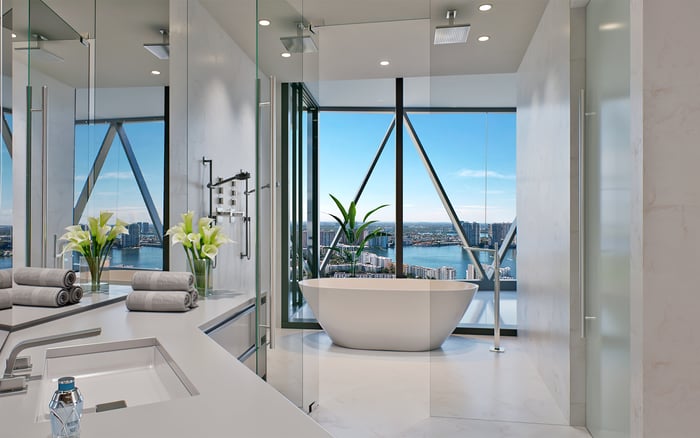
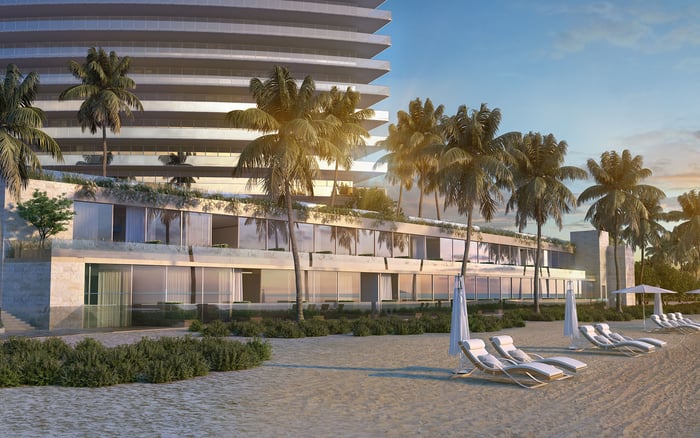
In Sunny Isles Beach, the choice between preconstruction and a completed condominium is not simply new versus old. It is a decision between future luxury positioning, contract-based flexibility, actual building performance, reserve visibility, and timing certainty on one of South Florida’s most concentrated oceanfront corridors.

Sunny Isles Beach concentrates one of South Florida’s most sophisticated condominium decisions within a narrow coastal setting. The city sits in northeast Miami-Dade on a barrier-island strip where prime land is finite, so the market is shaped less by outward expansion than by redevelopment, tower replacement, and the careful repositioning of oceanfront addresses.
That geography makes the decision more exacting. Along Collins Avenue, buyers are weighing the Atlantic Ocean on one side, the Intracoastal Waterway on the other, and a corridor where views, stack orientation, tower spacing, arrival sequence, and association quality can materially alter the ownership experience. Here, the question is not simply whether a buyer prefers new or existing. It is whether future luxury product and customization are worth more than known building performance, known costs, and immediate occupancy.
Preconstruction in Sunny Isles Beach is concentrated in a relatively small number of ultra-luxury branded projects rather than a broad, commodity-style pipeline. That distinction matters because new supply is often positioned at the top of the market, not as a discounted alternative to existing inventory. Bentley Residences Sunny Isles is a clear example of how the city’s next generation of product is being framed around brand identity, design ambition, and premium residential expectations.
The appeal is real. Early buyers may gain access to preferred floor plans, exposures, finish packages, and, in some cases, a degree of customization unavailable in a completed tower. For a purchaser with a defined view preference, a precise lifestyle brief, or a desire to align delivery with future relocation plans, that flexibility can be powerful.
But flexibility is only valuable when the contract supports it. Deposit schedule, escrow structure, delivery timing, permitted finish substitutions, change provisions, assignment restrictions, and cancellation rights deserve the same scrutiny as the floor plan. The practical value of any protection depends on timing, documents, and the specific purchase agreement.
The strongest preconstruction purchase is not merely the most glamorous rendering. It is the one with a credible developer, clear deposit protections, realistic timing, limited ambiguity in specifications, and a contract that tells the buyer what can change before closing.
Sunny Isles has become a natural stage for Branded Residences because the local product is already oriented toward privacy, service, water views, and an international buyer base. St. Regis® Residences Sunny Isles reinforces the hospitality-branded direction of the city’s new-development market, where perceived value often includes service culture and identity as much as square footage.
That does not mean branding alone should drive the decision. A sophisticated buyer should ask what the brand controls, what the association will pay for over time, how service standards translate into operating costs, and whether the promised lifestyle matches the owner’s actual use pattern. For a seasonal owner, lock-and-leave service may be central. For a full-time resident, acoustic performance, elevator efficiency, staff depth, and day-to-day association governance may matter more.
The branded premium also changes the resale comparison. A completed building can appear less flexible at first, but it allows a buyer to test the real experience: the light at 4 p.m., the condition of the amenities, the tone of the lobby, the parking flow, the neighbor profile, and the monthly cost structure. In Sunny Isles, certainty has its own luxury value.
Completed towers give buyers something preconstruction cannot: the ability to experience the property before committing. A purchaser can stand in the residence, study the view plane, feel the ceiling heights, listen for noise, inspect finishes, observe staff, and review actual budgets rather than projections.
This is especially relevant in a market where oceanfront exposure can be both the prize and the diligence burden. Salt air, windstorm insurance, flood-zone considerations, façade condition, windows, balconies, mechanical systems, and building-envelope maintenance all belong in the conversation. Newer towers may offer a different ownership profile than older towers, while established buildings may offer immediate visibility into how the property actually operates. The right conclusion depends on the building, not just the year built.
For buyers who want immediate occupancy, The Ritz-Carlton Residences® Sunny Isles may enter the conversation differently from an unbuilt project because the buyer can evaluate the lived environment. The same principle applies when comparing established luxury addresses such as Jade Signature Sunny Isles Beach or Armani Casa Sunny Isles Beach: the advantage is not merely that the tower exists, but that its real performance can be examined.
Resale certainty is strongest when the association has current inspections, funded reserves, transparent board minutes, no hidden special assessments, and a clear history of capital planning. In completed buildings, diligence should be more technical than a surface review of amenities and monthly fees.
Reserve planning deserves particular attention because it can shape carrying costs, assessment risk, and long-term liquidity. Inspection status, insurance coverage, maintenance history, litigation, board communication, and the age of major systems can all influence whether a completed residence feels stable after closing.
Miami-Dade coastal ownership adds another layer of scrutiny for aging properties, including those in Sunny Isles Beach. None of this means older buildings are inherently problematic. It means the buyer’s document review must be deeper, more technical, and more forward-looking.
A careful purchaser should review inspection status, reserve studies, board minutes, litigation, assessment history, insurance coverage, engineering work, and the age of major systems. In a completed building, the best certainty comes from transparency.
The buyer who should lean preconstruction is typically patient, contractually disciplined, and willing to accept delivery risk in exchange for early selection and future product. This buyer cares about the newest design language, brand positioning, and the chance to secure a preferred exposure before the building is completed.
The buyer who should lean completed-building certainty often wants occupancy, visibility, and evidence. This buyer may value seeing the exact residence more than selecting from a future stack. They may also prefer known operating costs, established association culture, and the ability to negotiate with real building data in hand.
In Sunny Isles Beach, both paths can be intelligent. The mistake is evaluating them as if they carry the same kind of risk. Preconstruction risk is concentrated in contracts, timing, execution, and final delivery. Completed-building risk is concentrated in association health, inspections, reserves, insurance, and future capital needs. The better purchase is the one whose risk profile the buyer understands before signing.
Is preconstruction automatically less expensive in Sunny Isles Beach? No. New branded towers in Sunny Isles are often positioned as premium luxury products, so the value case depends on selection, timing, and contract terms.
What is the biggest advantage of buying preconstruction? Early selection is the primary advantage, especially for floor plans, exposures, finishes, and potential customization.
What is the biggest risk in preconstruction? The main risks are contractual: deposit treatment, delivery timing, developer change rights, assignment limits, and final execution.
Why do completed buildings feel safer to some buyers? Buyers can inspect actual views, light, amenities, staff culture, neighbors, association behavior, and operating costs before closing.
Are older Sunny Isles condos risky? Not automatically. They require deeper diligence around inspections, reserves, insurance, maintenance history, and possible assessments.
What documents matter most in a resale purchase? Buyers should review association financials, reserve studies, board minutes, inspection records, insurance, litigation, and assessment history.
Why do reserves matter more now? Reserve planning can make future capital obligations more visible and more important to ownership costs.
How does coastal exposure affect the decision? Flood-zone, windstorm, insurance, façade, balcony, window, and building-envelope issues matter for both new and existing towers.
Who is the best fit for Move-In Ready ownership? A buyer who wants immediate use, verified building performance, and known monthly costs may prefer a completed residence.
Can a buyer compare preconstruction and completed condos directly? Yes, but the comparison should include deposits, timing, reserves, insurance, assessments, inspections, and lifestyle fit, not just price.
When you're ready to tour or underwrite the options, connect with MILLION.
If branded residences are on your mind — as a home or as an allocation — we would be glad to share what we are seeing, privately.
Begin a quiet conversation