A collector-focused guide to buying in Sunny Isles Beach, with emphasis on light control, wall planning, privacy, security, oceanfront exposure, and residence-level due diligence.
Sunny Isles Beach appeals to art collectors for a simple reason: it can offer a private residential rhythm beside the Atlantic while remaining connected to the broader cultural life of South Florida. The right purchase is not simply about an address or a view. For a serious collector, it is about whether a residence can protect, present, and quietly support a collection over time.
That is where the search becomes more exacting. A beautiful apartment can still be wrong for art if the walls are interrupted, the light is too aggressive, the service flow is awkward, or the building rules complicate installations. Conversely, a residence that appears understated at first can become exceptional when it offers calm proportions, disciplined circulation, and enough architectural restraint to let important works breathe.
Sunny Isles Beach should be approached as a Buyer's Guides subject rather than a simple neighborhood preference. The oceanfront setting is seductive, but collectors should look beyond the first impression and ask how the property performs on ordinary days, during seasonal occupancy, and in the moments when works need to be delivered, rotated, photographed, conserved, or stored.
Views matter, especially in Sunny Isles Beach, but collectors should evaluate the apartment in layers. Begin with wall planes. Long, uninterrupted walls are more valuable than dramatic corners if your collection includes large-format painting, photography, textile work, or sculptural relief. Columns, switch plates, sconces, door swings, and built-ins can quickly limit hanging options.
Ceiling height is equally important, not for drama alone, but for proportion. A taller room can make a major work feel intentional rather than compressed. It can also allow lighting to be handled with greater subtlety. If a residence has expansive glass, assess whether the interior walls still provide enough museum-quality calm. A view should not compete with the art in every room.
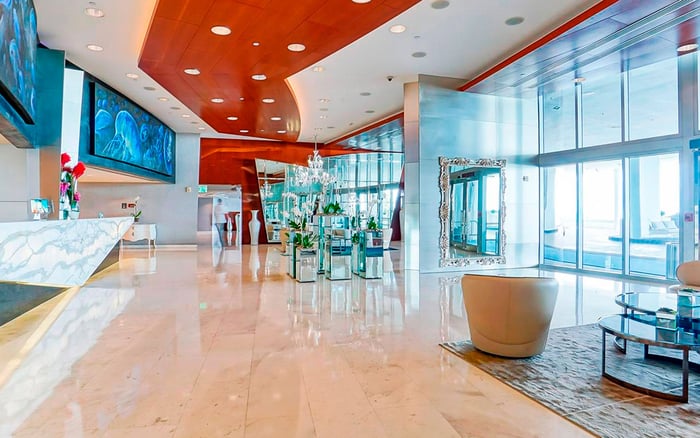
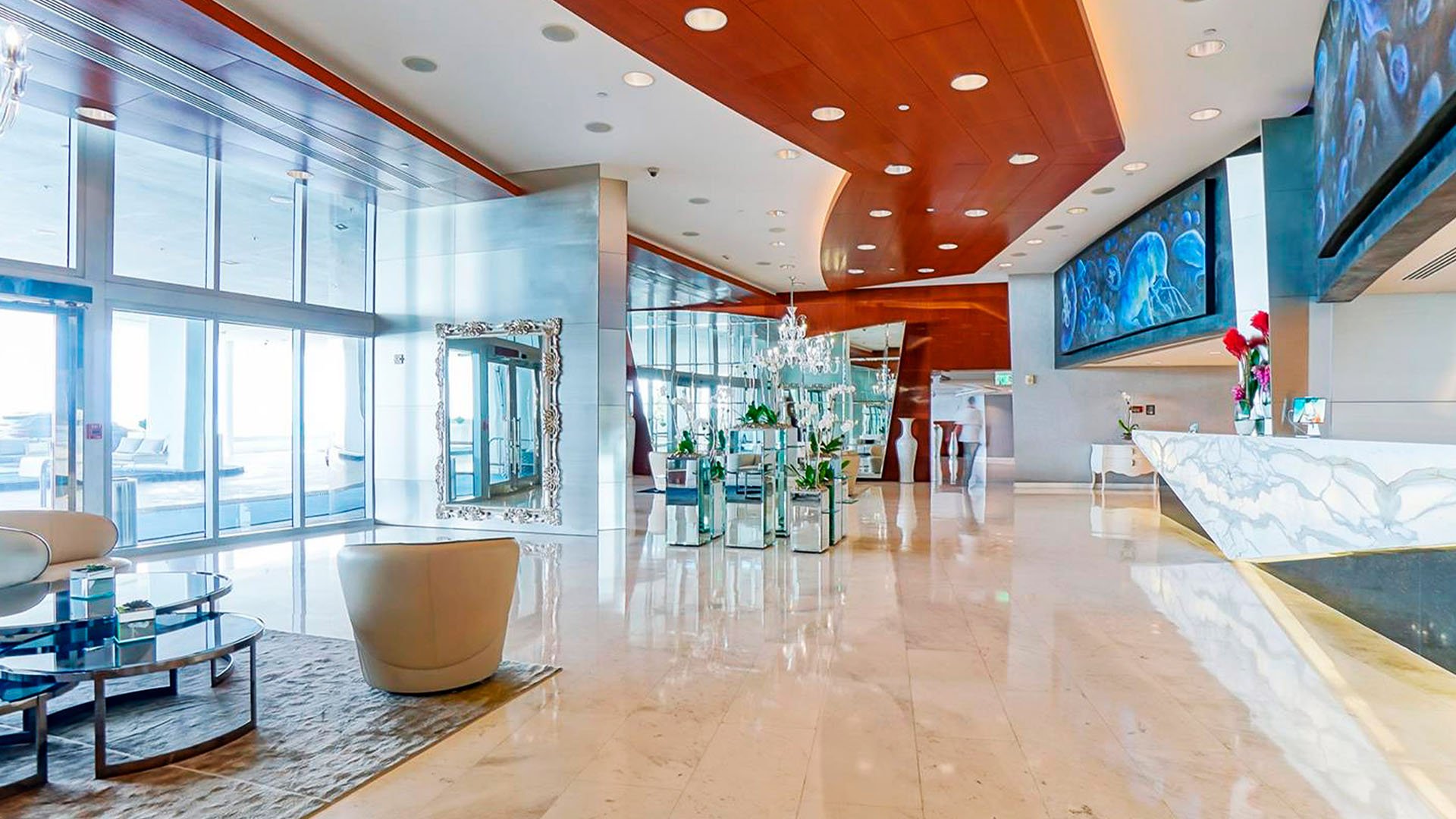
Flooring should also be considered through a collector’s lens. Stone, wood, and large-format surfaces each create a different optical field for sculpture and furniture. The goal is not necessarily a white-box environment. In many luxury homes, art looks best against texture, warmth, and shadow, provided those elements are deliberate rather than distracting.
Oceanfront living brings atmosphere, but art requires discipline. Natural light can be glorious for daily life and unforgiving for works on paper, photography, textiles, and certain pigments. A buyer should ask how the residence manages glare, heat, and exposure throughout the day. Window treatments, UV-conscious glazing, and lighting plans should be reviewed before closing, not after move-in.
Humidity is another part of the conversation. South Florida interiors can support significant collections, but the mechanical systems, maintenance standards, and owner habits must align with that ambition. Ask how consistently the residence can maintain a stable interior environment. For second-home owners, remote monitoring and reliable building support can matter as much as the initial finish package.
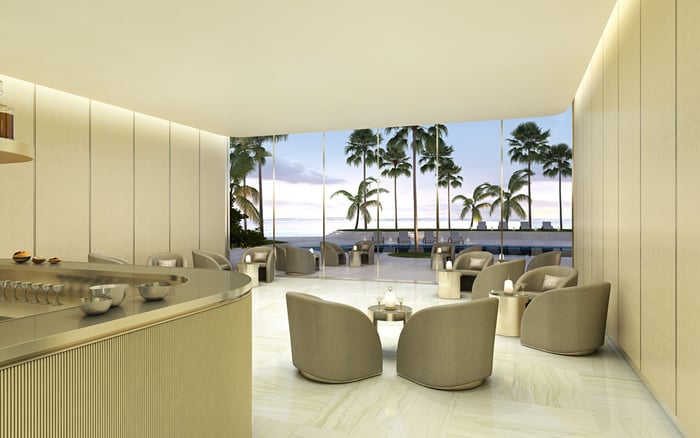
Oceanfront does not have to mean overexposed. The most successful collector residences in Sunny Isles Beach balance spectacle and control. They allow the water to remain present while preserving interior zones where art can be read without visual noise.
Collectors often focus on the apartment and underweight the route into it. That is a mistake. Art has to move. It may arrive in crates, require multiple handlers, or need temporary staging before installation. Before purchasing, buyers should understand loading access, freight elevator dimensions, delivery scheduling, insurance requirements, and any restrictions on contractors.
Privacy is just as central. A residence may be personally discreet, but the building’s circulation determines how private the owner’s life feels. Valet areas, lobby traffic, elevator sharing, and service corridors all contribute to the experience. For collectors who lend works, host intimate viewings, or receive advisors during the season, these details are not secondary.
The Sunny Isles shorthand can suggest a single beachfront lifestyle, but collector needs vary widely. Some buyers want a quiet lock-and-leave home with a few excellent walls. Others want a gallery-like primary residence with room for rotation, study, and entertaining. The correct building is the one whose operations match the owner’s collecting behavior.
Design & Architecture should be treated as collection infrastructure. A branded kitchen, imported stone, or dramatic lobby may be appealing, but the deeper question is whether the architecture gives art a clear role in daily life. Does the entry sequence create a moment for a signature piece? Does the living room allow art and ocean to coexist? Is there a corridor suited to works on paper? Can a bedroom hold something meaningful without feeling crowded?
Buyers comparing Jade Signature Sunny Isles Beach may begin with the name and the setting, but the more valuable exercise is to walk the plan slowly and map where each category of work could live. At The Ritz-Carlton Residences® Sunny Isles, a collector should apply the same discipline: compare arrival, privacy, wall composition, and service flow before being persuaded by hospitality associations.
If your calendar includes Art Basel week, acquisitions may arrive quickly and decisions may need to be made under time pressure. A prepared residence makes that easier. The right home has already anticipated lighting, placement, access, and professional support.
Sunny Isles Beach offers a range of high-end condominium choices, but an art collector should compare them through function as much as prestige. When considering Bentley Residences Sunny Isles, ask how the residence plan would support large works, private arrivals, and long-term storage needs. The value of any luxury concept is strongest when it translates into daily ease.
At St. Regis® Residences Sunny Isles, the buyer’s checklist should include service expectations, discretion, installation protocols, and whether the interiors can remain visually composed as the collection grows. A residence that feels complete on its own must still have enough restraint to accommodate personal acquisitions.
For buyers studying Turnberry Ocean Club Sunny Isles, the same questions apply. Do the principal rooms allow multiple focal points? Can a sculpture be placed without blocking circulation? Is there a place for a work that should be seen quietly rather than theatrically? These are not aesthetic luxuries. They are practical questions for a collector who wants the home and collection to mature together.
Before committing, bring the right advisors into the residence. An art installer, lighting designer, architect, conservator, or collection manager may see constraints that a buyer misses. They can identify whether a wall can carry weight, whether lighting can be improved, and whether the building’s delivery process is compatible with valuable works.
Review association rules with care. Ask about contractor access, insurance certificates, elevator padding, move-in hours, protective floor coverings, and renovation approvals. If you plan to add specialized lighting, display millwork, climate monitoring, or reinforced hanging systems, understand what can be approved and how long approvals may take.
Finally, think about resale. A collector’s improvements should elevate the residence without making it overly idiosyncratic. The best art-ready homes in Sunny Isles Beach feel refined even without the collection in place. They offer clarity, balance, and adaptability, qualities sophisticated buyers recognize quickly.
What should art collectors prioritize first in Sunny Isles Beach? Start with wall quality, light control, service access, and privacy. The view matters, but the residence must protect and present the collection properly.
Is an oceanfront condo suitable for valuable art? It can be, provided the interiors support stable climate control, careful light management, and disciplined maintenance. Buyers should evaluate these systems before closing.
How important are ceiling heights for collectors? Ceiling heights influence proportion, lighting, and the presence of larger works. They can make a collection feel curated rather than compressed.
Should I bring an art advisor before making an offer? Yes, if the collection is meaningful or growing. An advisor or installer can identify practical issues that may not be obvious during a standard showing.
What building rules matter most for art installation? Focus on freight elevator use, delivery hours, insurance requirements, contractor access, and approvals for lighting or wall reinforcement.
Can a second home still support a serious collection? Yes, but it should have reliable systems, monitoring options, and building support. Absentee ownership requires more planning, not less.
Are branded residences automatically better for collectors? Not automatically. Service culture can help, but the floor plan, walls, light, and access determine whether the residence truly works for art.
How should collectors think about terraces? Terraces enrich lifestyle, but interior wall placement remains the priority. Outdoor drama should not eliminate the quiet rooms needed for display.
What is the biggest mistake collectors make when buying? They fall in love with the view before testing the plan. A residence must be walked as a gallery, a home, and a logistics environment.
Should resale influence art-related upgrades? Yes, upgrades should improve flexibility and refinement. The best collection-ready improvements feel architectural rather than overly personal.
If you'd like a private walkthrough and a curated shortlist, connect with MILLION.
If branded residences are on your mind — as a home or as an allocation — we would be glad to share what we are seeing, privately.
Begin a quiet conversation