A discreet guide to evaluating hydration stations as part of a luxury South Florida floor plan, from circulation and plumbing logic to outdoor living and long-term usability.
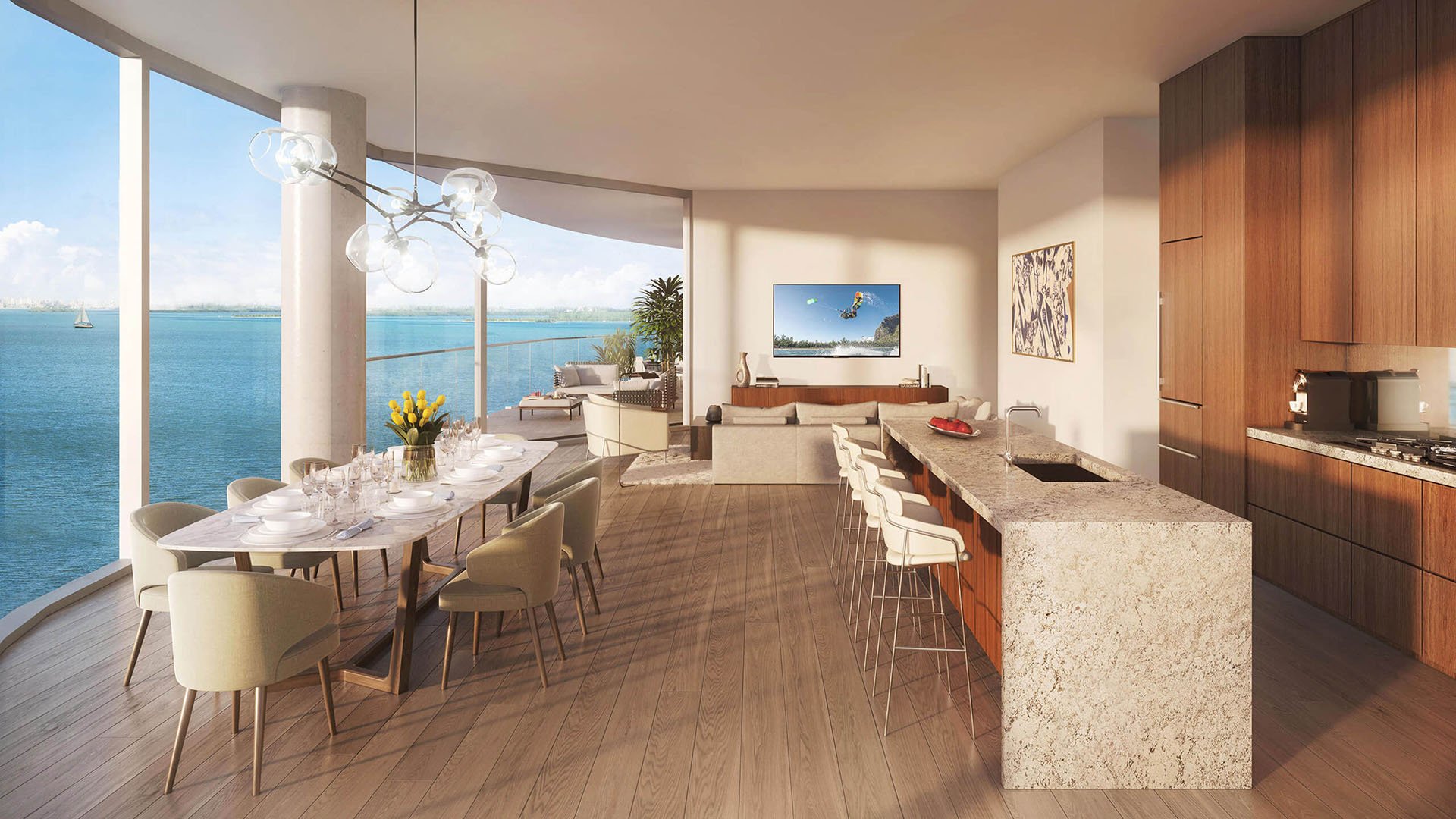
A hydration station sounds simple: a refined place to pour, filter, chill, carbonate, or supplement water without interrupting the room. In a South Florida luxury residence, however, its placement can reveal far more about the intelligence of a floor plan. It touches circulation, entertaining, wellness routines, terrace access, kitchen hierarchy, plumbing proximity, and the subtle choreography of how a home is actually lived in.
The most successful examples are not decorative afterthoughts. They sit where movement already occurs, where guests can serve themselves without crossing private zones, and where the owner’s daily rituals feel effortless. A buyer comparing Brickell, Miami Beach, Coconut Grove, or Sunny Isles residences should look beyond the appliance package and ask a more architectural question: does the plan make wellness convenient without making it visible everywhere?
That question matters most in residences where the kitchen is both social stage and service core. If every glass of water requires entering the main kitchen work zone, the plan may feel less graceful during dinner, a trainer visit, or a poolside afternoon. A discreet hydration point can protect the kitchen’s function while elevating the rhythm of the home.
Hydration stations should influence the floor plan when the residence is designed around routines rather than square footage alone. A household with morning training, frequent entertaining, visiting family, children, staff, or long terrace days will use water points differently from a seasonal owner who lives lightly. The floor plan should respond to those patterns.
Start with the primary suite. A station near the suite can support morning and evening rituals without turning the bedroom into a kitchenette. The best placement is usually adjacent to a dressing area, morning bar, or private corridor, not inside a prominent sleeping zone. It should feel calm, quiet, and intentional.
Next, study the fitness or wellness area. If the plan includes a gym, sauna, treatment room, or flexible studio, a nearby hydration point is often more logical than relying on the kitchen. The station should offer enough counter surface for bottles or supplements, enough concealed storage for supplies, and a finish language that belongs to the residence.
Finally, consider the entertainment route. In a home with a large terrace, pool deck, media room, or lounge, a hydration station can reduce traffic through the kitchen and keep guests oriented. The station should be visible enough to be useful, but not so central that it becomes clutter.
A hydration station works when it meets people at a natural pause. Near an elevator foyer, it may greet an owner returning from a walk. Between a kitchen and terrace, it may serve indoor and outdoor living. Near a family room, it may become the everyday alternative to opening the refrigerator repeatedly. Near a wellness suite, it may support the home’s private resort logic.
What usually fails is placement that ignores sequence. A station tucked behind a formal dining wall may be beautiful but inconvenient. One too close to the cooking line may compete with prep. One inside a private corridor may confuse guests. One far from plumbing may create unnecessary complication, especially if the surrounding walls and millwork were never designed for it.
In new-construction purchases, buyers have the advantage of asking these questions early. Where are the wet walls? What can be modified before delivery? Can the station be integrated into millwork rather than inserted as a visible appliance bay? Does the ceiling, lighting, and ventilation plan support the feature? These are not minor details. They decide whether the station reads as architecture or accessory.
The most elegant hydration point is quiet in every sense. It does not announce itself with exposed utility needs. It does not create noise near a bedroom. It does not force filters, bottles, or accessories into view. It belongs to the room because the floor plan anticipated it.
Plumbing proximity is the first practical concern. A station that aligns with existing wet areas is usually easier to execute cleanly. When the desired location is distant from a kitchen, bar, laundry, or bath wall, buyers should understand what is required before assuming the feature is simple. Luxury is not just the presence of water. It is the absence of awkward compromises.
Storage is equally important. A beautiful counter without concealed space can become a display of cartridges, glasses, towels, and wellness products. The better plan includes drawers, closed cabinetry, a waste solution, and possibly a niche for larger bottles. If the residence is serviced by staff, the station should also be easy to replenish without disturbing private rooms.
Sound deserves attention. Ice, refrigeration, carbonation, or filtration equipment can be intrusive in the wrong place. A station near a primary bedroom, study, or media room should be reviewed with the same discipline as an appliance wall. Quiet operation is part of the luxury standard.
South Florida homes often blur the boundary between interiors and open-air living. That makes hydration planning especially relevant around terraces, summer kitchens, cabanas, and waterfront entertaining zones. A single kitchen may not be enough if the terrace is central to daily life.
For a residence with deep outdoor living, the ideal plan often creates a short, intuitive route between the interior station and exterior seating. The station should support pool days, sunset gatherings, and casual lunches without turning the main kitchen into a traffic corridor. If an outdoor kitchen exists, buyers should decide whether it will truly serve daily hydration or whether a separate indoor point is more practical.
Material selection also matters. A station near exterior openings should withstand humidity, fingerprints, and frequent use. Stone, cabinetry, hardware, and lighting should be chosen for performance as well as beauty. The design can be serene, but it must be durable.
During a private tour, walk the residence as if it is already yours. Enter from the elevator or garage. Go to the primary suite. Move from the gym to the shower. Walk from the kitchen to the terrace. Imagine a guest serving themselves while dinner is being prepared. These movements reveal whether the floor plan supports a hydration station or merely has space to place one.
Ask where the station would live if it is not already installed. Then ask what that location would affect: art walls, storage, lighting, air conditioning grilles, passage width, and furniture placement. In a refined residence, no single convenience should weaken the larger composition.
The best floor plan does not need hydration points everywhere. It needs them in the right places. One excellent station may be more valuable than three poorly placed ones. The priority is not abundance. It is alignment with the way the home will be used.
Even when a buyer is purchasing for personal enjoyment, future appeal matters. A well-integrated hydration station can suggest a residence planned for modern living, especially when it connects to wellness, entertaining, and indoor-outdoor flow. A poorly placed one can feel like customization that the next owner may remove.
The safest approach is restraint. Choose locations that another sophisticated owner would understand immediately. Avoid highly personal arrangements in prominent spaces. Keep finishes consistent with the residence. Preserve flexibility where possible. A future buyer may not share every ritual, but they will recognize thoughtful planning.
For South Florida’s ultra-premium market, the quiet signals often matter most. A hydration station should not shout wellness. It should make the day smoother, the rooms calmer, and the plan more intelligent.
Should every luxury residence have a hydration station? No. It is most valuable when it supports a clear daily routine, such as wellness, entertaining, or terrace living.
Where is the best place for a hydration station? The best location is along a natural path, such as near a wellness area, terrace connection, family room, or primary suite support zone.
Is the kitchen still the best place for filtered water? Often, yes, but relying only on the kitchen can create unnecessary traffic during entertaining or outdoor living.
Should a hydration station be visible to guests? It should be easy to find, but discreet enough to avoid disrupting the architecture or becoming a clutter point.
Can a hydration station be added after purchase? Sometimes, but the result depends on plumbing access, cabinetry, electrical planning, and the surrounding finishes.
Does a hydration station belong in the primary suite? It can, especially near a dressing area or morning bar, but it should not make the sleeping area feel commercial or noisy.
What should buyers ask before choosing a floor plan? Ask where the wet walls are, how the station would be serviced, and whether it affects storage, lighting, or circulation.
Is an outdoor hydration point necessary? Not always. The key is whether the terrace or pool area is used often enough to justify a dedicated or nearby station.
What makes a hydration station feel luxurious? Integration, quiet operation, concealed storage, durable finishes, and a location that feels natural rather than forced.
What is the best way to shortlist comparable options for touring? Start with location fit, delivery status, and daily lifestyle priorities, then compare stacks and elevations to validate views and privacy.
For a tailored shortlist and next-step guidance, connect with MILLION.
If branded residences are on your mind — as a home or as an allocation — we would be glad to share what we are seeing, privately.
Begin a quiet conversation