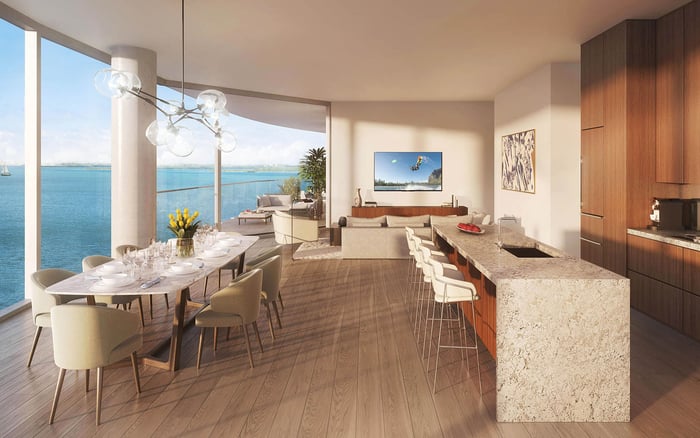
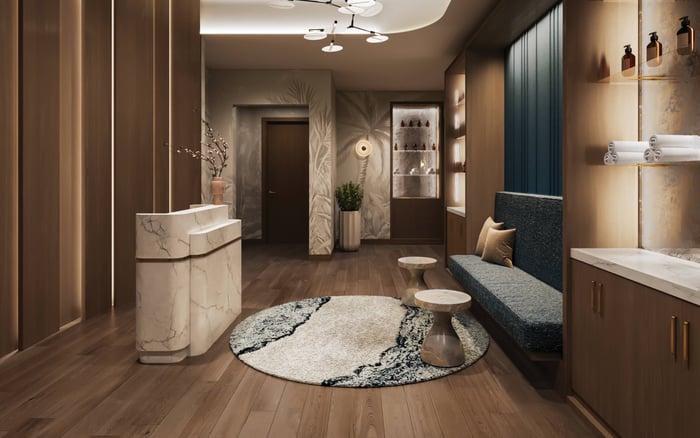
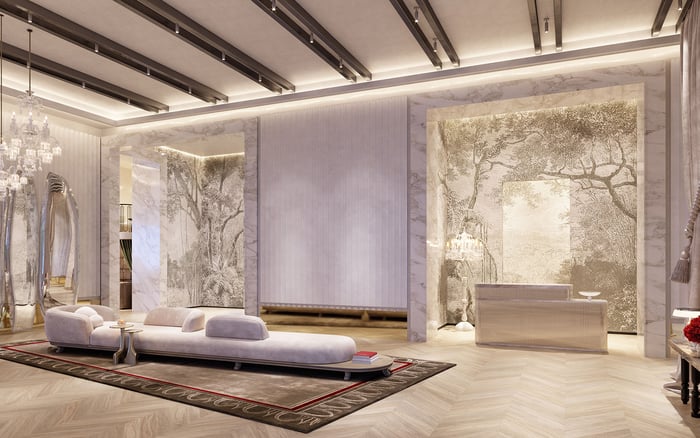
A discreet yoga room is becoming one of the most persuasive wellness gestures in luxury residential design, not because it is loud or showy, but because it makes daily restoration feel effortless, private, and architecturally resolved.
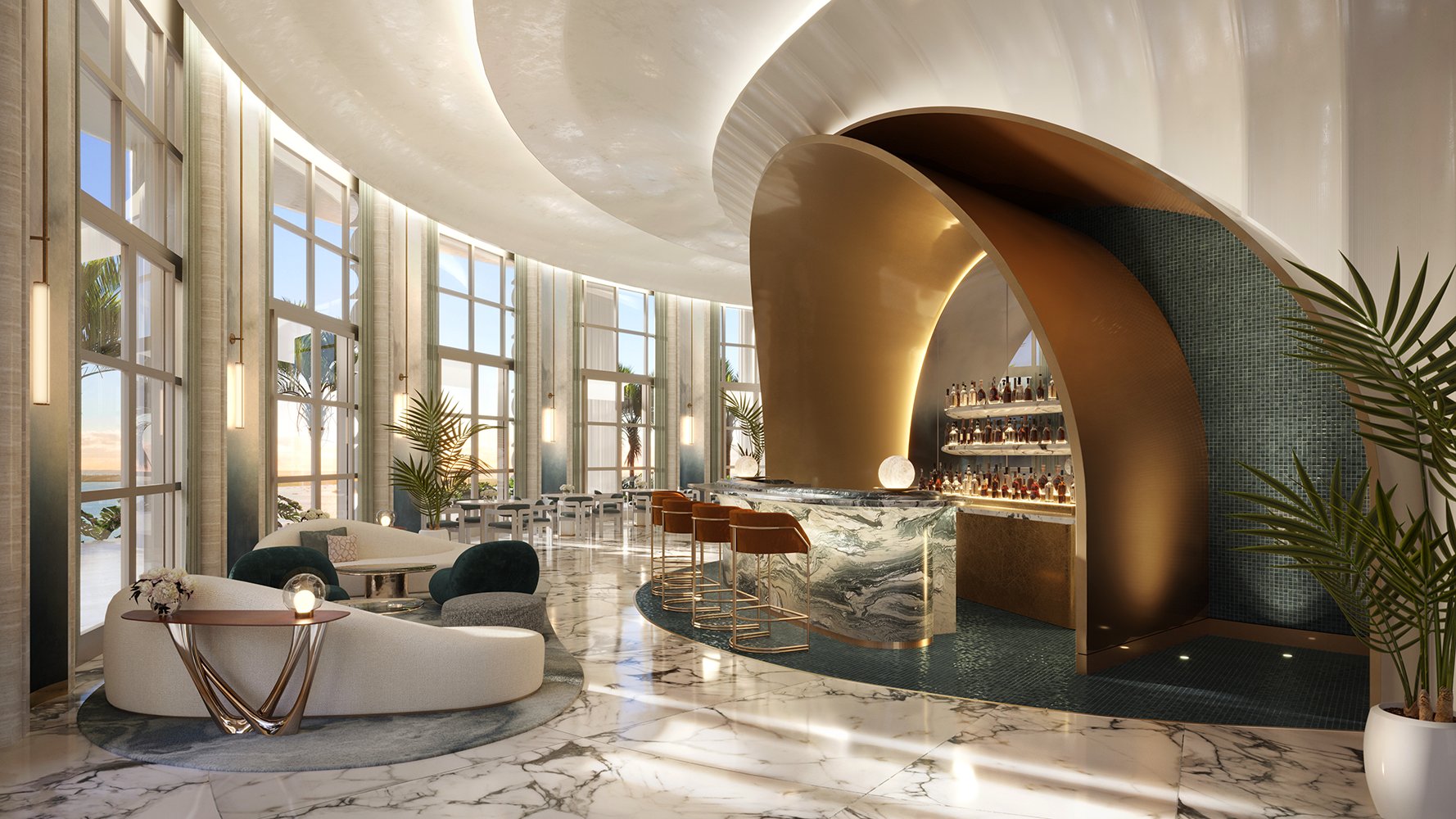
The quiet luxury case for yoga rooms is not about adding another amenity to a residence. It is about clarifying how a home should feel at the beginning and end of the day. In South Florida, where indoor and outdoor living already shape the rhythm of luxury life, a dedicated yoga room can become a private threshold between performance and restoration, sunlight and shade, social life and silence.
The strongest version is not a mirrored studio borrowed from a fitness club. It is a considered room with calm proportions, soft materiality, and enough spatial discipline to support movement without visual noise. For a buyer evaluating a primary residence, pied-à-terre, or second home, the question is no longer whether wellness belongs at home. The sharper question is whether the home gives wellness a place that feels permanent, beautiful, and effortless to use.
A spare bedroom with a mat on the floor can function, but it rarely creates the same emotional pull as a purpose-built practice room. Quiet luxury depends on intention. A yoga room should have a clear floor zone, restrained storage, comfortable ceiling height, and a way to control light without making the space feel sealed off from the rest of the residence.
This is where design restraint matters. The room does not need theatrical finishes. In fact, too much polish can work against the purpose. Honed stone, pale wood, limewash textures, woven shades, and warm indirect lighting can read as more sophisticated than overt branding or decorative excess. A buyer should be able to imagine morning stretching, evening breathwork, a private lesson, or simple silence without rearranging furniture first.
The best rooms also avoid the common mistake of becoming multipurpose in name only. If the yoga room is also the gift-wrapping room, storage overflow, and occasional guest room, the ritual quickly dissolves. Flexibility is useful, but the hierarchy should be clear. The room’s first identity should be restoration.
For 2026, the most compelling yoga rooms will likely be judged less by square footage than by sensory control. Light is the first consideration. A room that receives glare at the wrong hour may look beautiful in a tour, but feel harsh in practice. Filtered natural light, especially when paired with automated shading, creates a more forgiving and usable environment.
Acoustics are equally important. Residences in dense settings, from Brickell to Miami Beach, often deliver extraordinary views and energy, but a yoga room should feel buffered from elevators, entertaining spaces, media rooms, and service corridors. A calm room near a primary suite can be powerful, but only if the adjacency does not compromise privacy.
Flooring deserves careful attention. A surface should feel stable, warm, and easy to maintain. Highly reflective stone may photograph well, yet it can feel cold or slippery. Wood or matte finishes often support a more grounded experience. Built-in storage for mats, bolsters, blocks, and towels allows the room to remain visually composed, which is the essence of quiet luxury.
Ventilation is another subtle marker. A room that can feel fresh without becoming breezy is more desirable than one dependent on aggressive mechanical cooling. In South Florida, where humidity and sunlight are part of the daily equation, comfort is a design achievement, not an afterthought.
A yoga room in South Florida carries a different meaning than it might in a mountain house or an urban townhouse. Here, the luxury residence is often a stage for water, sky, terraces, pools, and hospitality. That makes privacy more valuable. A quiet room tucked away from the entertaining sequence can balance the openness of the overall home.
In Coconut Grove, the appeal may come from a softer, garden-facing atmosphere. In Sunny Isles, it may be about creating stillness above the oceanfront pace. In Brickell, the yoga room can become a retreat from a vertical, high-energy lifestyle. In Miami Beach, the most refined examples may feel connected to light and air while still preserving discretion. The underlying desire is the same: a home that offers composure without announcing it.
This is also why a yoga room should not be treated as a decorative wellness label. Buyers are increasingly adept at sensing when an amenity is only staged. A sincere room has proportion, quiet, storage, and a mood that survives after the sales presentation ends.
The resale logic is simple, even when the design is subtle. A dedicated yoga room signals that the residence understands modern private life. It can appeal to buyers who practice yoga, but also to those who want a meditation room, stretching room, Pilates corner, recovery space, or calm office alternative. The value is not locked into one use.
Still, the room must be planned with enough neutrality to remain adaptable. Overly specific built-ins, permanent equipment, or decorative themes can narrow the audience. A room with elegant proportions and concealed infrastructure does the opposite. It lets the next owner project their own ritual onto the space.
This is where quiet luxury becomes strategic. It does not shout wellness. It makes wellness feel inevitable. For South Florida’s ultra-premium buyer, that may be the more enduring message.
The finest yoga rooms often succeed because of what they remove. There should be no visual clutter, no awkward equipment pile, no bright overhead lighting, and no sense that the room was borrowed from another purpose. Doors should close softly. Hardware should feel discreet. Technology should be present only when needed, with speakers, climate controls, and shading integrated rather than displayed.
Mirrors require judgment. A full mirrored wall can make a room feel commercial. A limited mirror, or no mirror at all, may better suit a residence built around privacy. Art should also be restrained. One sculptural piece, textured wall, or framed view can carry more authority than a collection of wellness clichés.
The relationship to water can be especially powerful in South Florida, but it should be handled with care. A water view may inspire calm; too much exposure can make a private practice feel observed. The most luxurious solution is often layered: a view filtered through shade, landscape, or architectural screening.
The most persuasive yoga room in 2026 will not be the most elaborate. It will be the one that feels easiest to return to. Luxury buyers understand the difference between impressive and livable. A yoga room belongs to the second category, but when designed well, it can become quietly impressive precisely because it refuses to perform.
For developers, architects, and homeowners, the lesson is clear. Give the room real status in the plan. Let it breathe. Protect it from noise. Make storage invisible. Choose materials that support touch, movement, and calm. Above all, design it so the owner can use it on an ordinary Tuesday, not only admire it during a showing.
That is the quiet luxury case: a private room that asks for very little, gives back daily, and makes the entire residence feel more complete.
Is a yoga room worth prioritizing in a luxury residence? Yes, if it is designed as a true daily-use room rather than a staged corner with a mat.
How large does a yoga room need to be? It should allow comfortable movement, clear circulation, and storage, but thoughtful proportion matters more than sheer size.
Should a yoga room have mirrors? Mirrors can help with alignment, but a fully mirrored wall may feel too commercial for a private luxury residence.
What flooring works best for a yoga room? Matte, stable, warm surfaces are typically more comfortable than glossy or slippery finishes.
Where should a yoga room be located in the home? A quiet area near the primary suite or garden-facing space often works well, provided privacy and acoustics are protected.
Can a yoga room also function as a meditation room? Yes, and the best examples are calm enough to support movement, breathwork, meditation, or quiet recovery.
Is natural light important? Natural light is desirable when it can be filtered and controlled, especially in bright South Florida conditions.
What makes a yoga room feel luxurious? Proportion, silence, material restraint, concealed storage, and lighting control create a more refined experience than decoration alone.
Can a yoga room help future resale appeal? It can broaden emotional appeal when the space feels adaptable, elegant, and not overly specialized.
What should buyers ask during a private showing? Ask how the room handles glare, sound, storage, ventilation, and whether it can support more than one wellness routine.
For a tailored shortlist and next-step guidance, connect with MILLION.
If branded residences are on your mind — as a home or as an allocation — we would be glad to share what we are seeing, privately.
Begin a quiet conversation