A discreet buyer’s guide to assessing in-unit wellness rooms in South Florida residences, with attention to privacy, recurring costs, comfort, and long-term usability.
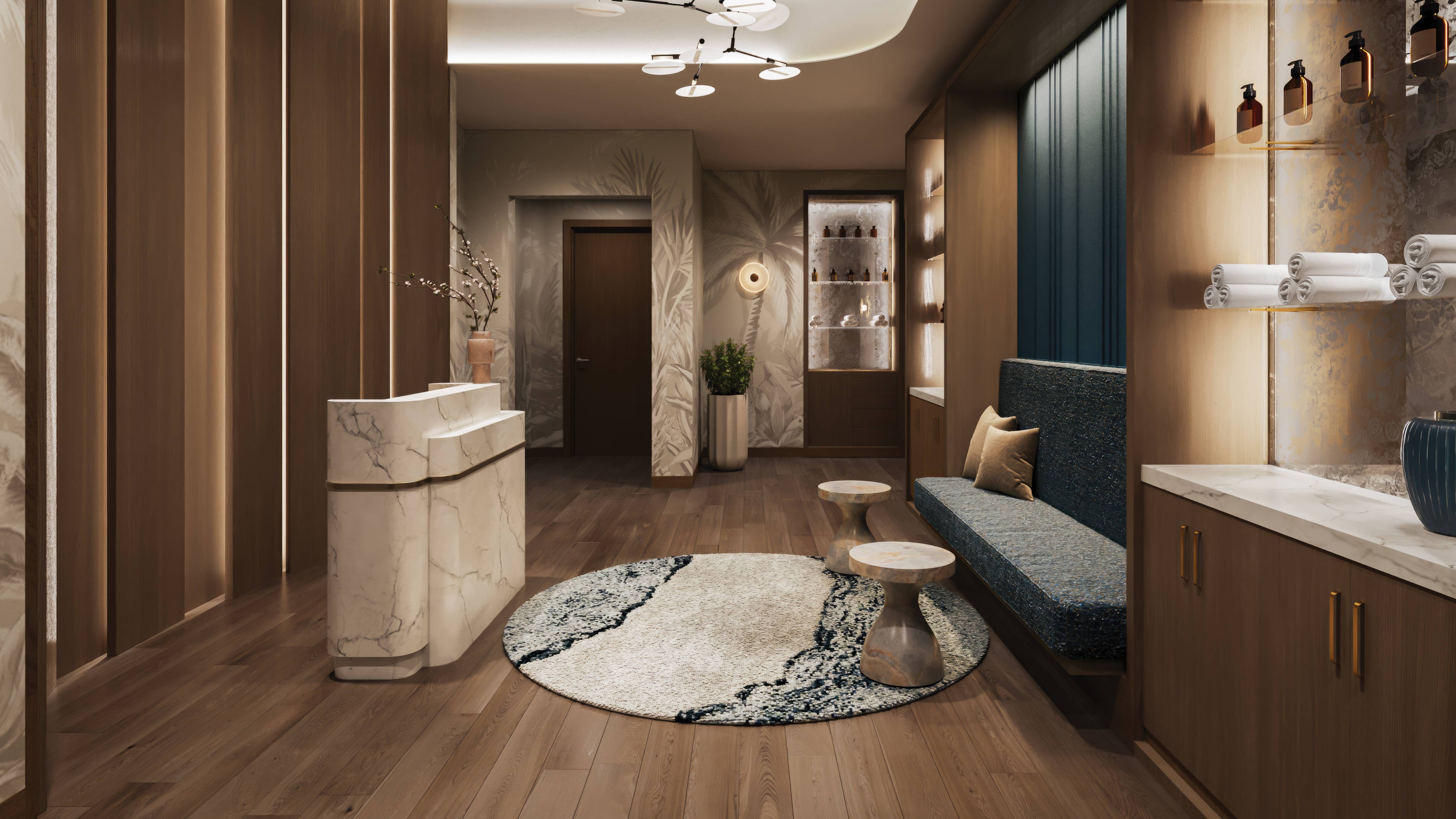
In-unit wellness rooms have become one of the more personal measures of luxury in South Florida residential design. They are not simply spare rooms with exercise mats or attractive millwork. At their best, they translate private rituals into architecture: a place to stretch before a flight, decompress after a board meeting, recover after tennis, or enjoy a treatment without entering a shared amenity space.
For buyers, the question is not whether the room looks serene during a showing. The question is whether it will remain private, comfortable, and sensible to operate every day. A well-conceived wellness room should feel effortless. A poorly planned one can become a costly, underused chamber that photographs beautifully but fails in real life.
In markets such as Brickell, Miami Beach, Coconut Grove, Sunny Isles, and other premium enclaves, wellness space is increasingly part of how buyers compare new-construction residences, large resale units, and custom-finished homes. The best evaluation begins with a disciplined walk-through, not a mood board.
A wellness room should be studied first on the floor plan. Its position within the residence will reveal more than its finishes. A room beside a primary suite may be ideal for morning rituals and evening wind-downs, but it may also require stronger separation if one person rises early and another sleeps late. A room near a foyer may be convenient for trainers, therapists, or service providers, yet it can compromise discretion if guests or staff pass by frequently.
Look closely at doors, corridors, and lines of sight. Can someone at the entry see into the room when the door opens? Is the room adjacent to a powder room, service corridor, elevator landing, or children’s bedroom? Privacy is partly visual and partly behavioral. If the space requires awkward movement through the home, it may not be used as intended.
Sound is equally important. A meditation room, massage room, reformer room, or recovery space all benefit from quiet. During a visit, pause inside the room with the door closed. Listen for mechanical noise, hallway traffic, elevator sounds, plumbing, adjacent televisions, and exterior activity. A beautiful space that carries conversation too easily may not feel private once occupied.
The most refined wellness rooms are designed to disappear into daily life, but their operating costs should not be invisible during due diligence. Buyers should ask what systems are required for the room’s intended use. A stretching studio has a very different cost profile from a room designed around heat, steam, cold therapy, treatment equipment, specialized lighting, or enhanced ventilation.
The first category is energy. Dedicated equipment, climate control, lighting scenes, and supplemental systems can increase recurring utility use. The second is maintenance. Specialty surfaces, drainage points, filters, cabinetry, mirrors, fixtures, electronic controls, and wellness equipment may require routine service. The third is access. If equipment breaks, can it be repaired without disturbing finished walls, stone, millwork, or ceiling details?
Association rules also matter in condominium residences. Before assuming a wellness concept can be expanded or altered, buyers should understand what changes require approval. Weight, moisture, sound, plumbing, electrical work, flooring changes, and contractor access may all become practical considerations. The point is not to discourage customization. It is to ensure that the room’s promise is supported by the building’s structure, rules, and service culture.
Wellness spaces succeed or fail through repeated use. During a showing, spend several minutes in the room without speaking. Notice the temperature, air movement, smell, brightness, glare, and acoustics. A wellness room should invite stillness, movement, or recovery without demanding constant adjustment.
Natural light can be a gift, but it should be controlled. Too much glare may make stretching, breathwork, or screen-guided sessions uncomfortable. Too little light may make the room feel secondary. Window treatments, lighting layers, and dimming are not decorative afterthoughts; they define the room’s mood across morning, afternoon, and evening.
Materials deserve equal scrutiny. Flooring should suit the intended activity, from barefoot movement to equipment stability. Walls should be easy to maintain. Storage should be close enough that mats, towels, bands, props, and small devices do not migrate into bedrooms or closets. If the wellness room opens to a terrace, consider whether the transition supports the ritual or simply creates heat, glare, and distraction.
A wellness room that serves only one highly specific habit may feel indulgent, but it can narrow future usefulness. The strongest layouts allow the room to evolve. Today it may function as a yoga studio, treatment room, or meditation space. Later it may serve as a recovery lounge, nursery-adjacent quiet room, private office, or guest overflow space.
Flexibility begins with proportions. A room that is too narrow may not support movement. A room with poor wall placement may limit equipment. A room without proper storage may become cluttered. Evaluate outlet locations, ceiling height, lighting controls, wall strength for potential installations, and whether the room can be furnished without blocking circulation.
For resale-minded buyers, flexibility also keeps the audience wider. Not every future purchaser will want the same wellness ritual. A calming, well-built room with good light, privacy, and adaptable infrastructure will read as more valuable than a niche installation that must be removed.
A sophisticated buyer should treat the wellness room as a small suite of decisions, not a single amenity. Ask what the room was designed for, what it can reasonably become, and what it should not be asked to do. If a seller describes a use that depends on added equipment, heat, moisture, plumbing, or sound isolation, confirm whether the space was actually prepared for that purpose.
Ask how the room is ventilated, how humidity is controlled when relevant, and whether specialty equipment has been maintained. Ask whether any work was permitted or approved where required. Ask what warranties, manuals, or service contacts will transfer. If the room is part of a new residence, ask what is included in the delivered specification and what is merely shown for inspiration.
The best wellness rooms are quiet in every sense: visually composed, mechanically unobtrusive, financially predictable, and easy to enter without ceremony. They do not compete with the rest of the residence. They deepen it.
What is the first thing to evaluate in an in-unit wellness room? Start with its location on the floor plan. Privacy, access, noise, and daily convenience usually reveal themselves before finishes do.
Is a wellness room different from a home gym? Yes. A wellness room may support stretching, recovery, meditation, treatments, light fitness, or quiet restoration rather than exercise alone.
Why do carrying costs matter for a wellness room? Specialized equipment, climate needs, maintenance, and service access can affect the true cost of ownership over time.
How can I judge privacy during a showing? Close the door, listen carefully, and study sightlines from entries, corridors, bedrooms, elevators, and service paths.
Should the room have natural light? Natural light is desirable when it can be controlled. Glare, heat, or exposure can make a room less comfortable for daily rituals.
What should condominium buyers ask before changing the room? Ask about association approvals, contractor access, sound, flooring, moisture, electrical work, and any limits on equipment.
Can a wellness room improve resale appeal? It can, especially when the room is flexible, quiet, well-finished, and not overly customized to one narrow use.
What makes a wellness room comfortable every day? Good air, calm lighting, practical storage, suitable flooring, and easy circulation all support consistent use.
Is equipment included when a residence is sold? Not always. Buyers should clarify what conveys, what is staged, and what requires separate negotiation or installation.
What is the ideal wellness room? The ideal room feels private, adaptable, simple to maintain, and aligned with the owner’s real routine.
If you'd like a private walkthrough and a curated shortlist, connect with MILLION.
If branded residences are on your mind — as a home or as an allocation — we would be glad to share what we are seeing, privately.
Begin a quiet conversation