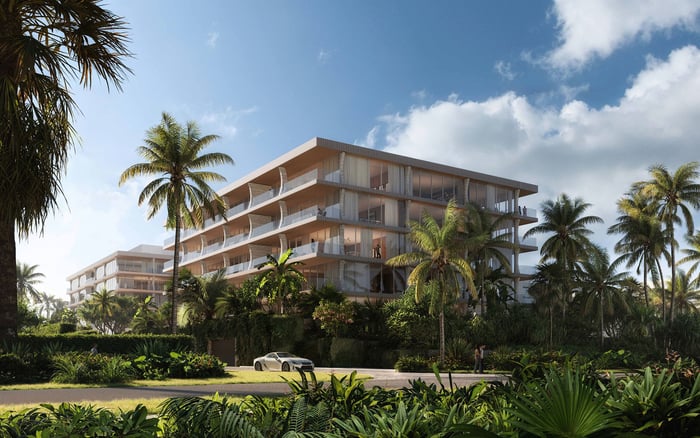
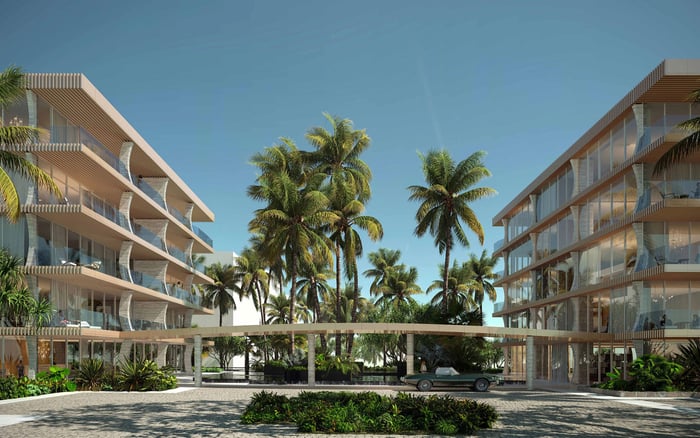
A buyer-focused editorial on evaluating Nora House West Palm Beach or Edgeworth West Palm Beach through the quieter variables of ownership: acoustics, digital infrastructure, privacy, and daily work-from-home performance.
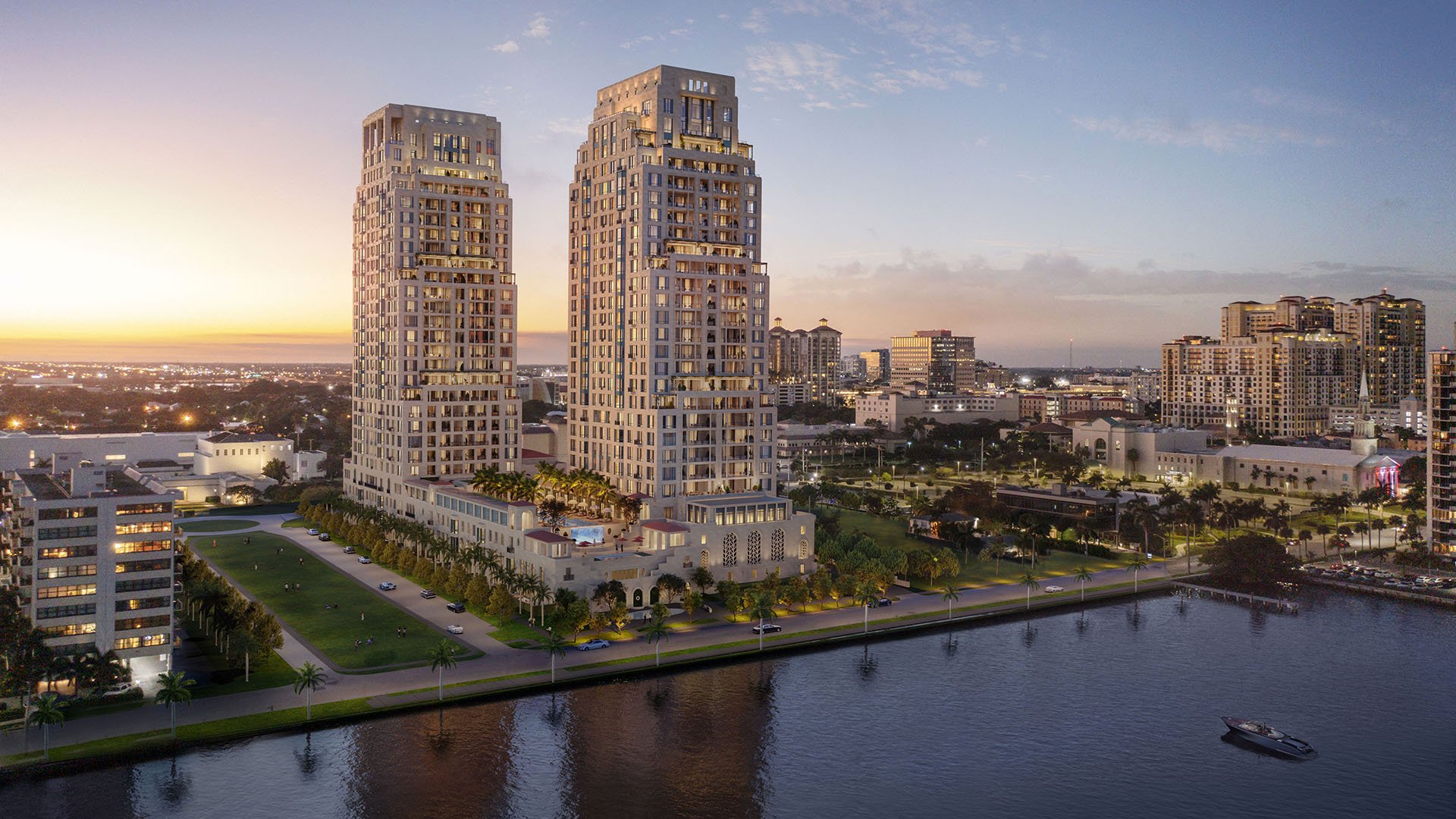
For buyers weighing Nora House West Palm Beach or Edgeworth West Palm Beach, the most consequential differences may not be the most photogenic. In a market where the visual language of luxury is already well understood, the ownership experience is increasingly shaped by what happens behind the walls, above the ceiling, within the glazing, and across the residence’s digital backbone.
Acoustic comfort, technology infrastructure, and remote-work privacy have moved from optional preferences to central purchase criteria. They influence sleep, concentration, entertaining, wellness, resale appeal, and the daily rhythm of a household where professional life may unfold from a private study, secondary bedroom, den, or shaded terrace.
West Palm Beach has become a sophisticated year-round residential market for buyers who understand that elegance is not simply marble, millwork, and views. It is the ability to take a confidential call without household interruption. It is stable connectivity in every room. It is mechanical systems that do not dominate the soundscape. It is a floor plan that allows work, rest, guests, and service to coexist with grace.
In luxury real estate, quiet is often undervalued until it is missing. A beautiful residence can feel compromised if footfall transmission, corridor noise, elevator proximity, neighboring mechanical rooms, street activity, or interior echo disrupts daily life. For buyers considering Nora House West Palm Beach or Edgeworth West Palm Beach, the acoustic conversation should begin early and remain part of every showing, contract review, and design consultation.
The most relevant questions are practical. How does the residence manage sound between bedrooms and entertaining spaces? Are work areas buffered from living rooms, kitchens, and primary suites? Does the glazing meaningfully reduce exterior noise? How are mechanical systems located, insulated, and serviced? In a boutique setting, the answer may depend less on scale than on detailing, adjacency, and execution.
Acoustic comfort is also emotional. It shapes whether a home feels calm at 7 a.m., composed during an evening dinner, and restorative at the end of the day. Owners who divide time between Palm Beach, New York, Greenwich, Boston, Chicago, or abroad often want a South Florida residence that does not feel like a hotel room with a better kitchen. They want sanctuary, and sanctuary begins with controlled sound.
Technology has become part of the invisible architecture of ownership. Buyers may admire a lobby, pool, or kitchen first, but they live with Wi-Fi reliability, low-voltage planning, device integration, cellular reception, building access systems, and the ability to support video calls, streaming, security, and smart-home control without friction.
A polished residence should be evaluated for the future, not only the present. The strongest ownership experience allows for wired access points, thoughtful equipment locations, clean concealment, strong signal distribution, and enough flexibility for future upgrades. Remote work, telehealth, media, climate control, digital art, and layered security all compete for bandwidth and system stability.
This is especially important for buyers who intend to use the home as a second home but expect it to perform like a primary command center whenever they are in residence. The category labels may be simple, but the underlying infrastructure questions are far more nuanced.
A buyer should not assume that newer automatically means better. New construction may offer a cleaner starting point for infrastructure planning, while pre-construction can allow earlier conversations about wiring, millwork integration, specialty lighting control, and private office requirements. The key is to ask before finishes are fixed and before a den is staged as an aesthetic vignette rather than tested as a working room.
Remote-work privacy is not simply a matter of having a desk. It is about separation, acoustics, camera background, guest circulation, natural light, door placement, storage, and the ability to move through the home without disturbing someone who is working. In ultra-premium households, two or more people may need simultaneous privacy, often while staff, family, guests, and deliveries continue in the background.
When comparing Nora House West Palm Beach or Edgeworth West Palm Beach, buyers should study how a residence behaves during a real weekday. Imagine a board call in one room, a child or guest in another, housekeeping in motion, and someone returning from the gym or pool. The question is not whether the home photographs as calm. The question is whether it remains calm in use.
A floor plan with a den near the entry may work well for client calls if it has acoustic separation and an appropriate powder room nearby. A bedroom converted to an office may offer better privacy, but only if storage, lighting, and sound transfer are resolved. An open-plan living area may be ideal for entertaining and less convincing as a professional environment.
Privacy also includes digital privacy. Buyers should ask how networks can be segmented for owners, guests, building systems, and service personnel. They should consider where routers, hubs, cameras, access controls, and backup systems will live. True discretion is not only visual. It is operational.
The most useful comparison between Nora House West Palm Beach and Edgeworth West Palm Beach is not a generic amenity checklist. It is a personal performance audit. A buyer should begin with daily life, then test each residence against that reality.
For acoustic comfort, visit at different times when possible and stand quietly in bedrooms, work areas, corridors, and terraces. Listen for elevators, road noise, lobby activity, mechanical hum, and sound transfer from adjacent spaces. Ask direct questions about window systems, wall assemblies, slab conditions, door specifications, and mechanical placement. Even when exact technical details are not immediately available, the quality of the response can reveal how seriously the building treats quiet.
For technology, ask where equipment will be housed, how connectivity reaches secondary rooms, whether hardwired solutions are practical, and how future upgrades can be managed without opening finished surfaces. A residence that supports a high-performing digital environment should not require visible improvisation after closing.
For remote-work privacy, walk the floor plan as if arriving for a confidential call five minutes late. Where do you sit? What is behind you? Who might pass by? Can a guest enter without appearing on camera? Can another household member work at the same time? Can doors close without making the room feel isolated or underlit?
West Palm Beach buyers are often sophisticated, mobile, and time-sensitive. Many are not purchasing only a warm-weather retreat. They are buying continuity: the ability to maintain professional, family, and wellness routines without surrendering comfort or discretion. That makes the less visible elements of a residence more important than ever.
A home that is quiet, connected, and private can feel larger than its dimensions. A home that is visually impressive but acoustically unresolved can feel smaller, more exposed, and less restful. The difference is rarely captured in a single photograph. It emerges in the way mornings begin, calls unfold, dinners end, and guests depart.
For this reason, the final choice should be shaped by how each residence performs under pressure. The most compelling home is the one that makes daily life feel effortless while preserving the owner’s control over sound, signal, and space.
Why does acoustic comfort matter in a luxury residence? It affects sleep, focus, entertaining, and the sense of privacy. Quiet is one of the clearest signs that a home has been thoughtfully conceived.
Should buyers test a residence for noise during a showing? Yes. Buyers should listen from bedrooms, work areas, terraces, and corridors rather than relying only on visual impressions.
Is remote-work privacy different from having a home office? Yes. Remote-work privacy includes sound control, camera background, circulation, lighting, and separation from household activity.
What technology questions should buyers ask first? Ask about connectivity, equipment locations, wired access points, upgrade flexibility, and how guest and owner networks can be separated.
Can a secondary bedroom function well as an office? It can, if the room has privacy, appropriate lighting, reliable connectivity, and enough acoustic separation from active areas.
Does new construction always solve technology concerns? Not automatically. Buyers should still review wiring strategy, signal distribution, and future upgrade options before assuming performance.
Why is pre-construction useful for remote-work planning? It may allow earlier input on wiring, lighting, millwork, and office placement before the residence is fully finished.
What should second-home buyers prioritize? They should prioritize reliable systems, low-friction arrival, secure connectivity, and spaces that can shift quickly into work mode.
How should buyers compare Nora House West Palm Beach and Edgeworth West Palm Beach? They should compare how each option supports quiet, privacy, technology, and daily routines rather than relying only on finishes.
What is the best sign that a residence will feel calm long term? The best sign is consistent performance: quiet rooms, stable connectivity, logical circulation, and private work areas that remain comfortable under real use.
For a tailored shortlist and next-step guidance, connect with MILLION.
If branded residences are on your mind — as a home or as an allocation — we would be glad to share what we are seeing, privately.
Begin a quiet conversation