A buyer-focused guide to the storm-preparation questions to raise before purchasing at Mr. C Residences West Palm Beach, especially for seasonal and absentee owners.

For buyers evaluating Mr. C Residences West Palm Beach, storm preparation belongs at the center of operating due diligence, not as an afterthought once finishes, views, amenities, and service culture have been considered. In South Florida, even the most refined residence is a managed asset, and the building’s response before, during, and after a named storm can affect comfort, cost, access, and long-term ownership confidence.
The right posture is not alarmist. It is precise. Buyers should request the building’s written storm-preparation protocol from the developer or sales team rather than rely on a general assurance that hurricane procedures exist. A written protocol allows counsel, insurance advisers, and property managers to understand who does what, when communications begin, how the property is secured, and what happens after conditions clear.
This is especially important for second-home owners, seasonal residents, and international buyers who may not be in West Palm Beach when a storm watch becomes a warning. Storm readiness is best understood as a service question, a governance question, and a financial question at the same time.
The first practical distinction is whether storm preparation services apply only to common areas or whether management offers unit-level assistance. A luxury condominium may have a well-organized plan for lobbies, elevators, service corridors, and amenity spaces, yet leave residence interiors and terraces largely to individual owners unless the documents say otherwise.
Ask whether management provides pre-storm inspections of individual residences, and whether that service is included in association fees or billed separately. For absentee owners, the details matter: whether staff can enter the residence, what authorization is required, what is checked, how the inspection is documented, and whether photographs or written confirmations are sent before the storm arrives.
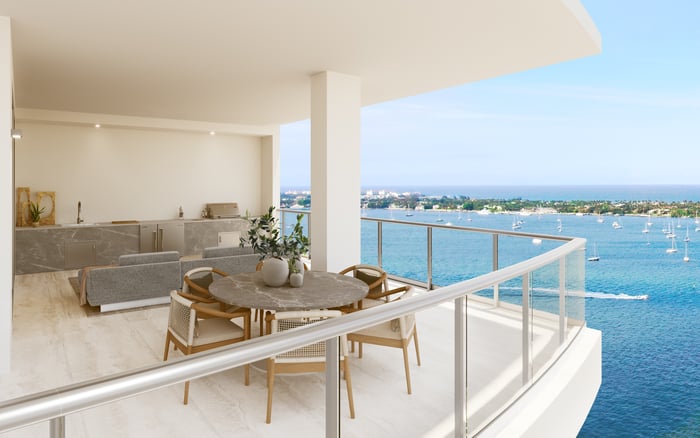
Terraces deserve particular attention. Ask who is responsible for securing balconies, outdoor furniture, planters, grills where permitted, art objects, cushions, and other loose exterior items before a named storm. In a new-construction building, buyers often focus on design and materials, but the daily discipline of securing exterior spaces is just as relevant to preserving the property and protecting neighboring residences.
A storm plan is only as useful as its communication chain. Ask how the building communicates updates to owners before, during, and after a storm, particularly if many residents are away from Palm Beach County. The process should identify the official channels, the timing of alerts, the type of information shared, and whether there is a dedicated contact for owners who are out of town.
Buyers comparing the broader West Palm Beach market, from Alba West Palm Beach to Forté on Flagler West Palm Beach, should ask similar questions across each property. Consistent inquiry helps separate architectural appeal from operational clarity. A beautiful lobby matters; knowing how, when, and by whom it is protected before a severe weather event matters just as much.
The communication plan should also address the days after a storm. Ask whether the property has a documented post-storm re-entry and damage-assessment process for owners, guests, staff, vendors, and insurance adjusters. If access to the building is limited, owners need to know who makes that decision and how updates will be delivered.
Generator coverage is one of the most consequential subjects in storm due diligence, and it should be discussed in specific terms. Ask what building systems are backed up by generator power, including elevators, life-safety systems, access control, water pumps, cooling, and emergency lighting. Do not assume that every resident-facing service remains available during an extended outage.
The follow-up question is endurance. Ask how long the building can operate during a power outage and which resident services would be suspended if disruption continues. A building may prioritize life-safety and essential access while nonessential services pause. Buyers should understand that hierarchy before closing, especially if the residence will be used by family members, guests, or staff during storm season.
Location of critical systems also belongs in the discussion. Ask where mechanical, electrical, fire-safety, and communications equipment is located relative to possible flooding or storm-surge exposure. Waterfront and near-waterfront buildings can be exceptionally desirable, but their operating plans should address lower-level vulnerabilities with discipline and detail.
The exterior envelope is another area where buyers should avoid vague language. Ask whether the building’s impact glass, exterior envelope, roof systems, and openings were designed for current Florida high-wind requirements. The answer should be supported by project documentation, engineering materials, or condominium documents, not simply by marketing shorthand.
Lower-level common spaces also require scrutiny. Ask whether management has a specific plan for protecting lobbies, parking areas, loading zones, service areas, elevators, and other lower-level common spaces. The most visible amenities are not the only concern; service entries, mechanical access points, and loading areas can be central to recovery.
Buyers studying The Ritz-Carlton Residences® West Palm Beach or Shorecrest Flagler Drive West Palm Beach may find that similar questions reveal meaningful differences in how each property describes its storm planning. The objective is not to seek perfection. It is to understand preparedness, responsibility, and documentation.
Before buying, ask whether the purchase documents, condominium declaration, bylaws, and rules clearly define owner versus association responsibilities for storm preparation and recovery. This is where lifestyle expectations meet legal structure. A resident may expect concierge coordination, but the documents may place certain responsibilities squarely on the owner.
Insurance should be approached with the same precision. Ask whether the condominium association’s insurance covers wind, flood, common-area damage, and code-required upgrades after a major storm. Then ask what storm-related costs could become special assessments, including insurance deductibles, uninsured losses, cleanup, temporary repairs, and restoration of amenities.
The most sophisticated buyers do not treat special assessments as an abstract risk. They ask how deductibles are allocated, whether reserves may be used, what requires board approval, and how quickly owners may be billed after an event. Counsel and insurance advisers should review the documents before the deposit becomes a long-term commitment.
Storm recovery is often a logistics challenge. Ask whether the concierge, property manager, or association offers vendor coordination for shutters where applicable, leak checks, remediation, cleanup, and repairs after a storm. If the residence will be unoccupied for long periods, this question is central to the ownership experience.
Vendor coordination should also be examined through access rules. If a remediation contractor, insurance adjuster, or repair team needs to enter after a storm, owners should know who can authorize entry, whether staff escorts are required, how elevators are controlled, and whether service areas will be available. These small details can determine whether recovery is seamless or prolonged.
For buyers, the goal is not to demand that every service be included. The goal is to know what is included, what is optional, what is owner-paid, and what must be arranged privately. Discreet ownership depends on clarity long before the forecast changes.
Should I ask for a written storm-preparation protocol? Yes. A written protocol is more useful than a broad assurance because it defines procedures, timing, and responsibilities.
Do storm preparation services usually cover individual residences? They may or may not. Buyers should ask whether unit-level checks are available and whether they are included or billed separately.
Who secures terrace furniture before a storm? That responsibility should be confirmed in writing. Ask specifically about balconies, planters, outdoor furniture, and loose exterior items.
What should absentee owners ask before buying? Ask how management communicates storm updates, whether staff can inspect the residence, and how post-storm access is handled.
Which generator details matter most? Ask which systems are backed up, how long they can operate, and which resident services may pause during an extended outage.
Should I ask about flood exposure for building systems? Yes. Buyers should ask where critical mechanical, electrical, life-safety, and communications equipment is located.
What insurance questions should be reviewed? Ask about wind, flood, common-area damage, code-required upgrades, deductibles, uninsured losses, and possible special assessments.
Can the association coordinate repairs after a storm? It depends on the building’s rules and management structure. Ask whether vendor coordination is offered for leak checks, cleanup, and remediation.
Are owner and association responsibilities always clear? Not always. The condominium declaration, bylaws, rules, and purchase documents should be reviewed before closing.
Is this due diligence only relevant to waterfront property? No. Storm preparation matters across South Florida, although waterfront and lower-level exposure can make the questions more urgent.
For a confidential assessment and a building-by-building shortlist, connect with MILLION.
If branded residences are on your mind — as a home or as an allocation — we would be glad to share what we are seeing, privately.
Begin a quiet conversation