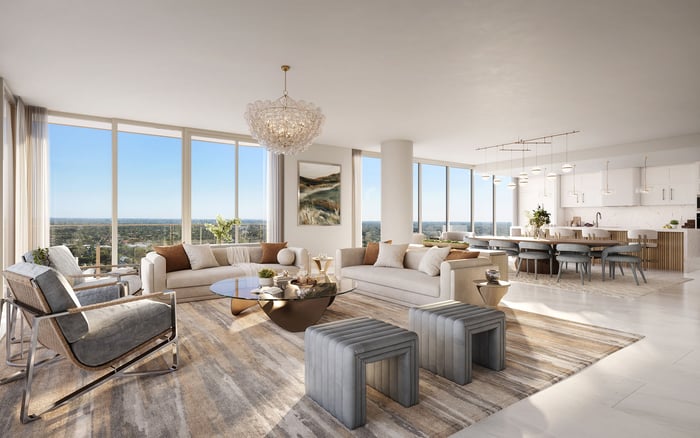
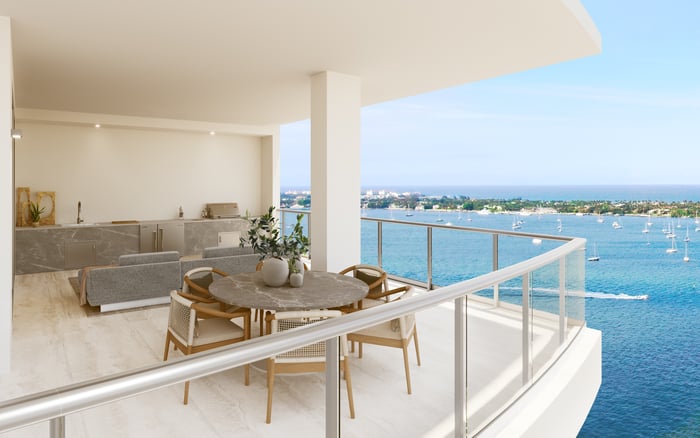
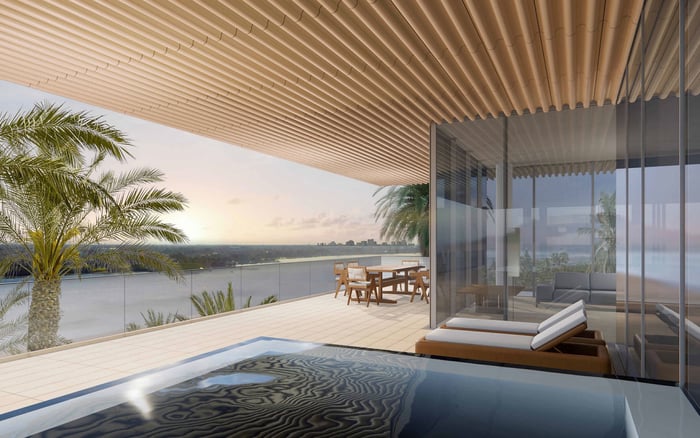
A buyer-focused look at how Forté on Flagler, Edgeworth, and Banyan Tree Residences frame West Palm Beach luxury through architecture, service, place, and lifestyle identity.
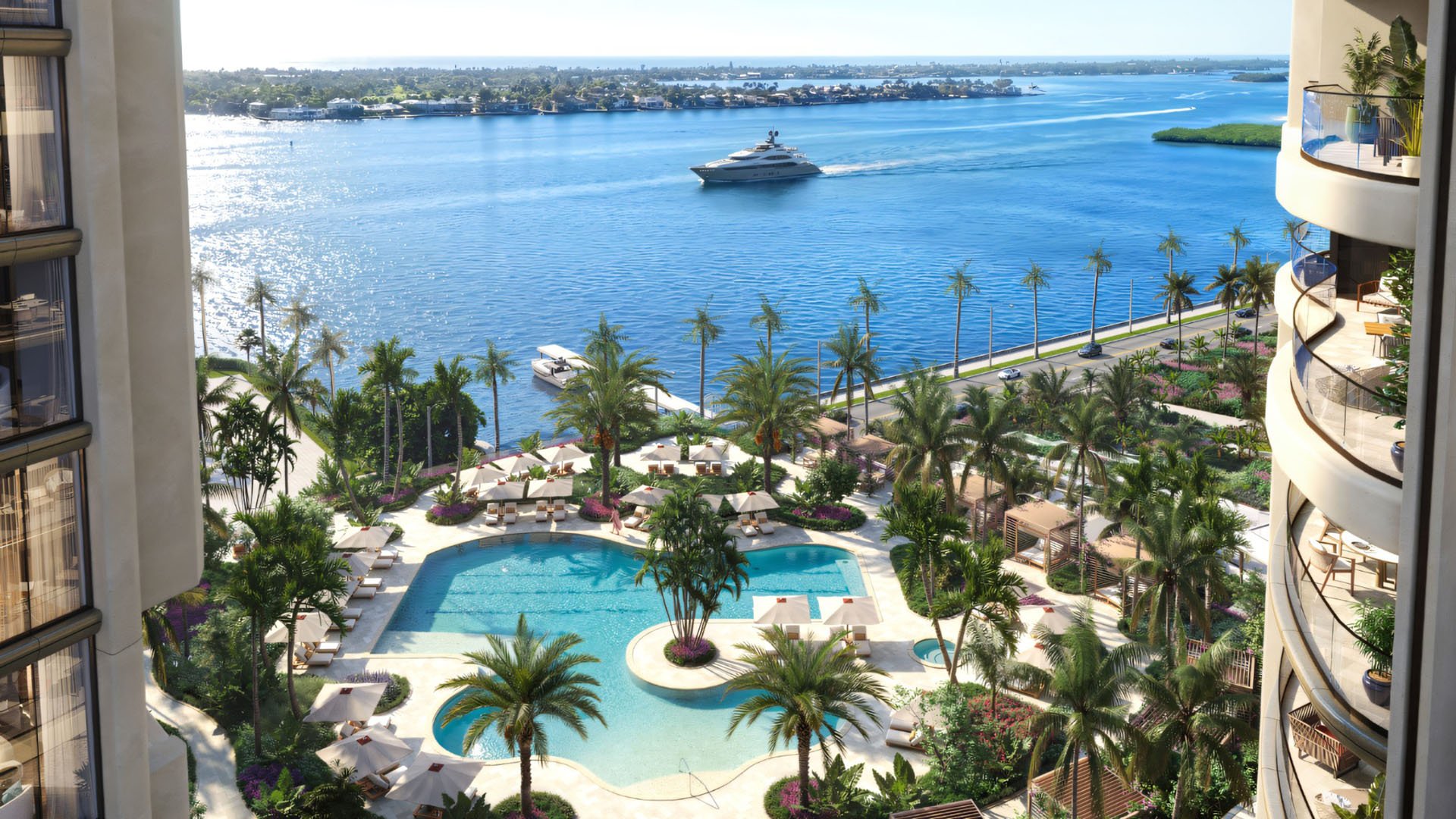
In West Palm Beach, the most compelling luxury residential projects are no longer presented as isolated collections of private homes. They are framed as complete environments, where architecture, amenities, service, location, and tone work together to create a recognizable residential identity. That identity is increasingly central to perceived value.
This is the lens through which Forté on Flagler West Palm Beach becomes an important reference point. Its brand language is rooted in modernist waterfront elegance, a phrase that matters because it connects two value drivers at once: the architectural discipline of contemporary design and the emotional premium of living near the water. For affluent buyers, the message is not simply that a residence has views or finishes. It is that the building has a point of view.
That distinction is increasingly relevant as West Palm Beach evolves into one of South Florida’s most closely watched luxury markets. Buyers are not only comparing floor plans. They are comparing atmosphere, service expectations, privacy cues, and the kind of life a building appears to endorse.
Forté on Flagler’s positioning is strongest when read as a study in coherence. The waterfront is not treated as a backdrop alone. It becomes part of the project’s residential vocabulary, shaping how architecture and lifestyle are understood. The result is a premium identity built around restraint, light, horizon, and a cultivated sense of arrival.
For buyers, this clarity can be valuable because it reduces ambiguity. A project with a consistent design language allows the residence, amenity experience, and location to reinforce one another. Forté’s narrative suggests a curated residential experience rather than a purely transactional condominium purchase.
This is where Design & Architecture intersect with market psychology. A luxury buyer may respond to a terrace, a view corridor, or an interior palette, but those features become more persuasive when they belong to a larger story. In the case of Forté on Flagler West Palm Beach, the story is not maximalism. It is modern waterfront confidence.
If Forté represents the waterfront-modernist comparison point, Edgeworth West Palm Beach can be understood through a different kind of brand language: boutique urban sophistication. That framing speaks to buyers who value proximity, discretion, and the social texture of a growing downtown environment.
The word “boutique” carries its own residential meaning. It suggests selectivity, less institutional scale, and a sharper relationship between private living and the city around it. In a market where many projects compete for attention through visual drama, boutique positioning can instead emphasize composure. It tells the buyer that value may come from refinement, edited experience, and the feeling of being intelligently placed within West Palm Beach.
This does not need to compete with waterfront identity. It serves a different buyer mood. Some purchasers want the cinematic calm of water. Others want a more urban rhythm, with the residence functioning as a private retreat connected to the city’s cultural and dining life.
Banyan Tree Residences West Palm Beach introduces another language altogether: resort and wellness branding. In South Florida luxury real estate, that vocabulary has become especially powerful because it reframes the home as a daily restoration environment.
Resort language implies service, ease, softness, and escape. Wellness language adds another layer, suggesting that the residence is not merely beautiful, but supportive of how an owner wants to live. For buyers who split time between markets, work across time zones, or prize privacy, this kind of branding can be more than decorative. It can become a reason to choose one address over another.
In that sense, Banyan Tree’s conceptual position reflects the broader rise of Branded Residences in South Florida. The strongest branded projects do not rely only on name recognition. They translate the brand into spatial expectations: how one arrives, how one moves through amenity spaces, how service feels, and how the building supports a particular version of Lifestyle.
The key word is coherence. A luxury project gains persuasive power when every element appears to speak the same language. Architecture, amenity programming, hospitality cues, landscape, arrival sequence, and neighborhood context all become part of the buyer’s perception of value.
This is why West Palm Beach projects are increasingly discussed through identity rather than inventory alone. A buyer may still evaluate square footage, exposure, ceiling heights, and finish quality, but the emotional decision often turns on a more subtle question: does this building feel like the life I am trying to buy?
That question is also why projects such as Alba West Palm Beach and Mr. C Residences West Palm Beach can sit within the same buyer conversation without offering the same promise. Each project can be read through its own language of place, service, design, and social positioning. The buyer’s task is to decide which vocabulary feels durable, not merely fashionable.
For sophisticated purchasers, brand language should be studied with the same seriousness as floor plans. A polished narrative can elevate a project, but the most valuable narratives are those that align with the physical and experiential reality of the building.
The practical test is simple. Does the architecture support the promise? Do the amenities feel connected to the stated lifestyle? Does the location strengthen the brand rather than contradict it? Does the service model make the daily experience easier, more private, or more graceful?
Forté’s waterfront modernism, Edgeworth’s boutique urban tone, and Banyan Tree’s resort-wellness vocabulary offer three different answers to the same market question. In West Palm Beach, residential value is increasingly created not only by what is built, but by how convincingly a project explains why it should matter.
Why does brand language matter in luxury real estate? It helps buyers understand the experience a building is trying to create, beyond size, finishes, and views.
What is Forté on Flagler’s main residential identity? Forté on Flagler is best understood through modernist waterfront elegance, linking location and architecture into a premium identity.
How does Edgeworth differ conceptually from Forté? Edgeworth reads as a boutique urban proposition, while Forté is anchored by a waterfront-modernist narrative.
What does Banyan Tree add to the West Palm Beach conversation? Banyan Tree brings a resort and wellness vocabulary, appealing to buyers who value restoration, service, and ease.
Are branded residences only about famous names? No. The strongest examples translate brand identity into architecture, amenities, service, and daily residential experience.
Should buyers prioritize brand over location? No. The most compelling projects align brand, location, design, and lifestyle so that each strengthens the other.
What should a buyer examine first? Start with whether the project’s stated identity is visible in its architecture, amenity plan, and sense of arrival.
Does waterfront positioning automatically create value? Waterfront can support value, but it becomes more powerful when paired with disciplined design and a coherent residential story.
Why is West Palm Beach attracting this kind of branding? The city’s luxury market increasingly attracts buyers who evaluate lifestyle, privacy, design, and service together.
How should buyers compare these projects? Compare the life each project appears to offer, then test that promise against location, design, amenity quality, and long-term fit.
For a tailored shortlist and next-step guidance, connect with MILLION.
If branded residences are on your mind — as a home or as an allocation — we would be glad to share what we are seeing, privately.
Begin a quiet conversation