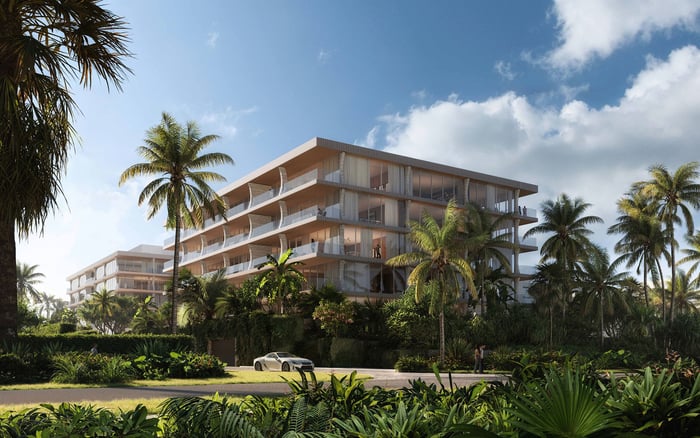
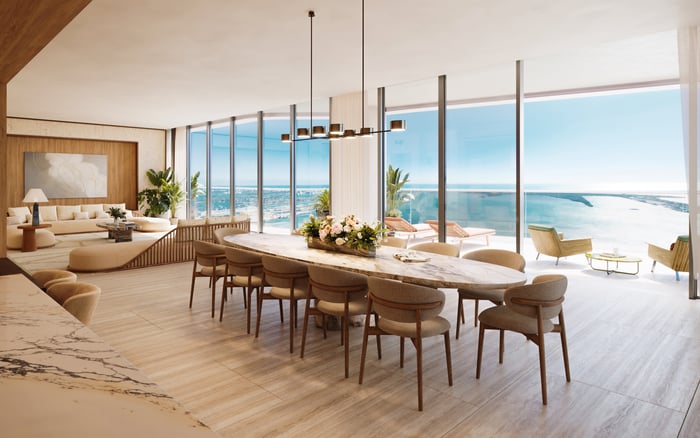
A discreet due-diligence guide for ultra-luxury buyers evaluating how reserves, service standards, capital planning, and owner philosophy may shape future assessments at The Ritz-Carlton Residences® Palm Beach Gardens.

At the ultra-premium end of the condominium market, monthly carrying costs tell only part of the ownership story. At The Ritz-Carlton Residences® Palm Beach Gardens, the more sophisticated diligence question is not simply what the current assessment is. It is how the association is likely to approach future capital needs, service expectations, reserve funding, and one-time owner charges.
That is the essence of special-assessment culture. It describes the norms that shape how often special assessments are used, how large they tend to be, and which events trigger them. In a branded luxury setting, this culture can be as consequential as the view, floor plan, or amenity package.
Buyers evaluating Palm Beach Gardens should treat this as practical risk management, not a warning sign. There is no need to assume a special assessment has occurred. The goal is to understand whether the property’s financial philosophy favors predictable monthly carrying costs, occasional larger owner contributions, borrowing, or some combination of all three.
The first question should be direct: when major work is needed, does the association expect to use reserves, borrow funds, or charge owners through a one-time assessment? Each answer creates a different ownership profile.
A reserve-led approach may produce higher regular assessments, but it can reduce surprise. A lower-dues approach may feel efficient in the short term, but it can create the possibility of larger one-time charges when capital projects arise. Borrowing can spread costs over time, although buyers should understand how debt service would be incorporated into future budgets.
This is especially relevant for buyers comparing Branded Residences across South Florida. The service posture at a Ritz-Carlton-level residence may require planning for hospitality-style staffing, refined common-area finishes, landscaping, amenity upkeep, and other luxury-level components. The issue is not whether these standards are desirable; they are often central to the value proposition. The question is whether the reserve strategy is calibrated to the replacement cost of luxury components rather than standard condominium components.
Before closing, a buyer should request the current budget, reserve schedule, projected capital plan, and any available developer-to-association transition materials. These documents can help reveal whether the property is being run with a prevention mindset or a reaction mindset.
New-construction diligence is especially important because early budgets may not always show the full rhythm of a mature association. A buyer should ask how operating costs are expected to evolve after turnover, how reserve contributions are being modeled, and whether the transition materials identify future obligations related to shared facilities, amenities, service programs, or high-maintenance finishes.
The most useful question is simple: does the board or management team have a written policy for when capital projects are paid from reserves versus special assessments? If the answer is yes, ask to review it. If the answer is no, ask how those decisions are expected to be made and who will advise the association.
A polished sales presentation can explain lifestyle, design, and amenities. Assessment culture requires a broader conversation. The strongest diligence interviews include the association board, professional management, sales or developer representatives, and any available financial or reserve-study professionals.
The most revealing answers often come from asking the same question in different ways. Ask the board how it thinks about predictability. Ask management which categories are most likely to create future capital demands. Ask developer representatives what transition materials will be delivered. Ask reserve professionals whether luxury-level replacement costs have been considered.
For buyers also studying nearby offerings such as The Ritz-Carlton Residences® West Palm Beach, Palm Beach Residences, or Alba West Palm Beach, this line of inquiry can create a more disciplined comparison. The question is not which residence has the lowest stated carrying cost today. It is which ownership structure feels most aligned with the buyer’s tolerance for predictability, capital calls, and long-term stewardship.
Even if a buyer is comfortable with the possibility of future special assessments, the next question is allocation. How would a special assessment be divided among residences? Would the formula be based on unit size, ownership share, or another provision in the governing documents?
This matters because two owners in the same building may have different exposure to the same project. A larger residence, a different common-interest percentage, or a specific governing-document formula can affect the final cost. Buyers should not rely on assumptions. They should ask for the allocation mechanics in writing and have counsel review the relevant provisions.
Allocation questions are also useful for owners comparing lifestyle-led communities across different markets, including projects such as Alina Residences Boca Raton. A residence may feel comparable in finish level or service ambition, while the association documents may create a very different cost-sharing result.
Special-assessment culture is partly financial and partly social. In an affluent, service-oriented community, owners may prefer pristine standards and fast execution, even if that means higher regular assessments or occasional capital contributions. In another community, owners may prefer leaner dues and more debate before major work is approved.
Neither philosophy is inherently better. The right fit depends on the buyer. Some households prefer a predictable monthly number that funds reserves aggressively. Others are comfortable with periodic assessments if regular dues remain lower. What matters is that the buyer understands the prevailing philosophy before committing capital.
A disciplined buyer should ask: do owners here tend to favor maintaining the property at the highest standard continuously, or do they prefer to defer certain improvements until they become necessary? In a luxury residence, the answer can affect everything from common-area presentation to landscaping, amenity refreshes, and hospitality-style service programs.
The most elegant diligence process converts abstract risk into concrete questions. What capital projects are foreseeable? Which costs are expected to be covered by reserves? What would trigger a special assessment? Who decides? How are owners notified? How would the charge be allocated? Are luxury-level replacement costs being modeled?
For a buyer at The Ritz-Carlton Residences® Palm Beach Gardens, these questions are not adversarial. They are the language of sophisticated ownership. A well-run association should be able to discuss its philosophy with clarity, even if future conditions cannot be predicted perfectly.
Ultimately, the buyer is not seeking certainty. The buyer is seeking alignment: between brand standards and budget discipline, between reserve planning and owner expectations, and between the purchase price and the long-term cost of preserving a rare residential experience.
What is special-assessment culture? It is the pattern of how an association uses special assessments, including frequency, size, triggers, and owner expectations.
Should I assume The Ritz-Carlton Residences® Palm Beach Gardens has had a special assessment? No. The diligence should be framed as a forward-looking review, not as a claim that any specific special assessment has occurred.
What documents should I request before closing? Ask for the current budget, reserve schedule, projected capital plan, and any available developer-to-association transition materials.
Why do brand standards affect assessment planning? Ritz-Carlton-level service expectations may influence operating costs, staffing, finishes, maintenance standards, and reserve needs.
Is a higher monthly assessment always a negative? Not necessarily. Higher regular assessments may support stronger reserves and reduce reliance on one-time owner charges.
What should I ask the board or management team? Ask whether there is a written policy for paying capital projects from reserves versus special assessments.
Who should be interviewed during diligence? Speak with the association board, professional management, sales or developer representatives, and relevant financial or reserve professionals.
How are special assessments usually allocated? Allocation depends on the governing documents and may vary by unit size, ownership share, or another stated formula.
What types of items can create future capital obligations? Amenities, shared facilities, service programs, landscaping, and luxury finishes can all require planning.
What is the main goal of this diligence? The goal is to translate assessment culture into a practical understanding of ownership risk before purchase.
For a confidential assessment and a building-by-building shortlist, connect with MILLION.
If branded residences are on your mind — as a home or as an allocation — we would be glad to share what we are seeing, privately.
Begin a quiet conversation