A luxury residence should make daily life quieter, not more complicated. For buyers comparing South Florida buildings, refrigerated package handling, floral delivery protocols, and household logistics often reveal how well a property actually operates once the glossy amenities fade into the background. This MILLION guide outlines the practical questions that separate polished service from preventable friction.

In South Florida luxury real estate, buyers rarely forget to ask about ceiling heights, views, or wellness programming. Easier to miss is the machinery of everyday life: where chilled grocery bags go when no one is home, how a florist reaches the residence before an evening dinner, whether housekeeping can enter without a parade through the lobby, and how many hands touch a delivery before it reaches the door.
These are not minor operational details. They mark the difference between a residence that feels quietly effortless and one that asks the owner to manage the building instead of the other way around. In markets such as Brickell, Miami Beach, and Palm-beach, where many owners split time between cities, reliable household logistics become even more consequential. A second-home owner may be sending groceries ahead of arrival, arranging fresh orchids before guests check in, or coordinating pet care, pressing, and pantry stocking from afar.
That is why the right line of questioning should move beyond, “Do you accept packages?” Nearly every luxury property says yes. The more revealing conversation concerns chain of custody, temperature control, accountability, timing windows, staff discretion, and how exceptions are handled on a humid Friday afternoon when ten residents are expecting food, flowers, and household vendors at once.
At buildings with a hospitality-forward profile, including residences such as St. Regis® Residences Brickell or The Residences at 1428 Brickell, buyers should listen for specificity. Precision usually signals operational maturity. Vague assurances usually mean you are still hearing marketing.
Start with the basic but essential point: is there truly refrigerated storage on-site, or simply a staff promise to “keep cold items somewhere safe”? Those are very different standards. Ask whether cold storage is dedicated, access-controlled, and staff-monitored, and whether perishables are kept in separate compartments from ordinary parcels.
Then ask about intake protocol. Who signs for the item? Is the package scanned on arrival? Is the delivery time logged? How quickly is the resident notified? Can an assistant, house manager, or family office receive the same alert? In a full-service building, these steps should feel systematic rather than dependent on whichever team member happens to be at the desk.
The next question is duration. Refrigerated storage is only useful if the building can clearly state how long items may remain there before escalation. Some owners assume groceries can wait indefinitely. In practice, the best-run properties define hold periods, follow-up notifications, and after-hours procedures. Ask what happens if a resident is in transit, out of the country, or unreachable.
Also ask about scale. A compact refrigerator suited to a few meal deliveries is not the same as a storage program that can handle catered trays, multiple grocery orders, or holiday entertaining. This matters in newer service-oriented developments where residents may expect hotel-style convenience, such as ORA by Casa Tua Brickell or high-touch coastal properties where owners arrive with staff and guests in tow.
One practical question many buyers skip: can fresh deliveries go directly upstairs, or must every item stop at a central receiving room first? Some residents prefer strict screening. Others want direct-to-residence service for perishables to minimize handling time. Neither approach is inherently better, but the rule should be clear.
Flowers sound simple until they are not. A premium bouquet may arrive in water, in a large vessel, or with a designer expecting access to place arrangements room by room before an event. Ask the building how floral deliveries are classified. Are they treated like ordinary packages, personal services, or vendor visits?
The answer matters because each category triggers different access rules. If florists must register as vendors, provide insurance, reserve service elevators, or wait for resident confirmation, same-day installation can become surprisingly cumbersome. For buyers who entertain often, this is not a trivial inconvenience. It is a real operating issue.
Ask whether the front-of-house team has a staging area for arrangements that cannot be left in direct sun or a hot loading zone. In South Florida, floral quality can deteriorate quickly. A building that understands this usually has a smoother protocol for art handling, catered deliveries, and event setup as well.
There is also a discretion component. Some residents want every delivery announced immediately. Others prefer that a house manager, assistant, or domestic staff member handle access and placement. The strongest service culture accommodates both without confusion. At residences with a highly curated lifestyle positioning, such as The Surf Club Four Seasons Surfside or Mr. C Residences West Palm Beach, buyers should ask whether these preferences can be embedded in the resident profile instead of renegotiated each time.
The most useful question a buyer can ask is this: walk me through a normal day for an owner who is not home. The answer should cover packages, grocery arrivals, housekeeping access, dog walkers, dry cleaning, maintenance vendors, and guest coordination.
From there, get specific. Is there a separate service entrance? Are service elevators protected and reservable? Can recurring vendors be pre-approved? Does the concierge coordinate timing windows, or only record instructions? If valet is involved, how are overlapping deliveries prevented from congesting arrival flow?
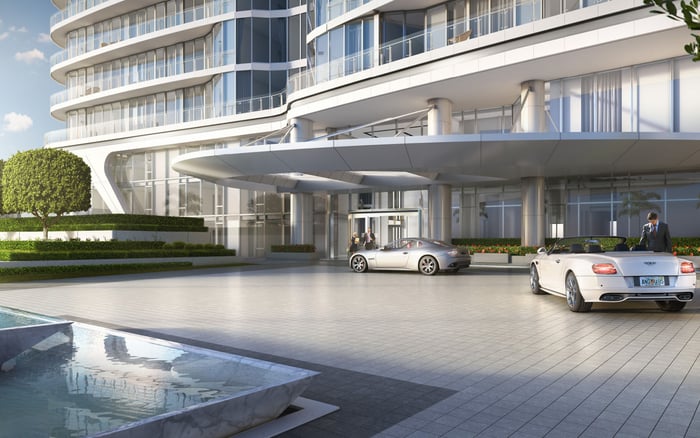
In dense urban settings like Downtown and Brickell, this discipline is especially important because vertical living creates more points of friction. A building may have a beautiful porte cochere and still run an untidy back-of-house. By contrast, a residence that manages invisible movement well often feels calmer everywhere else.
Ask, too, about support for second-home patterns. Can staff place items in the residence before arrival if written authorization is on file? Is there a documented key-release procedure for family offices or estate managers? Can housekeeping inspect refrigerated deliveries after long owner absences and remove spoiled items if needed? These are highly practical questions for buyers evaluating homes in West-palm-beach or seasonally used oceanfront properties.
At projects such as The Ritz-Carlton Residences® West Palm Beach, the relevant issue is not simply whether service exists. It is whether the operating model anticipates the rhythms of ownership: arrivals after flights, staff working in parallel, entertaining on short notice, and homes that must feel fully prepared upon entry.
Be wary of answers that rely on personality rather than procedure. “Our staff always figures it out” may sound reassuring, but it often means there is no formal system. The same applies when a sales team cannot explain where perishables are stored, who has access, or what happens after normal desk hours.
Another red flag is an overly rigid rule set that treats every incoming item identically. Luxury service requires judgment. Flowers for a dinner party, medication requiring refrigeration, and a case of sparkling water should not all move through the same workflow.
Pay attention to whether the building distinguishes among owner, guest, tenant, and staff permissions. In a sophisticated residence, these profiles are not improvised. They are established in advance, updated securely, and executed discreetly.
Finally, ask existing residents or management how exceptions are handled. Storm days, holiday volume, late-night grocery deliveries, and owners arriving from out of town are when operations reveal themselves. A polished building has contingency plans. A weaker one has apologies.
The best buildings answer operational questions with calm detail. They can describe receiving windows, temperature-sensitive handling, notification procedures, authorized recipient lists, service elevator logistics, vendor registration, and after-hours escalation without sounding defensive. That level of fluency usually reflects genuine readiness.
For the luxury buyer, the goal is not to turn a home tour into an audit. It is to confirm that the property understands the domestic life it is promising to support. Refrigerated package storage, floral delivery handling, and everyday household coordination may not make the brochure cover. They do, however, shape whether ownership feels elevated or merely expensive.
What should I ask first about refrigerated package storage? Ask where perishables are kept, who logs them on arrival, and how quickly you are notified.
Is refrigerated storage necessary in a luxury building? For many owners, yes, especially if groceries, meal deliveries, or temperature-sensitive items arrive regularly.
Why do floral deliveries deserve special attention? They often involve timing, staging, water, and in-residence placement rather than a simple handoff.
Should florists be treated as vendors or guests? Either can work, but the building should have a clear protocol that preserves speed and discretion.
What matters most for second-home owners? Remote authorization, reliable notifications, and trusted access for assistants or estate managers are essential.
How can I judge whether logistics are well managed? Ask the team to walk you through a typical unattended delivery day from intake to final placement.
Do service elevators really matter for household operations? Yes, especially when housekeeping, catering, florals, and move-ins overlap in a busy tower.
What is a major red flag during a tour? Vague assurances without a step-by-step explanation usually suggest the system is informal.
Can strong logistics influence resale appeal? Absolutely. Buyers remember buildings that make everyday life easier and more discreet.
Which South Florida areas make these questions especially relevant? High-service towers in Brickell, Miami Beach, and West Palm Beach are prime places to ask them.
For a discreet conversation and a curated building-by-building shortlist, connect with MILLION.
If branded residences are on your mind — as a home or as an allocation — we would be glad to share what we are seeing, privately.
Begin a quiet conversation