In South Florida luxury towers, the arrival sequence is not a decorative prelude. It is a daily performance test of design, staffing, privacy, and timing. This guide explains how to evaluate the full path from curb to residence, with a focus on porte-cochère capacity, valet rhythm, and elevator efficiency before you buy.
For a seasoned buyer, the real test of a luxury tower begins before the lobby doors open. The arrival sequence, from curb approach to front door, reveals how architecture, operations, and resident privacy perform under pressure. A glamorous entrance can still turn into a frustrating daily ritual if vehicles stack at the curb, valet attendants are stretched thin, or elevators create inconsistent waits at peak hours.
This is why buyers should assess the entire path in person. A tower should feel composed from the moment your car enters the property. The porte-cochère, valet handoff, lobby transition, and elevator ride should operate as one fluid chain. If one link underperforms, the entire experience feels less private, less efficient, and less luxurious.
In markets such as Brickell, Miami Beach, and Sunny Isles, where density and traffic patterns shift dramatically by hour and season, the elegance of arrival often separates a well-run residence from one that merely photographs well.
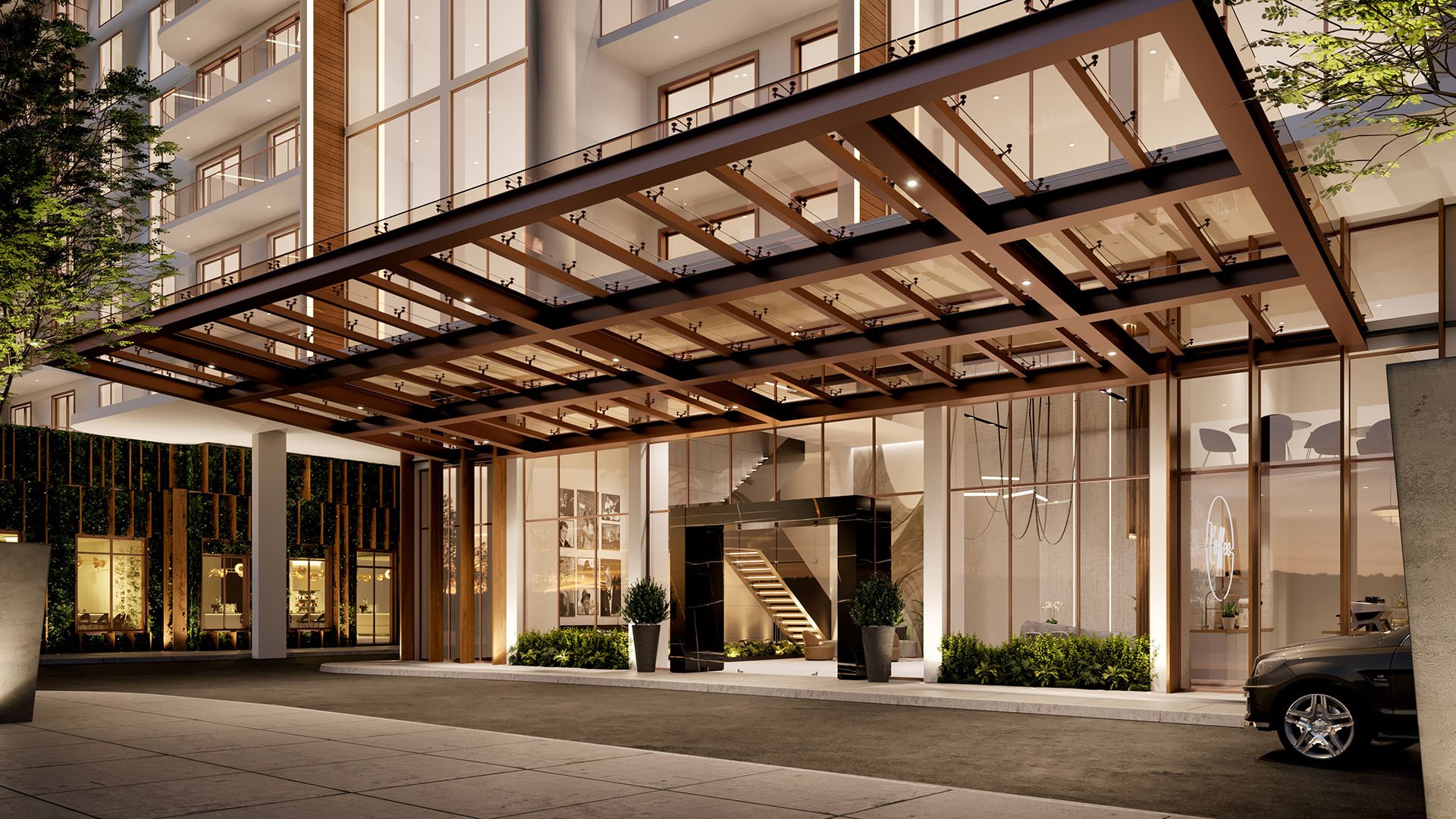
A strong arrival sequence begins with physical capacity. The porte-cochère should accommodate multiple vehicles loading and unloading without pushing traffic back onto the street. If cars idle in a single-file queue or drivers must improvise where to stop, that is usually the clearest sign the entry was not designed for real peak-hour use.
In South Florida, length and coverage matter as much as width. A longer covered drop-off offers more privacy during unloading and better protection from rain, humidity, and intense afternoon heat. Buyers should also note whether the canopy materials feel appropriate to a coastal environment. Weather-resistant, marine-grade finishes tend to age more gracefully in salt air than cheaper untreated surfaces.
Acoustics are another subtle tell. An enclosed arrival court that amplifies engine noise and echoes voices can undermine the sense of calm expected in a premium building. The best entrances feel controlled, not cavernous.
Projects that emphasize a highly choreographed arrival experience often make it central to the broader proposition, whether in the marina-adjacent composure of The Ritz-Carlton Residences® Miami Beach or the more vertical urban theater associated with St. Regis® Residences Brickell.
Valet is where service language becomes measurable. The key question is not whether the greeting is polished. It is whether the building handles arrivals and retrievals with visible rhythm. Strong operations usually show clear lane markings, intuitive signage, and staff actively directing movement rather than reacting to minor chaos.
As a practical benchmark, premium towers with well-staffed operations often retrieve vehicles within roughly 4 to 7 minutes, though buyers should treat any timing claim as directional unless management provides actual operating data. More important than one lucky fast pull is consistency. A resident can live comfortably with a predictable wait far more easily than with a building that is quick at noon and disorganized at 7 p.m.
Peak-hour staffing matters enormously. Sub-5-minute retrievals generally require a dedicated team during the busiest arrival window, not one attendant juggling desk work, curb flow, and keys. Ask whether staffing expands in winter high season, when second-home occupancy rises. Also ask whether the service model changes in a newly opened or lightly occupied tower, since early operations can be thinner than the sales experience suggests.
Technology can help, but it is not a cure-all. App-based vehicle requests can smooth the sequence when residents summon a car before reaching the lobby. That feature is part of the modern convenience narrative at buildings such as Aston Martin Residences Downtown Miami, but technology only works when staffing and circulation are already sound.
Many buyers focus on valet timing and overlook the space in between. Yet a weak transition from valet stand to elevator can quietly erode the daily experience. The route should be short, direct, and legible. Long walks, blind corners, and awkward garage-lobby detours create friction even when the car handoff itself is efficient.
This is also where operational planning becomes visible. Resident arrivals work best when service, delivery, and refuse traffic are separated from the main drop-off. If moving carts, delivery drivers, and residents compete for the same access point, the entrance begins to feel mixed-use rather than residential.
On a tour, pay attention to whether staff naturally guide movement or whether guests have to ask where to go. Good luxury circulation should be intuitive. In lower-density boutique formats, including some Boutique developments in Bay Harbor or Coconut Grove, this directness can be easier to achieve. In larger towers, it has to be deliberately engineered.
For buyers comparing calmer waterfront addresses with urban high-rise density, it is worth noting how projects such as Una Residences Brickell frame the progression from entry to vertical circulation as part of the lifestyle proposition.
Private elevator access remains one of the most meaningful differentiators in upper-tier condominium living, but the phrase deserves scrutiny. A private or semi-private elevator can materially reduce total arrival-to-unit time compared with a shared bank, especially during evening returns and weekend guest traffic. Still, buyers should verify exactly how many residences are served by that cab on the floor plan.
In other words, private should not be accepted as a marketing adjective. It should be understood as a circulation plan.
Predictability matters as much as speed. An elevator that arrives on a reliable pattern supports the sense of calm buyers expect at this level. An elevator that is occasionally swift but regularly delayed at peak moments will feel less luxurious over time. Cabin size also deserves attention. Larger cabs are simply more livable when carrying luggage, strollers, shopping, pets, or multiple passengers.
Buildings with multiple elevator banks are generally better equipped to handle concurrent arrivals without crowding the lobby. This becomes especially relevant in Second-home communities, where weekend returns and seasonal occupancy can concentrate demand. At the top end of the market, buyers often compare these details in projects known for strong privacy positioning, such as Turnberry Ocean Club Sunny Isles.
The most informative showing is rarely a quiet Tuesday at 11 a.m. Buyers should request a tour or spend time observing the building during Friday evening arrivals, a weekend turnover window, or a high-traffic seasonal period. That is when bottlenecks emerge and operating discipline becomes easiest to read.
Notice whether vehicles back up into the street. Notice whether attendants communicate confidently. Notice whether the lobby remains calm when several residents arrive at once. Notice whether an elevator bank absorbs traffic or creates a visible queue.
Then move from observation to documentation. Review building materials for valet hours, any service limitations, additional fees, and stated commitments. A tower may present valet as a signature amenity while quietly reducing staffing after hours or shifting residents to another parking arrangement overnight.
For a buyer weighing New-construction inventory against established resale, this step is essential. Stabilized buildings may offer a more settled operating rhythm, while recently delivered towers may still be refining staffing patterns and resident flow.
When comparing two or three luxury towers, keep the evaluation simple and disciplined. Time the curb-to-door sequence. Count how many cars the porte-cochère comfortably handles. Observe whether traffic organization is obvious or improvised. Ask how valet staffing changes at peak times, after hours, and during winter season. Confirm whether service and resident traffic are separated. Verify the elevator plan in writing, including how many residences share each cab.
Luxury is often described through finishes, views, and amenity language. But one of the clearest indicators of long-term satisfaction is how a building receives you when you come home. That moment repeats every day. Buyers who study it carefully usually make cleaner decisions.
Why should I test the arrival sequence in person? Because the real experience depends on how curb access, valet, lobby flow, and elevator timing work together in daily use.
What is the first warning sign of a weak porte-cochère? Street backup and curb congestion are usually the fastest signs that the drop-off area lacks capacity.
How long should valet retrieval take in a premium tower? Roughly 4 to 7 minutes is a useful directional range, but consistency matters more than a single fast retrieval.
Does 24/7 valet always mean the same level of service? No. Some buildings reduce staffing overnight or shift residents into a different parking routine after hours.
Why does seasonal occupancy matter in South Florida? Winter high season can materially slow arrivals if staffing does not scale when part-time residents return.
What makes the walk from valet to elevator important? A long or confusing transition adds daily friction even if the valet itself performs well.
Should deliveries share the same entrance as residents? Ideally no, because mixed delivery and resident traffic often creates visible delays and a less private feel.
Are private elevators always exclusive to one residence? Not necessarily. Buyers should confirm on the floor plan exactly how many units that elevator serves.
What matters more, elevator speed or predictability? Predictability. A consistently reasonable wait is easier to live with than irregular peak-time delays.
When is the best time to tour for a realistic test? Friday evenings, weekends, and other busy windows usually reveal far more than a quiet midday appointment.
For a confidential assessment and a building-by-building shortlist, connect with MILLION.
If branded residences are on your mind — as a home or as an allocation — we would be glad to share what we are seeing, privately.
Begin a quiet conversation