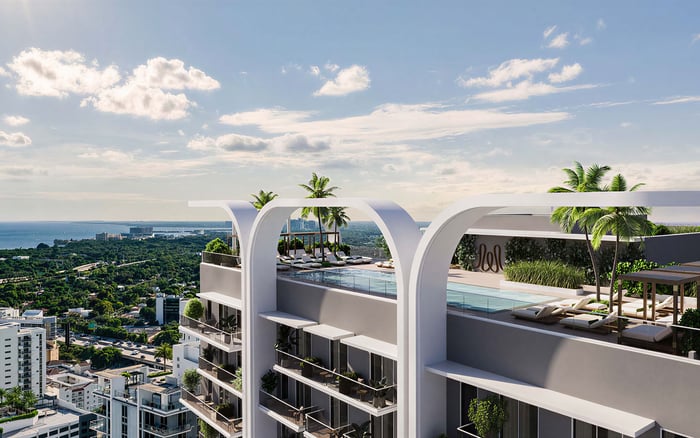
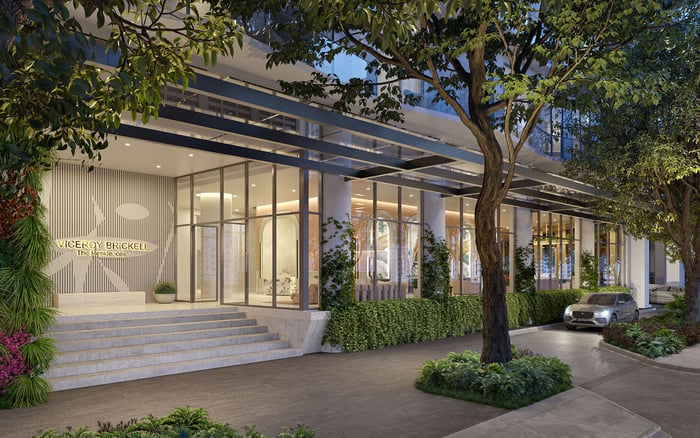
In South Florida, true luxury is not the drama of an arrival sequence but the steadiness of daily life. A tower that feels restorative on a quiet Wednesday is usually one that gets the fundamentals right: acoustics, humidity control, elevator flow, service routing, resilience, and operational maturity. This MILLION guide outlines a disciplined way to evaluate whether a glamorous address will deliver calm after the opening act fades.
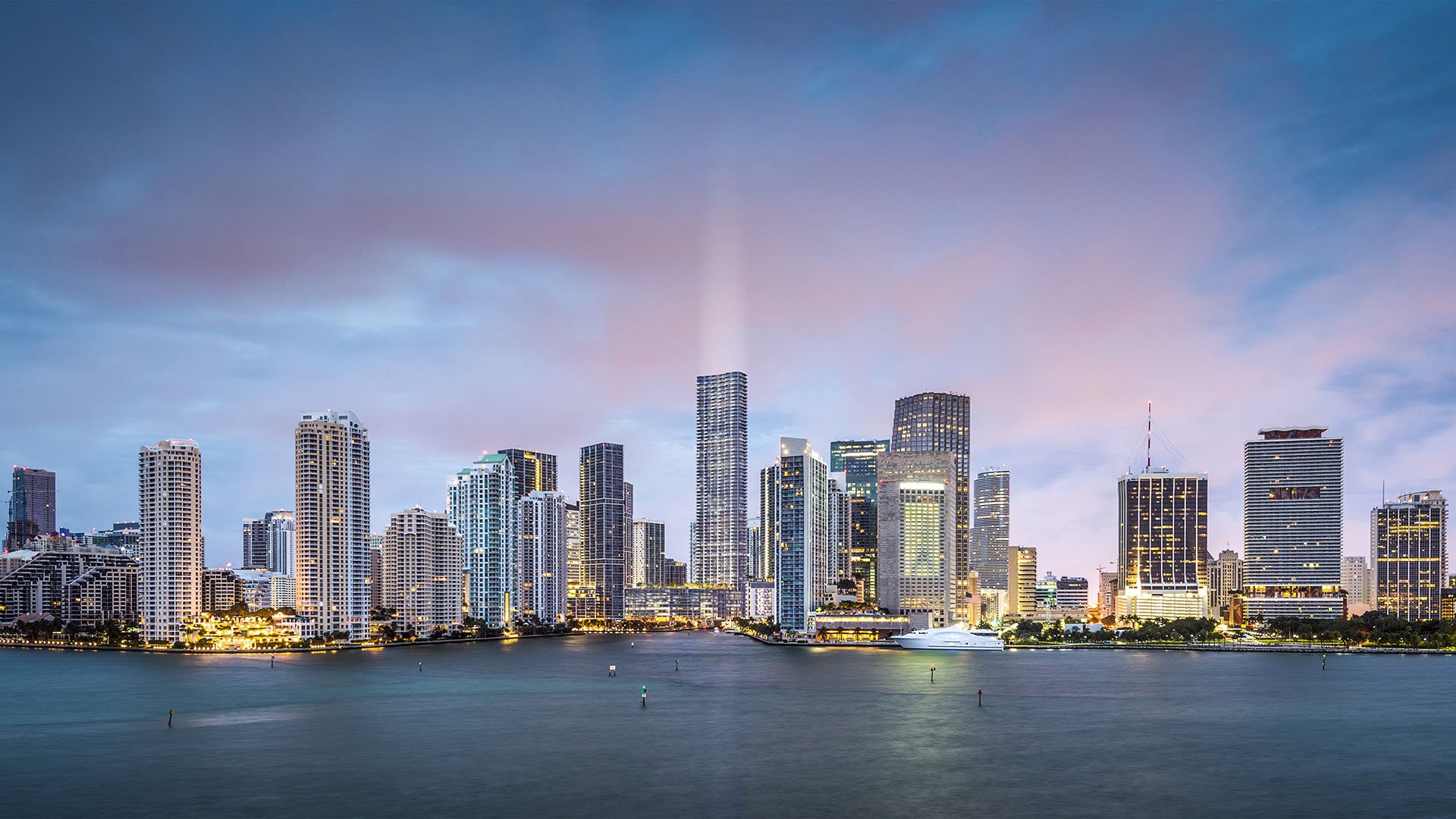
In South Florida, glamour is easy to stage. A perfumed lobby, a dramatic porte cochere, and a pool deck angled toward sunset can all persuade on first impression. What matters more, especially for a buyer who intends to live well rather than simply arrive well, is whether the building still feels composed on an ordinary Wednesday at 8:15 a.m. and again at 6:40 p.m.
That quieter test usually has less to do with spectacle than with systems. The buildings that feel restorative tend to control sound, move people efficiently, separate resident life from service operations, and manage moisture with rigor. They also tend to show an operational discipline that extends well beyond what is visible in renderings or sales galleries.
This is why a polished address in Brickell, Coconut Grove, Miami Beach, or Sunny Isles should be judged as much by weekday performance as by its finish palette. Even in highly designed settings such as The Residences at 1428 Brickell or Park Grove Coconut Grove, the deeper question remains the same: does the tower absorb friction, or amplify it?
Relaxation begins with what you do not hear. In multifamily construction, acoustic separation is not a boutique extra. It is part of the baseline buyers should take seriously. A building may photograph beautifully and still transmit chair movement, corridor conversations, or impact noise from above in ways that steadily erode daily comfort.
Ask for written documentation on wall and floor-ceiling acoustic performance, not just verbal reassurance. The goal is not technical theater. It is confidence that ordinary household activity remains private and that the residence feels insulated from neighboring routines.
This matters especially in towers that market wellness, hospitality, or social energy. An address such as 57 Ocean Miami Beach may project serenity through its design language, but the lived experience of calm still depends on what happens behind the walls, beneath the flooring, and along the corridor outside the front door.
Many buyers instinctively look at views and finishes first. A more sophisticated buyer asks how the building handles air. In this climate, poor dehumidification can undo the mood of an otherwise elegant residence with surprising speed. Persistent dampness, stale air, minor odor retention, and slow leak response are not cosmetic flaws. They are comfort failures.
A tower that feels genuinely easy to live in usually has strong moisture management, dependable ventilation, and maintenance protocols that do not treat small water issues as minor ones. Indoor environmental quality often determines whether a home feels crisp and restorative or heavy and compromised.
This is particularly relevant in oceanfront settings where exposure and humidity are part of daily life. Buildings such as Rivage Bal Harbour or The Perigon Miami Beach trade on an extraordinary coastal atmosphere. To feel relaxing year-round, however, that atmosphere must be carefully moderated indoors.
The ordinary-Wednesday test is best performed in person, without ceremony. Visit in the middle of the week, ideally once in the morning and once in the late afternoon. Watch the lobby, the curb, the elevator bank, and the transition from entrance to private floors.
You are looking for practical signs of friction: delivery bottlenecks, rideshare pileups, long elevator waits, crowded amenity spaces, noisy service carts, and a lobby that functions more like a transit hall than a residential threshold. Transitional spaces matter. Well-designed towers use vestibules, corridor sequencing, and circulation buffers to preserve calm before you even reach the residence.
In dense neighborhoods such as Brickell or Downtown, this test becomes even more important. A glamorous tower can feel very different at a broker preview than it does when residents, staff, guests, deliveries, and building services are all moving at once.
One of the clearest markers of quiet luxury is the separation of resident circulation from service traffic. In practice, this means asking direct questions about freight elevators, loading areas, package handling, move-in procedures, and housekeeping routes. If those answers are vague, the building may still be aesthetically refined while remaining operationally unsettled.
A serene tower does not force residents to share every circulation path with constant back-of-house activity. The choreography should feel discreet. You should be able to leave for a lunch meeting or return from school pickup without navigating a parade of deliveries and service congestion.
This distinction is especially important in mixed-use or highly programmed environments. In new-construction towers with ambitious amenity stacks and hospitality components, operational complexity rises quickly. The more moving parts a building has, the more carefully they must be separated to preserve private life.
Luxury buyers often perform meticulous due diligence on interiors and legal documents, yet skip one of the simplest practical checks: public permit and code-compliance history. In Miami-Dade and Broward, those records can help reveal unresolved work, repeated mechanical issues, violations, or signs that a newer building is still working through post-completion problems.
This matters because daily comfort depends heavily on building systems. Repeated trouble involving elevators, HVAC, life-safety systems, or unresolved repair activity can be a meaningful sign that the building has not yet reached operational maturity.
The public record will not tell you everything. It will not fully capture service quality, acoustic nuance, or resident satisfaction. But it can show whether the glamorous surface is supported by orderly follow-through. A refined buyer uses public records, a midweek site visit, and quiet conversations with current residents together, not separately.
Nothing shatters calm faster than a building that cannot move people efficiently or maintain order during disruptions. Elevator performance is one of the clearest weekday diagnostics. Notice wait times, stopping patterns, crowding at peak moments, and whether service traffic appears to interfere with resident flow.
Then ask harder questions. What is the backup power capacity? Which systems remain operational during an outage? How are cooling, security, access control, and communications handled if conditions deteriorate? In a hurricane-prone market, an elegant building without a clearly articulated emergency plan is not serene. It is simply untested.
The same applies to alarms and communications. A building that feels secure is one where emergency messaging, signaling, and protocols are clear enough that even an ordinary disruption does not become a scene.
A prized view can make a home feel expansive, but it can also create false confidence. South Florida skylines evolve quickly. Before assigning too much value to a corridor of water, park, or skyline, check whether nearby zoning or legislative activity could alter that outlook.
This is not a pessimistic exercise. It is part of judging whether a home will remain mentally restful over time. If your sense of calm depends on openness and light, future development potential is not a side note. It is part of the product.
For buyers considering resale opportunities as well as pre-completion inventory, this check helps separate enduring peace from temporary theater.
Ask management or the sales team for written documentation covering acoustic ratings, HVAC specifications, maintenance protocols, leak response procedures, and backup power scope. Verbal confidence is pleasant; written clarity is more useful.
If the tower is recently delivered, also look for evidence that it has moved beyond its early adjustment phase. A newly opened building can be visually immaculate yet operationally immature. Punch-list activity, repeated inspections, or a haze of unresolved service issues can all affect how the building feels in ordinary use.
The most relaxing towers are rarely the ones that simply promise the most. They are the ones that have reduced uncertainty.
What is the best single test for whether a luxury tower feels relaxing? Visit unannounced on a weekday and observe the building during normal traffic patterns. Daily calm is easiest to judge when nothing is being staged for you.
Why do acoustics matter so much in a high-end condo? Because privacy is one of the foundations of luxury. A residence cannot feel restorative if impact noise and hallway sound travel too easily.
Should I care about humidity control if the finishes are exceptional? Absolutely. In South Florida, weak dehumidification can undermine comfort, air quality, and even odor control regardless of how beautiful the interiors are.
Are amenities a good measure of how relaxing a tower will be? Not by themselves. Utility, circulation, and operational quality matter more than the length of the amenity list.
What should I watch during a midweek site visit? Focus on elevator flow, delivery congestion, lobby noise, service traffic, and whether common spaces feel orderly or overburdened.
How important are public code and permit records? Very important. They can reveal unresolved issues and patterns of mechanical or compliance trouble before you commit.
What should I ask about service logistics? Ask how deliveries, freight, moves, housekeeping, and package handling are routed. The more discreetly service functions operate, the calmer the building usually feels.
Why does backup power affect everyday comfort? Because resilience shapes confidence. If outages disrupt cooling, elevators, or security, the building will not feel easy to live in when conditions become stressful.
Can a brand-new tower still be a risky choice for comfort? Yes. A newer building may still be resolving punch-list and systems issues even if the design presentation is flawless.
How should I balance glamour with livability? Treat beauty as the invitation and operations as the proof. The right tower offers both, but weekday performance should carry more weight.
If you'd like a private walkthrough and a curated shortlist, connect with MILLION.
If branded residences are on your mind — as a home or as an allocation — we would be glad to share what we are seeing, privately.
Begin a quiet conversation