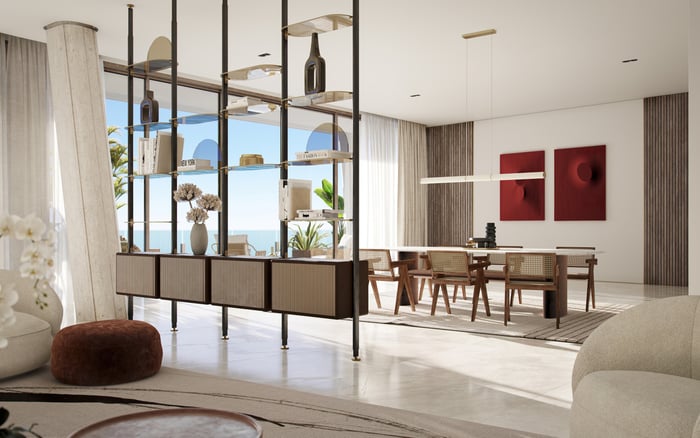
A practical buyer’s guide to punch-list strategy for luxury real estate in Grove Isle, with questions that protect finish quality, timing, leverage, and post-closing confidence.

In luxury real estate, the punch list is not a minor administrative appendix. It is the buyer’s last practical tool for translating presentation into performance. In Grove Isle, where the purchase decision may be shaped by privacy, design, water, light, service, and the promise of effortless living, the question is not simply whether imperfections exist. The sharper question is whether the buyer has a strategy for identifying them, documenting them, assessing their importance, and compelling resolution before leverage disappears.
A polished model residence can create a seductive first impression, but a closing file requires a different lens. The punch-list review should test the residence as a future home, not as a sales environment. Doors should be opened repeatedly. Cabinetry should be inspected in natural and artificial light. Stone, wood, paint, appliances, balcony drainage, smart-home controls, and HVAC behavior should be reviewed with patience. The goal is not to find fault for its own sake. The goal is to distinguish ordinary completion work from defects that could affect use, value, timing, or peace of mind.
Buyers considering Vita at Grove Isle should think about punch-list discipline early, especially if the purchase involves a newly delivered or recently completed residence. Even when a search file is labeled Coconut Grove, the Grove Isle review should be residence-specific, contract-specific, and coordinated before the buyer’s negotiating leverage narrows.
The first question is deceptively simple: who is responsible for the punch list, and who has authority to accept completion? A buyer should understand whether the developer, seller, contractor, construction manager, property manager, or warranty representative will coordinate repairs. If multiple parties are involved, the buyer should ask for a single point of contact, a written process, and a clear escalation path.
Luxury buyers should also clarify the difference between observable items and concealed items. A scratched panel, uneven paint line, or misaligned door pull can be photographed. A recurring moisture concern, equipment noise, control-system glitch, or intermittent appliance issue may require testing over time. The strategy should allow for both. If the contract limits the buyer’s ability to demand post-closing correction, the buyer should know that before signing, not after a walkthrough.
The most important signature is not always the ceremonial one. It may be the signature confirming that the buyer has accepted the residence subject to specific remaining work. That document should be precise. Vague phrases such as “to be addressed” or “builder to repair as needed” are rarely as useful as a dated schedule, item number, photograph, location, responsible party, and completion standard.
Timing changes everything. A walkthrough too early can produce a long list of items already scheduled for completion. A walkthrough too late can compress the buyer’s ability to negotiate holdbacks, delay acceptance, or require repairs before closing. The better approach is often a staged review: an initial inspection for major concerns, followed by final verification closer to closing.
For new-construction and pre-construction purchases, the buyer should ask how the developer defines substantial completion, what condition the residence must be in before the buyer’s inspection, and whether all appliances, lighting, air conditioning, plumbing fixtures, shades, audiovisual systems, and access controls will be operational for testing. A luxury residence cannot be fully evaluated if the buyer is allowed only to look, not operate.
Comparable expectations can be useful across the broader Grove and South Florida luxury market. Buyers looking at Four Seasons Residences Coconut Grove or The Well Coconut Grove may be weighing different design languages and amenity programs, but the closing discipline should remain consistent: document, verify, and preserve remedies.
Terrace conditions are especially important because they sit at the intersection of architecture, weather, maintenance, and daily enjoyment. Buyers should ask how terrace surfaces, railings, drains, doors, thresholds, lighting, exterior outlets, and waterproofing-adjacent details will be reviewed. This is not a request for perfection beyond the contract. It is a request that the most exposed parts of the residence be evaluated with appropriate care.
Glazing and exterior doors deserve equal attention. A luxury buyer should test smooth operation, seals, locking mechanisms, visible scratches, alignment, and transition points. If an issue appears only during heavy wind or rain, the buyer should ask how it will be documented and handled. The punch-list strategy should not assume every issue will reveal itself during a single sunny walkthrough.
Interior finishes also change under different light. Stone may read one way in morning light and another under recessed evening lighting. Wood flooring, lacquer, bronze, glass, and painted surfaces should be reviewed from multiple angles. The buyer should ask whether cosmetic tolerances are defined in writing, who determines acceptability, and whether replacement materials will match the installed finish.
A buyer may be purchasing a private residence, but the luxury experience is not confined to the unit. Pool areas, arrival sequences, elevators, corridors, fitness spaces, service areas, storage, parking, package rooms, and access protocols all affect the quality of ownership. The buyer should ask whether common-area punch-list items are tracked separately, whether the association or developer controls completion, and how unresolved amenity items are communicated to owners.
This matters because private value is influenced by shared execution. A residence can be immaculate while the path to it still feels unfinished. Buyers should not confuse a beautiful interior with a fully stabilized ownership environment. The punch-list conversation should therefore include both the residence and the building experience that supports it.
At other boutique Coconut Grove references such as Arbor Coconut Grove, buyers may be drawn to a more intimate scale, while established waterfront conversations may include Park Grove Coconut Grove. In each case, the punch-list principle is the same: the home begins at the arrival experience, not merely at the front door.
Before closing, the buyer should ask whether unresolved items can support a holdback, a repair escrow, a delayed closing, or a written post-closing completion agreement. The answer depends on the contract, the seller’s posture, the type of property, and the stage of delivery. The essential point is to ask early enough that the answer can shape negotiation.
A punch list without leverage is a courtesy request. A punch list tied to defined remedies is a closing strategy. Luxury buyers should avoid relying on verbal assurances, even when the relationship feels cordial. The tone can remain gracious while the documentation remains exacting.
The best punch-list strategy also prioritizes. Not every item deserves the same treatment. A tiny paint touch-up is different from a nonfunctioning system, a damaged built-in, a door that does not close properly, or a water-related concern. Buyers should classify items by urgency: closing-critical, post-closing acceptable with written commitment, cosmetic, and monitor. This keeps the negotiation focused and credible.
Before committing, ask: What is the inspection window? Who attends the walkthrough? Can specialists attend? Are photos and videos allowed? How are items logged? Who assigns responsibility? What is the completion deadline? What happens if work is incomplete at closing? What warranties apply after closing? Who confirms that the final work meets the standard promised?
A refined purchase is not passive. It is curated, tested, and confirmed. In Grove Isle, that approach is especially important because the buyer is often purchasing more than square footage. The buyer is purchasing a standard of arrival, a level of privacy, and a daily rhythm that should feel resolved from the first morning of ownership.
What is a punch list in a luxury real estate purchase? It is a written record of items that require correction, completion, verification, or further review before or after closing.
Should I raise punch-list questions before signing a contract? Yes. The strongest time to negotiate inspection rights, holdbacks, and repair standards is before the buyer’s leverage is reduced.
Can cosmetic items matter in a luxury residence? Yes. Finish quality is part of the value proposition, especially where stone, millwork, glass, paint, and hardware define the experience.
Who should attend the walkthrough? The buyer should consider a qualified inspector, relevant specialists, the buyer’s advisor, and the party authorized to record and resolve items.
What should be photographed? Every item should be photographed with location notes, close-up detail, and broader context so there is little ambiguity later.
Are common areas part of the punch-list conversation? They should be discussed because arrival, amenities, elevators, parking, and service areas influence the luxury ownership experience.
What if an item cannot be fixed before closing? The buyer should seek a written completion obligation, deadline, responsible party, and an agreed remedy if the work remains unfinished.
Is a verbal promise enough? No. Verbal assurances are difficult to enforce and often lack the precision needed for luxury-level completion standards.
How should buyers prioritize punch-list items? Separate items into closing-critical concerns, documented post-closing work, cosmetic details, and issues that require monitoring.
Does punch-list strategy apply to resale purchases too? Yes. Resale buyers should still document condition, negotiate repairs or credits, and verify systems before closing.
For a confidential assessment and a building-by-building shortlist, connect with MILLION.
If branded residences are on your mind — as a home or as an allocation — we would be glad to share what we are seeing, privately.
Begin a quiet conversation