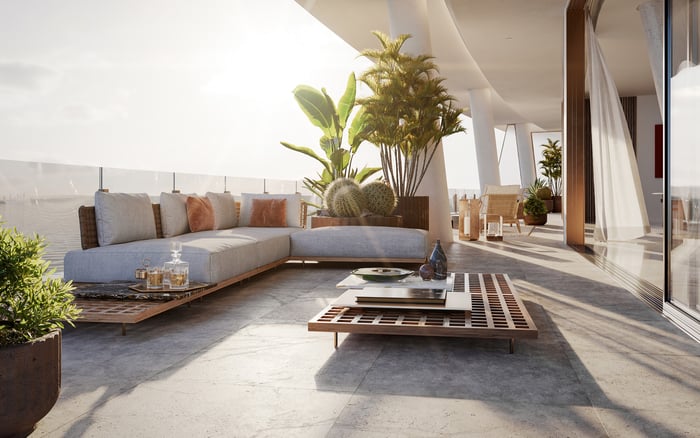
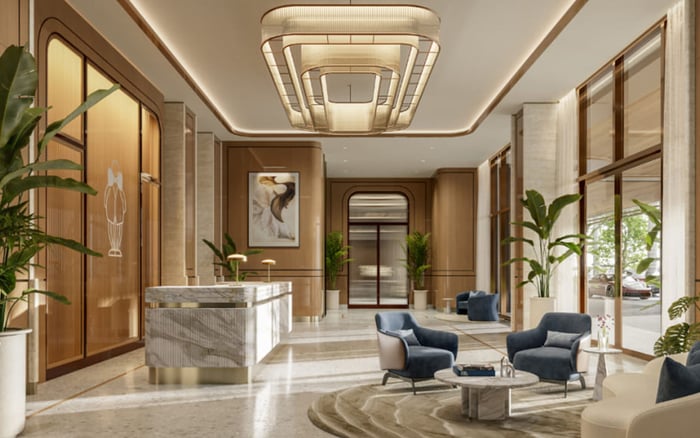
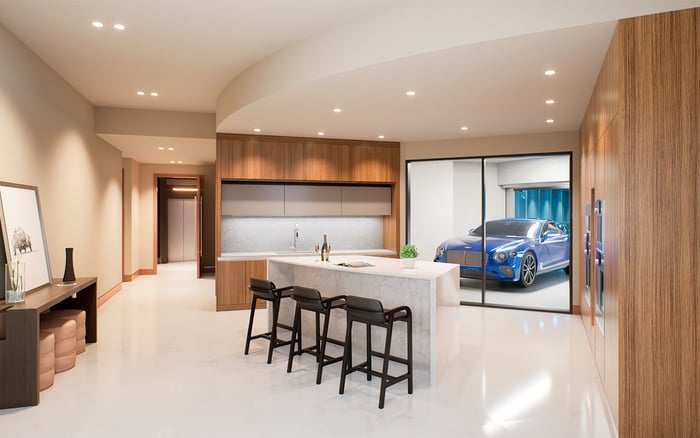
A discreet buyer-focused comparison of two prestige residential ideas, framed around private dining, entertaining flow, guest circulation, and acoustic privacy in South Florida’s branded ultra-luxury market.
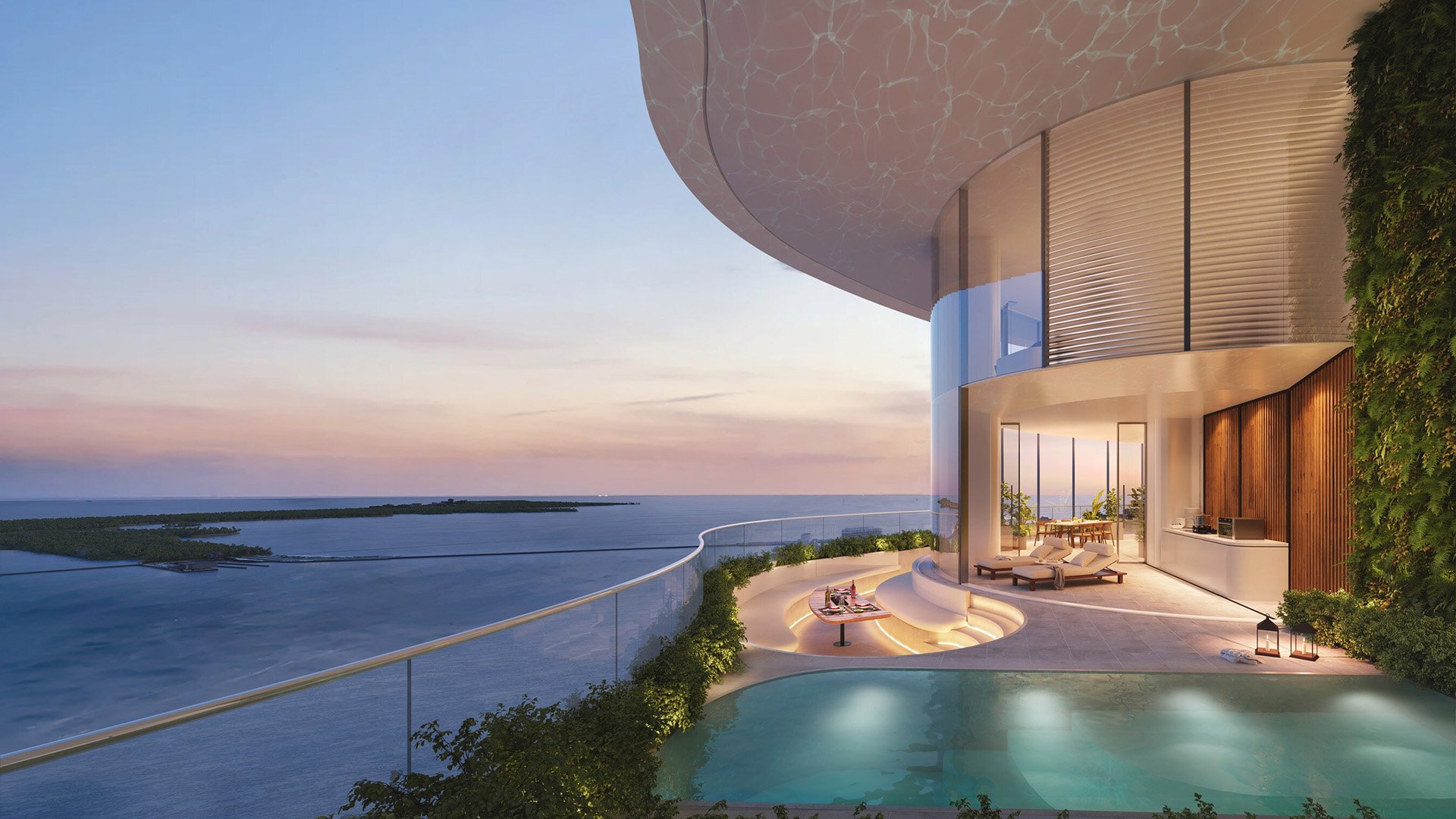
At the highest end of South Florida real estate, prestige is no longer defined simply by address, skyline, or brand recognition. Buyers are evaluating how a residence performs when life becomes layered: a quiet breakfast after travel, a chef-led dinner for twelve, children asleep while guests linger, or an owner retreating from the social areas without feeling that the home has been surrendered to the event.
That is the useful lens for comparing 619 Residences by Foster + Partners + Nobu Hospitality with Four Seasons Residences Coconut Grove. Both sit within the same ultra-premium conversation, yet they point toward different answers. Four Seasons Residences Coconut Grove reads as a classical residential proposition within South Florida’s branded luxury market, emphasizing service, discretion, comfort, and a clearer separation between public and private zones. The 619 Residences name, aligned with Foster + Partners and Nobu Hospitality, carries a different cultural signal: design pedigree, culinary identity, and a hospitality language buyers will naturally associate with dining and social atmosphere.
The distinction matters because a branded residence is not just a beautiful shell. It is a choreography of arrival, service, food, sound, privacy, staff movement, and retreat. In a pre-construction or new-construction decision, the most sophisticated buyers are asking not only what the residence looks like, but how it behaves.
Private dining is often where branded residences reveal their true character. A residence can have a spectacular kitchen, a generous table, and a dramatic view, yet still feel operationally awkward if food service, guest arrival, and cleanup intersect with the family’s private life.
Four Seasons Residences Coconut Grove reads as the more residentially discreet answer. Its value proposition centers on comfort and service rather than performance. For buyers who host frequently but prefer the tone of a private home, that distinction matters. The ideal experience is not a restaurant transplanted upstairs. It is dinner that appears effortless, with staff circulation kept subtle and the owner’s bedroom wing, study, or family spaces protected from the evening’s movement.
The Nobu-aligned side of the comparison invites a different question. If the hospitality identity implies a stronger food-and-beverage culture, buyers should study how that energy translates into residential life. Does private dining feel like an amenity extension, a social stage, or a personal ritual? Is the experience designed for theater, intimacy, or both? The answer will not be found in brand prestige alone. It comes from plan logic, service protocols, elevator access, catering paths, and where the host can step away when the evening grows long.
For the Coconut Grove buyer, this is especially important because the neighborhood’s appeal is not only cosmopolitan. It is also residential, green, and emotionally quieter than more overtly vertical luxury districts. A private dining program here should enhance that rhythm rather than overwhelm it.
Entertaining flow is not merely an open floor plan. It is the sequence by which a guest is received, oriented, held, moved, and eventually released without friction. The best residences have social clarity. Guests understand where to go. Staff can operate without becoming part of the party. Owners can host with ease rather than supervision.
Four Seasons Residences Coconut Grove is positioned around separation between public and private zones. That is a consequential detail. Public areas can remain gracious and active, while bedrooms, family lounges, and quieter rooms retain their autonomy. In practice, this allows an owner to entertain with confidence. The residence can open for an evening without becoming acoustically or visually exposed in every direction.
A more theatrical entertaining concept, the kind buyers may anticipate from a Nobu-adjacent idea, can be compelling when the buyer wants the residence to function as a social instrument. The risk is not theater itself. The risk is insufficient hierarchy. A dramatic dining room, terrace, or lounge can be magnificent, but it must still answer basic questions: Where do guests pause on arrival? Where do they gather before dinner? Where do they migrate afterward? What path does service take when dessert is cleared? Can a smaller family dinner feel natural in the same architecture?
The strongest luxury residences are flexible. They do not force every night to become an event. They can support a pool day, a quiet dinner, or a formal gathering without requiring the owner to adapt to the building’s ego.
Among experienced buyers, acoustic privacy has become a defining due-diligence issue. It is also one of the least glamorous topics in a sales conversation, which is precisely why it deserves attention. Sound determines whether a residence feels restful after the photography ends.
For Four Seasons Residences Coconut Grove and comparable branded residences, acoustic separation should be considered at three levels. First is internal separation: the distance and construction logic between entertaining rooms and sleeping areas. Second is vertical and lateral separation: how sound transfers between neighboring residences and common areas. Third is operational separation: whether amenity activity, elevators, service corridors, and gathering spaces are buffered from private living.
This is not only about avoiding noise. It is about preserving different moods inside the same home. A buyer may want a lively dinner in the great room while a family member reads elsewhere. A couple may host guests on a terrace while a child sleeps. A second-home owner may arrive from a long flight and expect the residence to perform as a sanctuary, not an extension of the lobby.
Four Seasons’ more classical residential orientation makes this concern central to its appeal. Its promise of discretion and comfort depends on acoustics as much as service culture. A more socially expressive concept may still perform beautifully, but buyers should test the details rather than assume brand sophistication automatically delivers silence.
The best comparison between these two prestige propositions is not which brand is more famous. It is which daily life is more accurate for the owner.
A buyer who entertains formally but values retreat may lean toward the Four Seasons logic: refined, service-led, and less theatrical. A buyer who wants a stronger culinary identity and a more social atmosphere may find the Nobu-aligned idea intellectually and emotionally compelling. Neither answer is inherently superior. The better answer is the one that matches how the owner actually lives.
The practical questions are direct. How is daily dining handled when no guests are present? How does the residence support a dinner for ten or twenty without compromising privacy? Where does staff move? What separates the primary suite from the entertaining core? How are common amenities, food-and-beverage programming, and private residential spaces distinguished? If there is a lively hospitality component, how is its energy curated so that it enriches rather than intrudes?
In South Florida’s branded-residence boom, high-net-worth buyers are increasingly weighing operations, wellness, lifestyle programming, and service quality alongside views and square footage. That shift is healthy. It places attention where luxury is actually lived: in ease, privacy, and consistency.
Four Seasons Residences Coconut Grove offers the clearer picture of residential discretion: service, comfort, separation, and a refined entertaining style. The 619 Residences by Foster + Partners + Nobu Hospitality comparison is compelling because it suggests another kind of prestige, one closer to culinary culture and designed social energy. The choice is not simply between two names. It is between two atmospheres.
For an ultra-premium buyer, the decisive walkthrough should be imagined, not just observed. Picture the arrival of guests, the timing of cocktails, the transition to dinner, the clearing of plates, the movement to a terrace, and the quiet return to the private suite. Then ask whether the residence protects the owner’s life at every point in that sequence.
That is where the real distinction appears. Not in the logo, not in the view, and not even in the finish package, but in the invisible choreography of dining, entertaining, and quiet.
Is Four Seasons Residences Coconut Grove positioned as a branded ultra-luxury residence? Yes. It is framed within South Florida’s branded ultra-luxury residential market, with emphasis on service, discretion, and comfort.
How does Four Seasons Residences Coconut Grove differ in tone from the Nobu-aligned concept? Four Seasons is characterized as more classically residential and less theatrical in its entertaining posture.
Why is private dining so important in this comparison? Private dining reveals how well a residence balances hospitality, service movement, guest experience, and personal privacy.
What should buyers study in an entertaining floor plan? Buyers should examine arrival sequence, gathering areas, staff paths, terrace access, and the separation of private rooms from social zones.
Is acoustic separation a major issue in branded residences? Yes. Acoustic privacy is a core due-diligence point for buyers comparing Four Seasons Residences Coconut Grove and comparable branded residences.
Does a stronger hospitality identity automatically mean better dining? Not necessarily. The experience depends on residential planning, service protocols, circulation, and how public energy is separated from private life.
Who may prefer the Four Seasons residential logic? Buyers who value discretion, refined service, comfort, and clear separation between entertaining and retreat spaces may find it especially aligned.
Who may be drawn to the Nobu-aligned idea? Buyers seeking a more culinary, social, and design-forward atmosphere may find that concept compelling if the operational details support privacy.
Why does Coconut Grove matter in this discussion? Coconut Grove adds a quieter residential context to the branded-residence conversation, making balance and restraint especially important.
What is the most important question before choosing between them? Ask how the residence will handle daily dining, large gatherings, and sound privacy when the home is fully in use.
When you're ready to tour or underwrite the options, connect with MILLION.
If branded residences are on your mind — as a home or as an allocation — we would be glad to share what we are seeing, privately.
Begin a quiet conversation